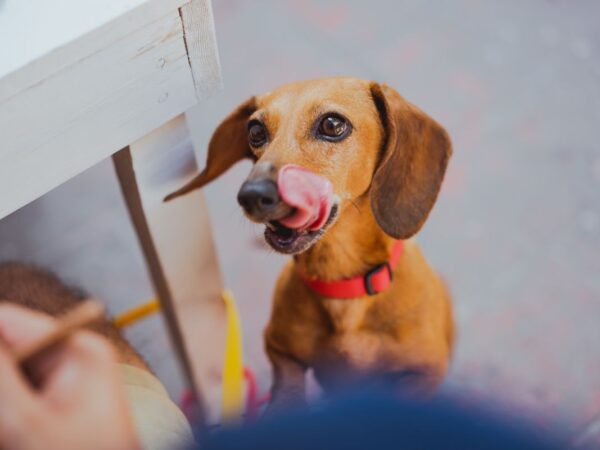
How much should you feed a puppy? The honest answer is: start with the feeding guide on your puppy food, split it into several small meals a day, and then adjust based on how your puppy’s body actually looks and feels. Young puppies usually need around four meals a day, dropping to three and then two as they grow. The right total amount depends on the food’s energy content, your puppy’s age and their expected adult size, so a quick body check every week or two matters more than any single number on a chart.
Why puppies need careful portions
Puppies grow incredibly fast, and their food has to fuel bones, muscles, organs and an immune system that is still developing. That is why they need a diet formulated specifically for growth. But more food does not mean better growth. VCA Animal Hospitals explains that the goal is slow, steady “optimal” growth, not the fastest possible growth. Overfeeding, high-energy diets and leaving food out all day can push a puppy towards maximal growth, which raises the risk of skeletal problems, obesity and a shorter life.
RSPCA Australia makes the same point: it is important not to underfeed or overfeed puppies, and overfeeding large and giant breeds in particular can predispose them to muscle and bone problems. The aim is a lean, well-muscled pup who grows at a steady pace.
How many meals a day does a puppy need?
Small stomachs and high energy needs mean young puppies do best on frequent small meals. RSPCA Australia recommends offering food at least four times a day to begin with, then gradually reducing the number of meals as your puppy grows. Adult dogs should still be fed at least twice a day, which helps reduce the risk of bloat. The table below shows a typical pattern many vets use as a starting point. Your own vet may tweak it for your puppy’s breed and health.
| Age | Typical meals per day | Notes |
|---|---|---|
| 8 to 12 weeks | 4 | Just home from the breeder or shelter. Keep the same food they were on for the first week or so. |
| 3 to 6 months | 3 | Growth is rapid. Weigh regularly and adjust the daily total, not just the meal size. |
| 6 to 12 months | 2 to 3 | Most small and medium breeds can move to two meals. Large breeds may stay on three a little longer. |
| Adult (timing varies by size) | At least 2 | Twice daily feeding is recommended to help reduce bloat risk, especially in deep-chested breeds. |
Remember the daily total is what matters for growth. Going from four meals to three does not mean cutting food by a quarter. It means dividing the same daily amount into fewer, slightly larger portions.
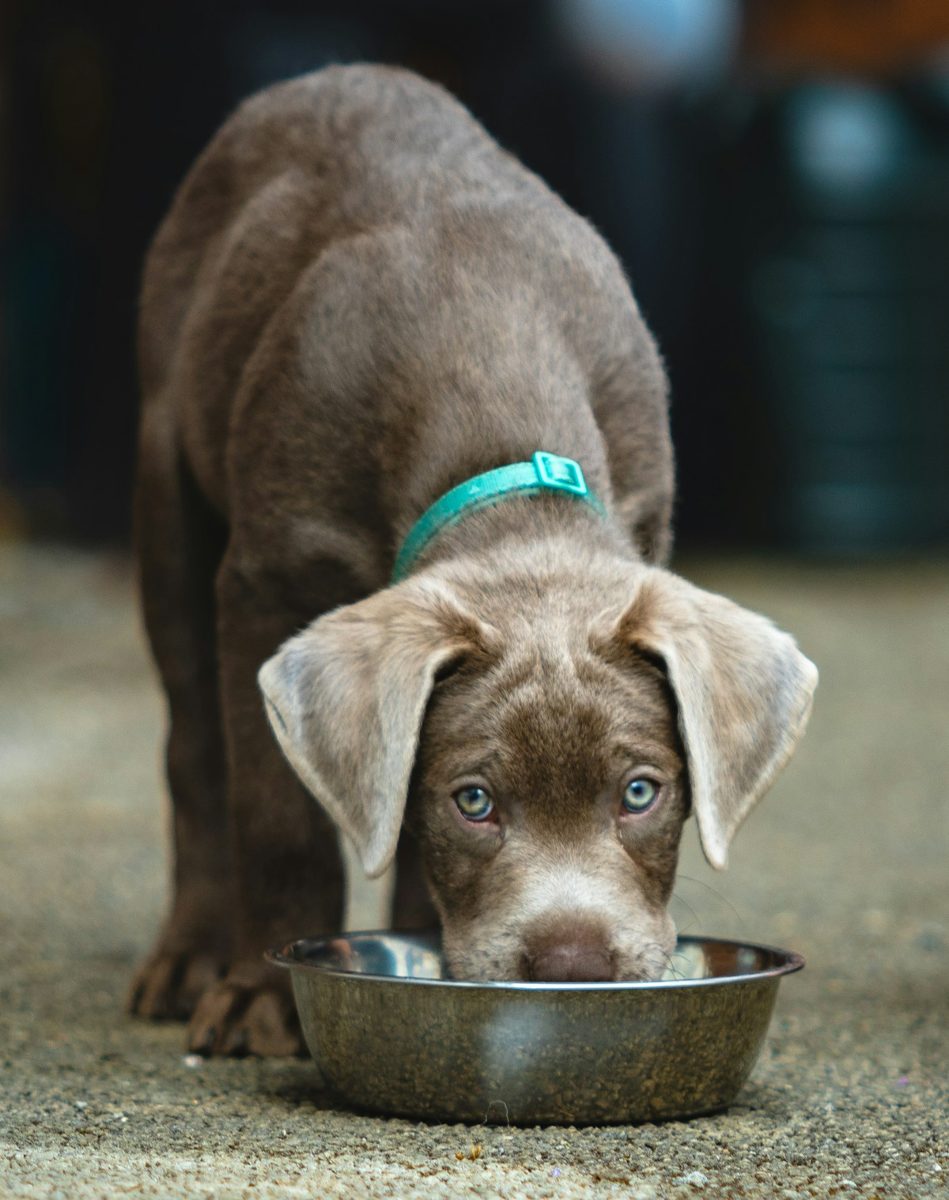
How to use the feeding guide on the food label
Every complete puppy food sold in Australia should carry a feeding guide, usually a table showing grams or cups per day by your puppy’s current weight and age, and sometimes by expected adult weight. This is the best starting point because it is based on that particular food’s energy density. Two foods that look the same in the bowl can differ a lot in kilojoules per cup, so never copy a portion from a different brand.
To get the most out of the label:
- Check it is a growth or “all life stages” food. Look for a statement that the food is complete and balanced for growth. Many Australian foods reference the AAFCO nutrient profiles, and RSPCA Australia advises choosing food that meets the Australian Standard for pet food (AS5812) or an equivalent standard. Our guide to reading a pet food label explains what these statements mean.
- Find your puppy’s row. Use their current weight and age. If the guide asks for expected adult weight, use your breeder’s or vet’s estimate.
- Treat it as a range, not a rule. Label amounts are averages. A busy working-breed pup may need more, while a calm, desexed puppy may need less.
- Weigh, do not scoop. A cheap kitchen scale is far more accurate than a cup, and small errors add up quickly in a small dog.
- Count the treats. VCA suggests treats and snacks should make up no more than 10 per cent of daily calories. If you use a lot of food rewards for training, take some kibble out of the daily allowance and use that instead.
The WSAVA Global Nutrition Guidelines encourage owners to rely on the information that matters on a label, such as the nutritional adequacy statement and feeding guide, rather than marketing claims or the ingredient list alone. If you are drowning in conflicting advice online, our article on telling good pet-food advice from viral advice can help.
Body condition scoring: the real feeding guide
The label gets you started. Your puppy’s body tells you whether to stay the course. Vets use a body condition score (BCS), most commonly the 9-point WSAVA scale, where 1 is emaciated, 9 is severely obese and 4 to 5 is ideal. The WSAVA dog body condition chart describes an ideal dog like this: ribs easily felt without excess fat, a waist visible behind the ribs from above, and the belly tucked up when viewed from the side.
Try this simple check every week or two:
- Feel the ribs. Run your flat hands along your puppy’s sides. You should feel the ribs easily under a thin layer of fat, a bit like the back of your hand.
- Look from above. There should be a visible waist between the ribs and the hips.
- Look from the side. The belly should rise up towards the back legs rather than hanging level or sagging.
If the ribs are hard to find and the waist is disappearing, cut the daily amount by around 10 per cent and recheck in a week or two. If the ribs, spine and hip bones are sharply obvious, increase slightly and talk to your vet, since an underweight puppy may also have worms or another health issue. For more on weight, see our guide to healthy weight in dogs and cats.
Large and giant breed puppies need extra care
Labradors, German Shepherds, Golden Retrievers, Great Danes, Mastiffs, Bernese Mountain Dogs and other big breeds are more vulnerable to developmental bone and joint disease. VCA notes that excess calories in these breeds can lead to abnormal skeletal development and orthopaedic disease, and that moderate energy restriction during growth can reduce the risk of hip dysplasia without affecting final adult size.
Practical rules for big puppies:
- Choose a large-breed puppy food. Look for an adequacy statement covering growth of large-size dogs. These diets are formulated with more controlled energy and calcium levels.
- Never add calcium. RSPCA Australia says calcium powder supplements should not be given unless your vet directs it. Too much calcium can be as harmful as too little for a growing large-breed skeleton.
- Portion feed, never free feed. Measured meals let you slow growth if your puppy is getting chunky.
- Aim for lean. A large-breed puppy should look athletic, not round.
- Plan for bloat. Many large, deep-chested breeds are at higher risk of gastric dilatation-volvulus. Keep meals split, avoid vigorous exercise straight after eating, and learn the warning signs of bloat.

When to switch to adult food
Puppy food should continue until your dog has finished most of their growing. According to the Merck Veterinary Manual, most dogs reach adulthood at around 9 to 12 months, but large and giant breeds can take almost two years. VCA gives a similar picture: 10 to 12 months for small and medium breeds, and up to 18 to 24 months for large and giant breeds.
| Expected adult size | Typical time to move to adult food |
|---|---|
| Toy and small breeds | Around 9 to 12 months |
| Medium breeds | Around 12 months |
| Large and giant breeds | Often 12 to 24 months, on your vet’s advice |
Desexing can also lower energy needs, so it is a good time to review portions with your vet. When you do switch, change over gradually across about a week, mixing increasing amounts of the new food with decreasing amounts of the old, to avoid an upset tummy.
Common puppy feeding mistakes
- Leaving the bowl full all day. Free feeding makes it hard to know how much your puppy eats and is linked to excess weight.
- Mixing too many extras. Adding home-cooked meat, milk or table scraps can unbalance a complete diet. RSPCA Australia advises against giving puppies milk because it can cause gut upsets.
- Forgetting treats and chews. Training treats, dental chews and the odd spoon of peanut butter all count.
When to call the vet
Book a vet check if your puppy:
- Is losing weight, not gaining as expected, or you can see their spine and hips clearly.
- Refuses food for more than a meal or two, or seems flat and lethargic.
- Has ongoing vomiting or diarrhoea, especially with blood. Puppies dehydrate quickly and these can be signs of serious illness such as parvovirus.
- Has a swollen, tight belly, is retching without bringing anything up, or is restless after eating. Treat this as an emergency.
- Is limping or has swollen joints, particularly in a large or giant breed.
Frequently asked questions
How many grams of food should my puppy eat a day?
It depends entirely on the food’s energy content and your puppy’s age, weight and expected adult size. Start with the feeding guide on your specific food, weigh it out, and then adjust up or down by about 10 per cent based on body condition. Your vet can calculate a more precise target if needed.
Is it OK if my puppy always seems hungry?
Many puppies act starving at every meal, and some breeds, such as Labradors, are notorious for it. Judge by body condition, not begging. If your puppy has a waist and easily felt ribs, they are getting enough. Puzzle feeders and snuffle mats can make meals last longer.
Should I feed my puppy raw meat or bones?
RSPCA Australia does not recommend raw meat and bones because they can break teeth, cause blockages and carry bacteria that can make pets and people ill. If you do choose raw, use human-grade products, avoid pet mince with sulphite preservatives, and talk to your vet so the overall diet stays balanced.
Can I feed my puppy adult dog food?
Only if it is labelled as complete and balanced for all life stages, including growth. A food made only for adult maintenance may not provide the right balance of protein, fat, calcium and phosphorus for a growing puppy.
When can my puppy go down to two meals a day?
Many small and medium breeds move to two meals at about six months. Large breeds sometimes stay on three meals a little longer. Keep feeding adult dogs at least twice daily.
Key takeaways
- Use the feeding guide on your puppy’s specific food as a starting point, and weigh portions.
- Start with about four meals a day, reducing to three and then two as your puppy grows.
- Check body condition every week or two: easily felt ribs, a visible waist and a tucked-up belly.
- Large and giant breed puppies need a large-breed growth diet, measured meals and no added calcium.
- Keep treats to about 10 per cent of daily calories.
- Switch to adult food at around 9 to 12 months for smaller dogs and later for large breeds, guided by your vet.
Sources
- VCA Animal Hospitals: Feeding Growing Puppies
- RSPCA Australia Knowledgebase: What should I feed my puppy?
- WSAVA: Nutrition Guidelines
- WSAVA: Body Condition Score charts for dogs and cats (PDF)
- Merck Veterinary Manual: Puppy Care
This article is general information for pet owners and is not a substitute for advice from a registered veterinarian. Every puppy is different, so please ask your vet to assess your puppy’s growth, body condition and diet, and contact them promptly if you have any concerns about your puppy’s health.