Can dogs drown in a backyard pool? Yes, and it happens more easily than most owners expect. Not every dog can swim well, and even strong swimmers can tire, panic or fail to find the way out of a pool with steep sides. As Australia heads into summer, the safest approach is simple: supervise dogs around water at all times, teach them where the exit is, keep pool gates shut, use a dog life jacket for boating and weaker swimmers, and know the basics of drowning first aid.
Here is a practical guide to keeping your dog safe in pools, at the beach and around rivers and dams this season.
Not every dog is a natural swimmer
The “dog paddle” might be instinctive, but swimming well is not. Dogs with heavy front ends, short legs or short noses often struggle to keep their heads up. Brachycephalic breeds such as Pugs, French Bulldogs and British Bulldogs can tire quickly and inhale water, so they should never be left in water without a life jacket and a hand close by. Our guide to flat-faced dog breeds explains why their breathing makes exertion riskier. Seniors, dogs with arthritis, puppies and dogs with heart or breathing problems also need extra care.
Even water-loving breeds like Labradors and retrievers can get into trouble. Fatigue, cold water, currents and a long swim back can all catch out a confident dog.
How to teach your dog to swim and, just as importantly, get out
The ASPCA advises introducing pets to water gradually and never leaving them unsupervised around a pool. A calm, step-by-step approach works best:
- Start shallow. Begin on the pool steps, a shallow beach or a quiet riverbank where your dog can stand. Let them choose to walk in.
- Use a life jacket for early lessons. It keeps their back end up, which helps them learn a level, relaxed stroke instead of vertical splashing.
- Support, do not throw. Never toss a dog into water. Hold them under the belly and let them paddle while you stay beside them.
- Teach the exit every time. This is the step people forget. From a few metres out, guide your dog back to the steps or ramp and reward them for climbing out. Repeat from different spots in the pool until they head for the exit on their own.
- Keep sessions short. A few minutes is plenty at first. Swimming is hard work, and tired dogs are more likely to panic.
Dogs in a pool usually swim to the nearest edge and try to scramble out, but sheer pool walls give them nothing to grip. A visible marker, such as a pot plant or flag beside the steps, and a pet ramp can make a real difference.
Pool fencing and backyard set-up
Australian pool fencing laws are designed to keep young children out, and those barriers also help protect dogs. But a compliant fence only works if the gate is shut. Check your set-up with your dog in mind:
- Keep the pool gate closed and latched. Never prop it open, even for a few minutes while you garden.
- Check gaps. Small dogs and puppies may squeeze through gaps that a child cannot, or dig under fencing. Mesh along the base can help.
- Remove climbing aids. Outdoor furniture, pot plants and barbecues next to the fence can help a determined dog over it.
- Use pool covers carefully. A dog that walks onto a soft cover can become trapped underneath. Only rigid, load-bearing covers should be relied on.
- Consider a pool ramp. Floating ramps designed for pets give a dog a way out if they do fall in.
- Supervise visiting dogs. A dog that has never seen your pool does not know where the steps are.
The RSPCA notes that small plastic shell pools can be a welcome way for pets to cool off in summer. A shallow clamshell in the shade is often a safer cooling option than the family pool for older or non-swimming dogs.
Dog life jackets: who needs one?
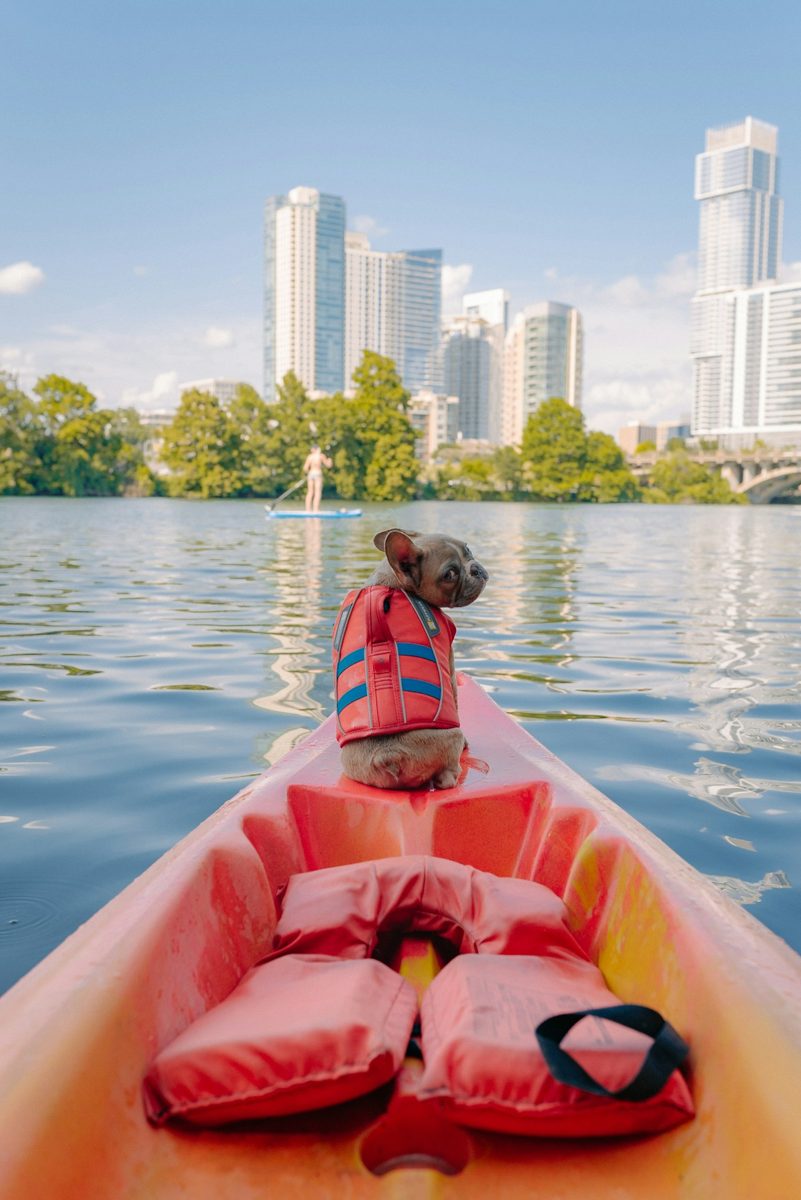
The ASPCA recommends flotation devices for pets on boats, and a well-fitted canine life jacket is worth considering for:
- Boating, kayaking and stand-up paddle boarding.
- Puppies and dogs that are still learning to swim.
- Flat-faced, short-legged, heavy-set, senior or arthritic dogs.
- Swimming in open water, rivers or surf, where currents and fatigue are more likely.
Look for bright colours, reflective strips, a sturdy grab handle on the back for lifting your dog out of the water, and a snug fit that does not slip forward over the head. Let your dog get used to wearing it on dry land first.
Chlorine, salt water pools and drinking
A quick swim in a well-maintained chlorinated or salt water pool is generally fine for healthy dogs, but a few habits help:
- Rinse after swimming. The ASPCA suggests rinsing your dog with fresh water to remove chlorine or salt from their coat, which can dry or irritate skin.
- Dry the ears. Water trapped in the ear canal can contribute to ear infections, especially in floppy-eared breeds. Our guide to ear infections in dogs and cats covers the signs to watch for.
- Offer fresh water. Dogs that gulp pool or sea water may vomit or get diarrhoea. Put a bowl of fresh water in the shade so they are less tempted.
- Store pool chemicals securely. Concentrated chlorine tablets and pool acids are far more dangerous than treated pool water. If your dog chews or swallows them, call your vet or the Animal Poisons Helpline on 1300 869 738.
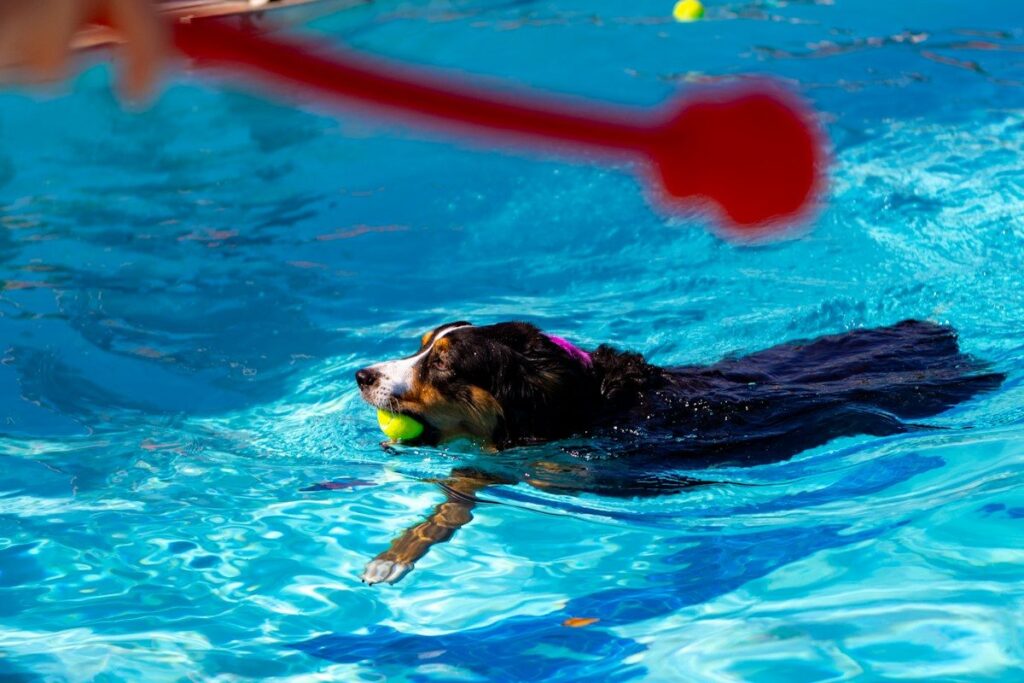
Dogs that repeatedly grab mouthfuls of water while chasing balls or hoses can, in rare cases, swallow enough to dilute the sodium in their blood. Signs can include vomiting, wobbliness, lethargy and bloating. Keep fetch sessions short and give regular breaks out of the water.
Beaches, surf and rips
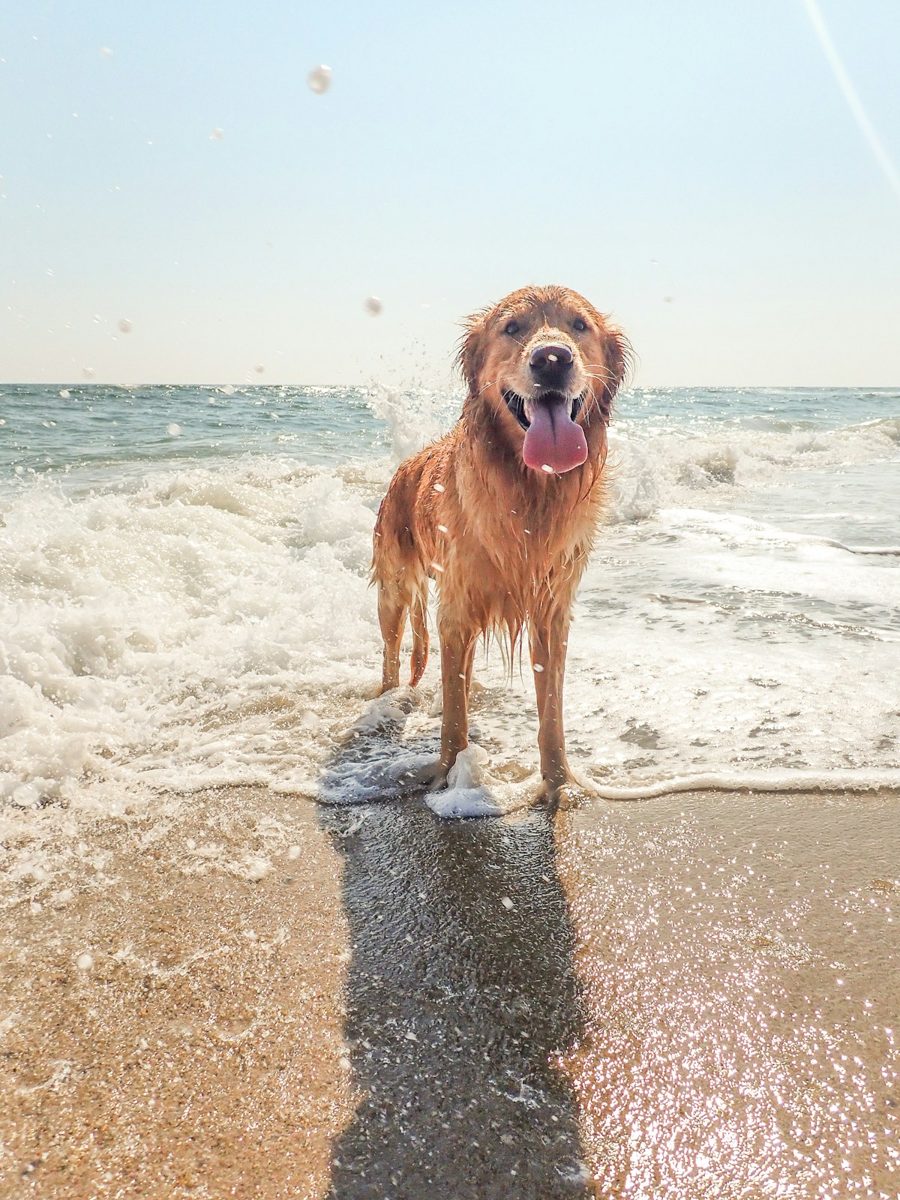
Australian beaches are a summer highlight for many dogs, but surf conditions can change quickly.
- Check local rules first. Many beaches have off-leash zones, seasonal restrictions and time limits, and fines for breaking them. Your local council website is the best source.
- Avoid swimming near rips. Rips often look like calmer, darker gaps between breaking waves. Keep your dog out of the water if conditions look rough.
- Never swim out after a dog in a rip. People drown trying to rescue pets. Call for help from lifeguards or emergency services, keep watching your dog, and call them from the shore. Many dogs make their own way back to the beach.
- Watch the sea water intake. According to the Merck Veterinary Manual, salt poisoning is much more likely when animals take in too much salt without enough fresh water. Bring plenty of fresh water and a bowl, and take breaks.
- Protect from sun and heat. Beaches offer little shade and hot sand can burn paws. Pale and thin-coated dogs can sunburn too. See our guide to sun safety for dogs and cats.
Rivers, lakes and dams: watch for blue-green algae
Warm, still fresh water can grow toxic blue-green algae (cyanobacteria) blooms in late spring and summer. The Merck Veterinary Manual describes algal poisoning as a severe and potentially deadly condition, with some toxins damaging the nervous system and others the liver. Signs can include muscle tremors, vomiting, diarrhoea, difficulty breathing and collapse, sometimes with a greenish stain around the mouth or legs.
Keep dogs out of water that looks green, scummy, discoloured or has a paint-like film, and obey any local algae warnings. If your dog has swum in or drunk suspicious water, rinse them thoroughly with clean water to stop them licking it off their coat, and contact your vet immediately. Read more in our article on blue-green algae and dogs.
Drowning and near-drowning first aid
If your dog has been pulled from the water unresponsive or struggling to breathe, act quickly and call for help on the way to the nearest vet.
- Get them out safely. Do not put yourself at risk. Use a pole, rope or flotation device if you can.
- Clear the airway. Open the mouth and remove any debris. For a small dog, hold them briefly by the hips with the head down to help water drain. For a larger dog, lay them on their side and raise the back end.
- Check for breathing and a heartbeat. Look for chest movement and feel for a heartbeat behind the left elbow.
- Start rescue breathing or CPR if needed. Close the mouth and breathe into the nose until you see the chest rise. If there is no heartbeat, give chest compressions over the widest part of the chest and keep going until you reach help.
- Keep them warm and get to a vet. Wrap your dog in a towel and head straight to a clinic.
When to call the vet
See a vet urgently if your dog has been rescued from water, even if they seem fine afterwards. Inhaled water can lead to breathing problems and lung infection hours later. Also seek help quickly if your dog has:
- Coughing, rapid or laboured breathing, or blue-tinged gums after swimming.
- Vomiting, diarrhoea, wobbliness or seizures after drinking sea water or pool water.
- Any exposure to water that might contain blue-green algae.
- Swallowed pool chemicals.
- Signs of overheating such as heavy panting, drooling or collapse. The RSPCA Knowledgebase and our heatstroke guide explain what to do.
Frequently asked questions
Can all dogs swim?
No. Many dogs can paddle, but flat-faced, short-legged, heavy-chested, very young and older dogs often struggle. Always supervise, and use a life jacket for dogs that are not strong swimmers.
Is chlorinated pool water bad for dogs?
Occasional swimming in a well-balanced pool is generally fine for healthy dogs. Rinse their coat afterwards, dry their ears, and discourage drinking pool water. Concentrated pool chemicals are the real danger, so store them out of reach.
Is it safe for dogs to drink sea water?
A few laps while swimming is usually only a mild problem, causing an upset tummy. Drinking a lot of sea water, especially without fresh water available, can lead to vomiting, diarrhoea and in severe cases salt poisoning. Always bring fresh water to the beach.
Should my dog wear a life jacket?
Yes, for boating, kayaking, open water and any dog that is not a confident swimmer. Choose one with a grab handle and a snug fit.
What should I do if my dog is caught in a rip?
Do not swim in after them. Alert lifeguards or call emergency services, keep your eyes on your dog, and call them to you from the shore. Many dogs swim free of the rip and return to land on their own.
Key takeaways
- Never leave dogs unsupervised around pools, beaches or open water.
- Teach your dog to find and use the pool steps, and consider a pet ramp.
- Keep pool gates latched and check fences for gaps a small dog could slip through.
- Use a life jacket for boating and for weak, young, older or flat-faced dogs.
- Rinse off chlorine and salt, dry ears, and provide plenty of fresh drinking water.
- Avoid green, scummy fresh water, and never enter a rip to rescue a dog.
- Any dog rescued from water should see a vet, even if they seem fine.
Sources
- ASPCA: Hot Weather Safety Tips
- RSPCA Australia: Caring for animals over summer
- Merck Veterinary Manual: Salt Poisoning
- Merck Veterinary Manual: Algal Poisoning
- RSPCA Australia Knowledgebase: How can I protect my dog from heatstroke?
This article is general information for pet owners and is not a substitute for advice from a registered veterinarian. If your dog has been in difficulty in the water or you are worried about their health, contact your vet or nearest emergency animal hospital straight away. For suspected poisoning, call the Animal Poisons Helpline on 1300 869 738.