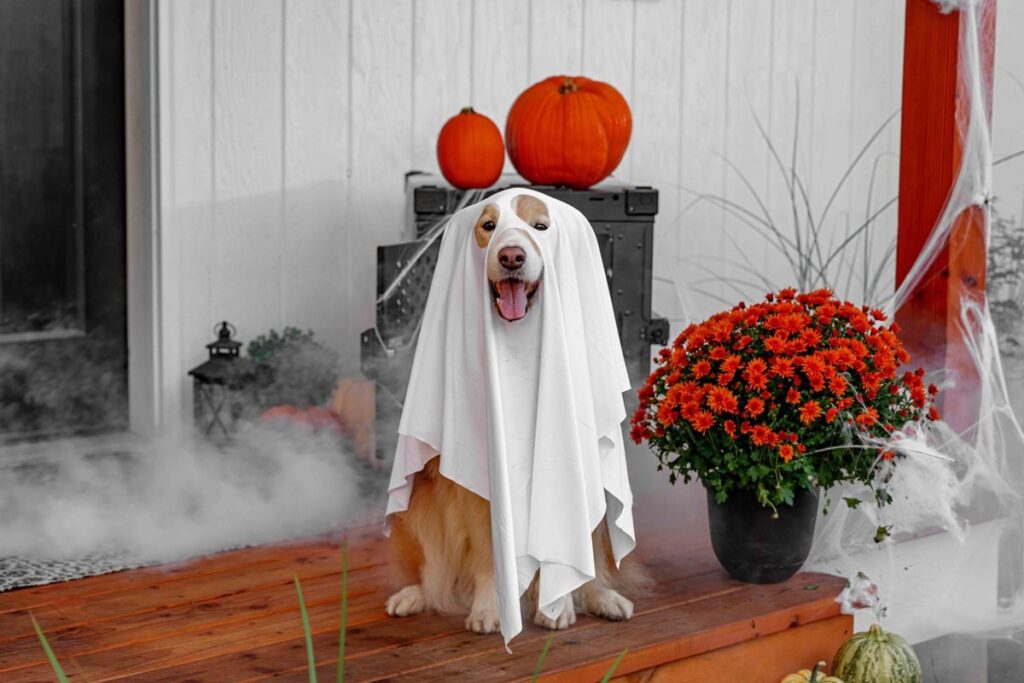
Halloween has become a big night in plenty of Australian suburbs, with trick-or-treaters, lolly bowls by the door and spooky decorations on the front verandah. For dogs and cats, though, it brings a cluster of risks in one evening: chocolate and sugar-free lollies, costumes, a doorbell that never stops, and decorations that look a lot like toys. The good news is that a little planning prevents almost all of them. Here is what to watch for on 31 October and how to keep your pets safe.
Why Halloween is risky for pets
Halloween combines several things that vets see problems from all year round, packed into a few hours. There is more chocolate and confectionery in the house than usual, often in bowls at nose height. Doors open over and over, which is a chance for an anxious dog or curious cat to slip out. People in masks and costumes can unsettle even confident dogs. And in Australia, 31 October falls in spring, when evenings are warm, windows and doors are open, and snakes and other seasonal hazards are also active.
The core rules are simple: keep treats away from pets, choose costumes carefully, keep pets away from the door during busy periods, take care with candles and wires, and make sure every pet has ID. The sections below go through each one.
Chocolate: how much is dangerous?
Chocolate contains theobromine and caffeine. RSPCA Australia explains that theobromine is toxic to dogs and other animals, that toxicity is dose-related, and that dark and cooking chocolate are the most dangerous because they contain much more theobromine than milk chocolate.
The Merck Veterinary Manual gives approximate theobromine levels of 2.3 mg per gram in milk chocolate, around 5.3 to 5.6 mg per gram in semisweet and dark chocolate, 15.5 mg per gram in unsweetened (baking) chocolate and 28.5 mg per gram in cocoa powder. White chocolate contains very little. In dogs, Merck reports mild signs such as vomiting and diarrhoea at about 20 mg/kg of theobromine, heart effects at 40 to 50 mg/kg, and seizures at 60 mg/kg or more.
Using those figures, here is roughly how much chocolate could cause problems:
| Dog’s weight | Milk chocolate: mild signs (heart effects) | Dark chocolate: mild signs (heart effects) | Cooking chocolate: mild signs (heart effects) |
|---|---|---|---|
| 5 kg | about 45 g (85 g) | about 18 g (36 g) | about 6 g (13 g) |
| 10 kg | about 85 g (175 g) | about 36 g (73 g) | about 13 g (26 g) |
| 20 kg | about 175 g (350 g) | about 73 g (145 g) | about 26 g (52 g) |
| 30 kg | about 260 g (520 g) | about 110 g (220 g) | about 39 g (77 g) |
Treat these as rough guides only. The theobromine content varies between brands, dogs vary in sensitivity, and a bag of fun-size bars adds up fast: a small dog that eats a handful of wrapped dark chocolates can easily reach a dangerous dose. The high fat and sugar in confectionery can also trigger vomiting, diarrhoea or pancreatitis, separate from theobromine.
Signs usually appear within 6 to 12 hours, according to Merck, and can include vomiting, diarrhoea, increased thirst, restlessness, hyperactivity, a racing heart, tremors and seizures. RSPCA Australia advises contacting your vet as soon as possible if your dog has eaten chocolate, even a small amount, because treatment works best when started early. Cats are also susceptible to theobromine, although they are much less likely to eat chocolate.
Xylitol in sugar-free lollies and gum
Xylitol is a sweetener found in many sugar-free gums, mints and lollies, and increasingly in baked goods, some peanut butters and supplements. On Australian ingredient lists it may appear as “xylitol” or as sweetener number 967.
In dogs, xylitol causes a surge of insulin and a rapid drop in blood sugar. The Merck Veterinary Manual reports that doses above about 100 mg/kg have been associated with low blood sugar, and doses above about 500 mg/kg with severe liver damage. Signs of low blood sugar can start within 30 minutes, or be delayed up to 12 to 18 hours, and include vomiting, weakness, wobbliness, collapse and seizures. Because products vary so widely in how much xylitol they contain, any ingestion of a sugar-free product by a dog should be treated as urgent. Merck notes that cats are not at risk from xylitol in the same way.
Other treat hazards in the lolly bowl
- Sultanas and raisins: often found in snack boxes and chocolate-coated treats, and linked to kidney damage in dogs. See our guide to grapes, sultanas and raisins.
- Wrappers and lolly sticks: dogs often swallow treats wrapper and all. Foil, cellophane and plastic sticks can cause vomiting or a gut obstruction.
- Macadamias and other nuts: common in chocolate assortments and best kept away from dogs.
- Party food: fatty sausage rolls, pizza and leftover barbecue meat can lead to pancreatitis, the same problem vets see after fatty festive meals.
Keep lolly bowls up high, ask children to store their haul in a closed cupboard, and check the floor after trick-or-treaters leave.
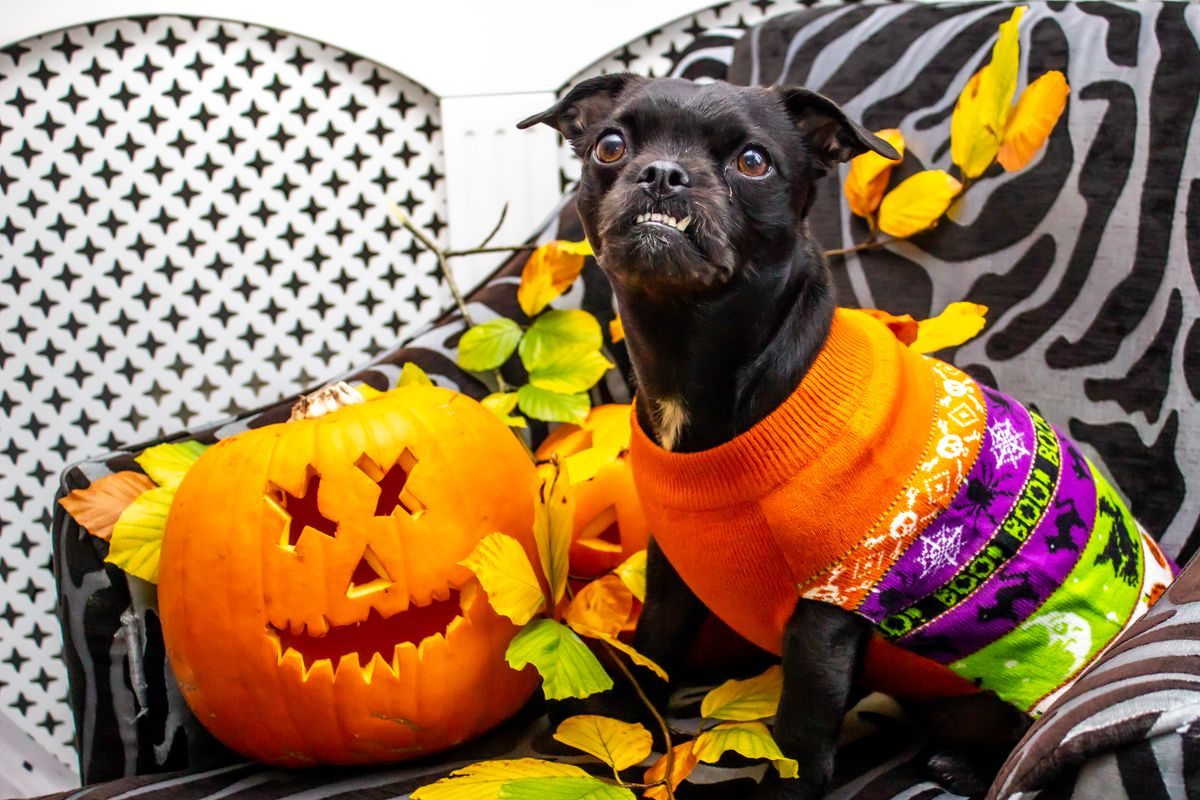
Costumes: fun for photos, not for hours
Some dogs tolerate a costume happily for a quick photo; many find them stressful. If you do dress up your pet:
- Choose something that doesn’t restrict movement, sight, hearing, breathing or the ability to bark or meow.
- Avoid elastic bands, small buttons, bells and dangling pieces that can be chewed off and swallowed.
- Try it on a few days beforehand, with treats, and take it off if your pet freezes, tucks its tail, flattens its ears, tries to scratch it off or hides.
- Never leave a costumed pet unsupervised, and don’t use costumes on hot evenings. Flat-faced breeds and thick-coated dogs overheat easily.
- A festive bandana or a decorated collar is often a kinder option than a full outfit.
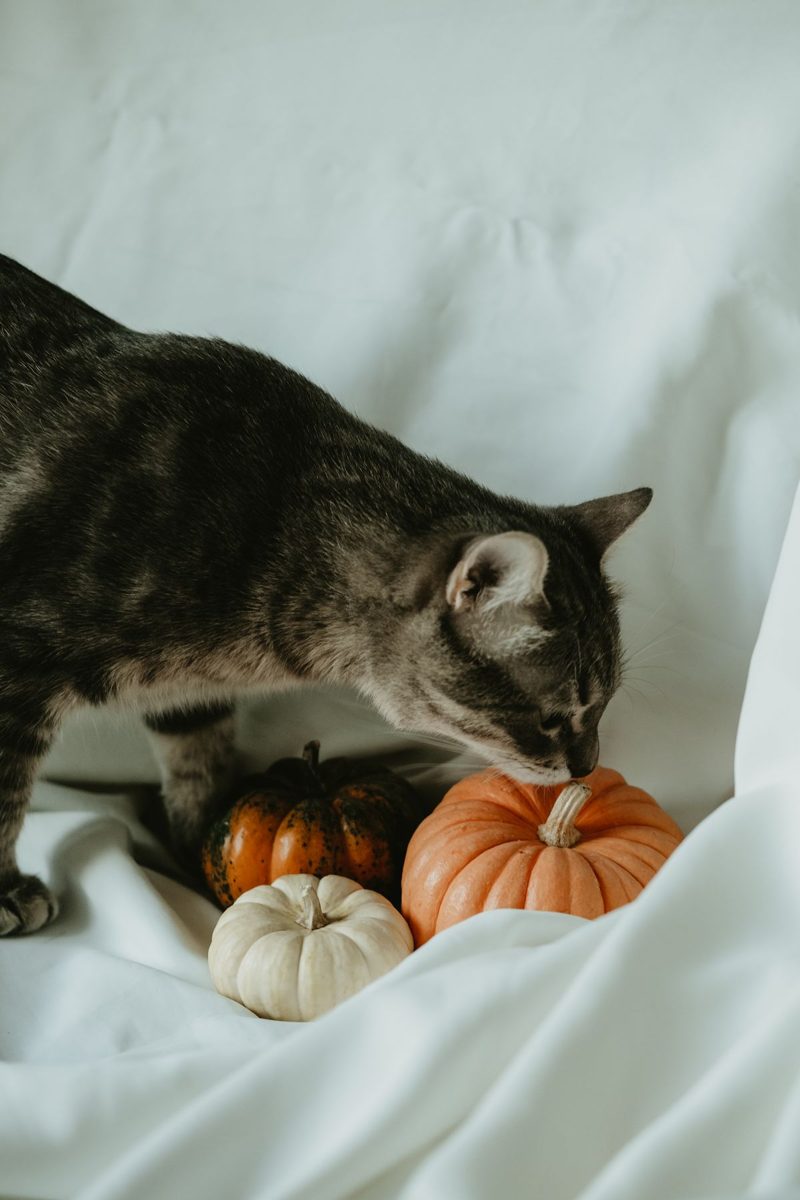
Cats rarely enjoy costumes. A Halloween photo of your cat beside a pumpkin is usually a better plan than a cape.
Trick-or-treaters and door stress
For many pets, the hardest part of Halloween is the doorbell. A steady stream of strangers, some in masks, can be frightening for dogs and cats, and every open door is an escape route.
- Set up a quiet room away from the front door with water, a bed, a long-lasting chew or food toy, and the radio or TV on for background noise. Settle your pet there before trick-or-treating starts, usually late afternoon.
- Exercise your dog earlier in the day, so they are more likely to rest in the evening.
- Use barriers. A baby gate, closed door or crate stops your dog rushing the door or slipping past visitors.
- Keep cats inside for the evening, ideally in a closed room. Busy streets, costumes and pranks are no place for a roaming cat.
- Consider a sign asking visitors not to knock or ring, and leave lollies in a bowl at the gate if your dog finds callers very stressful.
- Don’t take anxious dogs trick-or-treating. If your dog is reactive or nervous of strangers, our calm guide to reactive dog training has longer-term strategies, and your vet can advise on anxiety support.
Check that your pet’s microchip details are up to date and that dogs wear a collar with an ID tag. If the worst happens, our lost pet action plan walks you through the first 24 hours.
Decorations, candles and glow sticks
- Jack-o’-lanterns and candles: pets can knock over a lit pumpkin and start a fire or burn themselves. Use battery-operated LED tea lights instead.
- Batteries: small LED decorations often use button batteries. RSPCA Australia warns that button batteries are easily swallowed and can cause significant damage, especially if caught in the oesophagus.
- Fake cobwebs, string and tinsel: cats in particular love to play with them. RSPCA notes that swallowed string can cause painful and potentially deadly intestinal obstructions. Never pull on string you can see hanging from your pet’s mouth or bottom; go to the vet.
- Cords and cables: keep extension leads for light-up decorations out of reach, as chewing can cause burns or electric shock.
- Carved pumpkins: fresh pumpkin isn’t toxic, but a pumpkin that has sat outside for days can go mouldy, and mouldy food can make pets sick.
- Glow sticks and glow jewellery: cats love to chew them. The Pet Poison Helpline says chewing one can cause rapid nausea with frothy drooling, retching and vomiting, the liquid can irritate the eyes, and swallowed plastic can cause a blockage. If your pet bites into one, gently wipe the liquid from the mouth and fur and call your vet or a poisons helpline for advice.
When to call the vet
Call your vet, an emergency animal hospital or the Animal Poisons Helpline on 1300 869 738 (a 24/7 Australian service; consultation fees apply) straight away if your pet:
- has eaten any chocolate, especially dark or cooking chocolate or cocoa
- has eaten anything sugar-free that might contain xylitol
- has eaten sultanas, raisins or a large amount of fatty food
- has swallowed wrappers, sticks, string, batteries or decorations
- is vomiting, trembling, wobbly, unusually restless or collapsed
Don’t wait for signs to appear, and don’t try to make your pet vomit at home unless a vet tells you to. Have the packet or wrapper with you, and estimate how much was eaten and when.
Frequently asked questions
My dog ate one fun-size milk chocolate bar. Is that an emergency?
For a medium or large dog, a single small milk chocolate bar is unlikely to cause serious poisoning, but it can still cause tummy upset. For a small dog, or if the chocolate was dark, it is more of a concern. Because brands and dogs vary, the safest step is to call your vet with your dog’s weight, the type of chocolate and how much was eaten.
Is white chocolate safe for dogs?
White chocolate contains very little theobromine, so it is far less likely to cause chocolate poisoning. It is still high in fat and sugar and can cause vomiting, diarrhoea or pancreatitis, so it shouldn’t be given as a treat.
Are glow sticks poisonous to cats?
The liquid in glow sticks tastes very bitter and typically causes dramatic drooling, retching and vomiting, which can look alarming. Contact your vet or a poisons helpline for advice, keep the liquid away from your pet’s eyes, and watch for any signs of swallowed plastic causing a blockage.
Should I keep my cat indoors on Halloween?
Yes. Keeping cats indoors on Halloween night reduces the risk of injury, getting lost or being frightened by crowds and costumes. Many Australian councils already have cat containment or curfew rules, so it is a good habit year-round.
How can I tell if my dog is stressed by a costume?
Watch for a tucked tail, flattened ears, yawning, lip-licking, freezing, trying to scratch or bite at the costume, or hiding. If you see any of these, take it off. A pet who is genuinely comfortable will move, play and eat normally.
Key takeaways
- Dark chocolate, cooking chocolate and cocoa are the most dangerous; even small amounts can be harmful for small dogs.
- Sugar-free lollies and gum may contain xylitol (sweetener 967), which can cause dangerously low blood sugar and liver damage in dogs.
- Keep lolly bowls and children’s hauls out of reach, and watch for wrappers, sticks and sultanas.
- Give pets a quiet room away from the door, keep cats inside, and check ID tags and microchip details.
- Use LED lights instead of candles and keep glow sticks, batteries, cobwebs and cords away from pets.
- If your pet eats something risky, call your vet or the Animal Poisons Helpline on 1300 869 738 immediately.
Sources
- RSPCA Australia Knowledgebase: Why is chocolate toxic to dogs and other animals?
- Merck Veterinary Manual: Chocolate Toxicosis in Animals
- Merck Veterinary Manual: Xylitol Toxicosis in Dogs
- RSPCA Australia Knowledgebase: What are common household dangers for pets?
- Pet Poison Helpline: Glow Sticks and Glow Jewelry
This article is general information for pet owners and is not a substitute for advice from a registered veterinarian. If you think your pet has eaten something harmful, please contact your local vet or an emergency animal hospital straight away.