
Dog baiting is when someone deliberately leaves poisoned food where dogs will find it, usually meat, mince or a treat laced with rat bait, snail bait or another toxin. If you think your dog has eaten a suspected bait, treat it as an emergency: get to a vet straight away, even if your dog seems perfectly fine, and take any leftover bait or vomit with you. Some poisons act within minutes and others take days, so waiting to see what happens is the one thing you should not do.
This guide covers what Australian baiting reports have looked like, the poisons vets worry about, the signs to watch for, exactly what to do in the first hour, how to report it, and how to make your daily walks safer.
What dog baiting in Australian parks has looked like
Baiting is not common, but when it happens it tends to cluster in one park or along one walking route, and it gets the whole local dog community talking. A few reported examples show the pattern:
- Marks Park, Tamarama (Sydney). In February 2023, Pedestrian.TV reported that three dogs had died after suspected poisonings linked to the park. Waverley Council said it had not identified the bait, put up warning signs, and said any sample it obtained could be analysed and reported to police and the RSPCA.
- Rushcutters Bay Park (Sydney). In August 2019, Woollahra Council received two reports of suspected baiting, and a husky reportedly died after a walk in the park. The suspected bait was described as yellow and smelling of aniseed. Council rangers increased patrols but said they had not found physical evidence of baiting (Pedestrian.TV, August 2019).
- New Farm, Teneriffe and Newstead (Brisbane). Also in August 2019, dogs fell ill after suspected baits of mince-like meat were found in and around inner-city off-leash areas, and one dog died within a day. Brisbane City Council announced hidden cameras in off-leash dog parks and more patrols, working with police (Pedestrian.TV, August 2019).
- Regional Victoria. In July 2025, Bass Coast Shire Council put up warning signs at the Blue Gum Reserve off-leash area in Cowes on Phillip Island after a regular’s dog died from rat poison, and asked anyone with information to contact council or police (South Gippsland Sentinel-Times). In November 2022, RSPCA Victoria appealed for information about an alleged baiting along the Bendigo Creek Trail (Bendigo Advertiser).
Notice how often the word “suspected” appears. Many cases are never confirmed because no bait sample is recovered, which is one reason the steps below matter so much.
The poisons most often involved
Baits can contain almost anything, but vets usually think first about these four groups.
Anticoagulant rat and mouse bait
The Animal Poisons Helpline says anticoagulant rodenticides are among the most frequent rodenticide exposures it sees in Australia. These products stop blood from clotting, so signs are delayed for days. There is a vitamin K antidote, but only a vet can give it. We cover this poison in detail in our guide to rat bait poisoning in dogs and cats.
Snail and slug bait (metaldehyde)
Metaldehyde acts fast. VCA Animal Hospitals says signs usually appear within minutes to about three hours, and vets nickname it “shake and bake” because of the tremors and dangerously high body temperature it causes. There is no antidote, and some dogs that survive the first stage develop liver problems a few days later. Snail bait is also a common garden hazard, so see our spring garden poisons guide for safer alternatives at home.
Strychnine
The Merck Veterinary Manual describes signs starting within roughly 10 to 120 minutes: nervousness and stiffness, then rigid legs and severe seizures that can be set off by touch, noise or bright light. Without treatment the course can be very short, so speed is everything.
1080 (sodium fluoroacetate)
1080 is a legal pest-control poison used in parts of Australia for foxes, wild dogs, rabbits, feral pigs and feral cats. Dogs are very sensitive to it. The Animal Poisons Helpline notes that 1080 has no antidote and that dogs can be poisoned by baits, by eating poisoned carcasses, or by eating contaminated vomit.
Legal 1080 programs come with strict rules. In New South Wales, for example, the NSW EPA says neighbours within 1 kilometre must be notified at least 3 days before baits are laid, and warning signs must go up at entry points and stay up for at least 4 weeks after the last baits are used. Rules differ between states, so if you walk in farmland, state forests or national parks, read every sign at the gate and keep your dog on lead or out of baited areas completely.
Signs to watch for, by poison type
| Poison | When signs usually start | Typical signs |
|---|---|---|
| Anticoagulant rat bait | Several days, sometimes a week or more | Tiredness, weakness, pale gums, bleeding gums, blood in urine or stool, coughing or laboured breathing, collapse |
| Snail bait (metaldehyde) | Minutes to about 3 hours | Drooling, vomiting, panting, anxiety, wobbliness, muscle tremors, seizures, very high temperature |
| Strychnine | About 10 minutes to 2 hours | Nervousness, stiffness, rigid “sawhorse” stance, seizures triggered by noise, touch or light |
| 1080 | From about 30 minutes, sometimes many hours later | Frantic running or barking for no reason, vomiting, uncontrolled urination and defecation, seizures, breathing difficulty |
Many baits contain an unknown toxin, so do not try to diagnose from this table. Its main lesson is that “my dog seems fine” means very little in the first hours or days.
What to do in the first hour
- Stop your dog eating any more. Calmly take any remaining food from their mouth if you can do so safely. Do not put your hands in the mouth of a dog that is trembling or seizing.
- Collect the evidence. Use a poo bag turned inside out to pick up the bait, any packaging and any vomit. Note exactly where you found it. This helps your vet choose treatment and gives council or police something to test.
- Call your vet or nearest emergency vet and go. Tell them you suspect baiting so they can prepare. Head in straight away rather than waiting for symptoms.
- Get advice if you will be delayed. If you are far from a clinic, call the Animal Poisons Helpline on 1300 869 738. It runs 24/7, and consultation fees apply (from $75, according to its website).
- Do not make your dog vomit at home unless a vet tells you to. Merck notes that vomiting is only appropriate when the poison was eaten very recently and the dog has no signs yet. Salt, mustard or hydrogen peroxide can cause serious harm of their own, and a dog that is already twitching or seizing can inhale vomit. The Animal Poisons Helpline says inducing vomiting carries significant risks and is assessed case by case.
- Keep your dog quiet and cool on the way. This matters especially if you suspect snail bait or strychnine.
Emergency treatment can be expensive, which is worth knowing before it happens. Our guide to what vet visits cost in Australia gives a realistic picture.
How to report suspected baiting
Reporting helps protect other dogs and builds the evidence councils and police need.
- Your local council. Rangers can inspect the area, put up warning signs, increase patrols and, if they get a sample, arrange testing.
- Police. Deliberate baiting is an animal cruelty offence. Call your local station, or Crime Stoppers on 1800 333 000 if you want to stay anonymous.
- Your state RSPCA. RSPCA Victoria, for example, takes reports on 9224 2222. When it appealed for information about the Bendigo case, it noted that baiting resulting in an animal’s death attracted penalties of up to 250 penalty units (then $46,230) or 12 months’ imprisonment.
- Local dog groups. Share facts, location and time, and whether a vet confirmed poisoning. Avoid speculation about suspects, which can hamper investigations.
How to protect your dog on walks
Use a lead in hotspots
When a park has a current baiting alert, keep your dog on lead there, or walk somewhere else until council gives the all clear. A lead lets you see what your dog sniffs and stop them before they swallow it.
Teach “leave it” and “drop it”
A solid “leave it” stops your dog going for something, and “drop it” gets it out of their mouth. Practise at home with low-value food under your hand, reward generously for looking away, and build up slowly to the park. A reliable recall helps too, and our recall training guide walks through the steps.
Consider a basket muzzle for scavengers
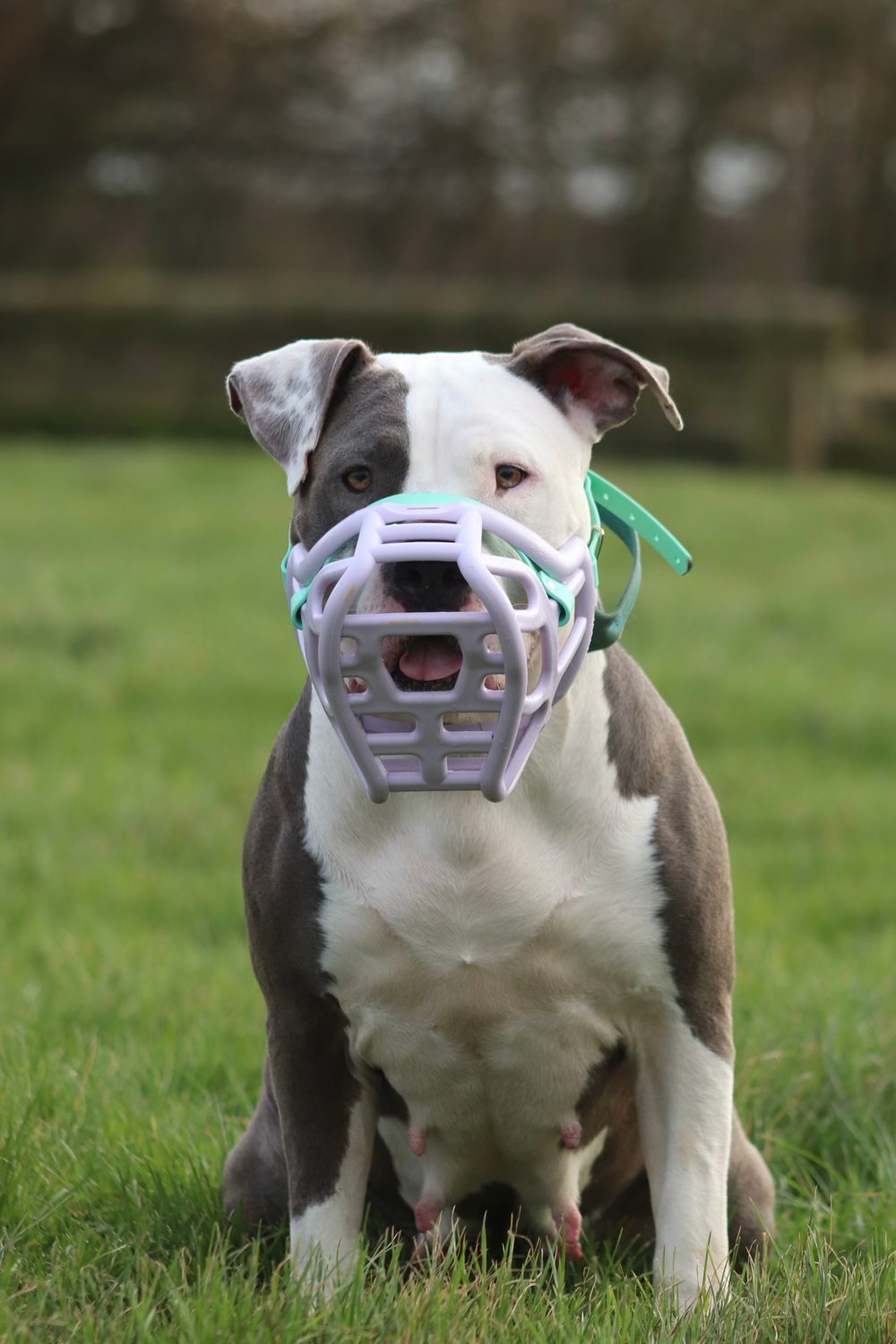
For dogs that hoover up everything, a well-fitted basket muzzle is a practical tool. The Animal Poisons Helpline notes that a muzzle can help prevent dogs eating baits and contaminated carcasses. Choose a basket style that lets your dog pant and drink, and train it with treats so it becomes a cue for a walk, not a punishment.
Check before you go
- Look for council signs at park entrances and check your council’s website or social media.
- Follow local dog-walking groups for alerts, but confirm with council where you can.
- Scan the edges of paths, under trees and near bins, where baits are often dropped.
- In rural areas, read every gate sign for 1080 or other pest baiting.
When to call the vet
Call immediately if you saw your dog eat something suspicious, if there is a baiting alert in a park you visited, or if your dog shows tremors, drooling, vomiting, wobbliness, stiffness, frantic behaviour, pale gums or unusual bleeding. Do not wait until the next day.
Frequently asked questions
How quickly do signs of dog baiting show?
It depends on the poison. Snail bait and strychnine can cause signs within minutes to a couple of hours, while anticoagulant rat bait can take several days or longer. That is why vets want to see dogs straight away rather than after signs appear.
Should I make my dog vomit if I think they ate a bait?
Not unless a vet or the Animal Poisons Helpline tells you to. Home remedies can cause harm, and vomiting is dangerous for a dog already showing nervous signs. Vets can induce vomiting safely when it is appropriate.
Is the Animal Poisons Helpline free?
No. It is a 24/7 service on 1300 869 738, but consultation fees apply, starting from $75 according to its website. In a clear emergency, go straight to your vet or emergency clinic.
Can my dog be poisoned by 1080 in a park?
1080 is a legal pest bait used mainly on rural properties and in some public land programs, with notification and signage rules. Dogs can also be poisoned by eating carcasses of animals that ate baits. Always read signs and keep dogs out of baited areas.
Key takeaways
- Suspected baiting is an emergency. Go to a vet straight away, even if your dog seems fine.
- Collect the bait or vomit safely in a bag and note where you found it.
- Do not induce vomiting at home unless a vet or the Animal Poisons Helpline advises it.
- The Animal Poisons Helpline (1300 869 738) runs 24/7; consultation fees apply.
- Report suspected baiting to council, police and your state RSPCA.
- Use a lead in alert areas, train “leave it” and “drop it”, and consider a basket muzzle for scavengers.
Sources
- Animal Poisons Helpline: 24/7 Helpline for Australian Pet Owners
- Animal Poisons Helpline: 1080 and Your Dog
- VCA Animal Hospitals: Metaldehyde Toxicity (Slug Bait Poisoning)
- Merck Veterinary Manual: Strychnine Poisoning in Animals
- NSW EPA: Guidance for using 1080
- Pedestrian.TV: Sydney Dog Owners Put On High Alert After 3 Suspected Dog Poisonings At The Same Park
- Pedestrian.TV: A Dog Has Tragically Died After Suspected Baiting In Sydney’s Rushcutters Bay Park
- Pedestrian.TV: Brisbane City Council To Install Hidden Cameras In Off-Leash Parks After Dogs Poisoned
- South Gippsland Sentinel-Times: Poison bait warning at Blue Gum Reserve in Cowes
- Bendigo Advertiser: RSPCA seeking information on illegal dog baiting
This article is general information for pet owners and is not a substitute for advice from a registered veterinarian. If you think your dog has eaten a bait or poison, contact your vet or an emergency clinic immediately.