
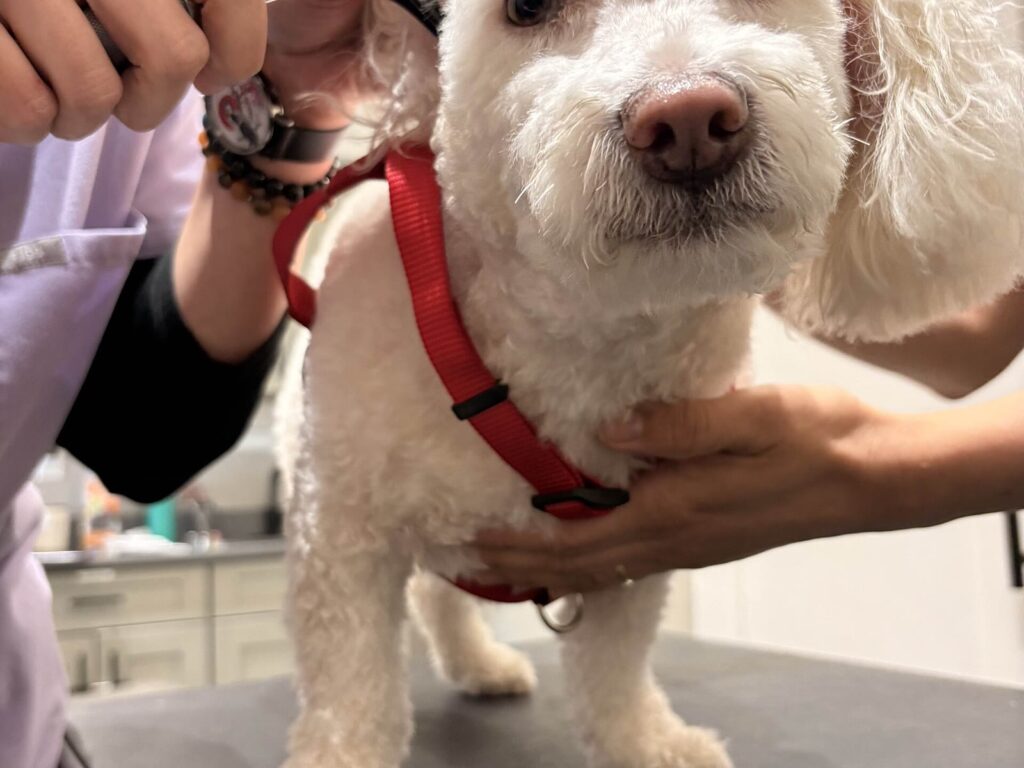
Head shaking, scratching at one ear, a yeasty smell when your dog leans in for a cuddle, or a cat that suddenly will not let you touch its head. Ear infections are one of the most common reasons Australian dogs and cats end up at the vet, and they are easy to dismiss until they become painful and stubborn. The good news is that most clear up well when they are caught early. This guide explains what causes ear infections, the signs in dogs and cats, why spring and wet weather bring a spike, what your vet will do, and how to stop them coming back.
What an ear infection actually is
Most ear infections in pets are otitis externa, which means inflammation of the outer ear canal. Dog and cat ear canals are long and L-shaped, warm and a little humid by nature, which makes it easy for debris and moisture to sit at the bend.
The infection itself is usually an overgrowth of yeast (most often Malassezia) or bacteria such as Staphylococcus, which live in small numbers in a healthy ear. Something has to tip the balance first. The MSD Veterinary Manual lists the main triggers as allergies, parasites such as ear mites, foreign bodies such as grass seeds, and ear shape, with yeast and bacteria then adding to the problem. As the manual puts it, unless every cause is treated, the condition often returns.
When infection spreads deeper, past the eardrum, it becomes otitis media (middle ear) or otitis interna (inner ear). These are more serious and can affect balance and hearing.
What causes ear infections in dogs
Allergies
Allergy is the big hidden driver. VCA Animal Hospitals reports that allergies are involved in as many as 43% of canine ear infections, especially chronic or recurrent ones, and that ear infections occur in 65% to 80% of dogs with food allergies. Allergic skin becomes inflamed and produces more wax and oil, and that thickened lining is an easy target for yeast and bacteria. This is why a dog can have “just an ear infection” every spring for years before anyone connects it to pollen or grass allergy.
Ear shape and coat
Breeds with long, floppy or hairy ears trap more warmth and moisture. Cocker spaniels, basset hounds, retrievers, poodles and schnauzers are well known for it, as are Australia’s hugely popular oodles, such as cavoodles and spoodles.
Moisture
Water from swimming, baths, rain or dewy grass that stays in the canal creates the warm, damp conditions yeast and bacteria love.
Grass seeds and foreign bodies
Seeds from grasses such as barley grass can work their way into the ear canal, usually causing sudden, intense head shaking. Our guide to grass seeds in dogs covers where else they hide.
Other conditions
Hormonal problems such as hypothyroidism, and over-cleaning or irritating home remedies, can also set dogs up for repeat infections.
What causes ear infections in cats
Cats get ear infections less often than dogs, and the causes are a little different:
- Ear mites (Otodectes cynotis) are a common cause, especially in kittens, young cats and outdoor cats. They cause intense itching and a dark, crumbly discharge that looks like coffee grounds, and they spread easily between cats and dogs in the same house.
- Allergies to pollens, food or fleas can inflame the ears along with the skin. See our guide to itchy skin allergies in cats.
- Inflammatory polyps, non-cancerous growths, are a well-recognised cause of middle ear disease in cats and can extend into the ear canal.
- Grass seeds and other foreign bodies in outdoor cats.
The MSD Veterinary Manual notes that healthy cats generally do not need routine ear cleaning unless a vet advises it, and a persistent problem in one ear may need further tests to rule out a growth.

Signs to watch for
In dogs
- Head shaking or tilting, often after walks, swims or baths
- Scratching or pawing at one or both ears, or rubbing the face along carpet and furniture
- A yeasty, “corn chip” or generally unpleasant smell
- Brown, yellow or black discharge or wax build-up
- Redness, swelling or scaly skin inside the ear flap
- Flinching, whimpering or pulling away when you touch the ear
In cats
- Scratching around the base of the ear, sometimes leaving small scratches or hair loss
- Head shaking, usually less dramatic than in dogs
- Dark, crumbly, coffee-ground discharge
- Holding one ear flat or drooping
- Reluctance to be touched around the head
To check at home, gently lift the ear flap and look and sniff for redness, odour or discharge. Do not push anything into the canal itself.
What the signs usually point to
| What you notice | Common cause | Typical species |
|---|---|---|
| Brown, waxy discharge, yeasty smell | Yeast overgrowth (Malassezia) | Mainly dogs, some cats |
| Yellow or green discharge, strong smell, pain | Bacterial infection | Dogs and cats |
| Dark, crumbly, coffee-ground discharge | Ear mites | Kittens and cats, sometimes puppies |
| Sudden, intense head shaking after time outdoors | Grass seed or other foreign body | Mainly dogs |
| Infections that return each year, with itchy paws or belly | Underlying allergy | Mainly dogs |
| Head tilt, loss of balance, circling | Middle or inner ear involvement | Dogs and cats |
This is a rough guide only. Different causes can look alike, and only a look down the ear canal can tell them apart.
Seasonal triggers: why spring and wet weather bring a spike
Ear infections happen all year, but vets see predictable bumps.
Spring. Grasses, weeds and trees release pollen through spring and into early summer across much of Australia, which sets off environmental allergies (atopic dermatitis) in sensitive dogs and cats. Pets with this kind of allergy often get itchy paws, bellies and ears at the same time each year. Food allergies, by contrast, tend to cause problems year-round. Spring also brings more swimming, more time in long grass, and grass seeds that lodge in ears from late spring onwards. For the bigger allergy picture, see our guide to spring allergies in dogs.
Warm, humid and wet weather. Moisture that gets into the ear from swims, baths, rain or dew does not dry as quickly in warm, still, humid air, giving yeast and bacteria the conditions they like.
Winter. Ear infections are easy to miss in the cooler months. Damp walks leave ears wet, dogs spend more time indoors, and the odd head shake is easy to put down to the weather.
If your pet has an ear infection at the same time every year, mention the pattern to your vet. It is a strong clue that allergy, not bad luck, is behind it.
What your vet will do
Your vet will look down the ear with an otoscope to check the canal and the eardrum, and usually take a swab to examine under the microscope for yeast, bacteria or mites. That tells them which medication to use. Checking the eardrum matters, because some ear medications should not be used if it is damaged. Cats, and dogs with very sore or blocked ears, may need sedation for a proper look and clean.
Treatment often involves:
- A thorough clean of the canal, because wax and discharge can stop drops from working
- Medicated drops, often combining an antibiotic, an antifungal and an anti-inflammatory
- Antiparasitic treatment for ear mites, usually for every cat and dog in the house
- Oral medication, a culture test, or imaging for severe, recurring or deep infections
- A plan for the underlying cause, such as allergy management
Use the full course, even once the ear looks better, and go back for any recheck your vet books. Straightforward cases caught early usually settle within a couple of weeks. Long-standing cases can take months, and some pets need ongoing management.
Costs vary by clinic and by how far the infection has progressed. A simple early infection usually means one consult and a bottle of drops, while chronic cases needing sedation, cultures or specialist care cost many times more. Our guide to what vet visits cost in Australia has typical ranges.
What not to do at home
- Do not use cotton buds in the canal. They push wax and debris deeper and can damage the eardrum.
- Do not use vinegar, hydrogen peroxide or other home remedies. The MSD Veterinary Manual warns they can irritate an inflamed canal and make discharge worse.
- Do not use leftover drops from a previous infection or another pet, or any human products. If the eardrum is damaged, some products can cause real harm.
- Do not over-clean. Cleaning every day irritates the canal.
Preventing ear infections
- Dry ears after water. Towel the ear flap and outer ear after swims and baths. For dogs prone to infection, your vet may recommend an ear-drying cleanser after water exposure.
- Clean only as advised. For dogs with floppy or hairy ears, a vet-recommended cleaner used on the schedule your vet suggests can cut down wax. Most cats do not need routine cleaning.
- Check after walks. Run your hands over the ears, face and feet after time in long grass, especially from late spring.
- Keep up allergy treatment. If your pet has a known allergy, stick with the plan your vet prescribed through the high-risk season, rather than waiting for a flare.
- Keep parasite control current. Ask your vet whether your pet’s flea product also covers ear mites.
- Groom hairy ears. Regular grooming helps oodles and other hairy-eared breeds. See our oodle grooming guide.
When to call the vet
Ear problems rarely clear on their own. Book an appointment if you notice:
- Head shaking or scratching that does not settle within a day or two
- Any smell, discharge, redness or swelling in the ear
- Coffee-ground discharge in a kitten or young cat
- Signs in a pet that has had ear infections before, especially at the same time of year
Treat it as urgent and call the clinic the same day if your pet has a head tilt, loss of balance, circling, sudden deafness, a swollen or hot ear, or is in obvious pain and will not let you touch its head.
Frequently asked questions
Can I treat my pet’s ear infection at home?
Not reliably. Yeast, bacteria, mites and grass seeds all need different treatment, and a vet needs to check the eardrum before drops go in. Home remedies often delay proper care and can make the ear worse.
Why does my dog get an ear infection every spring?
A seasonal pattern usually points to an environmental allergy, such as to pollens or grasses. Treating each infection on its own will not stop the cycle. Ask your vet about managing the allergy itself.
Are ear infections contagious between pets?
Yeast and bacterial ear infections are not considered contagious. Ear mites are, and spread easily between cats and dogs, which is why vets usually treat every pet in the household.
Can an ear infection make my pet deaf?
A one-off infection treated promptly usually clears with no lasting harm. Repeated or untreated infections can cause permanent thickening and narrowing of the ear canal and hearing loss.
Do cats need their ears cleaned?
Most healthy cats keep their own ears clean and do not need routine cleaning. If your cat’s ears look dirty, have a vet check for mites or infection first.
Key takeaways
- Head shaking, scratching, odour, discharge and redness are the classic signs of an ear infection.
- In dogs, allergies and floppy or hairy ears are the biggest risk factors. In cats, ear mites are a common cause.
- Spring pollens, grass seeds and swimming bring a seasonal spike, and winter infections are easy to miss.
- Skip cotton buds, home remedies and leftover drops. A vet needs to identify the cause and check the eardrum.
- Head tilt, loss of balance or severe pain needs same-day attention.
- Infections that keep coming back need the underlying cause treated, not just the ear.
This article is general information for Australian dog and cat owners and is not a substitute for advice from a registered veterinarian. If your pet’s ears are bothering them, contact your vet.