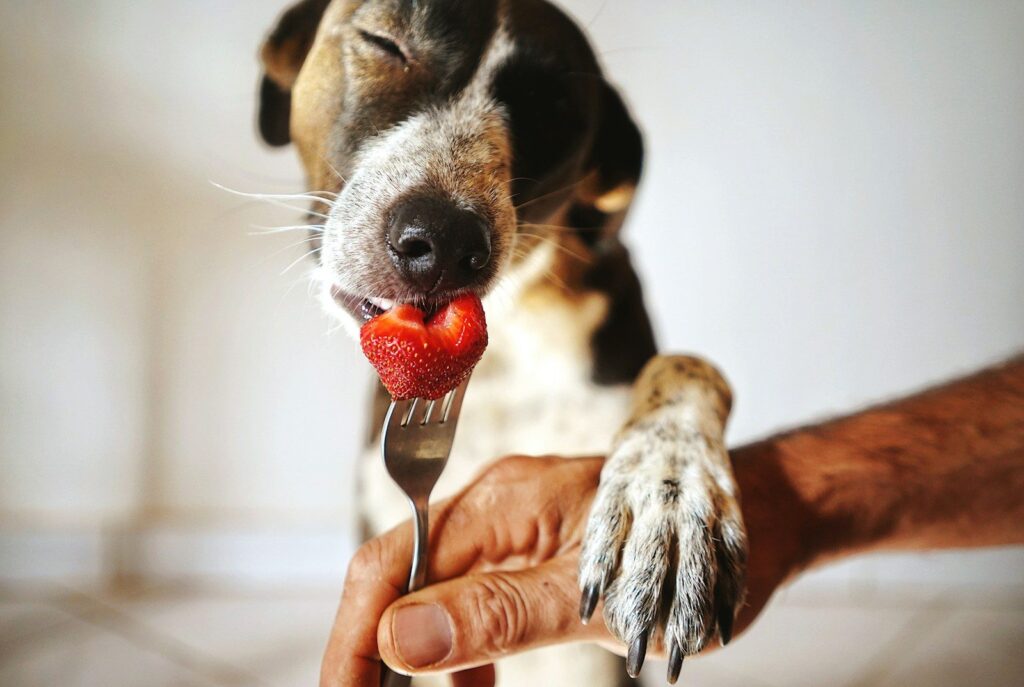
Yes, dogs can eat strawberries. Fresh, plain strawberries are not toxic to dogs, and most dogs can enjoy a few as an occasional treat. The catch is in the detail: strawberries contain natural sugar, so portions should stay small, and many strawberry-flavoured products made for people (sugar-free yoghurt, jam, lollies and desserts) can contain xylitol, a sweetener that is dangerous for dogs. Here is how to share strawberries safely, how much to give a dog of your size, and which products to keep well out of reach.
With strawberry season starting across much of Australia in spring and early summer, punnets are cheap and plentiful, and plenty of dogs will sit politely by the fruit bowl. A little planning means you can say yes without worrying.
Are strawberries good for dogs?
Strawberries are not a superfood your dog needs. A complete and balanced dog food already supplies everything a healthy dog requires. That said, strawberries are a reasonable low-calorie treat when you compare them with many commercial snacks or table scraps.
According to the American Kennel Club, strawberries provide antioxidants, fibre and vitamin C. They are also mostly water, which makes a cold or frozen strawberry a refreshing snack on a warm day. Key points:
- Low in calories: a single medium strawberry contains only a few calories, far less than most biscuits or chews.
- Fibre: a small amount of fibre is fine for most dogs, though too much fruit at once can loosen stools.
- Vitamin C and antioxidants: dogs make their own vitamin C, so this is a minor bonus rather than a reason to feed them.
- Training value: many dogs find the smell and taste exciting, so small pieces can work as a high-value reward.
Think of strawberries as a healthier swap for fattier treats, not as something to add on top of an already generous treat allowance.
The sugar question
Strawberries contain natural sugar (fructose and glucose). In the small amounts a dog would eat as a treat, this is not a problem for most healthy dogs. It does matter in a few situations:
- Dogs with diabetes: any sugary food can affect blood glucose control. Check with your vet before offering fruit.
- Overweight dogs: every treat counts toward daily calories. If your dog is on a weight-loss plan, see our guide to safe weight loss for pets and factor strawberries into the plan.
- Dogs with sensitive stomachs or a history of pancreatitis: introduce any new food slowly and talk to your vet first.
A common guideline is that treats of all kinds should make up no more than about 10% of your dog’s daily calories, with the rest coming from their complete diet. The AKC uses this rule for strawberries too. RSPCA Australia similarly suggests that treats be small, safe morsels offered occasionally rather than a large part of the diet.
How many strawberries can a dog eat? Safe portions by size
There is no official dose for fruit, so these are conservative, practical starting points based on the 10% treat rule. They assume a healthy adult dog that is not getting lots of other treats on the same day. Start at the lower end the first time.
| Dog size (approx. weight) | Example breeds | Suggested portion per day (occasional treat) |
|---|---|---|
| Toy (under 5 kg) | Chihuahua, Maltese, toy poodle | Half to 1 small strawberry, chopped finely |
| Small (5 to 10 kg) | Jack Russell, Cavoodle, Shih Tzu | 1 to 2 strawberries, chopped |
| Medium (10 to 25 kg) | Border collie, Staffy, Kelpie | 2 to 3 strawberries, halved or quartered |
| Large (25 to 40 kg) | Labrador, Golden retriever, German shepherd | 3 to 4 strawberries, halved |
| Giant (over 40 kg) | Great Dane, Mastiff, Newfoundland | 4 to 5 strawberries, halved |
“Occasional” means a few times a week rather than a daily bowl. If your dog has never had strawberries, give one small piece first and wait a day to see how their stomach handles it.
How to serve strawberries to your dog
- Choose fresh, ripe fruit. Skip any that are mouldy or mushy. Mouldy food can upset a dog’s stomach, and some moulds produce toxins.
- Wash them well. Rinse under running water to remove dirt and any residue.
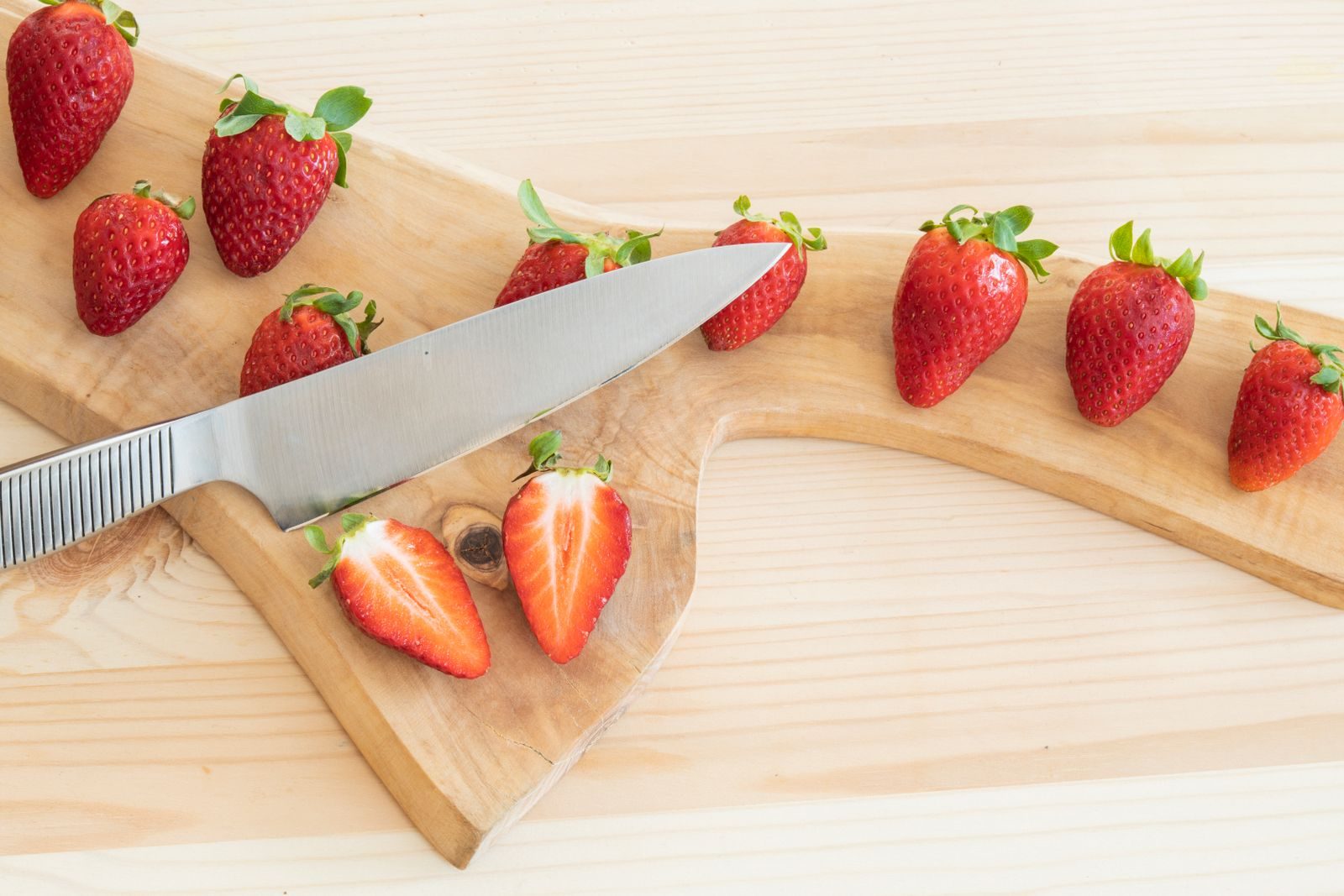
- Remove the green tops. The leaves and stems are not toxic, but they are tough and can cause mild stomach upset.
- Cut to size. Whole strawberries can be a choking hazard for small dogs and for dogs that gulp. Slice or quarter them. For toy breeds and puppies, chop finely or mash.
- Serve plain. No sugar, cream, chocolate, ice cream or syrup.
For a summer treat, freeze small strawberry pieces or blend a strawberry with a little water and freeze it in an ice cube tray. Our guide to watermelon for dogs has more ideas for cool fruit snacks, and frozen treats pair well with keeping your dog cool once the hot weather arrives.

Strawberry products to avoid
Fresh strawberries are fine. Many strawberry-flavoured foods are not. The biggest danger is xylitol (also called birch sugar or sugar alcohol E967), a sweetener used in sugar-free and “no added sugar” products.
VCA Animal Hospitals explains that xylitol causes a rapid release of insulin in dogs, which can lead to a dangerous drop in blood sugar within 30 minutes to 2 hours of eating it. Larger doses can cause liver failure. The MSD Veterinary Manual also lists xylitol as a serious food hazard for dogs. Xylitol is the same reason we warn about some brands in our guide to peanut butter for dogs.
Products to keep away from your dog:
- Sugar-free or “lite” strawberry yoghurt: may contain xylitol. Even regular flavoured yoghurt is high in sugar.
- Strawberry jam, conserve and fruit spreads: very high in sugar, and “diet” or reduced-sugar versions may contain xylitol.
- Strawberry lollies, gum and mints: sugar-free gum and mints are among the most common sources of xylitol poisoning.
- Canned strawberries or strawberries in syrup: loaded with sugar.
- Strawberry ice cream, milkshakes and desserts: high in fat and sugar, and some contain chocolate or artificial sweeteners. Chocolate-dipped strawberries are a double no.
- Dried strawberries and fruit leathers: sugar is concentrated, and some are sweetened or mixed with raisins or sultanas, which are toxic to dogs. See our guide to grapes, sultanas and raisins.
Always read the ingredients list. If you see xylitol, birch sugar or “sweetener (967)”, keep it away from your dog.
Can dogs be allergic to strawberries?
Food allergies to strawberries are uncommon in dogs, but any dog can react to a new food. Stomach upset from eating too much is far more likely than a true allergy. Watch for these signs after the first few servings:
- Vomiting or diarrhoea
- Itching, especially around the face, ears or paws
- Red skin, hives or a rash
- Swelling of the face, lips or eyelids
- Excessive licking or scratching
Mild tummy upset usually settles within a day if you stop the fruit. Swelling of the face or any difficulty breathing is an emergency.
When to call the vet
Contact your vet or an emergency clinic straight away if:
- Your dog has eaten any strawberry product that contains xylitol, even if they seem fine. Signs can appear quickly or be delayed.
- Your dog shows weakness, wobbliness, collapse, trembling or seizures after eating a sweet product.
- There is facial swelling, hives or breathing difficulty.
- Vomiting or diarrhoea continues for more than 24 hours, or your dog seems flat and unwell.
- A small dog has swallowed a whole strawberry or large piece and is gagging or struggling to breathe.
For poisoning advice, the Animal Poisons Helpline is available on 1300 869 738 around the clock. Consultation fees apply (the Animal Poisons Helpline lists consultations from $75). If your dog has eaten xylitol, go to your vet rather than waiting.
Frequently asked questions
Can puppies eat strawberries?
Yes, in tiny amounts once they are eating solid food well. Puppies have sensitive stomachs and need a growth diet, so treats should be minimal. Mash or finely chop a small piece and offer it occasionally. Our guide on how much to feed a puppy explains how treats fit into a growing dog’s diet.
Can dogs eat frozen strawberries?
Yes. Plain frozen strawberries make a good summer treat. Cut them into small pieces or let them soften slightly, as hard whole frozen berries can be a choking risk and tough on teeth. Avoid frozen berry mixes with added sugar.
Are strawberry leaves and stems poisonous to dogs?
No, they are not considered toxic, but they can cause mild stomach upset. Remove the green tops before serving. If your dog raids a strawberry plant in the garden, watch for vomiting and check whether any snail bait or fertiliser has been used nearby.
My dog ate a whole punnet of strawberries. What should I do?
For most medium and large dogs, a punnet of plain strawberries will at worst cause an upset stomach or loose stools. Offer water and watch for vomiting, diarrhoea or lethargy. Call your vet if your dog is small, diabetic, unwell or if symptoms last more than a day. If the strawberries were coated in chocolate or part of a dessert, call your vet now.
Can dogs eat strawberry yoghurt?
It is best avoided. Flavoured yoghurts are high in sugar, and sugar-free versions may contain xylitol. If you want to share yoghurt, use a small spoonful of plain, unsweetened yoghurt with a few fresh strawberry pieces stirred through, provided your dog tolerates dairy.
Key takeaways
- Fresh, plain strawberries are safe for most dogs as an occasional treat.
- Keep portions small: roughly half a strawberry for toy breeds up to four or five for giant breeds, a few times a week.
- Wash, remove the tops and cut strawberries into bite-sized pieces to prevent choking.
- Avoid strawberry yoghurt, jam, lollies, syrup, ice cream and desserts, especially anything containing xylitol.
- Diabetic or overweight dogs should only have fruit with their vet’s approval.
- If your dog eats a xylitol-containing product, contact your vet immediately.
Sources
- American Kennel Club: Can Dogs Eat Strawberries?
- VCA Animal Hospitals: Xylitol Toxicity in Dogs
- MSD Veterinary Manual: Xylitol Toxicosis in Dogs
- RSPCA Australia Knowledgebase: What should I know before feeding dog treats?
- Animal Poisons Helpline: Australian pet poisons advice
This article is general information for pet owners and is not a substitute for advice from a registered veterinarian. If your dog has a health condition, is on a special diet or has eaten something that may be toxic, contact your vet for advice specific to your pet.