
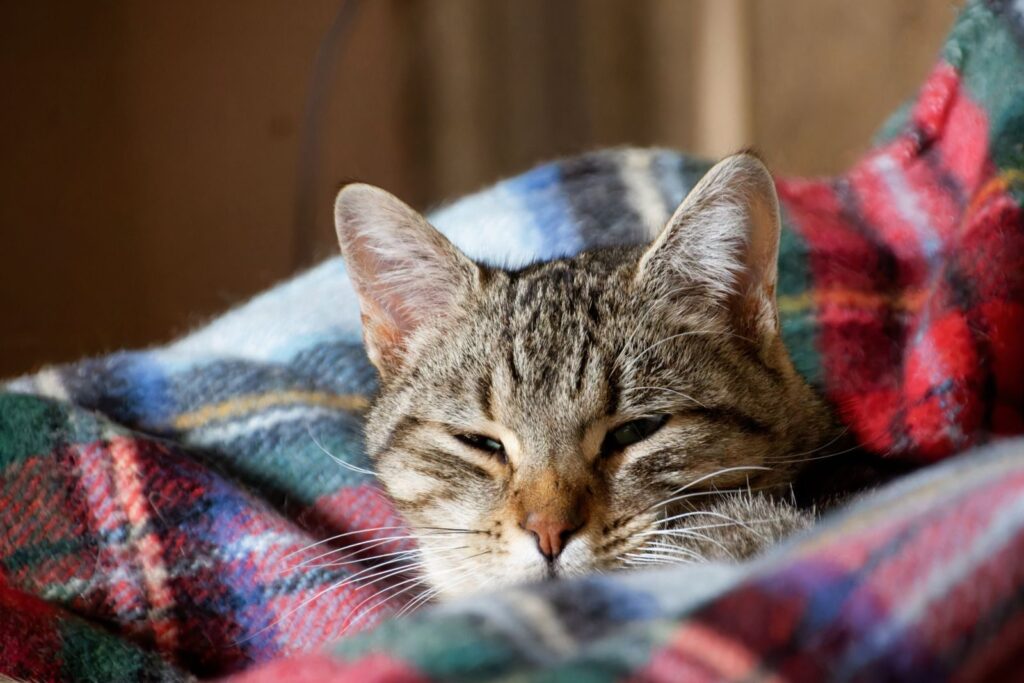
Cats throw up for many reasons, and not all of them are serious. The most common causes are hairballs, eating too fast, a sudden change of food or a food intolerance. But vomiting can also be the first sign of illness such as kidney disease, hyperthyroidism or poisoning, and a cat that vomits often is not “just being a cat”. As a rule, a single vomit in a cat that is otherwise bright, eating and acting normally can be watched at home. Repeated vomiting, vomiting with other symptoms, or any chance your cat has touched a lily or other toxin needs a vet.
This guide covers the usual causes, how to tell vomiting from regurgitation, what you can safely do at home, and the red flags that mean it is time to call your vet.
Vomiting vs regurgitation: what is the difference?
It helps to know which one you are seeing, because the causes are different and your vet will ask.
| Vomiting | Regurgitation | |
|---|---|---|
| Effort | Active. Your cat heaves, with strong belly contractions, often after drooling, lip-licking or meowing. | Passive. Food comes back up with little or no warning or effort. |
| Timing | Any time, including hours after a meal. | Usually soon after eating. |
| What comes up | Partly digested food, liquid, foam or yellow bile. | Undigested food, often tube-shaped and coated in mucus. |
| Where the problem lies | Stomach, intestines or a whole-body illness. | Usually the oesophagus (food pipe), or simply eating too fast. |
The MSD Veterinary Manual describes regurgitation as a passive motion that does not need effort or contraction of the abdominal muscles, while vomiting involves forceful contractions. If you can, take a short video on your phone. It can be very useful for your vet.
Common causes of cat vomiting
Hairballs
Cats swallow loose hair when they groom. Most passes through in the faeces, but some collects in the stomach and comes back up as a sausage-shaped clump, often after a bout of hacking. Longhaired cats and heavy groomers are most affected. An occasional hairball is common, but frequent hairballs are not normal and can point to overgrooming, skin problems or a gut motility issue. Our guide to cat hairballs explains what is normal and how to reduce them. Also note that a cat hacking without producing a hairball may actually be coughing, which can be a sign of feline asthma.
Eating too fast
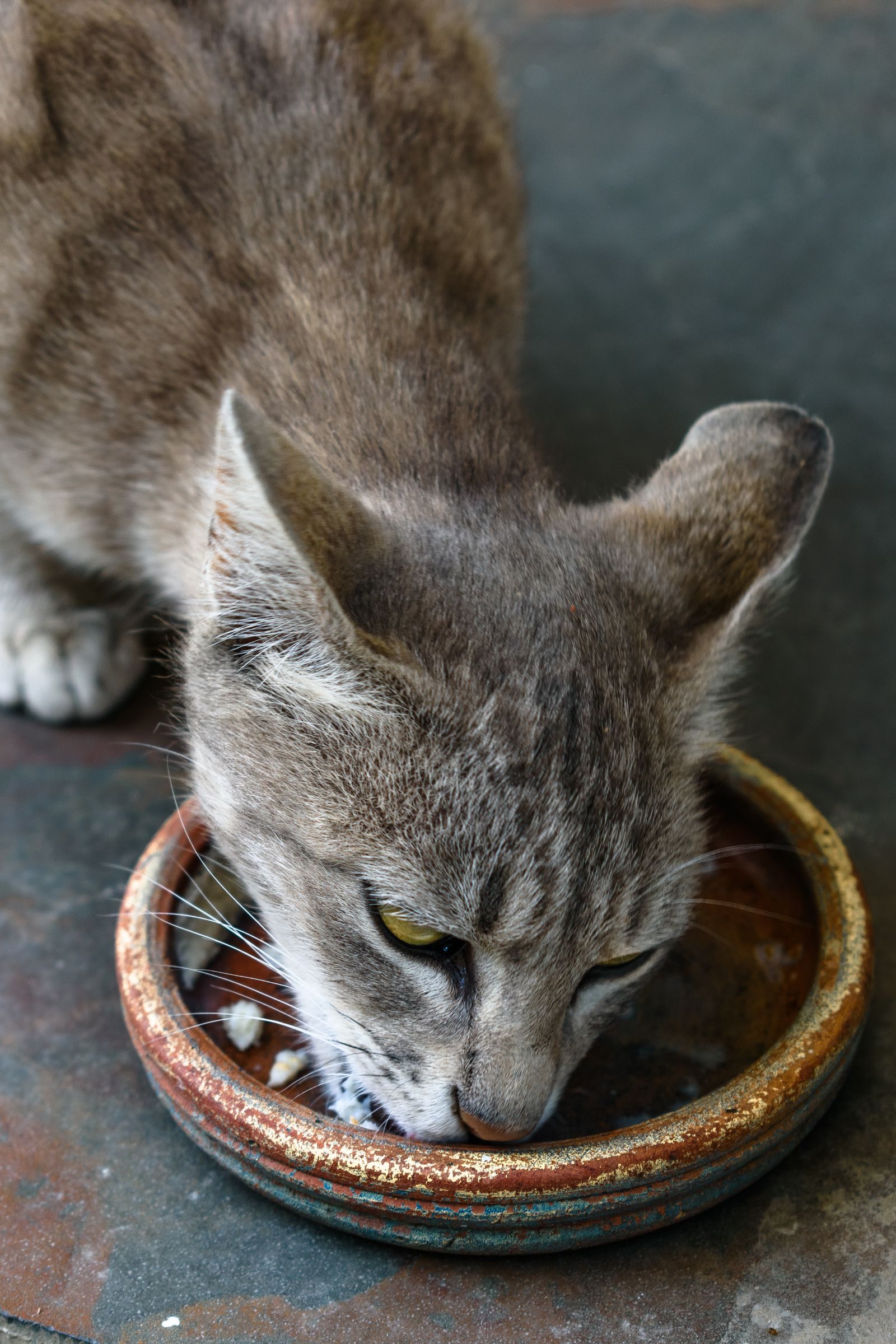
Some cats wolf their food, then bring it straight back up undigested a few minutes later. This “scarf and barf” pattern is more common in multi-cat homes where cats compete for food. Smaller, more frequent meals, a slow feeder or puzzle feeder, and feeding cats separately often help.
A sudden change of diet
Switching food abruptly can upset a cat’s stomach. When changing diets, mix the new food into the old gradually over about a week. Rich treats, table scraps and spoiled food can cause similar upsets.
Food intolerance or allergy
Some cats react to specific ingredients, often a protein source. Signs can include ongoing vomiting, diarrhoea and sometimes itchy skin. Diagnosis usually involves a strict elimination diet trial guided by your vet. Avoid self-diagnosing and switching foods repeatedly, as this can make the picture harder to read.
Illness
VCA Animal Hospitals lists serious causes of vomiting that include infections, swallowed foreign objects, kidney and liver disease, pancreatitis and cancer. Some conditions to know about:
- Chronic kidney disease: very common in older cats. Vomiting often comes with increased thirst, weight loss, poor appetite and bad breath. See our guide to early signs of kidney disease in cats.
- Hyperthyroidism: an overactive thyroid gland, mostly in middle-aged and older cats. According to VCA, the average age of affected cats is around 12 years, and the classic sign is weight loss despite a bigger appetite. Periodic vomiting or diarrhoea can also occur.
- Inflammatory bowel disease and intestinal lymphoma: can cause chronic vomiting, weight loss and diarrhoea in middle-aged and older cats.
- Diabetes, liver disease and pancreatitis: can all cause vomiting alongside changes in appetite, thirst or energy.
- Foreign bodies: string, hair ties, ribbon and tinsel are especially dangerous. Never pull on string you see hanging from your cat’s mouth or bottom.
- Intestinal parasites: worms can occasionally cause vomiting, particularly in kittens.
Toxins and poisons
Cats are very sensitive to many poisons, and vomiting is often an early sign. Common culprits in Australian homes include:
- Lilies: the most urgent. RSPCA Australia warns that all parts of true lilies (Lilium) and day lilies (Hemerocallis) are toxic, including the pollen and the water in the vase, and that even small amounts can cause rapidly fatal kidney failure, generally within 12 to 72 hours. Read more in our guide to lilies and cats.
- Human medicines: paracetamol and anti-inflammatories are extremely dangerous for cats.
- Dog flea treatments: products containing permethrin can cause severe poisoning in cats.
- Toxic foods and plants: onion, garlic, chocolate and a range of household plants. See our guide to foods toxic to cats.
What to do at home if your cat vomits
If your cat has vomited once or twice but is alert, interested in their surroundings, not in pain and has no other symptoms, it is usually reasonable to monitor them at home for a short time.
- Check what came up. Look for hair, grass, foreign material, plant matter, worms or blood. Note the colour and whether it was food, liquid or foam.
- Remove food for a short time. VCA notes that withholding food briefly can give the stomach a rest. For a healthy adult cat this means a few hours, not days. Do not fast kittens, elderly cats or cats with diabetes or other medical conditions without vet advice.
- Keep fresh water available. Offer small amounts if your cat is drinking and then vomiting large volumes.
- Reintroduce food gently. Offer a small portion of their usual food, or a bland diet if your vet recommends one, in frequent small meals.
- Watch closely for 24 hours. Note how often vomiting happens, appetite, energy, toileting and drinking.
- Do not give human medicines. Many are toxic to cats, including common anti-nausea and pain-relief products.
Cats should not go without eating for long. If your cat refuses food for more than 24 hours, call your vet, even if the vomiting has stopped.
When to call the vet: red flags
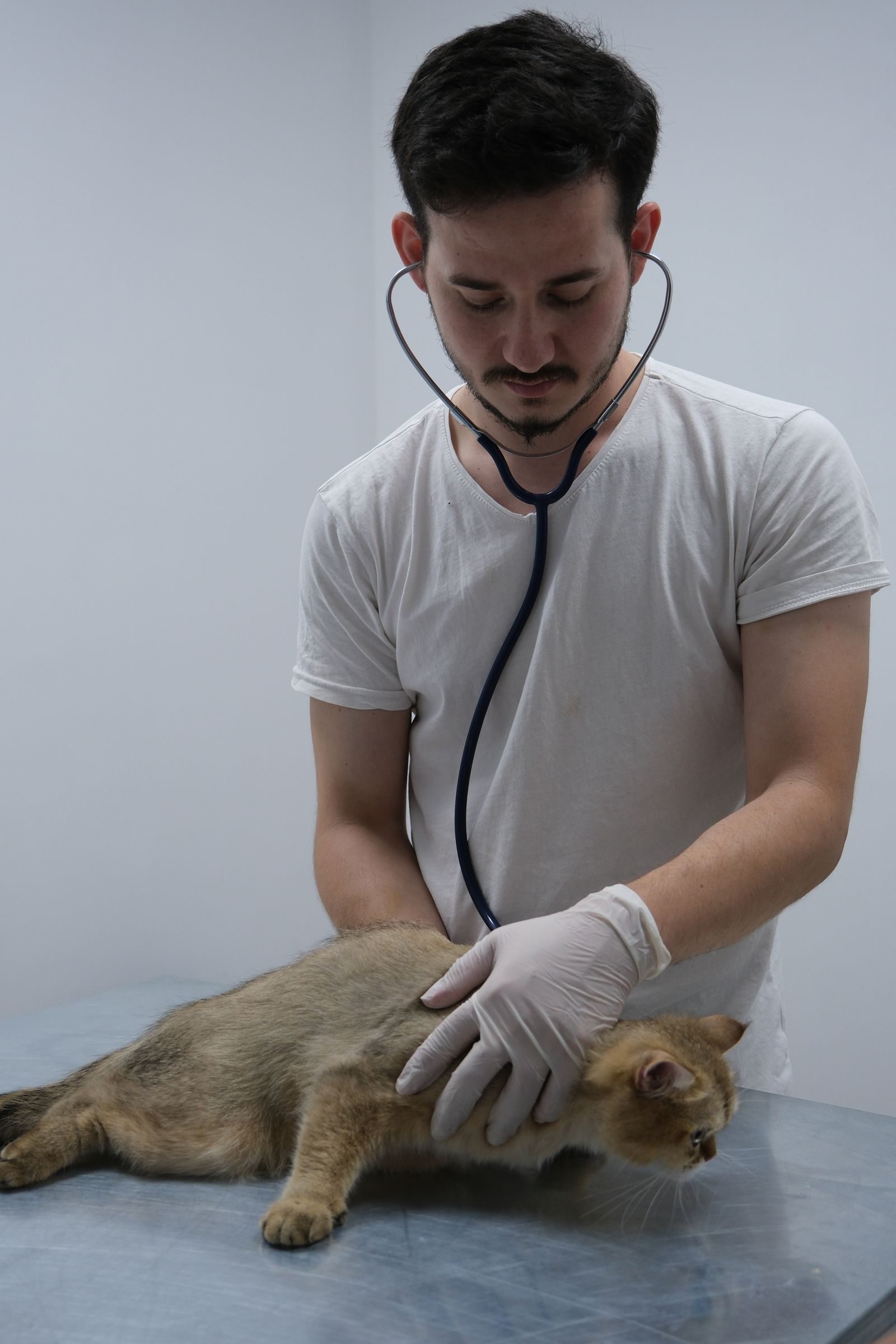
See a vet the same day, or go to an emergency clinic after hours, if your cat:
- Vomits repeatedly in a short time, or more than once or twice in a day
- Has blood in the vomit (red, or dark like coffee grounds)
- Is lethargic, hiding, weak or collapsed
- Has a painful or swollen belly, or cries when picked up
- Has diarrhoea as well, especially with blood
- Has not eaten for 24 hours, or is not drinking
- Strains in the litter tray or produces little or no urine (a blocked bladder is an emergency, especially in male cats)
- Has a fever, pale gums or rapid breathing
- May have eaten string, a toy, a lily, a medicine or any other toxin
- Is a kitten, a senior cat, or has an existing condition such as kidney disease or diabetes
Book a non-urgent appointment if your cat vomits regularly, even if it is “only” once a week, or if vomiting comes with weight loss, increased thirst or a change in appetite. The MSD Veterinary Manual notes that long-term vomiting needs veterinary attention, particularly if it comes with weight loss, dehydration or weakness. Your vet may recommend blood and urine tests, x-rays or ultrasound to find the cause.
For suspected poisoning, call your vet first. You can also contact the Animal Poisons Helpline on 1300 869 738 for 24/7 advice. Consultation fees apply (the Animal Poisons Helpline lists consultations from $75). With lilies, do not wait for symptoms. Go to the vet straight away.
Frequently asked questions
Is it normal for a cat to vomit once a week?
No. Regular vomiting is common in cats, but it is not normal and is often a sign of an underlying problem such as food intolerance, inflammatory bowel disease, hairball issues or another illness. If your cat vomits weekly or more, book a check-up.
Why is my cat throwing up undigested food?
Bringing up undigested food soon after eating usually points to eating too fast or regurgitation rather than true vomiting. Try smaller meals, a slow feeder and separate feeding spots. If it keeps happening, or your cat loses weight, see your vet, as problems with the oesophagus can cause regurgitation.
What does it mean if my cat vomits yellow liquid or white foam?
Yellow liquid is usually bile, and white foam often comes from an empty stomach. An occasional episode before breakfast may be linked to long gaps between meals, so smaller, more frequent meals can help. Repeated episodes, or foam with other symptoms, need a vet check.
Why does my cat vomit after eating grass?
Many cats chew grass and then bring it up. Occasional grass eating is common. Make sure any plants your cat can reach are non-toxic and have not been sprayed, and see your vet if vomiting is frequent.
Can I give my cat anything to stop the vomiting?
Do not give human anti-nausea or pain medicines. Several are toxic to cats. Your vet can prescribe safe, effective anti-nausea medication once they have examined your cat and ruled out serious causes.
Key takeaways
- Common causes include hairballs, eating too fast, sudden diet changes and food intolerance.
- Vomiting can also signal illness such as kidney disease, hyperthyroidism, pancreatitis or a swallowed foreign object.
- Vomiting is active and effortful; regurgitation is passive and brings up undigested food soon after eating.
- A single vomit in an otherwise well cat can be monitored at home for a short time with water available and food reintroduced gently.
- Repeated vomiting, blood, lethargy, pain, not eating for 24 hours or possible toxin exposure means a vet visit.
- Any contact with lilies is an emergency, even without symptoms.
Sources
- MSD Veterinary Manual: Vomiting in Cats
- VCA Animal Hospitals: Vomiting in Cats
- VCA Animal Hospitals: Hyperthyroidism in Cats
- RSPCA Australia Knowledgebase: Are lilies toxic to cats?
- Animal Poisons Helpline: Australian pet poisons advice
This article is general information for pet owners and is not a substitute for advice from a registered veterinarian. If your cat is vomiting repeatedly, seems unwell or may have been exposed to a toxin, contact your vet or an emergency clinic straight away.