
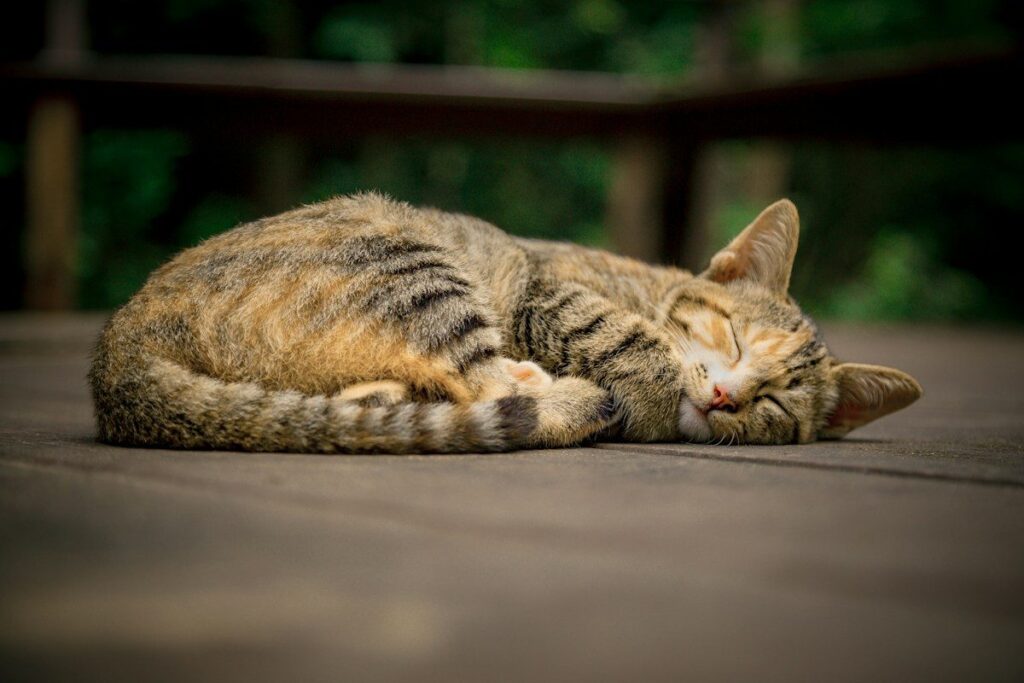
Why do cats sleep so much? Because they are built that way. Cats evolved as hunters that spend short bursts of intense energy stalking and pouncing, then rest for long stretches to recover and conserve energy. Adult cats are commonly described as sleeping somewhere around 12 to 16 hours a day, with kittens and older cats often sleeping even more. Much of that is light dozing rather than deep sleep. What matters most is not the exact number of hours but whether your cat’s sleep pattern suddenly changes.
This guide explains what is normal at each life stage, why cats are so active at dawn and dusk, how to tell healthy snoozing from a sleepy cat that might be unwell, and how to give your cat a more balanced day.
Cats are built to rest between bursts of action
Cats are specialised predators. In the wild, a cat makes many short hunting attempts a day, each one demanding quick bursts of energy, sharp senses and fast reflexes. Resting the rest of the time makes sense: it saves energy for the next hunt. Even a pampered indoor cat with a full bowl still carries those instincts. International Cat Care describes how play mirrors the natural predatory sequence of search, stalk, chase, pounce, catch and manipulate, and those short, intense bursts are exactly what a cat’s body is designed for.
A lot of cat “sleep” is actually light dozing. You may notice your cat’s ears still swivelling towards sounds, or their eyes half open. They can go from snoozing to fully alert in a moment. Deeper sleep happens in shorter spells, often with the body relaxed and curled up, and sometimes with twitching paws, whiskers or tail.
How much sleep is normal by life stage?
Every cat is an individual, and figures vary between sources, so treat these as rough guides rather than targets. The key is to learn what is normal for your own cat.
| Life stage | Typical sleep pattern | What to look for |
|---|---|---|
| Kittens (up to about 6 months) | Sleep much of the day, often in many short naps between wild play sessions | Bright, playful and eating well when awake |
| Young adults (about 1 to 6 years) | Commonly 12 to 16 hours, with active spells, especially early morning and evening | Interested in food, play and their surroundings |
| Mature and senior cats (about 7 years and over) | Often sleep longer and play less | Gradual change is normal; sudden change, weight loss or stiffness is not |
International Cat Care notes in its guide to senior cats that older cats hunt less, spend less time outside, sleep for longer periods and are generally less active. That gentle slowing down is expected. It is still worth discussing with your vet, because some “just getting old” changes are actually treatable conditions.
The crepuscular rhythm: why your cat is wide awake at 5am
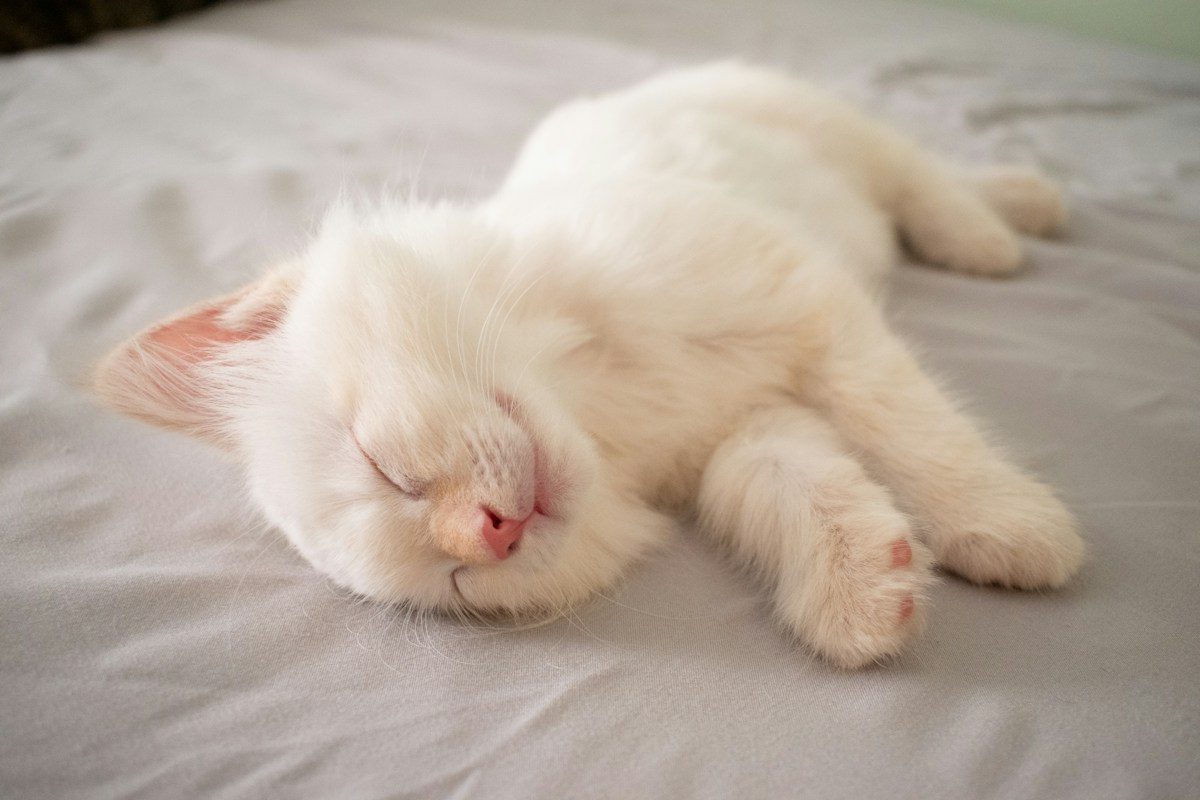
Cats are often called crepuscular, meaning they tend to be most active around dawn and dusk. In the wild this lines up with the activity of the small prey cats hunt. It is why many cats sleep through the middle of the day, then start zooming around, meowing or pouncing on your feet early in the morning and in the evening.
Pet cats are flexible, though, and many adjust to their household’s routine. Cats that are left alone all day often sleep while you are out, then want company, food and play when you get home. Indoor cats with little to do may also sleep out of boredom during the day and become restless at night. Our article on night-time restlessness and yowling in indoor cats has more on settling a nocturnal cat.
Weather plays a part too. Many cats sleep more on cold or rainy days and seek out sunny spots, and in the heat of an Australian summer they may stretch out somewhere cool and stay put during the hottest hours.
When excess sleep can signal illness
Cats are experts at hiding pain and illness. A change in sleep and activity is often one of the first clues that something is wrong. The question to ask is: has my cat’s normal pattern changed?
Possible causes of a cat that is suddenly sleeping more, or seems lethargic, include:
- Pain. International Cat Care’s guide to spotting pain in cats explains that painful cats often become withdrawn, hide, appear more sedentary than usual and stop grooming, jumping, climbing, playing or scratching. Arthritis is a common hidden cause in older cats, and you can learn the subtle signs of arthritis in cats.
- Kidney disease. Common in older cats and often accompanied by increased thirst, weight loss and reduced appetite. See our early-warning guide to kidney disease.
- Diabetes. Often causes increased drinking and urination, weight loss despite a good appetite, and weakness. Read about feline diabetes.
- Thyroid disease. Hyperthyroid cats are usually restless and hungry, but International Cat Care notes some show weakness, lethargy and loss of appetite instead.
- Infections and fever, such as cat flu or an abscess from a fight.
- Dental pain, which can make cats quieter and reluctant to eat.
- Poisoning, for example from lilies or human medicines.
- Stress or depression, after a move, a new pet or the loss of a companion.
How to tell normal sleep from lethargy
A healthy sleepy cat and a lethargic cat can look similar when they are curled up. The difference shows when they wake.
| Healthy sleepy cat | Possibly unwell cat |
|---|---|
| Wakes easily and becomes alert at the sound of food or a favourite toy | Slow to respond, uninterested in food, toys or people |
| Eats, drinks, grooms and uses the litter tray normally | Changes in appetite, thirst, toileting or grooming |
| Sleeps in usual spots, in relaxed, curled or stretched positions | Hides in unusual places, sits hunched, or avoids being touched |
| Has regular play or active spells, often at dawn and dusk | No active spells, or reluctant to jump or climb |
| Change in sleep is gradual with age | Change in sleep is sudden, over days or a couple of weeks |
It helps to jot down a few notes over a week: roughly how much your cat sleeps, when they are active, and how they are eating and drinking. These notes are very useful for your vet.
When to call the vet
Contact your vet promptly if your cat:
- Is suddenly sleeping much more or much less than usual, for more than a day or two.
- Is hard to rouse, wobbly, weak or collapses. This is an emergency.
- Has stopped eating for more than 24 hours.
- Is drinking or urinating more, or losing weight.
- Is hiding, hunched, panting or breathing with effort.
- Is straining in the litter tray or passing little or no urine. A blocked bladder in male cats is an emergency.
- Has vomiting, diarrhoea or any chance of exposure to a toxin such as lilies.
For suspected poisoning, call your vet or the Animal Poisons Helpline on 1300 869 738.
Enrichment: helping your cat have a balanced day
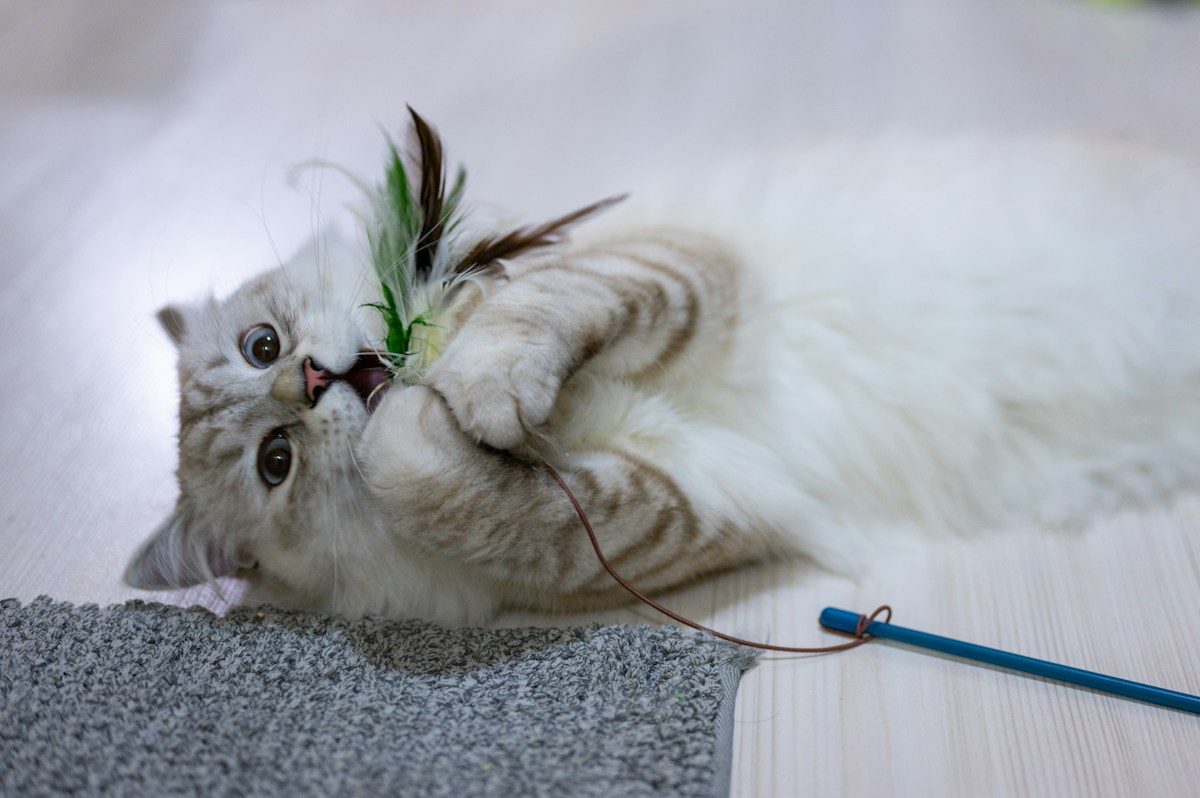
Lots of sleep is normal, but a cat that sleeps out of boredom can become overweight, frustrated or noisy at night. Giving your cat outlets for their natural behaviours makes their waking hours more satisfying and often helps everyone sleep better.
- Play in short bursts. Two or three sessions of five to ten minutes with a wand or fishing-rod toy suit how cats hunt. International Cat Care suggests ending laser games with a toy your cat can actually catch so the game finishes on a positive note.
- Time play for dawn and dusk. A play session followed by a meal in the evening mimics hunt, catch, eat, then sleep, and can help a cat settle overnight.
- Make food work. Puzzle feeders, treat balls and scattering a portion of dry food can turn meals into a hunt.
- Use height and hideouts. Cat trees, shelves, window perches and boxes give cats places to watch, climb and retreat.
- Rotate toys. Bring out a few at a time and swap them every few days to keep them novel.
- Try low-cost ideas. The RSPCA Knowledgebase has DIY enrichment ideas for cats and dogs.
- Adapt for seniors. Older cats still enjoy gentle play. Ramps, steps and warm, padded beds help them reach favourite sleeping spots.
For more ideas, see our full guide to indoor cat enrichment.
Frequently asked questions
Is it normal for my cat to sleep all day?
Many healthy adult cats sleep for most of the day, especially when they are home alone, and become active at dawn and dusk. As long as your cat wakes readily, eats, drinks, grooms and plays as usual, long daytime sleep is normal.
Why does my kitten sleep so much?
Kittens play in intense bursts and then crash. Sleep supports their rapid growth and development. A sleepy kitten that is bright, playful and eating well when awake is usually fine. A kitten that is floppy, not eating or has diarrhoea should see a vet quickly.
Do older cats sleep more?
Yes. International Cat Care notes older cats tend to sleep for longer and be less active. A sudden change is not just ageing though, so mention it to your vet, as pain, kidney disease and thyroid disease are common in seniors.
Do cats dream?
During deeper sleep, cats often twitch their paws, whiskers or tail, which suggests active brain activity similar to dreaming. It is normal and nothing to worry about.
Should I wake my sleeping cat?
There is usually no need. Let your cat rest, and plan play and meals for times when they are naturally awake. If your cat is very difficult to wake, see a vet.
Key takeaways
- Long sleep is normal for cats, which evolved to rest between short bursts of hunting.
- Adult cats are often described as sleeping around 12 to 16 hours a day, with kittens and seniors sleeping more.
- Cats are naturally most active around dawn and dusk.
- A sudden change in sleep, appetite, thirst, grooming or mobility is a reason to see your vet.
- Short daily play sessions, food puzzles and climbing spaces make waking hours richer and can improve night-time sleep.
Sources
- International Cat Care: Playing with your cat
- International Cat Care: Special considerations for senior cats
- International Cat Care: How to spot signs of pain in cats
- International Cat Care: Hyperthyroidism in cats
- RSPCA Australia Knowledgebase: How can I create low‑cost DIY enrichment for my cat or dog?
This article is general information for pet owners and is not a substitute for advice from a registered veterinarian. If your cat’s sleeping, eating or behaviour changes, or you have any concerns about their health, please contact your vet.