
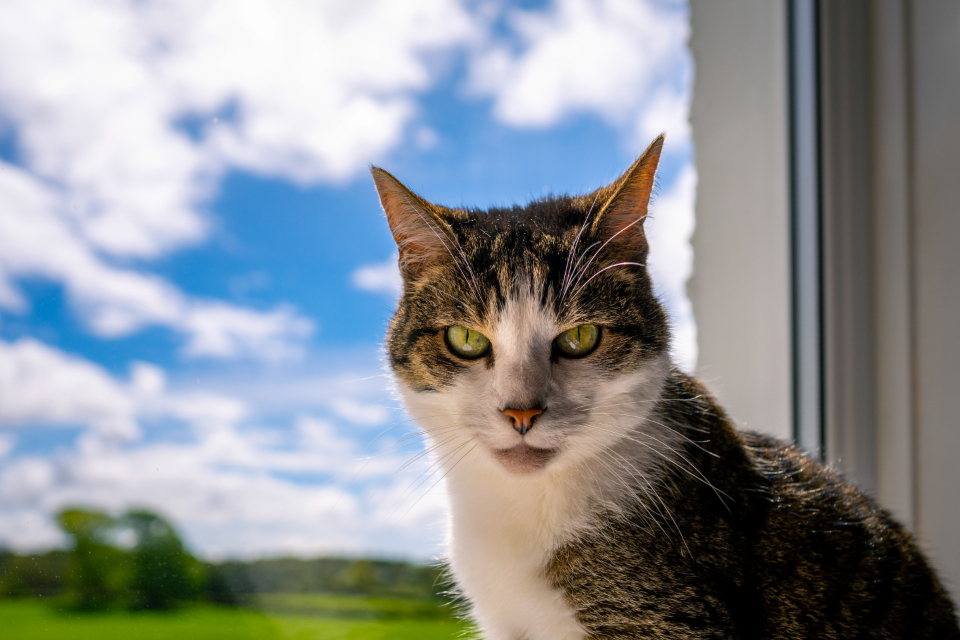
More Australian cats are living life behind the front door than ever before. Keeping a cat safely at home protects them from cars, dog attacks, cat fights, paralysis ticks and snakes, and it protects native wildlife too. The trade-off is that an indoor cat relies on you for the excitement an outdoor cat finds for itself. Without it, boredom creeps in, and bored cats tend to make their own fun, usually on the couch or at 3am. This guide covers why enrichment matters, the framework vets use, practical ideas you can set up this week, catios, and how to help a former roamer settle indoors.
Why indoor and contained cats need enrichment
Cats are natural hunters. Even the most pampered moggy is wired to stalk, chase, pounce, climb, scratch and explore. Take away the hunting and territory patrolling that fills a roaming cat’s day and you create a gap. Enrichment simply means giving your cat safe, indoor ways to do those natural things.
Containment is also increasingly the rule rather than a choice. In the ACT, cats born on or after 1 July 2022 must be kept on their owner’s premises 24 hours a day, and many councils in other states have introduced night curfews or full containment. Our guide to cat curfew and containment laws in Australia explains what applies where you live.
RSPCA Australia’s guidance is that contained cats should have choice about where they eat, drink, rest, play, scratch and toilet, plenty of horizontal and vertical space, safe places to hide, and opportunities for exercise and fresh air. Meet those needs and you are likely to see a calmer, more confident cat.
The five pillars of a healthy cat home
Vets have a handy framework for this. The AAFP and ISFM Feline Environmental Needs Guidelines set out five “pillars” of a healthy feline environment. Use them as your enrichment checklist:
- A safe place. A private, secure retreat, often raised, such as a covered bed, a high shelf or a cardboard box.
- Multiple, separated key resources. Food, water, litter trays, scratching posts, play areas and resting spots, spaced apart so your cat never feels cornered. This matters even more in multi-cat homes.
- Opportunities for play and predatory behaviour. Daily outlets for the built-in hunter, from wand toys to food puzzles.
- Positive, predictable human interaction. Gentle, consistent contact on your cat’s terms.
- Respect for your cat’s sense of smell. Avoid strong cleaners and air fresheners near food, beds and litter, and let your cat scent-mark its territory by rubbing and scratching.
Practical enrichment ideas
Build upwards
Cats feel safest when they can survey their patch from above. A sturdy cat tree, a few wall shelves or a cleared bookshelf gives your cat vertical territory and a “cat highway” around the room. Pair that height with a couple of enclosed hideaways at floor level and you have covered both the need to watch and the need to retreat.
Provide proper scratching spots
Scratching is normal behaviour that keeps claws healthy and leaves scent. Put several scratching posts in the rooms your cat actually uses, not just the laundry. RSPCA Australia suggests posts at least 1.5 times the length of your cat when stretched out, and some cats prefer horizontal scratchers to vertical ones. If the couch is already under attack, see our guide to why cats scratch furniture and how to redirect them.
Make them work for food
In the wild, a cat works for every mouthful. Recreate that at home:
- Feed part of the daily ration from a puzzle feeder or treat ball.
- Make a DIY puzzle by cutting small holes in a toilet roll, taping one end shut and adding a few biscuits.
- Scatter kibble around a room, or hide small portions in safe spots for a treasure hunt.
- Try a lick mat with a smear of wet food for a calm, settling activity.
Food games burn mental energy and slow down fast eaters. Count anything you use as part of the daily food allowance, so enrichment does not turn into weight gain.
Play like a predator
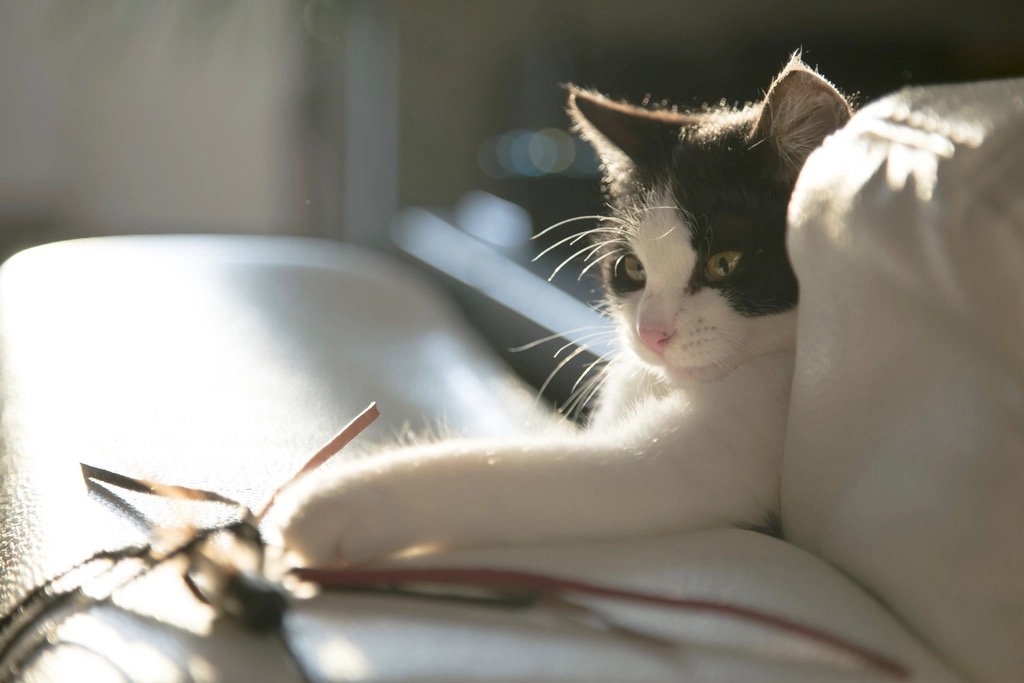
Play is practice for hunting, and the most satisfying games follow the stalk, chase, pounce and catch sequence. Move a wand or feather toy like a bird or mouse: darting, pausing and disappearing behind furniture. Cats hunt in short bursts, so several short sessions of around 5 to 15 minutes a day suit most cats better than one long one. Always let your cat “catch” the prey at the end, then offer a small meal or treat to complete the hunt-catch-eat cycle.
Rotate and refresh
Cats are creatures of habit who still crave novelty. Rotate a small handful of toys weekly rather than leaving everything out, introduce one new box or perch at a time, and notice which games your cat loves most. Some are chasers, others are puzzle solvers. Rubbing a toy with catnip or a cat-friendly scent can revive interest.
Engage the senses
- A pot of cat grass for safe nibbling (check any houseplants against our list of indoor plants toxic to cats).
- A cat water fountain, since many cats prefer moving water placed away from their food.
- Cardboard boxes and paper bags (handles removed) to explore.
Supervise new toys at first, especially anything with string, ribbon or small parts that could be swallowed, and check toys regularly for wear.
Bring the outdoors in, or build a catio
A window perch near a sunny spot can keep a cat entertained for hours. Place a bird feeder or bird bath outside the window, well out of any cat’s reach, and the glass becomes the best television in the house. A securely screened window also lets in new smells.
If you want to give your cat fresh air without breaking curfew, a catio (a secure outdoor enclosure) is the gold standard. It satisfies the urge to be outside while keeping your cat away from cars, foxes, ticks and snakes, and keeping wildlife safe from your cat. Catios range from simple DIY timber-and-mesh frames to modular kits, and they can connect to a window or door. Even a cat-proofed balcony can work in a smaller home. Our catio guide covers types, costs and set-up.
Enrichment through the seasons
Winter. Shorter days and chilly mornings mean less sunbeam-chasing and more time curled up, and that cosy hibernation can tip into boredom. Lean on food puzzles and short play sessions, and pair them with warm, draught-free beds, particularly for older or stiff cats. If you use a heated pad, choose one made for pets and make sure your cat can move away from the heat. Keep heaters, electric blankets and cords supervised. Our guide to keeping your cat warm through winter has more ideas.
Spring and summer. Longer days, nesting birds and new smells through the flyscreen all tell your cat it is time to be active. It is a good season to reset routines, add a new perch by the window, or finally build that catio. On hot days, offer cool resting spots and keep play sessions to the cooler parts of the day.
Signs your cat needs more enrichment
A bored cat rarely looks sad. Boredom shows up as behaviour, which can be mistaken for mischief:
- Wild night-time activity or zoomies that disrupt your sleep
- Excessive meowing or yowling, especially at night
- Destructive scratching of couches, curtains and carpet
- Over-grooming, sometimes with bald patches on the belly or legs
- Pestering, pawing or knocking things off shelves for attention
- Overeating and weight gain when food is the only highlight of the day
- Litter tray accidents
Some night-time activity is normal. RSPCA Australia notes that cats are naturally most active at dusk and dawn, and suggests several play sessions in the afternoon and early evening, smaller and more frequent meals, and a timed feeder to cut down on early-morning wake-up calls. A good play session followed by a meal before bed is one of the best cures for 3am zoomies.
Many of these signs can also point to pain, stress or illness. Over-grooming can be a skin problem, toileting accidents can signal a urinary issue, and night yowling in an older cat can have medical causes. If your cat’s behaviour changes suddenly, they stop eating, start hiding or lose interest in everything, that is not boredom. See your vet first.
Moving a roaming cat indoors
Bringing a former roamer inside takes patience. Go gradually if you can, and add enrichment before you close the cat flap so home already feels rewarding. Set up the catio, scatter feeding, vertical space and daily play in the weeks beforehand. Keep feeding times and litter trays consistent, since sudden changes add stress. The aim is a cat that chooses to stay engaged indoors, not one that simply has no other option.
Frequently asked questions
Can a cat be happy living indoors?
Yes. Contained cats can live long, healthy and contented lives as long as their needs for safety, play, hunting, climbing, scratching and social contact are met. Enrichment and, ideally, safe outdoor access through a catio make the difference.
How much play does an indoor cat need?
Most cats do well with several short sessions a day of around 5 to 15 minutes each, ending with a “catch” and a small meal or treat. Older cats may prefer gentler, shorter games, while young cats often want more.
Why is my indoor cat so active at night?
Cats are naturally most active at dusk and dawn. Play sessions in the afternoon and evening, a meal before bed and a timed feeder for the early hours usually help. If the night-time activity is new or comes with other changes, ask your vet. Our guide to night-time yowling in indoor cats has more.
Should I get a second cat to keep my cat company?
Not always. Some cats enjoy feline company, but many are happier as the only cat, and a poorly matched pair can create stress. Focus on enrichment first, and talk to your vet or a behaviour professional if you are considering another cat.
Do I need to spend a lot on enrichment?
No. Cardboard boxes, toilet-roll puzzles, scattered kibble, a cleared shelf and ten minutes of wand play cost next to nothing and are often the highlight of a cat’s day.
Key takeaways
- Indoor and contained cats are safer and often live longer, but they rely on you for stimulation.
- Use the five pillars as a checklist: a safe place, separated resources, play and hunting, positive interaction, and respect for smell.
- Vertical space, scratching posts, food puzzles and short daily play sessions cover most of a cat’s needs.
- A catio or a good window perch brings the outdoors in without breaking curfew.
- Night zoomies, over-grooming and destructive scratching can signal boredom, but sudden changes need a vet check first.
This article is general information for Australian cat owners and is not a substitute for advice from a registered veterinarian. If your cat’s behaviour changes suddenly, contact your vet.