
You shut the front door, and within minutes your dog is barking, pacing or scratching at the doorframe. Or you come home to a chewed skirting board and a puddle on the floor from a dog who has been house-trained for years. If this sounds familiar, you are not alone. Separation anxiety is one of the most common behaviour problems Australian vets and trainers see, and it often flares when routines change, such as a return to the office or the end of the school holidays. The good news is that with patience and the right plan, most dogs learn to feel safe while you are away. This guide covers the signs, the causes, a step-by-step plan to help, and when to bring in your vet.
What separation anxiety actually is
Separation anxiety is not simply “missing you”, and it is never stubbornness or spite. The RSPCA Australia Knowledgebase describes it as signs of distress when a dog is separated from the owner or family group (or sometimes another animal) it is attached to. The Merck Veterinary Manual puts it more bluntly: it is a syndrome in which a dog panics when left alone.
Seeing it as a fear response rather than naughty behaviour changes everything about how you respond. Dogs are never “getting back at you” when they make a mess. They are panicking, and panic is something you can gently train away, not punish away.
Signs your dog is not coping alone
Merck notes that signs are often most severe within the first 15 to 30 minutes after a dog is left alone, which is exactly when you are already out the door. Watch for:
- Barking, whining or howling that starts soon after you leave
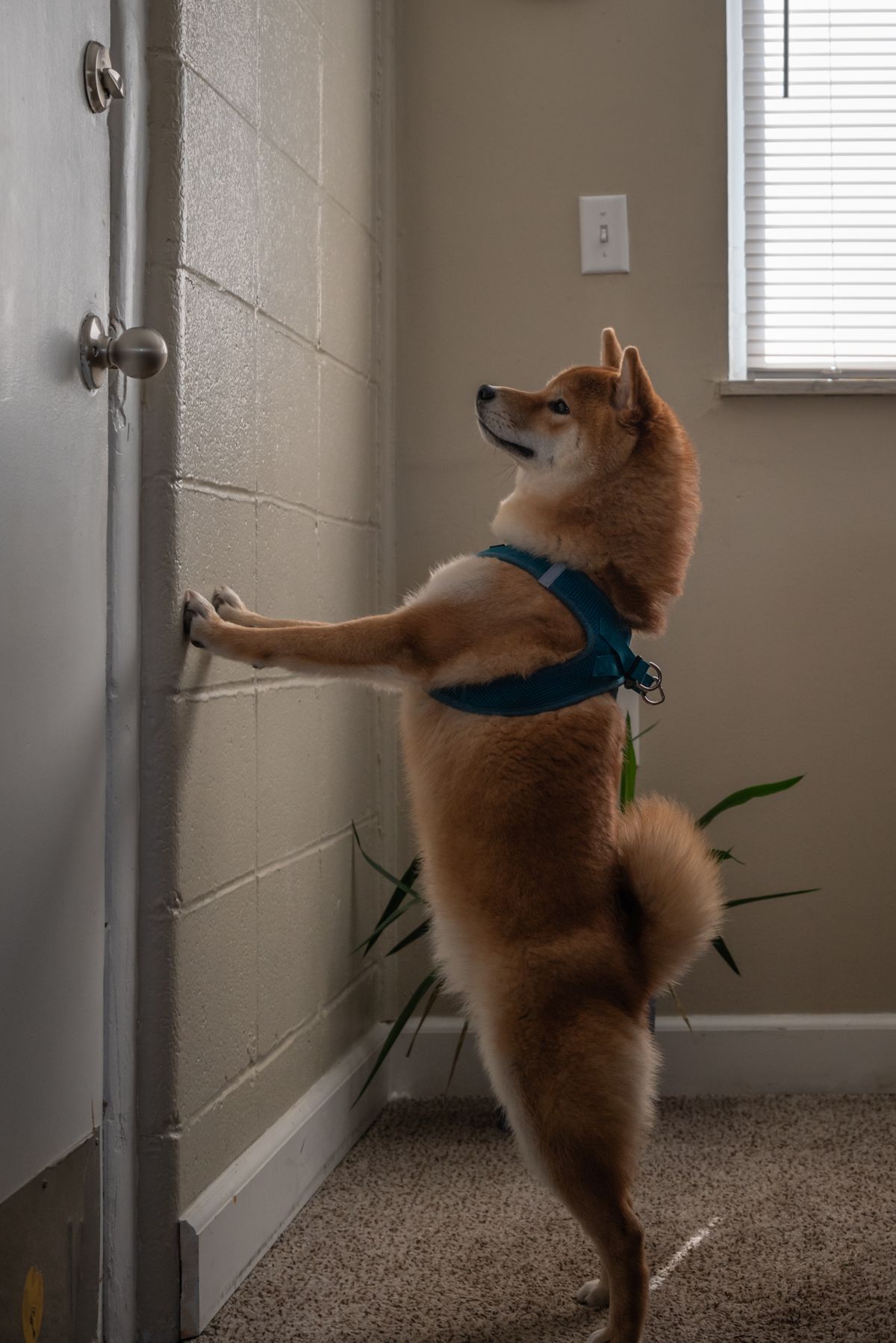
- Chewing, digging or scratching, especially around doors, windows, gates and crates
- Toileting inside, even in a fully house-trained dog
- Pacing, drooling, panting or trembling
- Trying to escape, which can lead to broken teeth, torn nails and other injuries
- Ignoring treats or food until you get home
- Shadowing you from room to room and getting clingy as you get ready to leave
- A frantic, over-the-top greeting when you return
In severe cases, dogs may also lick or chew themselves until they create wounds.
Is it anxiety or boredom?
A dog who chews a shoe while you are at work is not necessarily anxious. Young, under-exercised dogs often get into mischief simply because they are bored. Separation anxiety is the likely culprit when the behaviour happens specifically when your dog is alone (or apart from their favourite person) and stops when you are there.
A pet camera, or a phone propped up to record the room for the first half hour after you leave, tells you a lot. A dog that settles within a few minutes is usually fine. One that barks, paces or tries to get out is telling you it needs help. Plenty of owners assume their dog naps happily all day, only to find hours of pacing on the footage.
Why dogs develop separation anxiety
Dogs are social animals, and being alone does not come naturally to many of them. Problems rooted in fear and anxiety can be influenced by genetics, early life experiences, limited socialisation, medical conditions and stressful events. Common triggers include:
- A sudden change in routine, such as going from home all day to out all day
- Moving house
- A new baby or pet arriving, or the loss of a companion animal
- Being rehomed or adopted from a shelter
- A frightening event while alone, such as a storm or a tradie banging on the roof
Puppies that have never been left alone at all, including those raised while their owners worked from home, may simply never have learned that time alone is safe and normal.
A practical plan to help your dog
The aim, in RSPCA Australia’s words, is to teach your dog how to be calm and relaxed when you are not there. That takes gradual, reward-based training rather than any quick fix.
1. Practise leaving in tiny doses
This is the single most important exercise. Start with micro-departures: pick up your keys, step outside, and come straight back in while your dog is still calm. Stretch the time slowly from 30 seconds to a minute, then five, then fifteen, and keep repeating daily. If your dog panics, you have gone too far too fast, so drop back to a time they can handle. This gradual approach is called desensitisation.
2. Take the power out of your leaving cues
Dogs quickly learn the rituals that mean you are about to go: keys, shoes, a work bag, a particular jacket. If those cues always end with you gone, they alone can trigger panic. Pick up your keys and sit back down. Put your shoes on and make a cup of tea. Repeated at random without actually leaving, these cues stop meaning goodbye.
3. Make goodbyes and hellos boring
Big, emotional farewells and excited reunions tell your dog that your coming and going is a major event. RSPCA Australia suggests ignoring your dog for 15 to 30 minutes before you leave, then greeting them softly and calmly when you return and only giving attention once they have settled. It can feel a little cold at first, but it genuinely lowers the stakes.
4. Exercise before you go
A solid morning walk with plenty of sniffing, or a game of fetch in the backyard, leaves your dog more inclined to rest than fret. Pair physical exercise with mental work, such as hidden food, scatter feeding and training games. Our guide to easy indoor enrichment for dogs has plenty of ideas for wet or busy days.
5. Leave something special behind
Fill a Kong-type toy with food that takes your dog at least 20 to 30 minutes to work through, and offer it only when you leave. Freezing it makes it last longer. Pick it up again when you get home so it stays special. Your dog starts linking your departure with something good, and it keeps them busy through the hardest stretch. If you use peanut butter, check the label for xylitol, which is toxic to dogs. Our guide on whether dogs can eat peanut butter explains what to look for. A worn t-shirt that smells of you can also be reassuring.
6. Arrange company for long days
RSPCA Australia notes that providing human or dog company is an effective way to manage anxiety. For dogs that cannot yet cope with a full day, a trusted friend, neighbour, dog walker or pet sitter can break up the time. A good doggy daycare is another option, and our guide to choosing a safe doggy daycare covers costs and what to ask. Visit a few before you commit.
What not to do
- Do not punish. Scolding a dog for barking or for the mess you find hours later adds fear to an already frightened animal and reliably makes things worse. Your dog cannot connect the telling-off with something it did earlier.
- Do not jump straight to a full day. Springing a nine-hour absence on a dog that has never been alone sets them up to fail.
- Do not assume a second dog will fix it. Company helps some dogs, but separation anxiety is usually about the bond with a particular person, so another dog is not a guaranteed cure and means another animal to care for.
Return to the office: preparing your dog
For dogs that have had you home for months or years, going back to the office is one of the biggest routine changes they will face. Start the training plan above a few weeks before your first office day, not the night before. If you can, ease back in with a phased first week or a couple of shorter days. Set up a midday visit or walk for the early weeks, and shift your morning routine (alarm, walk, breakfast) to its new times in advance so the only new thing on day one is your absence.
End of the school holidays and holiday pets
School holidays bring constant company, extra walks and someone to follow from room to room. Then on the same Monday morning, the kids go back to class, the adults go back to work and the house falls silent. That contrast is a classic flashpoint. In the last week of the holidays, start building short absences back into the day and return to the normal school-term routine.
A puppy brought home over the holidays has no experience of being alone at all. RSPCA Australia advises starting puppies with very short periods, even a minute, and building up slowly. Do not leave a young puppy alone all day straight away. Line up a midday visit from a friend, walker or neighbour for the first few weeks. If your new dog came from a shelter, our week-by-week guide to the first months with a rescue dog helps them build confidence from the start.
When to get professional help
RSPCA Australia describes separation anxiety as a mental health issue that requires veterinary treatment, so do not feel you have to struggle on alone. Book in with your vet if your dog:
- Is injuring themselves trying to escape, or self-harming by licking or chewing
- Is destroying doors, crates or windows
- Will not eat while you are out, or is distressed for long periods
- Is not improving after a few weeks of consistent practice
Your vet will first rule out medical causes, because pain, illness and age-related changes can look a lot like anxiety. They may refer you to a veterinary behaviourist or a qualified reward-based trainer for a tailored plan. In more severe cases, vets may recommend medication alongside behaviour training. Merck notes that behaviour medication works best when combined with behaviour modification, and is usually used for several months rather than as a permanent fix. If storms also set your dog off, see our guide to calming a thunder-phobic dog.
Frequently asked questions
How long can a dog be left alone during the day?
There is no single safe number. It depends on your dog’s age, health, toilet needs and how well they cope alone. Many adult dogs manage a typical half day once they are used to it, especially with exercise beforehand and a toilet break, while puppies need much shorter periods and a midday visit. Build up gradually and watch how your dog copes. For long workdays, arrange a walker, sitter, daycare or a friendly neighbour.
How quickly will training work?
There is no overnight fix. Desensitisation usually takes weeks of short, daily sessions, and severe cases can take months. Consistency matters more than speed, and small, calm wins add up.
Should I crate my dog?
Some dogs feel secure in a crate they have been gradually trained to love. Others panic when confined and may hurt themselves trying to escape, and Merck notes that confined dogs with separation anxiety often damage kennels, walls or doors. If your dog is distressed in a crate, stop and talk to your vet or a behaviourist.
Do cats get separation anxiety too?
Yes, though it is less recognised than in dogs. A 2020 study in PLoS One found about 13% of surveyed cats showed separation-related problems, most often destructive behaviour, excessive meowing, urinating in the wrong places and appearing flat or withdrawn. Hiding, over-grooming and appetite changes are also worth noting. Toys, vertical space, hiding spots and a predictable routine help many cats, and our guide to clingy cats has more. Any change in toileting or appetite is worth a vet check first.
Will my dog grow out of it?
Rarely on its own. Without help, separation anxiety tends to persist or get worse. With a gradual training plan and veterinary support where needed, most dogs improve a great deal.
Key takeaways
- Separation anxiety is panic, not naughtiness. Never punish it.
- Signs include barking, destruction around exits, toileting indoors, pacing, drooling and escape attempts, usually worst in the first 15 to 30 minutes alone.
- Practise tiny departures, defuse your leaving cues, keep goodbyes and hellos calm, and exercise your dog before you go.
- A food-stuffed toy that lasts 20 to 30 minutes, given only when you leave, builds a positive link with alone time.
- Prepare for big routine changes, like returning to the office or the end of school holidays, weeks in advance, and arrange company for long days.
- See your vet if your dog is hurting themselves or not improving. Training, sometimes combined with medication, helps most dogs.
This article is general information for Australian dog owners and is not a substitute for advice from a registered veterinarian or qualified animal behaviour professional. If your dog is distressed or injuring themselves, contact your vet.