Rainy weeks, cold snaps, early sunsets, a sick day or a dog on post-surgery rest: there are plenty of times when your dog’s usual walks get cut short. Your dog still has the same busy brain, just fewer ways to use it. A bored dog often turns to barking, chewing or pacing simply because there is nothing better to do. The good news is that a dog’s mind can be worked just as hard inside as its legs are on a walk, usually in a fraction of the time, and most of the best ideas cost next to nothing. Here is how to keep your dog happy and settled indoors.
Why mental stimulation matters
Dogs are built to sniff, forage, chew, explore and solve problems. A normal walk delivers a flood of smells, movement and social contact that tires them out mentally as much as physically. Take that away for a week of wet weather and all that unspent energy has to go somewhere, usually onto your skirting boards.
The RSPCA Australia Knowledgebase describes enrichment as activities that engage a dog’s mind, body and senses, and notes it has wide-ranging benefits: promoting relaxation, reducing stress and anxiety, strengthening the bond with their people, and helping prevent problem behaviours such as excessive barking. It can also help slow age-related cognitive decline in older dogs.
Mental work is also surprisingly tiring. A short session of sniffing or problem-solving can leave a dog as content and settled as a longer walk, which makes enrichment a real lifesaver on grey days when nobody fancies heading out.
Signs your dog is under-stimulated
- Chewing furniture, shoes or skirting boards, or shredding soft furnishings
- Nuisance barking, whining or demanding attention
- Pacing, restlessness or trouble settling in the evening
- Trailing you from room to room looking for something to do
- Digging at carpet, bedding or doors, or raiding the bin
- Over-the-top greetings and repetitive habits such as tail-chasing
Chewing and shredding are not your dog being naughty. They are often a release valve for tension and a way to fill empty time. If these behaviours creep in when walks drop off, treat them as a cue to add more mental and physical activity, not as proof your dog is stubborn.
Feed the nose first: scent games
A dog’s sense of smell is its superpower, and scent games are one of the fastest ways to tire a dog out mentally. Sniffing is calm, satisfying and naturally settling, which makes it ideal for older dogs or dogs who find boisterous play a bit much.
- Find it. Pop your dog in another room, hide small treats around the lounge, then release them with a cheerful “find it”. Start easy so they win, then make the hiding spots trickier.
- Scatter feeding. Toss your dog’s kibble across a towel, a snuffle mat or the lawn and let them forage for it.
- The muffin-tin game. Drop treats into a muffin tray, cover each cup with a tennis ball, and let your dog nudge them off.
- Towel rolls. Roll a few treats inside an old towel so your dog has to unroll it.
Turn mealtime into a puzzle
Every dog has to eat, so mealtime is the easiest place to start. There is no rule that says dinner has to come out of a bowl. Turning a two-minute meal into a longer job gives your dog a satisfying task and can help dogs that gulp their food.
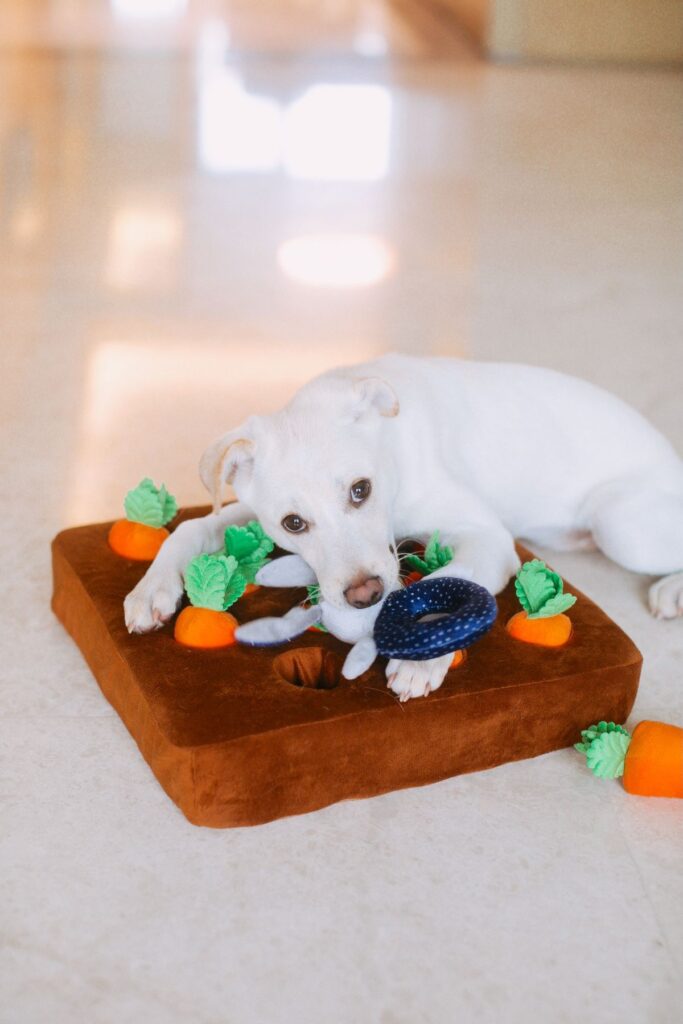
- Snuffle mats hide dry food in the fabric so your dog has to sniff it out.
- Puzzle feeders and treat-dispensing toys make your dog work out how to release the food.
- Lick mats spread with a little wet food or dog-safe spread, then frozen. Slow, steady licking helps many dogs relax, including on stormy nights.
- Stuffed, frozen rubber toys packed with wet food, soaked kibble or a little xylitol-free peanut butter. Freezing overnight makes them last much longer.
Always check spreads for xylitol, an artificial sweetener that is toxic to dogs. Our guide to peanut butter for dogs explains what to look for on the label.
You do not need to spend much. The RSPCA’s DIY enrichment guide suggests puzzle feeders made from cardboard boxes or toilet rolls, egg carton and muffin tin games, and homemade snuffle mats from old towels or t-shirts. Just make sure materials are safe if chewed and supervise your dog with anything they could swallow.
Short training sessions beat long ones
Learning is genuinely tiring for dogs, and you do not need much of it. Five to ten minutes of reward-based training once or twice a day can take the edge off a restless dog and strengthen the bond between you. Ideas to try:
- Teach a new trick such as “spin”, “touch” or “high five”
- Practise a calm “go to your mat” and settle
- Play impulse-control games such as “leave it” and “wait”
- Teach your dog the names of their toys, then ask them to fetch each one by name
- Polish an old trick or add a new cue to a familiar behaviour
Keep sessions short, upbeat and generous with rewards, and finish while your dog is still keen. Indoor days are also a great time to practise the foundations of a reliable recall, with no distractions.
Safe ways to move indoors
When you truly cannot get outside, you can still burn some physical energy at home:
- Hide and seek. Ask your dog to stay, hide somewhere in the house, then call them to find you. It builds recall and burns energy without much space.
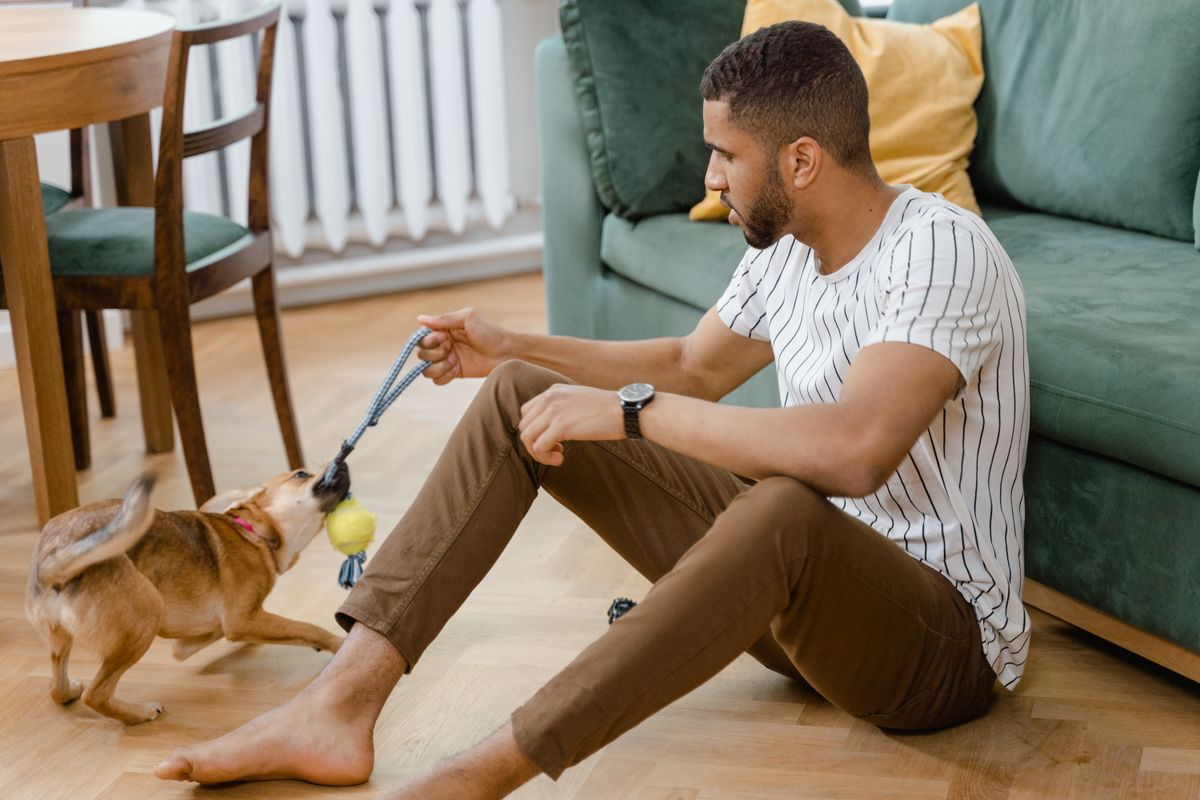
- Tug. A controlled game of tug suits many dogs. Teach a “drop it” cue so you can reset the game, and let your dog win sometimes to keep it fun.
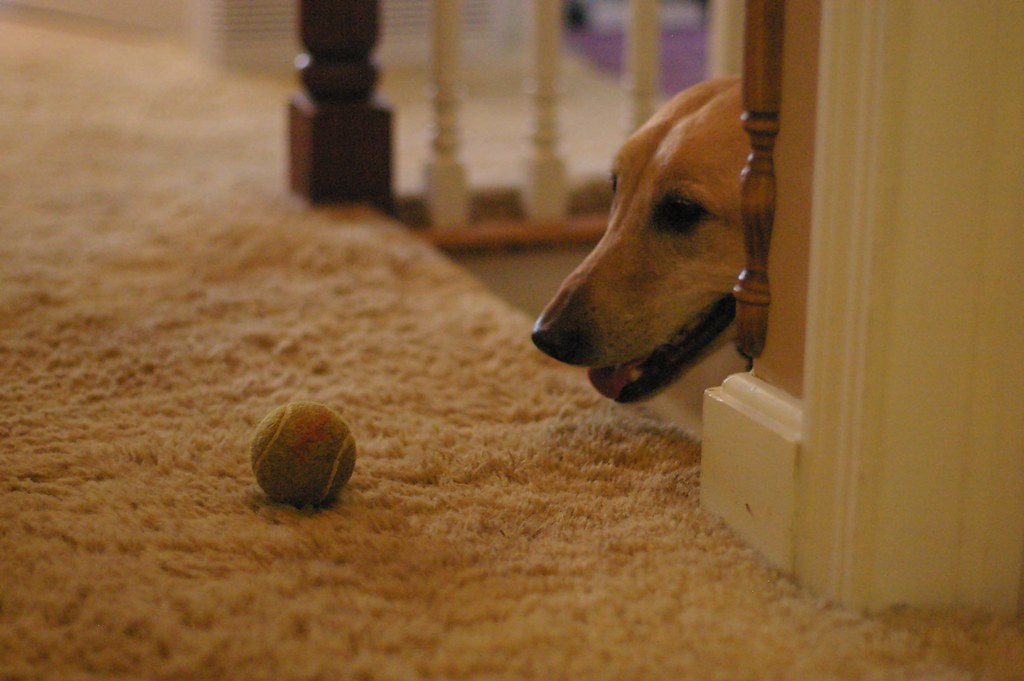
- Hallway fetch. A clear hallway makes a decent lane for gentle fetch with a soft, lightweight toy. Move the breakables first.
- Mini obstacle course. Cushions, boxes and a broom handle across two books make a course to weave through, step over and crawl under.
A few safety notes. Put down rugs or mats so your dog is not skidding on slippery floors. Skip repeated jumping or stair running for puppies, seniors and dogs with joint problems. Keep games calm and take a break if your dog gets over-excited.
Getting the most out of enrichment
Rotate toys
The same toys every day quickly lose their novelty, while a toy that has been in the cupboard for a fortnight feels new again. Keep three or four toys out, store the rest, and swap them over once a week. Do the same with puzzle feeders and snuffle mats. It keeps things interesting and saves you buying more gear.
Watch the food budget
So many enrichment ideas involve food that treats can quietly add up, and less walking plus more snacks is a recipe for weight gain. Use part of your dog’s daily ration for enrichment and reduce the bowl to match. Our guide to healthy weight for pets can help if the scales are creeping up.
Supervise and tailor
Supervise your dog with chews, DIY toys and anything with small parts, and check toys regularly for damage. Watch which activities your dog loves. Some are nose-driven and live for scent games, others prefer puzzles or learning tricks. Tailoring enrichment to your dog keeps them engaged and helps you notice when a game is too easy or too hard.
Little and often
A few short sessions spread across the day work better than one long play session after work. Working breeds, young dogs and dogs who normally get lots of exercise tend to feel a slowdown most, so build in several mini sessions for them. Older or unwell dogs may prefer gentler, shorter activities.
Winter: keep outdoor time where you can
Australian winters bring shorter days, cold snaps and plenty of rain, which is when indoor enrichment earns its keep. It is a brilliant supplement, but most dogs still need real outdoor exercise and toilet breaks most days. Aim for the mildest part of the day, keep walks shorter rather than skipping them, and dry your dog off well afterwards. Short-coated, small and older dogs may appreciate a well-fitted coat. Our guide on whether your dog needs a winter coat helps you decide.
Older dogs often feel the cold in their joints, so gentle indoor play is a good way to keep them moving. See our guide to easing winter joint pain in older pets for more.
When boredom might be something more
Most restlessness eases once a dog has more to do. Some behaviours point to something else, though:
- Destructive behaviour, howling or distress that happens only when your dog is left alone can suggest separation-related problems rather than boredom. Our separation anxiety guide explains the signs.
- A sudden change in behaviour, or a dog that seems withdrawn, anxious or uncomfortable, can be a sign of pain or illness.
- Night-time pacing, confusion or changed sleep in an older dog can be an early sign of canine cognitive dysfunction.
If restlessness continues despite plenty of enrichment, talk to your vet, who can rule out medical causes, or a qualified behaviourist.
Frequently asked questions
How much mental stimulation does my dog need each day?
It varies by dog. Most do well with a few short bursts of enrichment spread through the day alongside their usual walks. Puppies, working breeds and highly driven dogs generally need more, while older or unwell dogs may prefer gentler, shorter activities.
Can indoor games replace daily walks?
For most dogs, no. Walks provide fresh air, toileting, exercise and social contact that are hard to recreate inside. On truly unwalkable days, enrichment helps bridge the gap, but aim to get back to regular walks as soon as you can.
What are the easiest ideas to start today?
Scatter feeding, a stuffed and frozen rubber toy, a muffin-tin game and a round of “find it” are the easiest wins. They cost little, need no special skills and use things you already have at home.
Is tug-of-war bad for dogs?
No. Played with clear rules, tug is a great outlet. Teach a “drop it” cue, keep the game low and controlled, stop if teeth touch skin, and avoid hard yanking with puppies or dogs with neck or back problems.
Do older dogs need enrichment too?
Yes. Gentle scent games, lick mats and easy puzzles keep senior dogs mentally sharp, and the RSPCA notes enrichment can help slow age-related cognitive decline. Keep sessions short and avoid jumping and slippery floors.
Key takeaways
- Mental work tires dogs out as effectively as physical exercise, and it helps prevent barking, chewing and restlessness.
- Scent games and puzzle feeding are the fastest, cheapest ways to settle a restless dog indoors.
- Short, reward-based training and safe indoor play round out a good routine.
- Rotate toys, count enrichment food as part of the daily ration, and supervise with chews and DIY toys.
- In winter, keep up outdoor time where you can and protect older joints from the cold.
- See your vet if restlessness looks more like anxiety, pain or a sudden behaviour change.
This article is general information for Australian dog owners and is not a substitute for advice from a registered veterinarian or qualified behaviourist. If you are worried about your dog’s behaviour or health, contact your vet.