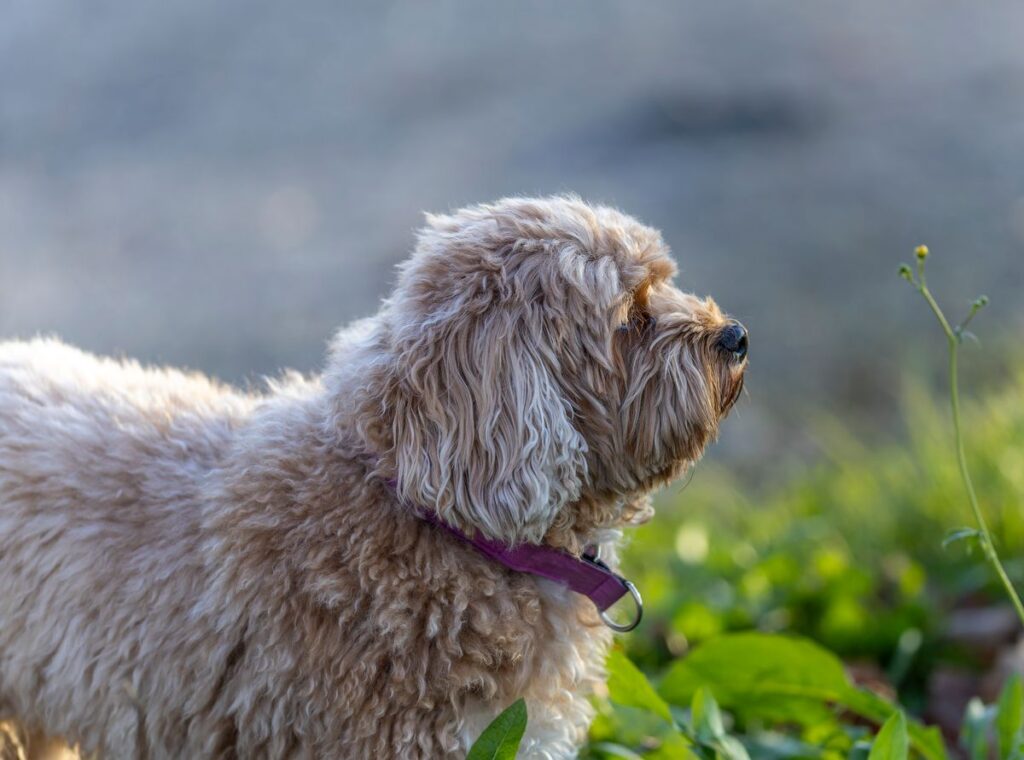
Cavoodles, Groodles and Labradoodles now dominate Aussie footpaths, and it is easy to see why: they are friendly, low-shedding and apartment-friendly. But that soft, curly coat comes with a catch, and winter is when it bites hardest. Cold, wet walks and damp coats are the perfect recipe for matting, and by the time you notice, the problem is often already under the surface. Here is how to keep your Oodle comfortable, clean and mat-free through an Australian winter.
Why Oodle coats mat faster in winter
Oodle coats do not shed the way a Labrador’s does. Instead of dropping loose hair, that hair stays in the coat and tangles around the strands still growing. Add moisture from rain, puddles and morning dew, plus friction from a raincoat or harness, and loose curls quickly twist into tight knots. Winter simply stacks every risk factor at once: wetter walks, more layers rubbing against the coat, and owners brushing less often because it is cold and dark. Mats usually start where friction is highest: behind the ears, under the collar and harness, in the armpits, and around the back legs.
Matting is a welfare issue, not just a cosmetic one
It is tempting to see a few knots as a tidy-up job, but severe matting genuinely hurts. When mats tighten against the skin they pull constantly and trap moisture and dirt underneath, and the ASPCA notes that dogs with matted, dirty coats can be prone to painful hot spots. Redness, sores and skin infections hidden beneath a pelted coat often only become visible once the hair is clipped away. A matted coat also hides lumps, ticks and wounds you would otherwise spot early. If your dog flinches when you touch a certain area, or the coat feels like a solid board rather than fluff, treat it as a health problem and speak with your vet or a professional groomer.
A winter brushing routine that actually works
The single biggest mistake owners make is brushing only the top layer. The fluffy surface looks fine while mats form silently against the skin. Breeds with a Poodle-type coat are rated by the Royal Kennel Club as needing grooming every day, and the fix is a technique groomers call line brushing: part the coat in sections and work from the skin outwards, so you are combing the whole strand, not just the tips. A slicker brush followed by a steel comb is the standard combination: if the comb glides to the skin without catching, that section is genuinely clear.
- Brush most days. Tight, woolly curls can tangle quickly, and the ASPCA suggests a daily grooming routine for dogs prone to matting, so aim for a short daily session rather than one big weekly battle.
- Always dry a wet coat fully. After a rainy walk or a bath, towel off and blow-dry on a cool setting while brushing: air-drying a curly coat is how mats set in.
- Check the friction zones. Behind the ears, under the collar and harness, armpits and back legs need extra attention.
- Never brush a bone-dry, matted coat. Use a detangling spray, and if a knot will not tease apart gently, stop rather than rip.
- Keep it short for winter. A shorter trim is far easier to maintain through the wet months than a long, show-style coat.
Wool, fleece or hair? Know your dog’s coat
Not every Oodle coat behaves the same way, even within a single litter. Tight, woolly curls tend to trap moisture and mat the fastest, and usually need daily attention. Looser, wavy fleece coats are often more forgiving, though they still need regular brushing. Straighter, hair-type coats mat least but still tangle around the ears and legs. If you are unsure which one your dog has, ask your groomer: it changes how often you need to pick up the comb.
When to book the groomer, and when shaving is the kind choice
Many groomers suggest a professional groom for Oodles roughly every six to eight weeks, and stretching that out over winter is a common reason coats get out of hand. Booking regularly is cheaper and far kinder than an emergency de-matting session. And if the coat has already pelted (matted right down to the skin so a comb cannot pass through), accept that it cannot be safely brushed out. Trying to tease apart a solid mat is painful and can tear the skin, and the MSD Veterinary Manual advises against cutting mats out with scissors, recommending electric clippers made for pets instead. In that situation a full clip-off is the humane reset, letting a fresh, healthy coat grow back. It is not a failure; it is the comfortable choice for your dog. For any skin redness, sores or signs of pain, consult a licensed veterinarian for diagnosis or treatment specific to your pet.
Frequently asked questions
How often should I brush my Cavoodle in winter?
Most Cavoodles benefit from a short brush most days in winter, especially if they have tight, woolly curls. Damp weather speeds up matting, so a few minutes daily is far easier than a long weekly session, and always dry the coat fully after wet walks or baths.
Should I shave my Oodle for winter?
You do not need to shave a well-maintained coat, and a moderate length can add warmth. But if the coat is badly matted or pelted, shaving is the safest and kindest option, because tightly matted hair cannot be brushed out without causing pain. Your groomer can advise on a practical winter length.
Why does my dog’s coat mat even though I brush it?
Usually because only the top layer is being brushed while mats form against the skin. Part the coat and brush from the skin outwards (line brushing), then run a steel comb through: if it catches, that area still has knots hiding underneath.
Key takeaways
- Winter’s wet, cold conditions make Oodle coats mat faster: plan for more brushing, not less.
- Line brush from the skin outwards and finish with a steel comb; the top layer lies.
- Always dry a wet or bathed coat fully before it sets into knots.
- Severe matting is painful and a welfare concern: regular home brushing plus professional grooming (often every six to eight weeks) helps prevent it.
- If a coat has pelted, a humane clip-off beats a painful de-matting, and any skin problems warrant a vet check.