
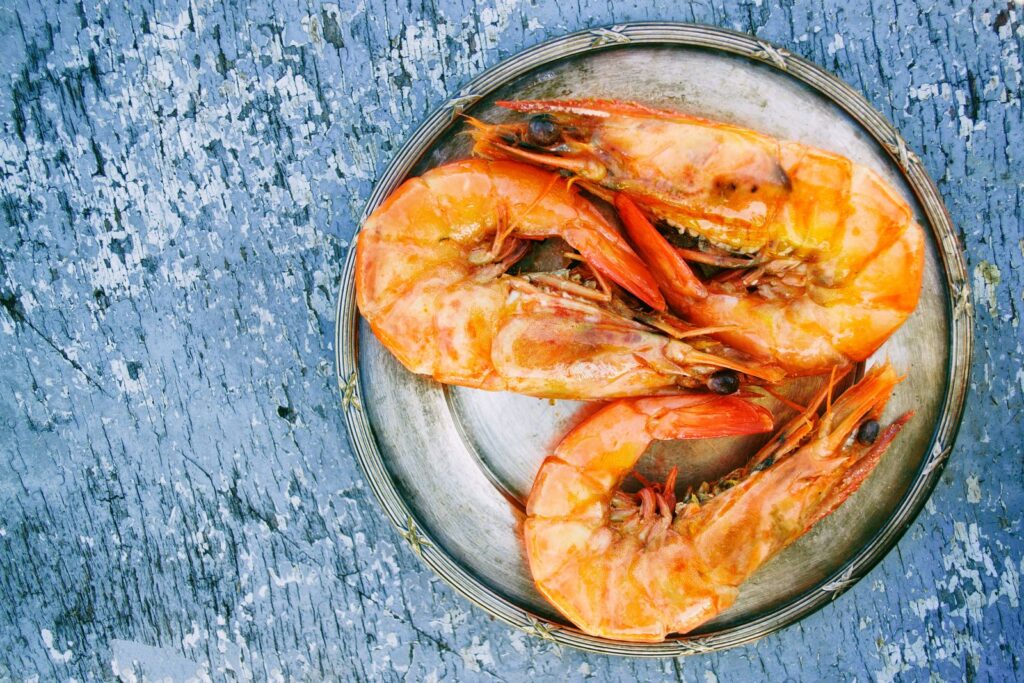
Yes, most dogs can eat prawns (called shrimp in the US) as an occasional treat, as long as they are fully cooked, completely peeled, and served plain. One or two prawns is plenty for a medium or large dog, and a small dog only needs part of one. Raw prawns, shells, heads, tails, and anything cooked in garlic butter, salt, batter or seafood sauce are the parts that cause problems.
Prawns are a fixture of the Aussie summer, so it is worth knowing which bits are fine to share and which belong in a sealed bin.
Are prawns good for dogs?
Plain prawn meat is not a superfood for dogs, but it is not a bad treat either. The American Kennel Club notes that shrimp provides vitamin B12, niacin, phosphorus and antioxidants, and is low in fat, calories and carbohydrates.
The same source points out that prawns are high in cholesterol, so they work as an occasional treat rather than a regular part of the diet.
Cooked, peeled and plain: the only safe way to share
If you want to give your dog a prawn, think of it as a three-step check.
- Cooked all the way through. The flesh should be opaque and firm, not translucent or grey. Steamed or boiled prawns are best.
- Fully peeled. Remove the head, legs, shell and tail. What is left should be just the soft meat.
- Nothing added. No butter, oil, garlic, salt, chilli, lemon pepper, marinade, batter or dipping sauce.
The AKC recommends steaming and advises against fried or breaded prawns. The easiest approach is to set aside one or two plain prawns before the rest of the batch is seasoned.
Why raw prawns are a bad idea
Raw shellfish can carry harmful pathogens, which is why the AKC says to cook prawns before your dog has any. The UC Davis veterinary Nutrition Support Service also lists raw animal products among the foods to avoid when choosing treats, and the ASPCA warns that raw animal foods can carry bacteria such as Salmonella and E. coli that can make both pets and people sick.
Seafood also spoils quickly in the heat. The Food Safety Information Council advises keeping seafood chilled in an esky with ice on the way home and storing it in a fridge at or below 5°C, eating prawns soon after purchase. A prawn that has sat on a platter in the afternoon sun is no better for your dog than it is for you.
Shells, heads and tails: the choking and blockage risk
The hard parts of a prawn are the biggest practical danger. According to the AKC, shrimp shells are a choking hazard and can cause obstructions, especially in small breeds. Heads and the spiky tail fans are tougher and sharper again, and a dog that finds a pile of them rarely stops at one.
The Cornell Riney Canine Health Center lists the common signs of a gut obstruction as vomiting, reduced appetite, belly pain, diarrhoea, dehydration and lethargy. If your dog has eaten a quantity of shells or heads and shows any of these signs, call your vet or nearest emergency vet. Do not wait to see whether it passes on its own, and do not try to make your dog vomit at home.

Garlic butter, salt, batter and seafood sauces
Most prawns that end up near a dog are not plain. They come off the barbecue in garlic butter, out of the fryer in batter, or dunked in cocktail sauce or aioli. Each of these brings its own problem.
- Garlic and onion. These belong to the allium family, which the ASPCA says can damage red blood cells and lead to anaemia. Garlic prawns, garlic aioli and many marinades are a no. Our guide to onion and garlic dangers for pets explains the signs and why cooked or powdered forms still count.
- Salt. Heavily salted prawns and salty dipping sauces are not ideal. The ASPCA notes that too much salt can cause increased thirst and urination, and in larger amounts vomiting, diarrhoea, tremors and seizures.
- Butter, oil and batter. Rich, fatty food can trigger vomiting, diarrhoea and, in some dogs, pancreatitis. Rather than repeat it here, see our post on fatty festive food and pancreatitis in dogs, which covers the warning signs in detail.
Shellfish allergy and intolerance in dogs
Some dogs simply do not agree with prawns. The AKC notes that dogs can react differently to shrimp, and advises stopping if you see an upset stomach and calling your vet if symptoms get worse. That is why the first prawn should be a small piece, followed by a day of watching.
True food allergy in dogs usually shows up on the skin. The Animal Dermatology Clinic, an Australian veterinary specialist practice, lists itching that does not respond to usual treatment, often on the face, ears, feet, armpits or belly, along with recurrent ear infections and gut signs such as vomiting, diarrhoea and flatulence. It also explains that food allergies can only be diagnosed with a strict elimination diet, and that blood, saliva and skin tests for food allergy are unreliable.
Watch for:
- Vomiting or diarrhoea within a day of eating prawns
- New itching, face rubbing or paw licking
- Red, inflamed ears
- Swelling of the face, hives, or any difficulty breathing, which needs a vet straight away
How many prawns can a dog have?
Vets use a simple guide for all extras: treats and other food items should not exceed 10% of your dog’s daily calories, with at least 90% coming from a complete and balanced diet. This is the guidance from the UC Davis veterinary Nutrition Support Service, which gives the example that a dog eating 100 Calories a day should get no more than 10 of those from treats.
On a summer day prawns are rarely the only extra, so count the chips and sausage ends too. If you want a low-fat summer alternative, plain fruit such as watermelon works well for many dogs. As a rough guide drawn from the AKC’s advice:
| Dog size | Suggested prawn treat | How often |
|---|---|---|
| Toy and small breeds | Part of one peeled prawn | Occasionally, not daily |
| Medium breeds | One peeled prawn | Occasionally, not daily |
| Large and giant breeds | One to two peeled prawns | Occasionally, not daily |
If your dog is on a weight-loss plan or a prescription diet, check with your vet before adding any extras. Our guide to healthy weight loss for pets explains how quickly small treats add up.

Christmas, the barbie and the bin: where the real risk is
Most prawn trouble in Australian dogs does not come from a carefully peeled treat. It comes from scraps. Think of the seafood platter left on a low coffee table, a guest slipping a garlic prawn under the table, or a bag of shells and heads tied up and left by the back door on a hot afternoon.
RSPCA Tasmania points out that food left on tables or in rubbish bags is one of the most common places pets steal food that makes them sick. Prawn waste is especially tempting because it smells strongly, and it gets worse the longer it sits in the heat.
A few simple habits help over the festive season and summer barbecue weekends:
- Bag and bin straight away. Put prawn shells and heads in a sealed bag, then into an outdoor bin with a lid your dog cannot knock over. Some owners keep the bag in the freezer until bin day to cut the smell.
- Brief your guests. Ask visitors, especially kids, not to feed the dog from their plates. One plain prawn from you is fine; ten garlic prawns from ten guests is not.
- Keep platters high. Coffee tables and picnic rugs are at nose height for most dogs.
- Watch the beach and park barbecues. Discarded prawn shells on the sand or around public barbecues are easy for a dog to grab on a walk.
Prawn shells are not the only festive scrap worth guarding. Cooked bones from the ham or turkey are even more dangerous, as covered in our post on why dogs should not eat cooked bones.
Can cats eat prawns?
Cats can have a small piece of plain, fully cooked and peeled prawn as an occasional treat, following the same rules as dogs. Skip anything raw, as the ASPCA warns that raw animal foods can carry harmful bacteria. Garlic and onion matter even more for cats, as the ASPCA notes that cats are more susceptible to allium damage than dogs. Cats are small, so a piece the size of your fingernail is plenty. For more on fish-based treats for cats, see our guide on whether cats can eat tuna.
Frequently asked questions
Can dogs eat prawn shells?
No. Prawn shells, heads and tails are a choking hazard and can cause a blockage in the gut, especially in small dogs. Always peel prawns completely before sharing, and bin the shells where your dog cannot reach them.
Can dogs eat raw prawns?
No. Raw shellfish can carry harmful bacteria and other pathogens. Only give your dog prawns that are cooked all the way through.
My dog ate garlic prawns. What should I do?
Garlic is part of the allium family, which can damage red blood cells in dogs. How serious it is depends on how much your dog ate relative to its size. Call your vet or nearest emergency vet for advice, and tell them roughly how many prawns and what the sauce contained.
Can puppies eat prawns?
Puppies need a carefully balanced diet for growth, so the simplest approach is to stick to their puppy food and puppy treats. Ask your vet before adding human food like prawns.
Are prawn crackers safe for dogs?
They are not a good choice. Prawn crackers are deep-fried and salty. A plain cooked prawn is a far better option.
Key takeaways
- Plain, fully cooked and peeled prawns are generally safe for dogs in small amounts.
- Never feed raw prawns, and do not share prawns that have been sitting out in the heat.
- Shells, heads and tails can cause choking or a gut blockage, so peel prawns completely and bin the waste securely.
- Avoid garlic butter, salt, batter and seafood sauces.
- Start with a small piece and watch for vomiting, diarrhoea, itching or swelling.
- Keep all treats, prawns included, under 10% of your dog’s daily calories.
- The biggest risk at Christmas and summer barbecues is scraps and bin raiding, not a single peeled prawn.
Sources
- American Kennel Club: Can Dogs Eat Shrimp?
- UC Davis Veterinary Medical Teaching Hospital, Nutrition Support Service: Treat guidelines for dogs
- ASPCA: People Foods to Avoid Feeding Your Pets
- Cornell University College of Veterinary Medicine: Gastrointestinal foreign body obstruction in dogs
- Animal Dermatology Clinic: Food allergies for dogs
- Food Safety Information Council: Seafood food safety
- RSPCA Tasmania: Make sure your pet has a pawsome Christmas
This article is general information only and is not a substitute for advice from a registered veterinarian. If your dog or cat has eaten something that worries you, or seems unwell, contact your vet or nearest emergency vet.


