Winter in Australia is peak comfort-food season. The slow cooker’s bubbling away, there’s a roast in the oven and a big pot of soup on the stove, and somewhere nearby, a hopeful set of eyes is watching every mouthful. It feels harmless to share a scrap of casserole or let the dog lick the gravy spoon. But some of the most common ingredients in our winter cooking (onion, garlic, leek and chives) are genuinely dangerous for dogs and cats.
These vegetables all belong to the Allium family, and they can quietly damage your pet’s red blood cells. The worrying part is that signs often don’t show up for a few days, so by the time your pet looks unwell, the meal is a distant memory. Here’s what every Aussie owner should know this winter.
Why Onion and Garlic Are Toxic to Pets
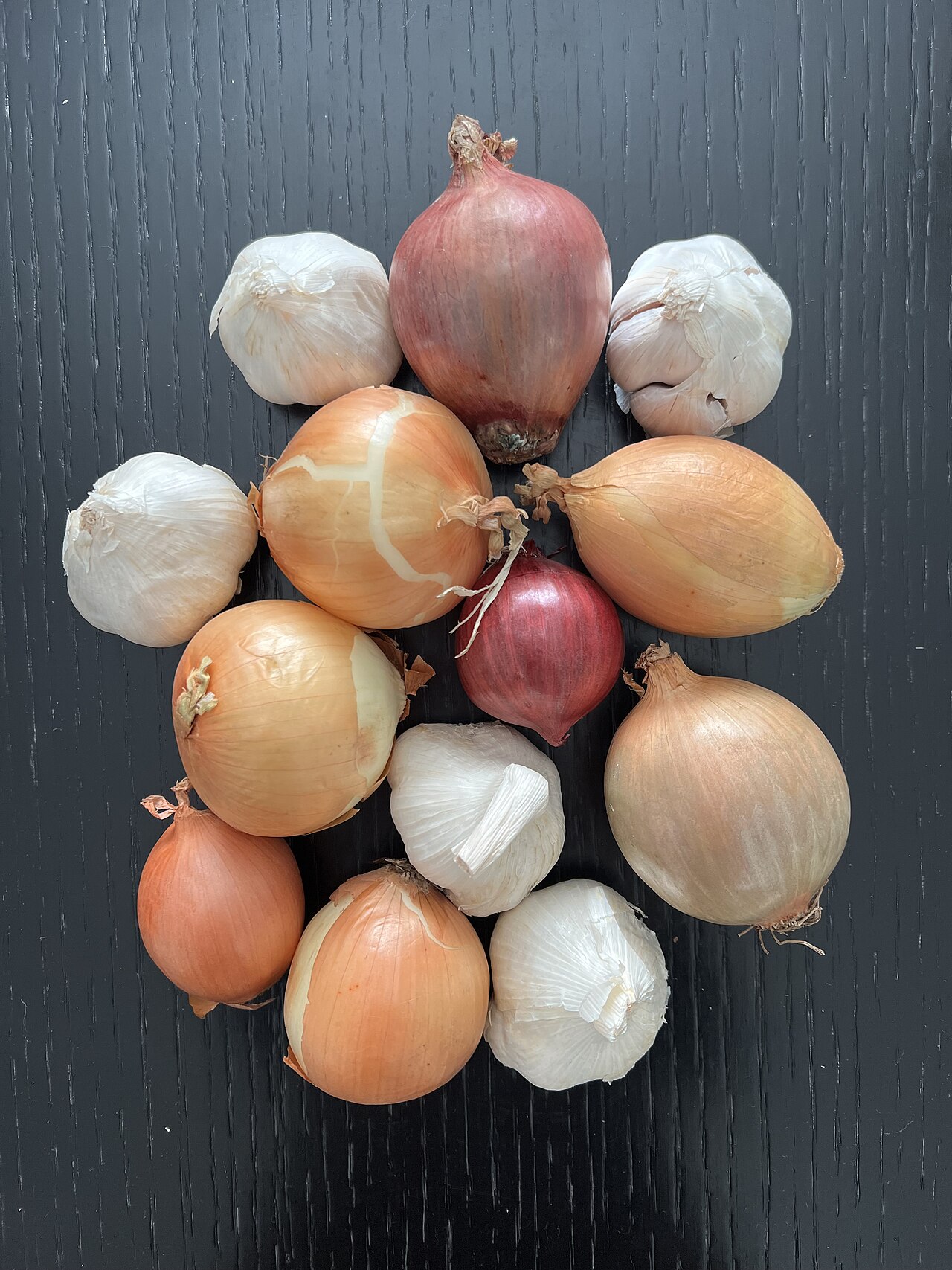
Onions, garlic, leeks, chives and shallots contain sulphur compounds (thiosulphates and related oxidants) that dogs and cats can’t process safely. Once absorbed, these compounds cause oxidative damage to red blood cells, forming what vets call Heinz bodies and making the cells rupture. The result can be haemolytic anaemia: a shortage of healthy red blood cells to carry oxygen around the body (Merck Veterinary Manual on allium toxicosis).
Importantly, cooking doesn’t make these foods safe. Raw, cooked, fried, powdered or dehydrated: all forms are toxic (Merck Veterinary Manual). In fact, concentrated forms like garlic powder, onion powder and dried soup or gravy mixes are among the riskiest, because a small amount packs a big dose. That leftover French onion dip or the stock cube in your casserole counts too.
How Much Is Too Much?
Toxicity depends on the type of allium, how concentrated it is, and your pet’s size and species. As a general guide, clinical signs have been seen in dogs after around 15 to 30 grams of raw onion per kilogram of body weight, while cats are more sensitive and can be affected at roughly 5 grams per kilogram. Garlic is considerably more potent than onion, around three to five times more toxic (Merck Veterinary Manual).
To put that in perspective, a small dog or a cat doesn’t need to eat much of a concentrated product to get into trouble. And repeated small amounts (a bit of gravy today, a crust of onion bread tomorrow) can add up. Cats are especially vulnerable (ASPCA Animal Poison Control), and some vets suggest certain Japanese breeds, such as the Akita and Shiba Inu, may be more susceptible than others. Because so many variables are involved, there’s no truly “safe” amount to aim for: the goal is zero.
Signs to Watch For
This is the tricky part: the timeline is delayed. You might see mild tummy upset early on, but the serious signs of anaemia can take one to several days to appear.
Early signs (within hours)
- Vomiting or diarrhoea
- Drooling or nausea
- Tummy pain or tenderness
- Going off their food
- Seeming a bit flat or tired
Later signs of anaemia (1–5 days later)
- Pale or yellowish gums
- Weakness, lethargy or reluctance to move
- Rapid breathing or fast heart rate
- Reddish or dark-coloured urine
- Collapse in severe cases
If your pet shows any of the later signs, treat it as an emergency and get to a vet straight away.
What to Do If Your Pet Eats Onion or Garlic
Don’t wait for symptoms to appear: act on the exposure. In Australia you can ring the Animal Poisons Helpline on 1300 869 738 (1300 TOX PET), a 24/7 service that can assess the risk based on your pet’s weight and how much they ate. Note that consultations are not free; the helpline lists fees from $75 (Animal Poisons Helpline). It’s a good number to save in your phone now.
- Take the food away and note what it was and roughly how much was eaten.
- Check the label if it was a packaged product: gravy mix, soup, dip or baby food often hide onion and garlic powder.
- Call the Animal Poisons Helpline or your vet for advice specific to your pet.
- Don’t try to make your pet vomit at home unless a vet or the helpline tells you to.
- Watch closely over the next several days, even if they seem fine at first.
If caught early, a vet may be able to reduce absorption and provide supportive care. There’s no specific antidote for allium poisoning, so treatment focuses on decontamination, fluids and, in severe cases, oxygen or a blood transfusion (Merck Veterinary Manual). The earlier the vet is involved, the better the outlook. Always consult a licensed veterinarian for diagnosis or treatment specific to your pet.
Simple Ways to Keep Winter Meals Pet-Safe
- Keep table scraps off the menu: most winter dishes contain onion or garlic somewhere.
- Store onions, garlic and leeks in a closed cupboard, not a low open basket a dog can raid.
- Skip commercial ‘human’ leftovers and stick to your pet’s normal food or vet-approved treats.
- Be wary of baby food and jarred sauces, which frequently contain onion powder.
- Let visitors and kids know that sharing dinner with the dog isn’t a treat: it’s a risk.
A little awareness goes a long way. With a few small habits, you can enjoy your winter cooking and keep your best mate safely curled up by the heater, not at the emergency vet.
Frequently Asked Questions
Is a tiny bit of garlic really that bad for dogs?
Garlic is more concentrated than onion, so even small amounts can add up, especially for small dogs and cats. While a single accidental crumb may not cause serious harm, there’s no proven safe dose, and regular small amounts can build toward anaemia. It’s safest to avoid garlic altogether, including ‘natural’ garlic supplements unless your vet specifically recommends one.
My dog ate onion yesterday and seems fine, should I worry?
Possibly. The dangerous signs of anaemia are often delayed by one to five days, so a pet can look normal at first and become unwell later. Ring the Animal Poisons Helpline on 1300 869 738 or your vet with your pet’s weight and the amount eaten, and keep a close eye on them over the next few days.
Are cooked onions safer than raw?
No. Cooking, frying or drying doesn’t remove the toxic compounds. Cooked onion in a casserole, caramelised onion, onion rings and gravy are all still dangerous, and dried or powdered forms are actually more concentrated.
What about onion or garlic in dog food and treats?
Reputable commercial pet foods are formulated to be safe and won’t contain harmful levels. The risk comes from human food, leftovers and packaged products made for people. When in doubt, check the ingredient list and ask your vet.
Key Takeaways
- Onion, garlic, leek, chives and shallots are all toxic to dogs and cats, cooked or raw.
- They damage red blood cells and can cause haemolytic anaemia.
- Cats and some dog breeds are especially sensitive; concentrated powders are the biggest risk.
- Signs of anaemia are often delayed one to five days, so don’t wait to act.
- Save the Animal Poisons Helpline (1300 869 738) and call early if your pet eats any allium.