Yes, most dogs can eat a little plain cheese as an occasional treat. Cheese is not toxic to dogs, and many vets and trainers use tiny pieces as rewards or to wrap a tablet. The catch is the dose: cheese is rich in fat and often salty, some dogs cannot digest the lactose in it, and certain cheeses carry real hazards such as mould, garlic, onion or chives. Keep portions to a few small cubes, pick plain, lower-fat types such as cottage cheese or mozzarella, and keep your dog well away from the Christmas cheese board.
With summer entertaining and Christmas only weeks away, cheese platters will soon be sitting at nose height on coffee tables across Australia, so here is what to know.
Is cheese safe for dogs?
For a healthy adult dog, a small amount of plain cheese is generally fine. The American Kennel Club describes cheese as acceptable in small to moderate quantities, while warning that it is high in fat and that feeding too much on a regular basis can lead to weight gain. Cheese offers protein and calcium, but your dog does not need it: a complete and balanced dog food already supplies those nutrients.
Lactose intolerance: signs to watch for
Adult dogs make relatively little lactase, the enzyme that breaks down milk sugar. The ASPCA notes that because pets lack significant amounts of lactase, milk and other dairy products can cause diarrhoea or other digestive upset. RSPCA Australia likewise advises against offering dogs milk because it can upset their gut.
Cheese contains much less lactose than milk, which is why many dogs handle a small piece without trouble. Even so, the AKC points out that dogs with severe lactose intolerance can react to cheese in small amounts. If you are trying cheese for the first time, offer one small piece and watch over the next day for:
- loose stools or diarrhoea
- a rumbling, gassy or uncomfortable tummy
- vomiting or going off their food
If any of these appear, cheese is not a good treat for your dog. Mild, one-off upsets usually settle, but vomiting or diarrhoea that continues, or a dog that seems flat or sore, needs a vet check.
Fat, salt and the pancreatitis risk
The bigger worry with cheese is fat. Hard and aged cheeses, cream cheese and triple-cream styles pack a lot of fat into a small piece, and the AKC warns that high-fat cheese can contribute to pancreatitis, a painful and potentially life-threatening inflammation of the pancreas. VCA Animal Hospitals lists a fatty meal as one possible trigger, with signs that include vomiting, abdominal pain, lethargy, diarrhoea, fever and a reduced appetite. Some dogs adopt a “praying” stance, front end down and rear end up.
Salt is the other issue. Many cheeses are salty, especially feta, haloumi and parmesan. According to the ASPCA, too much salt can cause increased thirst and urination and, in larger amounts, abnormal blood electrolytes. RSPCA Australia includes both fatty foods and salt on its list of things never to feed dogs.
We cover the fatty-food problem in more depth, including when a scavenging episode needs an urgent vet visit, in our guide to pancreatitis and fatty food in dogs.
Which cheeses are lower risk, and which to avoid
The AKC suggests that lower-fat cheeses such as mozzarella, cottage cheese and soft goat cheese are the better choices, and notes that cottage cheese is lower in fat and sodium than many other cheeses. Use the table below as a rough guide.
| Cheese | Verdict | Why |
|---|---|---|
| Plain cottage cheese | Lower risk | Lower in fat, salt and lactose than most cheeses |
| Plain mozzarella, bocconcini | Lower risk | Milder, lower-fat option that is easy to tear into tiny pieces |
| Mild cheddar, tasty, Swiss | Tiny amounts only | Higher in fat and salt; fine as a crumb-sized reward |
| Feta, haloumi, parmesan | Best avoided | Very salty |
| Brie, camembert, cream cheese, triple cream | Best avoided | Very rich in fat |
| Blue cheese, gorgonzola, roquefort, stilton | Avoid | Made with moulds that produce mycotoxins |
| Flavoured cheese with garlic, onion, chives or herbs | Avoid | Allium plants damage red blood cells |
Blue cheese and other mould-ripened cheeses
Blue-veined cheeses are made with Penicillium roqueforti, a mould that produces a mycotoxin called roquefortine C. A veterinary toxicology paper in the Journal of Veterinary Diagnostic Investigation notes that roquefortine C toxicosis has been described as a paralytic syndrome, and that the same mould family is involved in tremor-causing poisonings in dogs that eat mouldy food. A nibble of blue cheese will not necessarily cause problems, but there is no benefit in taking the risk. Keep blue cheese off the menu, and never let your dog eat mouldy leftovers from the fridge or compost bin.
Cheese with garlic, onion, chives or herbs
Garlic and herb spreads, chive cream cheese and flavoured cheddars are a hidden hazard. The ASPCA explains that onion, garlic and chives are Allium plants that can irritate the gut and damage red blood cells, leading to anaemia. The AKC also flags herb-flavoured cheeses as a problem for the same reason. Our article on onion and garlic toxicity in dogs and cats covers the signs and why the effect can be delayed.

The cheese platter problem
A typical Aussie grazing board is a minefield for dogs: rich cheeses, salty cured meats, crackers, dips flavoured with garlic or onion, and, very often, grapes, sultanas or dried fruit. The ASPCA warns that grapes and raisins can cause kidney damage in dogs. If your dog helps itself to a platter, the cheese may be the least of your worries, so read up on grape and sultana poisoning and call your vet straight away if grapes or dried fruit were on the board.
Practical tips for summer gatherings:
- Keep platters on a bench or high table, not a low coffee table.
- Ask guests not to share snacks with your dog.
- Put leftovers away promptly and secure the bin.
Using cheese for training and hiding tablets
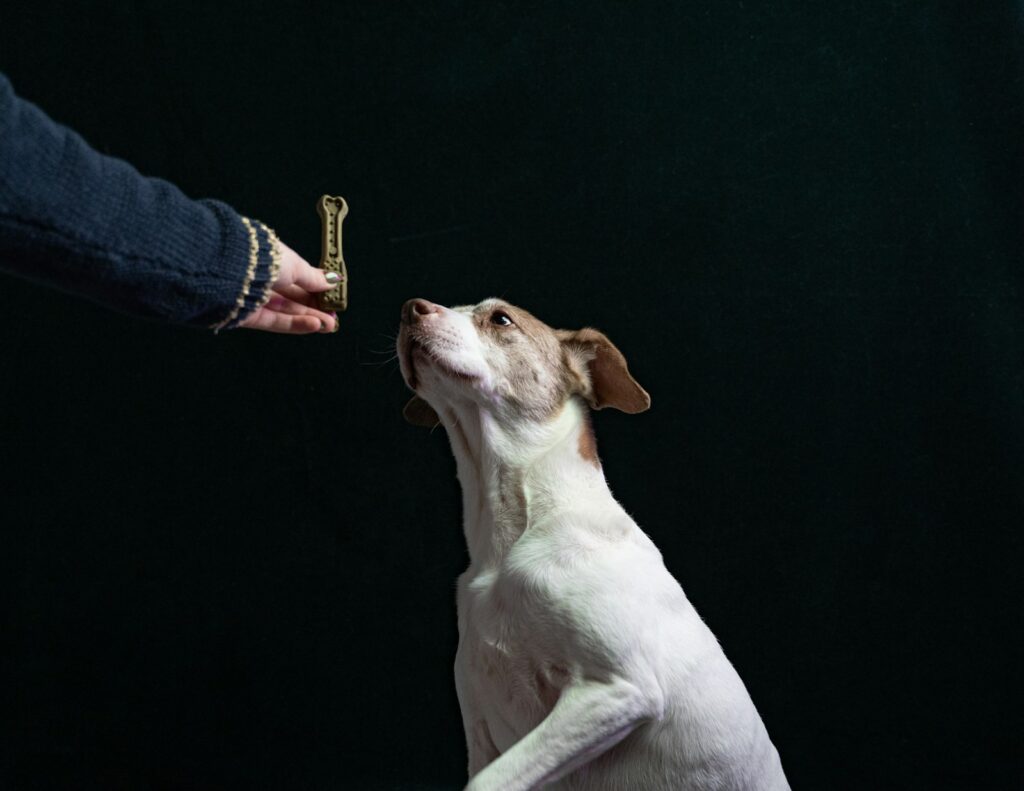
Cheese is one of the most useful tools in a dog owner’s kit precisely because dogs find it so appealing. The AKC notes that cheese is a good way to conceal tablets and that, as a training treat, a small cube or a few shreds is usually enough.
For training, cut mozzarella or mild cheddar into pea-sized pieces, and trim your dog’s dinner a little on heavy training days.
For tablets, wrap the pill in a small piece of soft cheese, then offer a plain piece first and a plain piece straight after so your dog gulps the medicated one without chewing. Before you do this, check with your vet or the label that the medicine can be given with food. Some medicines need to be given on an empty stomach, so this quick check matters.
How much cheese can a dog have?
The most widely used guide is the 10% rule. The AKC explains that treats should make up no more than 10% of a dog’s daily diet, and that the 10% refers to calories, not the number or volume of treats. Because cheese is so calorie-dense, it uses up that allowance quickly.
As a practical starting point:
- Toy and small dogs: one or two pea-sized pieces a day.
- Medium dogs: a few small cubes a day.
- Large dogs: a small handful of cubes, or a tablespoon or two of cottage cheese.
These are upper limits on days with no other treats, not daily targets.
Dogs that should skip cheese
Dogs with kidney disease
Dogs with chronic kidney disease are often prescribed a kidney support diet. VCA Animal Hospitals explains that these diets are formulated with reduced phosphorus, sodium and protein. Extra treats, including salty cheese, can work against that careful balance, so ask your vet which treats, if any, suit your dog’s diet.
Overweight dogs
Cheese is one of the easiest ways to add hidden calories. If your dog is carrying extra weight, swap cheese for low-calorie rewards such as small pieces of carrot, or use part of its daily kibble as training treats. Our guide to healthy weight loss for dogs and cats explains how to body condition score your pet at home.
Dogs with a history of pancreatitis or sensitive guts
If your dog has had pancreatitis before, or has a history of gut problems, a fatty treat is not worth the gamble. VCA notes that dogs recovering from a mild bout are fed small amounts of a low-fat, easy-to-digest diet, so check with your vet before reintroducing any cheese. The AKC also suggests that dogs with obesity or food sensitivities should see a vet before having cheese at all.
What about cats and cheese?
The ASPCA’s point about missing lactase applies to cats as well as dogs, so dairy can upset a cat’s stomach and cheese offers them nothing they need. A crumb of plain hard cheese is unlikely to harm most cats, but it should not become a regular treat. For more on dairy and cats, including kittens and supermarket “cat milk”, see our article Can cats drink milk?
Frequently asked questions
Can dogs eat cheese every day?
A healthy dog can have a pea-sized piece of plain, lower-fat cheese most days as long as it fits within the 10% treat allowance and causes no tummy upset. Large daily amounts add up quickly in fat, salt and calories.
Is cheese good for puppies?
Small pieces of mild cheese are often used in puppy training. Puppies have sensitive digestive systems, so start with a tiny amount and stop if you see loose stools. A complete puppy food provides everything a growing pup needs.
My dog ate a lot of cheese. What should I do?
Work out what type and roughly how much was eaten, and whether the cheese contained garlic, onion, chives or mould, or was eaten alongside grapes or other platter food. Call your vet or nearest emergency vet for advice, especially for a small dog, a dog with a history of pancreatitis, or any dog that starts vomiting or seems painful.
Key takeaways
- Most dogs can have small amounts of plain cheese as an occasional treat.
- Choose lower-fat, plainer types such as cottage cheese or mozzarella.
- Avoid blue cheese, mouldy cheese and any cheese flavoured with garlic, onion, chives or herbs.
- Rich, fatty cheese can contribute to pancreatitis, and salty cheese adds sodium.
- Stick to the 10% treat rule and use tiny pieces for training or pill hiding.
- Skip cheese for dogs with kidney disease, weight problems or a history of pancreatitis unless your vet approves.
- Keep summer and Christmas cheese platters, especially those with grapes, out of reach.
Sources
- American Kennel Club: Can Dogs Eat Cheese?
- ASPCA: People Foods to Avoid Feeding Your Pets
- RSPCA Australia Knowledgebase: What should I feed my dog?
- VCA Animal Hospitals: Pancreatitis in Dogs
- Journal of Veterinary Diagnostic Investigation (PubMed): Using roquefortine C as a biomarker for penitrem A intoxication
- American Kennel Club: How Many Treats Can a Dog Have?
- VCA Animal Hospitals: Nutrition for Dogs with Chronic Kidney Disease
This article is general information for Australian pet owners and is not a substitute for advice from a registered veterinarian who has examined your pet. If your dog has eaten something that worries you, call your vet or nearest emergency vet.