
A little clear or light brown crust in the corner of your dog’s eyes after sleep is normal, but continual weeping, sticky mucus, or yellow or green discharge is not. Goopy eyes in dogs usually come from allergies, conjunctivitis, dry eye, blocked tear ducts, eyelid problems or something stuck in the eye, and a squinting, cloudy or bulging eye needs a vet the same day. The UK vet charity PDSA puts it simply: a small amount of crusting is normal, but continual weeping or a sticky discharge isn’t.
Normal eye gunk vs discharge that needs attention
Tears constantly wash the surface of the eye and drain away through small ducts near the inner corner into the nose, as the MSD Veterinary Manual explains. Overnight, some dries into a small crust at the inner corner. If it is small, similar each morning and the eye is bright and comfortable, that is ordinary sleep gunk.
The American Kennel Club says to see a vet for thick, smelly or discoloured discharge, redness, swelling, squinting, frequent rubbing, or irritation that persists or worsens.
A quick colour guide
Colour is not a diagnosis, but it helps you judge how quickly to act.
| What you see | Common causes | What to do |
|---|---|---|
| Clear, watery tears | Allergies, irritants, wind, blocked drainage, something in the eye | Watch a day or two; see the vet if it persists or is one-sided |
| Grey or white mucus, stringy or sticky | Conjunctivitis, dry eye (KCS), eyelid problems | Book a vet check |
| Thick yellow or green pus | Infection, dry eye, corneal ulcer | See your vet promptly |
| Rusty or red-brown staining on the fur | Long-term tear overflow; pigment in tears darkens as it dries | Get new or one-sided staining checked |
The rusty colour of tear stains comes from porphyrin, an iron-containing pigment in tears, and it shows up most on pale coats, according to VCA Animal Hospitals.
Common causes of goopy eyes in dogs
Allergies and spring pollen
Late spring is pollen season, and for allergic dogs itchy, weepy eyes often arrive alongside the paw licking and scratching. VCA lists seasonal and inhaled allergens among the causes of conjunctivitis. Allergic eyes tend to be watery and pink in both eyes. Allergies are not just a skin story: in a study of 60 dogs with atopic dermatitis, 60% had eye or eyelid signs of allergy, most commonly reddened conjunctiva. If your dog’s weepy eyes come with itchy skin this time of year, read our guide to spring itch and atopic dermatitis in dogs for the wider picture.
Conjunctivitis
Conjunctivitis is inflammation of the pink membranes lining the eyelids and the white of the eye. VCA describes cloudy, yellow or greenish discharge, squinting, excessive blinking and redness or swelling around the eyes. Causes range from infections and allergens to smoke, foreign bodies, eyelash problems, dry eye and ulcers, so your vet will look for the underlying trigger.
Dry eye (keratoconjunctivitis sicca, KCS)
It sounds backwards, but a dog not making enough tears often has the goopiest eyes of all. Cornell University’s Riney Canine Health Center lists thick yellow-green discharge, a dull or dry-looking eye, redness, squinting and pawing at the face as typical signs. It is most often immune-mediated, and breeds such as Cavaliers, Shih Tzus, Westies and pugs are over-represented. KCS usually needs lifelong treatment, and if it is left alone it can lead to painful ulcers, scarring and permanent vision loss.
Blocked tear ducts
When tears cannot drain properly into the nose, they spill over the lids and down the face. VCA notes that the drainage openings can be blocked by hair, debris or a foreign body, narrowed by chronic inflammation, or simply poorly positioned in flat-faced breeds. The result is a wet, stained face. If a duct is truly blocked, a vet may flush it under anaesthetic.

Eyelid problems such as entropion
In entropion the eyelid rolls inwards so that hair and lashes rub on the eye. VCA lists squinting, excessive tearing and sometimes a mucoid, goopy discharge, usually in both eyes and usually noticed before one year of age. Shar peis, chow chows, bulldogs and mastiffs are among the prone breeds. Rubbing can cause ulcers and scarring, so it is corrected surgically.
Grass seeds and other foreign bodies
One suddenly squinting, streaming eye after a walk could well be a grass seed, especially in late spring. Seeds can hide under the eyelids where you cannot see them, and the MSD Veterinary Manual lists grass awns among the foreign objects that can cause inflammation in the tissues around the eye. Do not go digging around the eye yourself; see your vet the same day. Our article on grass seeds in dogs covers prevention and the after-walk check.
Corneal ulcers
An ulcer is a scratch or erosion through the clear front surface of the eye. VCA says ulcers are very painful: dogs squint, rub the eye on the carpet or with a paw, and hold the lids shut, and the eye may look cloudy, with discharge collecting in the corner. Trauma is the most common cause, followed by chemicals such as shampoo, infection, dry eye and eyelid problems. Some deepen quickly and can threaten the eye, so do not wait to see if it settles.
Flat-faced breeds and prominent eyes
Pugs, French bulldogs, Shih Tzus and other brachycephalic breeds have large, exposed eyes. PDSA notes they tend to have weepy eyes and tear staining because of their face shape, and can develop exposure keratitis when the lids do not fully cover the eye. VCA lists them among the breeds more prone to corneal ulcers. Our guide to brachycephalic breeds covers their other health needs.
How to clean your dog’s eyes gently at home
Cleaning removes crust but does not treat the cause, so get coloured or persistent discharge diagnosed first.
- Get set up. Use cotton pads dampened with warm water or sterile saline, and have treats ready.
- Soften first. Hold the damp pad on dried crust for a few seconds; never scrub.
- Wipe outwards. The AKC recommends wiping along the eyelid towards the ear, using a fresh pad for each eye, and not trying to hold the eye open.
- Flush only for minor grit. For dust or small particles, sterile saline can be used to rinse the eye, per the same AKC advice.
- Dry the fur. Pat the area dry afterwards.
- Keep hair short. Trim long hair around the eyes with blunt-nosed scissors.
VCA’s advice on tear stains is to clean the area at least twice daily for dogs prone to staining and to check with your vet before using any product. VCA also warns never to use hydrogen peroxide near the eyes, as it can cause serious damage.
Never reach for human eye drops
VCA is clear: do not put any cleansers or drops in your dog’s eyes without consulting your vet first. The ASPCA warns that some ingredients in human eye drops and nasal sprays can cause vomiting, weakness, agitation, a low heart rate and low blood pressure in pets, even in very small amounts. Medicated drops are not interchangeable either: the MSD Veterinary Manual notes that some combination eye drops are only used when there are no sores on the cornea, which is another reason your vet needs to look first. Our article on why human allergy medication is risky for pets explains the wider problem.
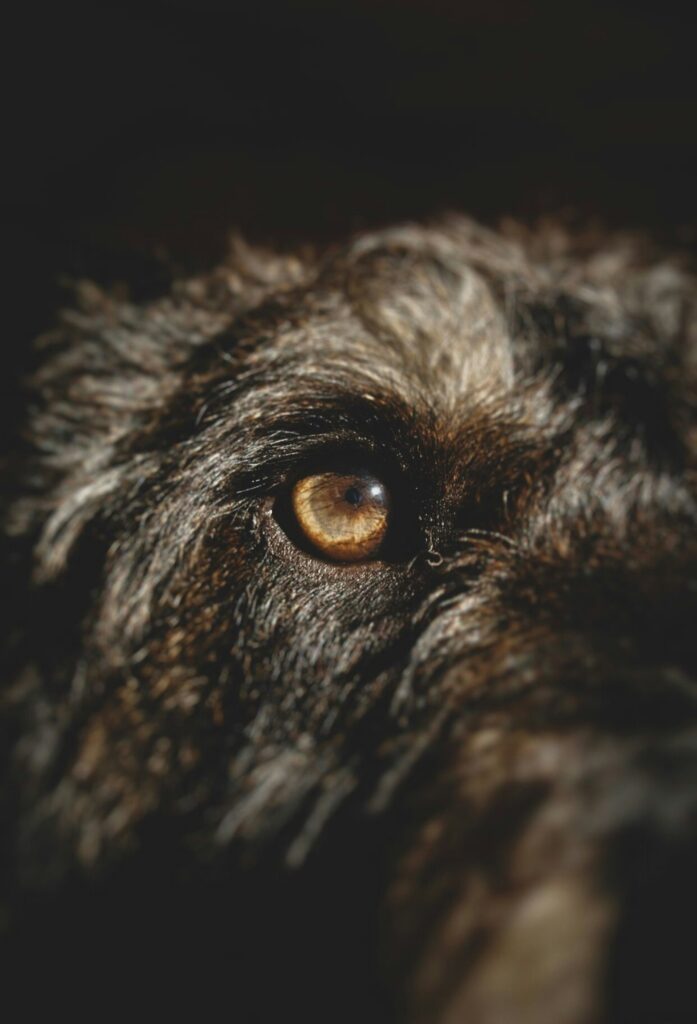
Emergency signs: see a vet today
Call your vet, or your nearest emergency vet after hours, if you notice:
- Squinting or holding an eye shut, pawing or rubbing the face on the floor.
- A cloudy, blue-tinged or suddenly hazy eye. VCA lists a cloudy or bluish cornea, a red eye and an enlarged eye as signs of glaucoma, an emergency in which vision can be lost very quickly unless eye pressure is brought down.
- An eye that bulges or has popped forward. Proptosis usually follows blunt trauma, and brachycephalic breeds are predisposed. The MSD Veterinary Manual says treatment starts with keeping the exposed eye moist; cover it with a clean, damp cloth and go straight to a vet.
- Any eye injury, a visible scratch, bleeding, or a chemical such as shampoo or cleaning product splashed in the eye.
- Sudden discharge from one eye only after a walk through long grass.
What the vet will do
Expect a full eye examination. The two key tests are:
- Schirmer tear test. A small paper strip is tucked under the lower lid for one minute to measure tear production. It is the key test for dry eye, according to Cornell.
- Fluorescein stain. A drop of orange dye sticks to any damaged area of the cornea and glows green under blue light, so even small ulcers become visible, as VCA describes. If the dye appears at the nostril within a few minutes, that also shows the tear ducts are draining, as VCA’s epiphora guide explains.
Your vet may also measure eye pressure, look behind the eyelids and third eyelid for grass seeds, flush the tear ducts, or take swabs, as VCA’s conjunctivitis guide outlines. Treatment then targets the cause.
Frequently asked questions
Is it normal for my dog to have eye boogers every morning?
Yes, a small amount of clear or light brown crust at the inner corner after sleep is normal, as long as it is about the same each day and your dog’s eyes are otherwise clear and comfortable.
Can dog conjunctivitis clear up on its own?
Mild irritation may settle in a day or so, but conjunctivitis often signals another problem. If discharge lasts more than a couple of days or turns yellow or green, see your vet.
Why does only one of my dog’s eyes have discharge?
One-sided discharge suggests a local problem such as a grass seed, scratch or ulcer. Treat sudden one-sided weeping as a same-day vet visit.
Key takeaways
- A little clear or light brown morning crust is normal; constant weeping, sticky mucus or yellow-green pus is not.
- Common causes include allergies, conjunctivitis, dry eye, blocked ducts, entropion, grass seeds and ulcers; flat-faced breeds are especially prone.
- Clean gently with warm water or sterile saline, wiping outwards, and never use human eye drops or hydrogen peroxide.
- Squinting, a cloudy eye, a bulging eye or any injury needs a vet the same day.
Sources
- PDSA: Weepy eyes in dogs
- MSD Veterinary Manual: Disorders of the Nasal Cavity and Tear Ducts in Dogs
- MSD Veterinary Manual: Disorders of the Orbit in Dogs
- MSD Veterinary Manual: Proptosis in Animals
- American Kennel Club: The Eyes and Ears of Good Grooming
- VCA Animal Hospitals: Puppy Tear Stains
- VCA Animal Hospitals: Eye Discharge (Epiphora) in Dogs
- VCA Animal Hospitals: Conjunctivitis in Dogs
- VCA Animal Hospitals: Corneal Ulcers in Dogs
- VCA Animal Hospitals: Entropion in Dogs
- VCA Animal Hospitals: Glaucoma in Dogs
- Cornell University College of Veterinary Medicine: Keratoconjunctivitis Sicca (KCS) in Dogs
- Veterinary Ophthalmology (PubMed): Allergic conjunctivitis and conjunctival provocation tests in atopic dogs
- ASPCA: Can Human Allergy Medication Be Harmful to Pets?
This article is general information only and is not a substitute for advice from a registered veterinarian. If your dog has a painful, cloudy, bulging or injured eye, contact your vet or nearest emergency vet straight away.