
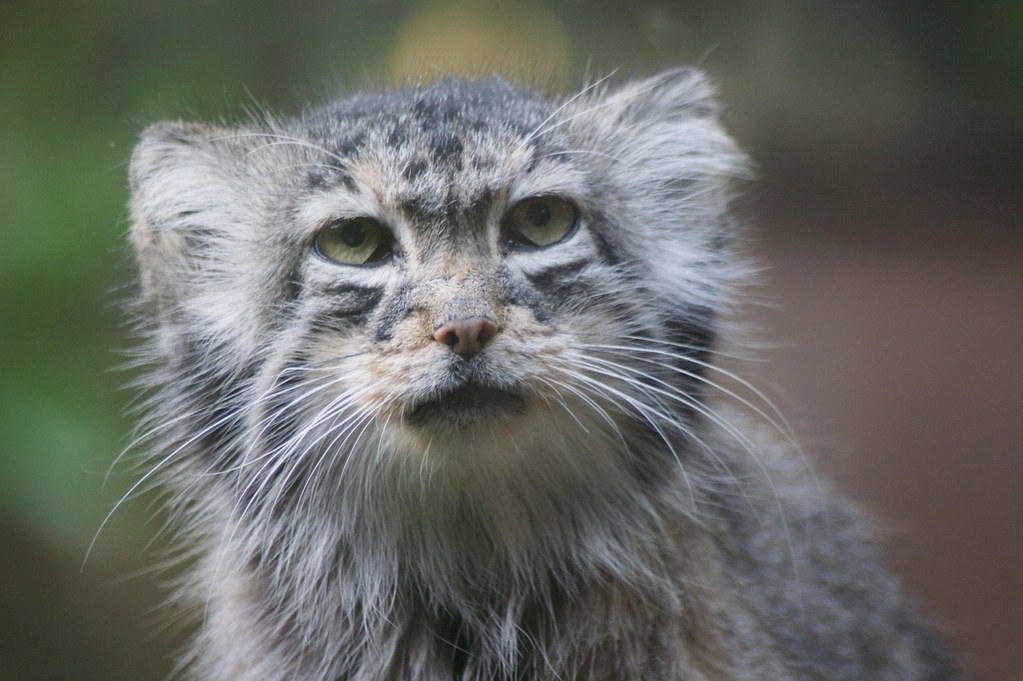
If you have ever scrolled past a photo of a fluffy, round-faced cat that looks deeply unimpressed with the world, chances are you were looking at a Pallas’s cat. Also known as the manul, this small wild cat has become an internet favourite thanks to its flat face, stocky build and wonderfully expressive scowl. Behind the memes is a remarkable survivor, built for some of the coldest, harshest landscapes on Earth. Here is what the Pallas’s cat actually is, where it lives, how it survives, why its future is less secure than its status suggests, and why, however cuddly it looks, it is not a pet.
What is a Pallas’s cat?
The Pallas’s cat (Otocolobus manul) is a small wild cat native to the grasslands, steppes and mountains of Central Asia. It is named after the German naturalist Peter Simon Pallas, who first described the species in 1776. It sits in its own genus, Otocolobus, so despite the resemblance it is not simply a fluffy house cat gone wild.
It is roughly the size of a domestic cat, but its dense fur, short legs and low, rounded body make it look considerably bigger and heavier than it really is. Much of that bulk is simply hair.
Pallas’s cat facts at a glance
| Scientific name | Otocolobus manul |
|---|---|
| Other names | Manul, Pallas cat |
| Weight | About 2 to 5 kg |
| Body length | About 46 to 65 cm, plus a bushy 21 to 31 cm tail |
| Coat | Long, extremely dense fur, grey in the north of its range and more tawny or fox-red in the south |
| Diet | Mainly pikas and small rodents such as voles, gerbils and hamsters |
| Behaviour | Solitary, secretive and mainly active around dawn and dusk |
| Habitat | Cold, dry steppe, montane grassland, rocky slopes and semi-desert, up to about 5,600 m |
| Litter size | Usually 3 to 4 kittens, born mostly in April and May |
| Lifespan | About 8 to 10 years |
| IUCN status | Least Concern (since 2020), with a declining population |
Measurements and life-history figures are from the IUCN SSC Cat Specialist Group species profile.
Where do Pallas’s cats live?
Pallas’s cats are found across a wide but patchy range, from the Caucasus and the Iranian Plateau through Central Asia, Afghanistan and Pakistan, parts of the Himalayas and the Tibetan Plateau, to southern Siberia, Mongolia and northern China. The largest populations are thought to be in Mongolia. The species is considered extinct in Armenia and Azerbaijan.
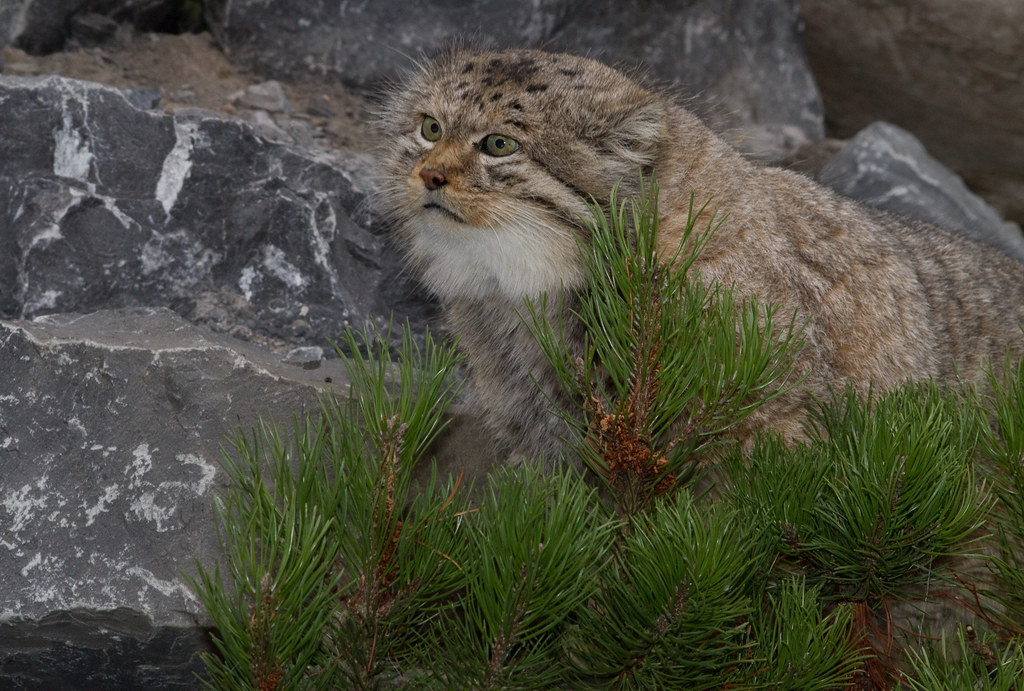
They live in an extreme continental climate: little rain, low humidity and bitterly cold winters. Typical habitat includes montane grassland, shrub and grass steppe, stony alpine desert and semi-desert. Within that, manuls prefer complex terrain with rock cover, hillslopes and ravines, and tend to avoid wide-open grassland with nowhere to hide.
Snow is a key limit. The Cat Specialist Group notes that snow deeper than about 15 cm restricts where they can live, because deep snow makes it hard for a short-legged hunter to move around and catch prey.
During the day manuls shelter in rock crevices, small caves and abandoned burrows, especially those dug by marmots. That dependence on marmot burrows for shelter and denning is one reason marmot hunting affects them.
Built for the cold: the manul’s adaptations
Almost everything that makes the Pallas’s cat look odd is an adaptation to its harsh, frigid home:
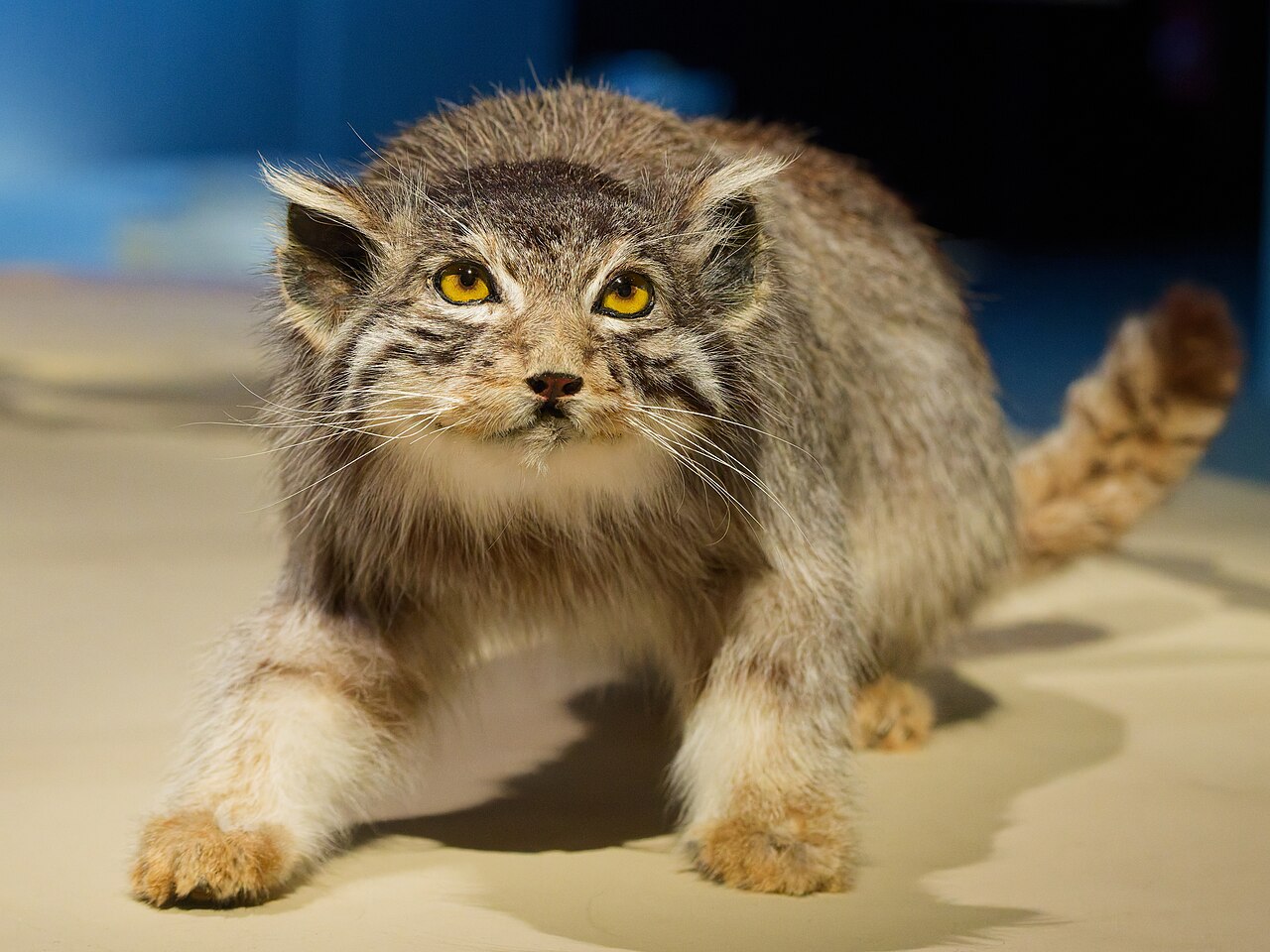
- Extraordinary fur. The manul has one of the thickest, densest coats of any cat. The hair on its underparts is nearly twice as long as on its back and sides, which insulates it while lying on frozen ground or snow. White-tipped hairs give the coat a frosted look that blends into rock and scrub.
- Low, wide-set ears. Its small, rounded ears sit low on the sides of the head rather than on top. This lets it peer over rocks and ridges while keeping its silhouette hidden, which is handy for an animal that hunts in open country.
- Round pupils. Unlike the vertical slits of a domestic cat, a manul’s pupils contract into small round circles in bright light.
- A bushy tail used as a blanket. Manuls often wrap their thick tail around themselves to keep their paws and face warm.
- A stocky, low body. Short legs and a compact frame keep the cat low while stalking, though they make it a poor runner.
If you are curious how domestic cats handle the cold, our guide to keeping your cat warm through an Australian winter covers practical tips. Pet cats are far less cold-hardy than their steppe cousins.
Diet and hunting style
The Pallas’s cat is a patient ambush predator rather than a sprinter. Its short legs are not built for long chases, so it relies on stealth and cover. The Cat Specialist Group describes three main hunting techniques: stalking, moving slowly through vegetation to flush prey, and waiting in ambush at burrow entrances.
Pikas, small round-eared relatives of rabbits, are its main prey in many areas, alongside small rodents such as voles, gerbils, hamsters and jerboas. Most prey weighs between about 50 and 300 grams, and birds and insects are taken occasionally. By eating rodents and pikas, manuls play a role in the balance of their grassland ecosystems.
This reliance on a fairly narrow range of prey makes the species vulnerable. When pika and rodent numbers fall, whether from natural cycles or from poisoning campaigns, manuls struggle to find enough food.
Behaviour and family life
Pallas’s cats are solitary and secretive. They are mainly active around dawn and dusk, but can be active at any time of day or night. Males can roam home ranges from a few square kilometres to more than 200 square kilometres.
Breeding is highly seasonal. After a pregnancy of around 66 to 75 days, most kittens are born in April and May in a sheltered den. Life is tough for the young: the Cat Specialist Group estimates that around two-thirds of kittens in the wild do not survive to independence. Young cats disperse at roughly four to five months old.
Is the Pallas’s cat endangered?
The Pallas’s cat is listed as Least Concern on the IUCN Red List. It was moved from Near Threatened to Least Concern in 2020 because of its wide range and assumed large overall population. That label is easy to misread, though. The global population is believed to be declining and is highly fragmented, and the species is listed as threatened on several national red lists, including Endangered in China and Turkmenistan. It is also listed on Appendix II of CITES, which controls international trade.
The main threats identified by the Cat Specialist Group are:
- Habitat loss and fragmentation, from overgrazing by livestock and conversion of steppe to farmland, mining and infrastructure
- Prey decline, including poisoning of pikas and rodents in parts of its range
- Loss of marmot burrows, as marmots are overhunted
- Hunting and trapping for fur, and accidental shooting when mistaken for marmots
- Predation by herding and domestic dogs, a major threat in many areas
- Climate change, which may bring deeper snow and more wildfires to parts of its range
Because the species is so secretive and thinly spread across remote terrain, getting accurate population counts is genuinely difficult. Conservation work, coordinated by groups such as the Pallas’s Cat International Conservation Alliance and the Manul Working Group, focuses on research, monitoring and protecting steppe habitat. The manul’s online fame has helped raise awareness and funding.
Why a Pallas’s cat is not a pet
It is easy to look at those fluffy cheeks and imagine one curled up on the couch, but the manul is a wild animal with needs no home can reasonably meet.
- It is not domesticated. Manuls are shy, easily stressed and adapted to huge territories, extreme cold and a specialised diet.
- Even zoos find them hard to keep. Kitten deaths in zoos are unusually high, and captive manuls are highly susceptible to toxoplasmosis, a parasite infection that most domestic cats cope with easily. Researchers are still working out why. Our guide to toxoplasmosis and cats explains the parasite.
- It is illegal to keep one in Australia. Live animals can only be imported under the EPBC Act if they are on the Live Import List. The domestic cat is on that list, but wild cat species such as the manul are not, and even domestic-wild hybrids like the Savannah cat are excluded. International trade in manuls is also controlled under CITES.
Australia’s rules on wild and hybrid cats are strict for good reason, given the damage cats already do to native wildlife. Our articles on the Bengal cat import changes and the Savannah cat cover how this plays out for hybrid breeds. If you love the look of the manul, the best way to help is to admire it from afar and support the conservation groups protecting its habitat.
Frequently asked questions
Can you keep a Pallas’s cat as a pet in Australia?
No. They are wild animals that are poorly suited to captivity, and wild cat species cannot legally be imported into Australia as pets. Even specialist zoos find them challenging to keep healthy.
Why does the Pallas’s cat look so grumpy?
Its “grumpy” expression comes from its flat face, low-set ears, round pupils and thick fur around the cheeks. These features are adaptations to cold, open habitat rather than a reflection of its mood.
How big is a Pallas’s cat?
About the size of a house cat: roughly 46 to 65 cm long in the body with a bushy 21 to 31 cm tail, and weighing around 2 to 5 kg. It looks larger because of its exceptionally thick fur.
Is the Pallas’s cat related to domestic cats?
It is a member of the cat family, Felidae, but sits in its own genus, Otocolobus. It is a distant cousin of the domestic cat, and it is a wild animal, not a domesticated one.
Key takeaways
- The Pallas’s cat, or manul, is a small wild cat of the cold steppes and mountains of Central Asia, about the size of a house cat.
- Its thick fur, low-set ears, round pupils and stocky build are all adaptations to extreme cold and open, rocky terrain.
- It hunts by stealth and ambush, mainly eating pikas and small rodents.
- It is listed as Least Concern by the IUCN, but its population is declining and fragmented, threatened by habitat loss, prey poisoning, hunting and dogs.
- It is not a pet. It is hard to keep even in zoos, and wild cats cannot legally be imported into Australia.
This article is general information for curious cat lovers. For advice about caring for your own cat, or questions about exotic animals and the law, speak to a registered veterinarian or the relevant government authority.