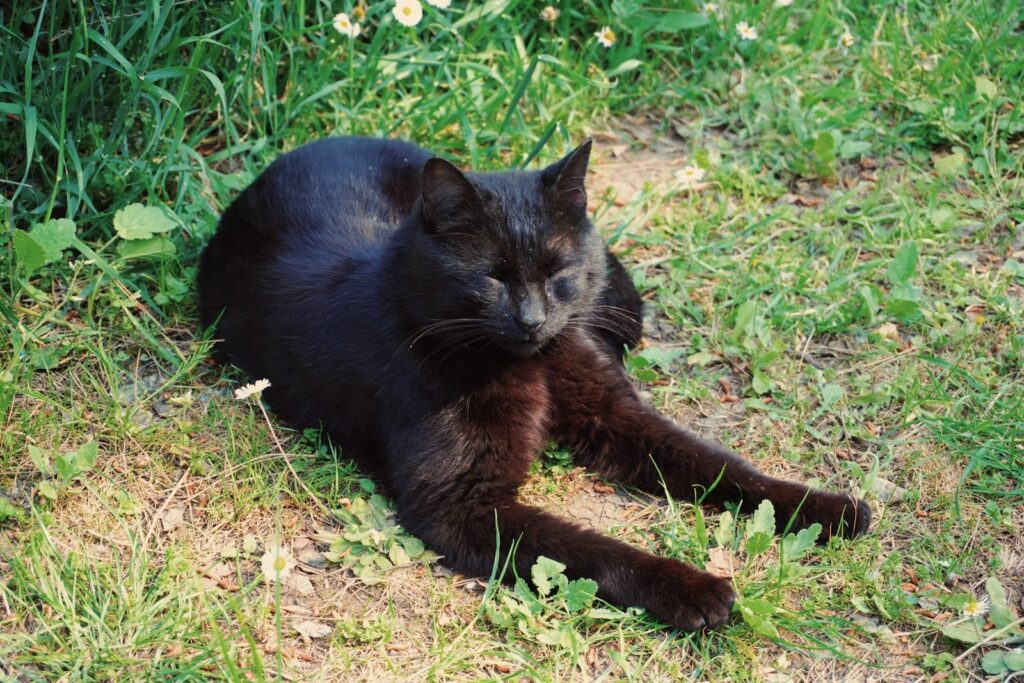
Black cats are not unlucky, and the honest answer to “do black cats wait longer in shelters?” is: sometimes, a little, depending on the shelter and the study. Some research found black cats took a few extra days to be adopted, while other studies found little or no difference. What is consistent is that black cats are very common in shelters, so there are simply more of them waiting. With National Black Cat Day on 27 October, here is what the evidence says, where the myths came from, and how to welcome a black cat into your home.
What is Black Cat Day?
National Black Cat Day was started by the UK charity Cats Protection. According to its history of the day, it launched on 27 October 2011 as Black Cat Awareness Day, after the charity found that black cats in its care took about a week longer on average to find a home than cats of other colours. It was renamed National Black Cat Day in 2012 and has been held every 27 October since, close enough to Halloween to push back against spooky stereotypes.
Cats Protection says the gap in its own centres has narrowed. By 2019 black cats were taking about two more days on average to be rehomed, and by 2020 they spent ten fewer days in care than a decade earlier. The day is a UK campaign, but shelters and owners around the world, including in Australia, now use it to show off their black cats.
Do black cats really wait longer to be adopted?
This is where you need to read past the headlines. The research is genuinely mixed.
Studies that found a disadvantage
- Colorado, 2013. Researchers at Colorado State University analysed nine years of records from one shelter and 18 years from another. They reported that adult black cats took about three more days to be adopted than mostly black cats, and four to six more days than cats of other colours. The lead researcher said they could not confirm superstition was the cause, and suggested that black cats being hard to photograph might play a part.
- California, 2002. An earlier study at a large municipal shelter found black and brown cats were the least likely to be adopted.
- Kentucky, 2020. A study of nearly 8,000 cats admitted to a large urban US shelter in 2010 and 2011 found black cats had the lowest adoption rate and highest euthanasia rate of any colour. However, the authors stressed that the overall effect of coat colour was weak once other factors were considered.
Studies that found little or no difference
- New York, 2015. At a no-kill shelter, coat colour did not affect how long kittens stayed, although lighter-coloured cats older than three months were adopted more quickly.
- Ontario, 2017. A study in Guelph found black cats were not significantly disadvantaged in length of stay.
- ASPCA data, 2013. As reported by the Humane Society of the United States’ HumanePro, an ASPCA study found black cats made up 33 percent of cats entering shelters and 31 percent of adopted cats, suggesting they were adopted at about the same rate as other cats.
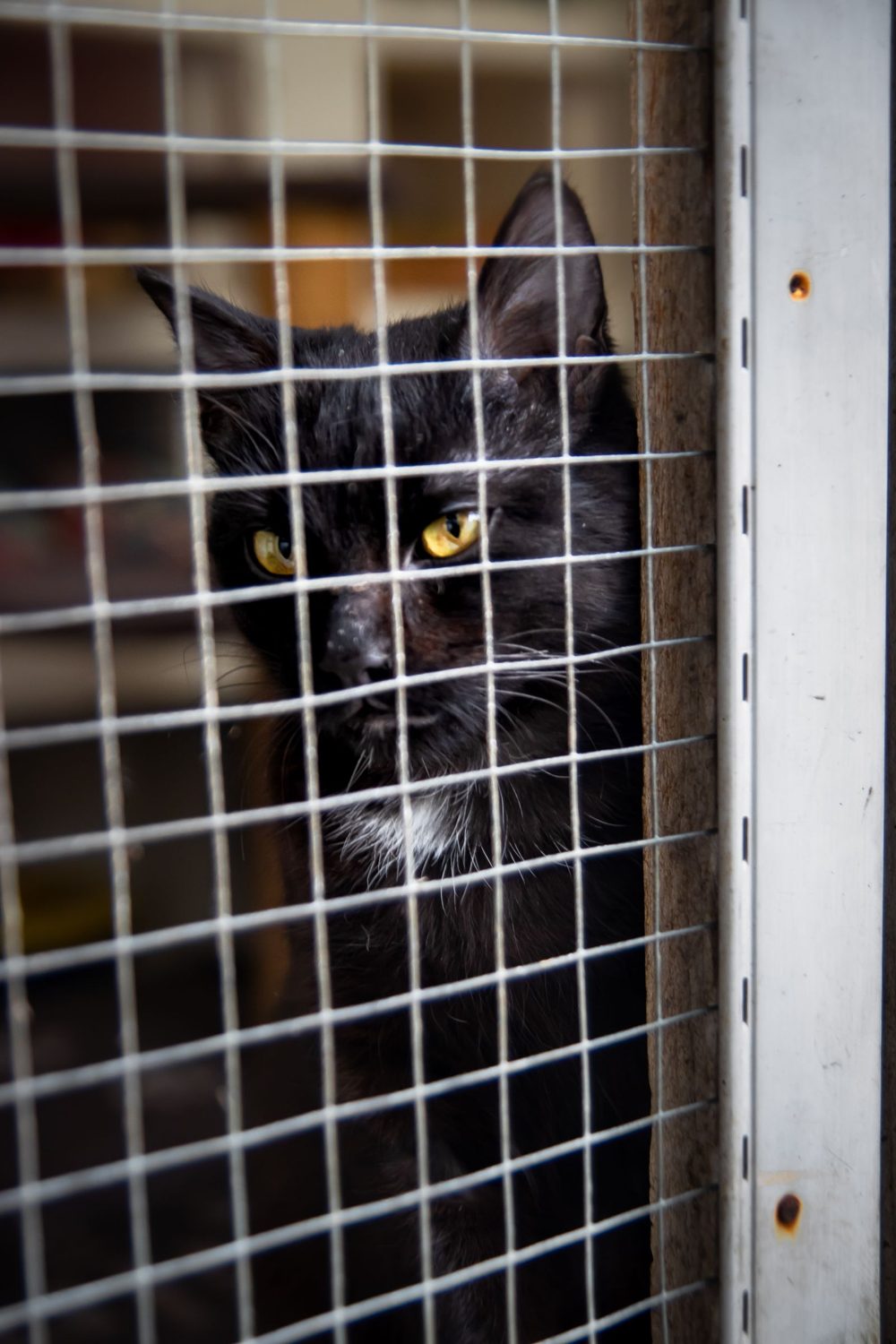
The authors of the 2020 Kentucky paper summed up the field as inconsistent, partly because studies classify coat colours in different ways. The fair takeaway: black cats are not doomed in shelters, but in some places they do wait a little longer, and because there are so many of them, those extra days add up for shelter staff and for the cats.
Where black cat superstitions come from
Whether a black cat is lucky depends a lot on where you grew up. Cats Protection’s round-up of black cat superstitions includes:
- The UK and Japan: a black cat crossing your path is said to bring good luck.
- Scotland: a stray black cat on your doorstep is a sign of prosperity (though check it does not already have a home).
- Yorkshire: it is lucky to own a black cat but not to meet one.
- England: giving a bride a black cat on her wedding day was thought to bring good luck.
- Europe at sea: keeping a black cat on a ship was believed to ensure safe passage.
- The United States, Belgium and Spain: black cats have traditionally been seen as unlucky.
The bad-luck version is linked with old European associations between black cats and witchcraft, which later fed into Halloween imagery. Cats Protection also found in a 2015 survey that 12 percent of 18 to 24 year olds thought black cats were unlucky, compared with 2 percent of people over 55, which suggests pop culture keeps the myth alive.
The Halloween adoption debate
Some shelters have paused black cat adoptions around Halloween, worried that cats might be adopted as props or harmed. Others argue that blanket bans keep healthy cats waiting longer for no proven benefit. HumanePro notes that fewer organisations now refuse to adopt out black cats in October, and the 2020 Kentucky study found black cats’ October adoption percentages were similar to, or lower than, other months, with no sign of a Halloween surge.
Most modern shelters rely on normal screening for every adopter rather than colour-based rules. If you already have a black cat, the bigger Halloween risks are everyday ones: open doors, frightening costumes and lollies. Our Halloween pet safety guide covers these.
The genetics of a black coat
A black coat comes down mainly to one gene. Most cats carry the “agouti” version, which bands each hair with lighter and darker pigment and produces tabby patterns. A solid black cat has inherited two copies of the recessive non-agouti version, so its hairs are filled with dark eumelanin from root to tip. The tabby pattern is often still there underneath, which is why you may spot faint “ghost stripes” on a black kitten or on a black cat in bright light.
Why some black cats look rusty
Plenty of black cats develop a reddish-brown tinge. It is often put down to sun exposure and age, but diet can matter too. In feeding trials at the University of California, Davis, black cats fed diets low in tyrosine developed reddish-brown coats, and their black colour was maintained or restored with diets high in tyrosine or phenylalanine. Feed a complete and balanced diet, and if your black cat turns rusty quickly, or the change comes with weight loss, a dull coat or other changes, book a vet check.
Breeds that can be black
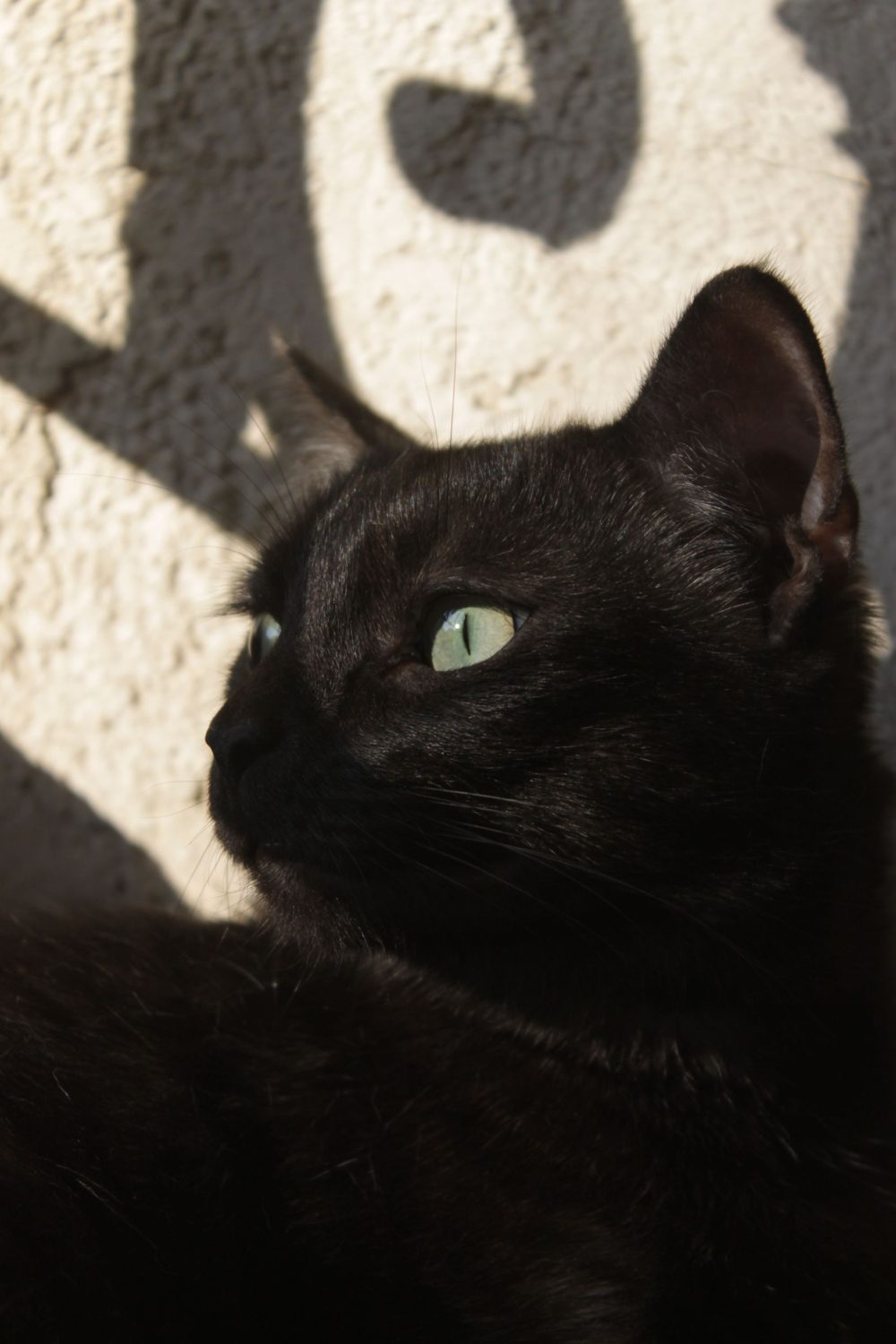
Most black cats in Australian shelters are domestic shorthairs or longhairs, not pedigrees, and they make wonderful companions. If you are curious about pedigrees, the best-known all-black breed is the Bombay. The Cat Fanciers’ Association breed standard calls for a glossy coat that is black to the roots, black nose leather and paw pads, and eyes from gold to copper. Many other breeds also come in solid black, including the Persian, British Shorthair, Maine Coon and Oriental Shorthair.
Adopting a black cat in Australia
Spring and early summer are busy times for shelters, as our guide to kitten season in Australia explains, so there are usually plenty of black cats and kittens looking for homes. A few practical tips:
- Start with a reputable rescue. RSPCA Australia’s Smart Kitten and Cat Buyer’s Guide notes that RSPCA cats are vaccinated, desexed and microchipped, and suggests checking RSPCA listings and adoptapet.com.au regularly.
- Ask about personality, not colour. Staff and foster carers can tell you which cats are confident, cuddly or shy.
- Look at adult cats too. Adult black cats are often the ones overlooked, and their personality is already settled.
- Plan for containment. Many councils have cat curfew or containment rules, so check our cat containment laws guide before you bring your cat home.
- Budget for the long term. Food, vet care, parasite prevention and boarding all add up over a cat’s lifetime, which can easily run well into the teens.
Photo tips for black cats
Black cats can be tricky to photograph, which matters for shelter listings and for proud owners alike.
- Use soft, bright, indirect light, such as a window on an overcast day. Harsh sun creates deep shadows and hides detail.
- Pick a mid-tone background. Avoid pure black or pure white; a grey blanket, green garden or warm timber works well.
- Focus on the eyes. Gold, copper and green eyes stand out beautifully against black fur.
- Increase exposure slightly on your phone so the coat shows texture rather than a flat silhouette.
- Get down to their level and capture play or a slow blink to show personality. Our cat body language guide explains what those slow blinks mean.
Frequently asked questions
When is Black Cat Day?
National Black Cat Day is held on 27 October each year. It was started by Cats Protection in the UK in 2011.
Are black cats adopted less often?
The evidence is mixed. Some studies found black cats took a few extra days to be adopted or had lower adoption rates, while others found little or no difference. Black cats are very common in shelters, which can make them seem overlooked.
Why is my black cat’s fur turning brown?
Sun exposure and age are common explanations, and research shows that diets low in the amino acid tyrosine can also turn black hair reddish. If the change is sudden or comes with other signs, check with your vet.
Are black cats lucky or unlucky?
Neither, scientifically speaking. Beliefs vary by culture: in the UK and Japan a black cat crossing your path is traditionally good luck, while in parts of the United States and Europe it has been seen as bad luck.
Key takeaways
- National Black Cat Day is on 27 October and was started by Cats Protection in 2011.
- Research on black cat adoption is mixed; any delay is usually days, not weeks, and varies by shelter.
- Black coats come from a recessive non-agouti gene, and rusting can relate to sun, age or diet.
- Superstitions differ around the world, and many cultures see black cats as lucky.
- Choose a cat for personality and fit, and give black cats in shelters a proper look.
Sources
- Cats Protection: The history of National Black Cat Day
- Cats Protection: Black cat superstitions
- Colorado State University: For black cats, superstition ain’t the way
- Animals (Carini, Sinski and Weber, 2020): Coat Color and Cat Outcomes in an Urban U.S. Shelter
- HumanePro: Who’s afraid of the big black cat?
- Journal of Small Animal Practice (Yu, Rogers and Morris, 2001): Effect of low levels of dietary tyrosine on the hair colour of cats
- Cat Fanciers’ Association: Bombay
- RSPCA Australia: The Smart Kitten and Cat Buyer’s Guide
- Adoptapet: Find a pet to adopt in Australia
This article is general information for pet owners and is not a substitute for advice from a registered veterinarian. If you notice changes in your cat’s coat, weight or behaviour, please speak with your vet.