

If you have ever looked at your cat and wished they came with subtitles, you are not alone. Cats are expert communicators, but they do most of their talking through posture, ears, eyes and that ever-busy tail rather than through meows. Learning to read these signals helps you spot when your cat is happy, anxious or sore, and it can make daily life calmer for both of you.
Here is a practical, vet-informed guide to what your cat is really telling you, written for everyday Aussie cat owners.
Start With the Tail
A cat’s tail is one of the easiest places to read their mood. Held high with a gentle curl at the tip, it usually means a confident, content cat saying a friendly hello. A tail that puffs up like a bottlebrush signals fear or alarm (the RSPCA’s cat body language guide describes raised hair, an arched back and a tense tail as signs of a very unhappy cat): your cat is trying to look bigger because something has startled them.
Watch the speed, too. A slow, lazy swish often means mild irritation or focus, while rapid thrashing or thumping against the floor is a clear request to be left alone. Tucking the tail tightly around or under the body points to nervousness or feeling unwell.
The Eyes Have It: The Famous Slow Blink
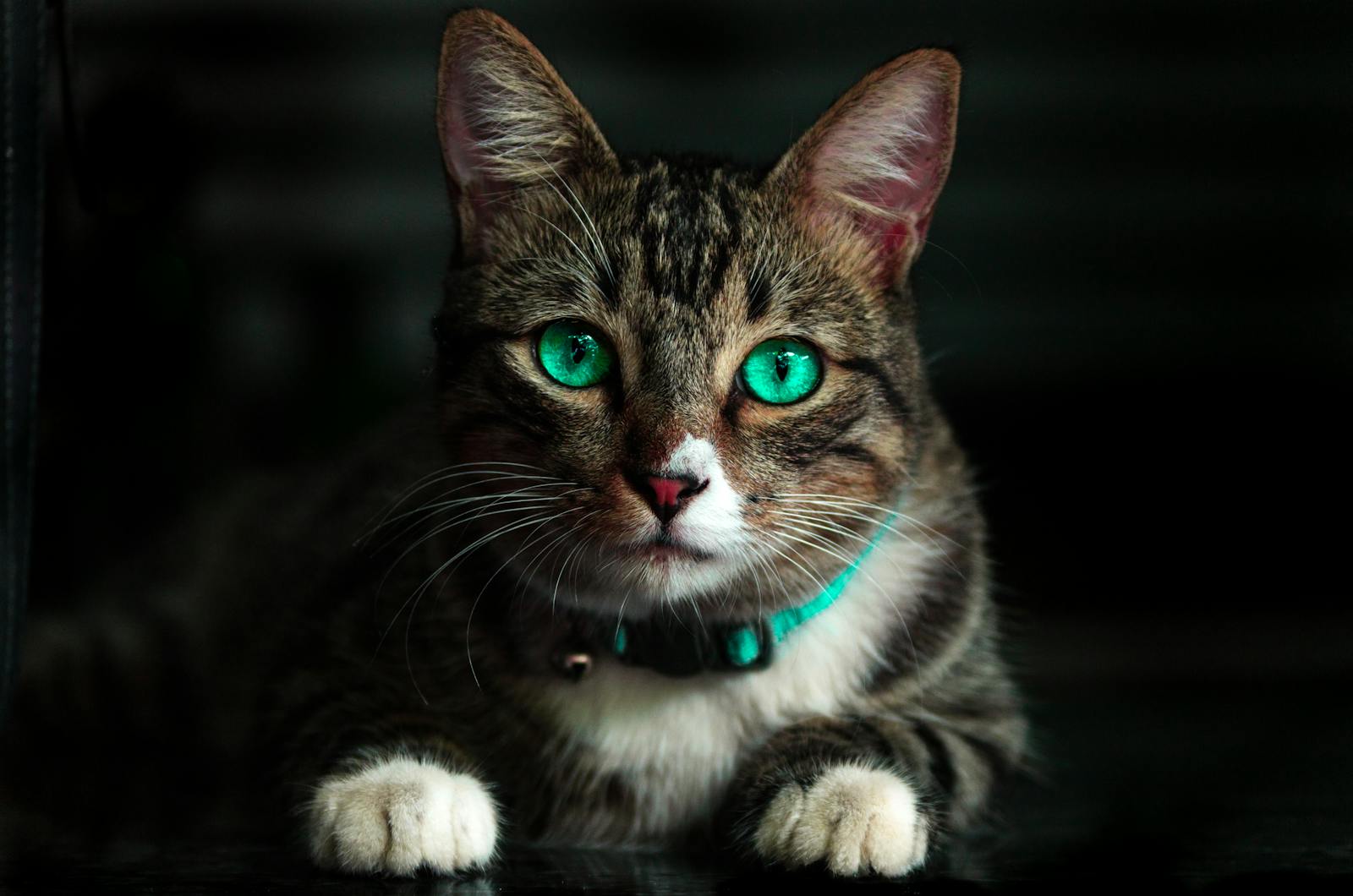
If your cat looks at you and slowly closes and reopens their eyes, take it as a compliment. This relaxed, drawn-out blink (sometimes called a cat kiss) is a recognised sign of trust and comfort. A 2020 University of Sussex and University of Portsmouth study published in Scientific Reports found that cats narrowed their eyes and half-blinked more often when their owners slow-blinked at them, and that they were more inclined to approach a stranger who had slow-blinked at them than one with a neutral expression.
You can try it at home: catch your cat’s gaze, then slowly half-close your eyes and gently look away. Many cats will return the favour. It is a lovely, low-pressure way to build trust, especially with a shy or newly adopted cat.
Pupil size matters as well. Wide, dilated pupils can signal excitement, fear or arousal, while a hard stare with narrow pupils may be a warning. Soft, half-closed eyes generally mean your cat feels safe.
Ears, Whiskers and Posture
Ears
Forward-facing ears suggest an alert, interested cat. Ears flattened sideways or back against the head (often called aeroplane ears) are a strong sign of fear, irritation or pain. If the ears keep swivelling, your cat is gathering information about something that has caught their attention.
Whiskers
Relaxed whiskers fan out gently to the sides. Whiskers pushed forward can mean curiosity or hunting focus, while whiskers pulled flat against the face usually indicate stress or discomfort.
Body posture
A loose, sprawled-out cat showing their belly is feeling secure, though that belly is not always an invitation for a rub. A crouched body with tucked paws and a lowered head signals anxiety, while an arched back with raised fur is a defensive display.
Sounds: Purring Is Not Always Happiness
Most of us read purring as pure contentment, and often it is. But cats also often purr while under duress, such as at the vet or while recovering from injury, so purring can happen when they are frightened, in pain or unwell, so it pays to read the whole picture. A purr paired with relaxed eyes and a soft body is a happy purr; a purr from a tense, hidden cat may be a sign something is wrong.
Trust your instincts. If the body language and the sound do not match up, treat it as a cue to check in on your cat.
Quick Signs Your Cat Feels Safe and Happy
- Tail upright with a relaxed curl at the tip
- Slow blinking and soft, half-closed eyes
- Ears facing forward and relaxed
- Kneading or making biscuits on a blanket or your lap
- Lying with a loose body, sometimes belly exposed
When Body Language Signals a Problem
Sudden changes are worth paying attention to. A normally social cat who starts hiding, crouching, flattening their ears or flinching when touched may be stressed, frightened or in pain. Cats are masters at masking discomfort, so subtle shifts in posture and routine are often the first clue that something is off. The RSPCA’s guide to recognising pain in cats lists hiding, changes in vocalisation and unusual aggression among the warning signs.
If you notice persistent signs of fear, aggression or pain (or any change that lasts more than a day or two), book a check-up with your vet. Australian welfare bodies such as the RSPCA also offer free guides on feline behaviour if you want to learn more.
The Takeaway
Your cat is communicating constantly; the trick is learning their language. Watch the tail, the ears, the eyes and the overall posture together rather than relying on any single signal. Practise the slow blink, respect the quieter cues that say back off, and you will not only understand your cat better: you will strengthen the bond you share.