If your cat has always had the run of the street, the rules may be catching up. More Australian councils are bringing in overnight cat curfews or round-the-clock containment, and state governments are reworking the laws that decide what councils can do. For many owners it feels sudden, but the shift has been building for years. This guide explains how cat containment laws work in Australia, what is changing, why councils are acting, and how to keep a contained cat genuinely happy.
Curfew or containment: what the terms mean
There is no national cat curfew in Australia. Cat rules are set by state and territory laws and, in most places, by individual councils, so they can differ between neighbouring suburbs. You will usually see two kinds of rule:
- A cat curfew requires your cat to stay on your property during set hours, most often overnight (for example 7pm to 7am).
- Containment (or confinement) requires your cat to stay on your property 24 hours a day.
“On your property” does not have to mean locked indoors. A cat that is inside, in an enclosed catio or run, or in a yard with cat-proof fencing is contained. In most areas a cat can still leave the property on a harness and lead or in a carrier.
Cat containment rules around Australia
Rules change often, so treat the examples below as a snapshot, not a substitute for checking with your own council.
Victoria
Victorian councils can make cat confinement orders under the state’s Domestic Animals Act, and many already have an overnight curfew or 24-hour containment in place. Several are tightening their rules through their current Domestic Animal Management Plans:
- Wyndham is extending its 10pm to 6am curfew to 24-hour containment. The council has set out a phased 2026 rollout: an education campaign from January to March, caution-only from April to August, final warnings (no fines) from September to November, and fines from December 2026. The existing overnight curfew stays enforceable during the transition.
- Maribyrnong introduced an overnight curfew from 1 July 2026, requiring cats to stay indoors or in a secure enclosure between 7pm and 7am.
- Merri-bek has adopted a curfew that starts on 1 April 2027. Cats registered before that date will need to be kept on their owner’s property from 7pm to 7am, while cats registered after it will need to be contained 24 hours a day.
New South Wales
NSW has no statewide curfew, and under the current Companion Animals Act 1998 councils have very limited power to make owners keep cats at home. That may change. The NSW Government is reviewing the Act, with cat management one of the issues on the table, and a private member’s bill to require containment and give councils enforcement powers has been introduced to state parliament. A number of NSW councils have said publicly that they would support stronger powers. Until the law changes, containment in NSW is encouraged rather than required in most areas.
Western Australia
The WA Government introduced the Cat Amendment (Local Laws) Bill 2026 to parliament in February 2026. According to the WA Government’s announcement, if passed it would let local governments make local laws restricting cats to their owners’ premises, keeping them out of public areas, or setting curfews. Check with your council about where this stands before assuming any new local rule applies to you.
ACT and South Australia
The ACT has some of the country’s broadest rules. Cats born on or after 1 July 2022 must be contained to their owner’s premises 24 hours a day, and older cats must also be contained if they live in one of the declared cat containment suburbs. In South Australia, rules are set by council by-laws, and some councils, such as Adelaide Hills and Campbelltown, already require cats to be confined to the owner’s property at all times.
The quickest way to find your local rule is to search your council’s website for “cat curfew” or “cat containment”. Look for the hours, the start date, any grace period and the current fines, which councils review regularly.
Why councils are pushing containment
Two motivations sit behind the trend, and both explain why the rules are unlikely to soften.
Your cat’s safety
Roaming is risky for cats. RSPCA Australia reports that two in three cat owners have lost a pet to a roaming-related incident, and a third of those involved cars. Outdoors, cats also face dog attacks, fights with other cats, infected bite abscesses, snakes, ticks and infectious diseases such as feline immunodeficiency virus (FIV). Contained cats avoid most of these hazards and are far less likely to go missing.
Native wildlife
Research from the Threatened Species Recovery Hub found that each roaming pet cat kills, on average, about 110 native animals a year: roughly 40 reptiles, 38 birds and 32 mammals. Around 71% of Australia’s pet cats are allowed to roam, and owners usually only see a small fraction of what their cat catches, because cats bring home only about 15% of the animals they kill. Suburban cats live at high densities, so their combined impact on local wildlife can be significant.
Is keeping a cat at home cruel?
It is a fair worry, but the answer is no, provided you meet your cat’s needs. The RSPCA Knowledgebase says it is okay to keep a cat at home all the time as long as their environment is set up for their physical and mental needs, and that ideally cats should also have access to a safe, escape-proof outdoor area. What matters is not whether a cat goes out, but whether their day has enough space, stimulation and choice. A bored cat in a bare home is the real welfare concern, and that is very fixable.
Helping an outdoor cat adjust
Cats used to coming and going can find sudden containment stressful, so a gradual, planned change works best. Many settle within a few weeks, though some take a couple of months.
- Set up first, restrict second. Add the enrichment below before you cut back outdoor access.
- Bring the curfew forward slowly. Call your cat in a little earlier each evening rather than shutting the door overnight all at once.
- Fill the old outdoor times. Feed and play at the times your cat used to head out, so home becomes where good things happen.
- Start small if needed. A nervous cat may do best starting in one quiet room with food, water, bedding, a hiding spot and a litter tray, then gaining more of the house as they relax.
- Get litter trays right. Offer one tray per cat plus one spare, kept clean, in quiet spots and away from food and water.
- Keep routines predictable. Regular meal and play times help reduce stress.
Watch for signs your cat is struggling: over-grooming, constant hiding, toileting outside the tray, or changes in appetite. These can also signal a health problem, so a vet check is worthwhile. Our guide to why cats stop using the litter box can help you work out what is going on.
Setting up a home your cat enjoys
Cats are natural climbers, hunters and watchers, so the goal is to give those instincts an outlet at home.
Height and hiding spots
Cat trees, wall shelves, a cleared bookshelf or a window perch give your cat vertical territory to climb, survey and nap. Just as important are cosy places to retreat, such as a covered bed, a box or a quiet nook, so your cat can take themselves off for some peace.
Feed the hunting instinct
Short daily play sessions with wand toys or feather teasers let your cat stalk, chase and pounce. Puzzle feeders and food-dispensing toys make them work a little for meals. A simple DIY version is a toilet roll or small container with kibble-sized holes cut into it. Rotate a small collection of toys each week so things stay interesting. Our indoor cat enrichment guide has plenty more ideas, and if your cat gets restless at night, see our article on indoor boredom and night-time yowling.
Scratching and the senses
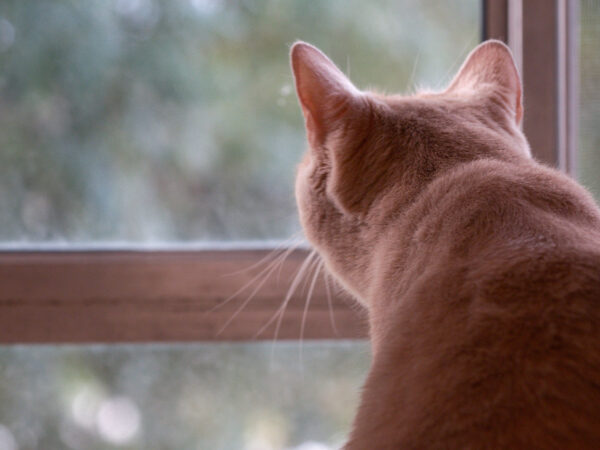
Sturdy scratching posts or pads in a few spots let your cat stretch and mark, and they protect the couch. A sunny window, a pot of cat grass and new smells and textures all help keep an indoor cat engaged.
Safe outdoor access options
Containment does not have to mean four walls. These options let your cat enjoy fresh air without roaming:
- A catio or netted run. Even a small balcony, courtyard or window box can be enclosed. Our guide to catio types, costs and setup walks through the choices.
- Cat-proof fencing. Angled, floppy-top or roller-style fence toppers stop cats climbing out of an existing yard.
- Harness walks. Many cats learn to walk on a harness and lead with patient, gradual training, giving them supervised time outside.
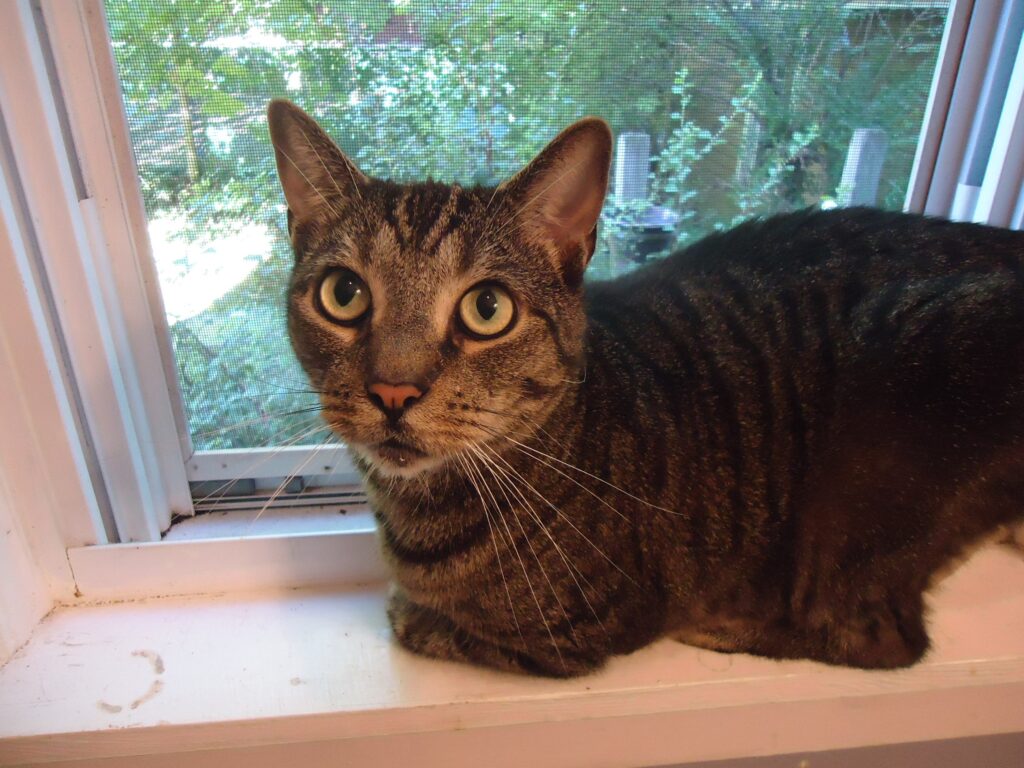
- Fully indoor with enrichment. Perfectly workable when you provide climbing space, scratching, play and window views.
Whichever you choose, budget for the setup, and keep your cat microchipped and registered with up-to-date contact details in case they ever slip out. It is also a good moment to review your overall cost of care, including whether pet insurance is worth it for your household.
Frequently asked questions
Is there a nationwide cat curfew in Australia?
No. Rules are set by states, territories and councils. Overnight curfews and 24-hour containment are most common in Victoria, the ACT and parts of South Australia, while NSW and WA councils currently have more limited powers, with law changes under consideration in both states.
Do I have to keep my cat inside 24 hours a day?
It depends on where you live. Some councils require full-time containment, others only an overnight curfew, and some have no rule at all. Even where containment applies, your cat can usually be in a catio or a cat-proofed yard rather than indoors.
What are the penalties for a roaming cat?
Penalties vary by council and are reviewed regularly. Many councils start new rules with an education or warning period before fines apply, as Wyndham has done. Check your council’s website for current fine amounts.
Will my cat be unhappy if it can’t go outside?
Most cats adapt well when the change is gradual and their home offers climbing, play, hiding spots and a safe view of the outdoors. A catio or harness walks can give them the best of both worlds.
How long does it take to transition a cat indoors?
Many cats settle within a few weeks, though some take a couple of months. Patience and routine matter more than speed. Speak with your vet if your cat shows ongoing stress.
Key takeaways
- Cat curfews and containment rules are expanding in Australia, but they are set by states and councils and vary widely.
- Victoria, the ACT and parts of South Australia already have many rules in place; NSW and WA are reviewing what councils can do.
- Containment protects your cat from cars, fights and disease, and protects native wildlife.
- Contained does not mean caged: an enriched home, a catio or cat-proof fencing all count.
- Transition gradually, set up enrichment first, and check your own council’s rules, dates and fines.
This article is general information for Australian cat owners and is not legal or veterinary advice. Cat containment rules change, so check with your local council for the rules that apply to you, and contact your vet about your cat’s health or behaviour.