When the Sun Clocks Off Before You Do
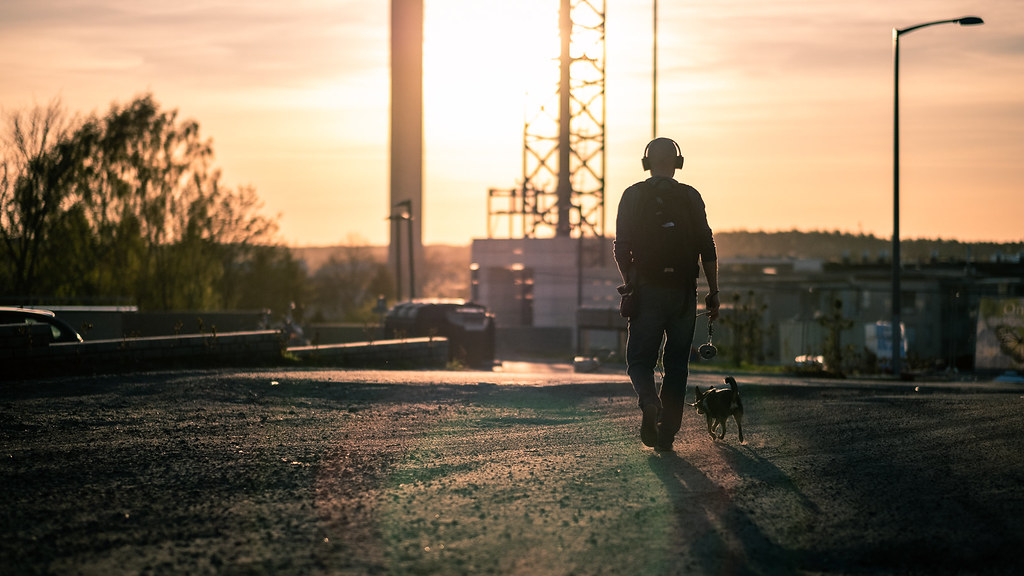
If you walk your dog after work or the school run, chances are you’re doing it in the dark right now. Through July the sun sets in our capital cities in the late afternoon (around 5pm to 5.30pm in most southern capitals, a little later up north) and these are still among the shortest days of the year, so daylight is in genuinely short supply.
That leaves most of us walking in low light or full darkness. The good news is that a few simple habits and the right gear make those dark evening laps far safer, for both you and your dog. Here’s how to handle it.
Being Seen Is the Whole Ballgame
The biggest risk on a dark walk isn’t the cold: it’s traffic. Pedestrians are among the most vulnerable people on the road, and road safety research from QUT identifies drivers’ limited vision at night as a key reason for their relatively high crash involvement after dark, right when many of us head out with the lead.
Visibility is the crux. In night-time driving trials, drivers often recognised pedestrians in black clothing only at short distances, and in the toughest conditions sometimes not at all. Meanwhile, at 60 km/h a car needs about 45 metres to stop on a dry road and about 54 metres in the wet, once reaction time is included. A dark-clad walker can become visible only when it’s nearly too late for a driver to react, and that assumes they were looking your way at all.
Light-coloured clothing helps, but retroreflective material is the real difference-maker because it bounces headlight beams straight back to the driver. Where you put it matters too: reflectors on your moving joints (ankles, knees and wrists) are recognised by drivers from far greater distances than a reflective vest alone. In one study, drivers recognised pedestrians wearing these “biomotion” markings at about 319 metres, compared with about 184 metres without them. The movement creates a biomotion effect that reads instantly as a walking person.
Gear That Actually Works
- Reflective bands on your ankles and wrists, plus a reflective or hi-vis top layer.
- An LED or reflective collar and lead so your dog is lit up too.
- A torch or head torch to spot paths, kerbs and hazards underfoot.
- A well-fitted harness or collar and a good-quality lead sized to your dog.
Dogs sit low to the ground and vanish into shadow easily, so lighting them up matters just as much as lighting up yourself.
Road Safety on Dark Streets
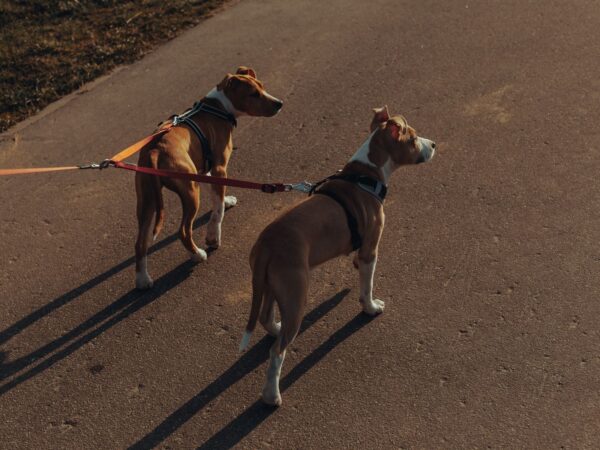
Rules vary between states and councils, but in many areas dogs must be kept on a lead and under effective control in public unless you’re in a designated off-lead area, and some councils set maximum lead lengths, so it’s worth checking your local by-laws. Beyond the law, a lead is your safety line in the dark. It keeps your dog secure if something startles them, and unfamiliar night-time sights and sounds spook dogs more easily than daytime ones. Keep your dog close near traffic, walk facing oncoming cars where you safely can, and take extra care near intersections and spots without pedestrian crossings.
The Cold and Dark Change How Dogs Behave
Winter walks are colder as well as darker, and that affects your dog’s comfort. Watch for signs your dog is feeling the chill: shivering, a tucked tail, whining, reluctance to keep walking, or curling into a tight ball. If you spot them, it’s time to head home.
Some dogs feel the cold more than others. Senior dogs, small breeds, and short-haired or short-legged dogs have less natural insulation, and cold weather can aggravate arthritis, leaving affected dogs slower and more reluctant to move. As a rough guide, if the weather has you reaching for a coat, a thin-coated dog will likely appreciate one too.
Coats can help clipped, short-coated or arthritic dogs, but they aren’t for every dog. Most dogs don’t need clothing, and a coat can interfere with temperature regulation or irritate the skin if left on too long. Never leave a coated dog unattended, and take it off once you’re back indoors.
Older and arthritic dogs deserve extra care, as some will “forget” to seek warmth when they’re cold or sore. If your dog is a senior, is arthritic, or you’re simply unsure how they’ll cope, consult a licensed vet for advice tailored to your dog.
Practical Routines for Short Winter Days
- Grab a walk in whatever daylight you can, then keep evening outings shorter and closer to home.
- Favour several short, regular walks over one long one, gentler on arthritic joints and easier to fit into dark evenings.
- Start gently and let your dog warm up, which helps reduce injury, especially in older dogs.
- Still let them sniff. A slower, nose-led amble is genuine enrichment and suits the season.
- Head home to warmth promptly after a cold walk, with a soft, elevated bed to settle into.
One easy thing to overlook: if walks get shorter over winter, your dog burns fewer kilojoules. Trimming their food to match helps avoid the quiet creep of winter weight gain. When in doubt about diet or exercise, your vet can help you find the right balance.
Frequently Asked Questions
What’s the best way to make my dog visible on a dark walk?
Use an LED or reflective collar and lead so your dog stands out to drivers, and add reflective bands to your own ankles and wrists. Reflective material on moving limbs is spotted by drivers much earlier than a vest alone, because the movement reads clearly as a person walking a dog.
How cold is too cold to walk my dog?
It depends on the dog. Thin-coated, small, short-legged, senior and arthritic dogs feel the cold sooner. Watch for shivering, a tucked tail, reluctance to walk or curling into a ball, and cut the walk short if you see them. Ask your vet for guidance specific to your dog.
Do I legally have to keep my dog on a lead at night?
Rules vary between states and councils, but in many areas dogs must be on a lead and under effective control in public unless you’re in a designated off-lead area, and some councils cap lead length, so check your local by-laws. Either way, keeping your dog leashed in the dark helps keep them secure if they take fright.
Should I shorten my dog’s walks in winter?
Often, yes. With daylight limited, several short, regular walks tend to work better than one long one, and it’s gentler on older or arthritic dogs. Just remember that less exercise means fewer kilojoules burned, so adjust your dog’s food to avoid winter weight gain.