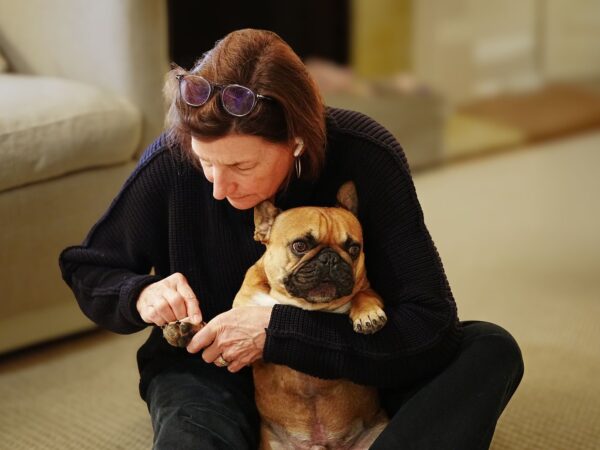
If you’ve been to an Aussie dog park lately, you’ve probably heard someone yell “Barry, drop it!” or “Stanley, come here!” and done a double-take. Naming pets after grandads (and grandmas) has quietly become a noticeable naming trend. According to Pet Insurance Australia, human names like Frankie, Walter, Hazel and Albert are increasingly turning up on its lists, while old-school pet names like Rex and Spot are falling away.
It’s a fun trend, and it says a lot about how we see our pets these days. But before you commit to calling your kelpie “Douglas” for the next 15 years, there’s a bit of practical thinking worth doing, because the name you choose actually affects how easily your dog learns to respond to it. Here’s the trend, the top names, and how to pick one that looks great on the council rego and works at the dog park.
Why Aussies are giving pets ‘grandad’ names
The short version: we treat our pets like family, so we’re naming them like family. Animal Medicines Australia’s 2025 national pet survey found that 73% of Australian households, nearly three in four, now live with a pet, and that “pet parenting” behaviours are increasingly popular. Treating pets as full family members shapes how owners spend, feed and, yes, name their animals.
Traditional human names carry a warmth and a bit of cheeky humour that pet owners love. As Pet Insurance Australia spokesperson Nadia Crighton put it, “There’s something genuinely funny about hearing someone call out ‘Barry, stop eating that!’ across a dog park.” It’s a small, wholesome trend, and it’s not going anywhere soon.
The vintage names Aussie owners are choosing in 2026
Based on Pet Insurance Australia’s naming data, here are some of the human names Aussie owners are reaching for this year:
- Popular for boys: Charlie, Frankie, Henry, Lenny, Walter, Douglas, Beau, Bruce, Stanley, Theodore, Albert, Barry, George and Larry
- Popular for girls: Bella, Charlie, Frankie, Gracie, Hazel, Sophie, Alice, Georgie, Phoebe, Penelope and Amber
- The ‘most likely to be your accountant’ club: Kevin, Stephen and Douglas: names so serious they’re funny on a fluffy cavoodle
A cute name is one thing: will your dog actually learn it?
Here’s where the fun trend meets some genuinely useful science. Dogs don’t understand names the way we do; they learn to recognise a specific sound and link it to good things happening. Many trainers suggest keeping names to one or two syllables, because shorter sounds are quicker to say and may be easier for a dog to pick out from background noise.
Some trainers also like two-syllable names because the rise and fall between the syllables (think “Fran-kie” or “Wal-ter”) can be easy to call out clearly at a busy park. The good news is that plenty of the trending vintage names fit this brief perfectly. To help your new dog learn their name fast:
- Say the name in a bright, happy tone, then immediately reward with a treat, a pat or play so the sound predicts something good
- Practise in short, frequent bursts in a quiet room before testing it out in the backyard, then the park
- Use the name to get attention, not to tell your dog off: you want them to always feel good about turning towards you
- Keep it consistent across the household so everyone uses the same word and pronunciation
If you’ve just brought home a pup, pairing name training with the basics like early socialisation and toilet training gives you a calm, confident dog much faster.
Names that can backfire at the park (and the vet)
A couple of practical traps worth dodging before you fall in love with a name:
- Names that rhyme with commands. “Beau” sounds a lot like “no,” “Kit” blurs into “sit,” and “Ray” can clash with “stay.” If a favourite name overlaps with a cue, just pick a clearly different training word to avoid confusion.
- Names that are hard to say or spell. Your vet nurse, groomer and dog-sitter all need to read and pronounce it. A name that’s a mouthful can lead to mix-ups on paperwork and appointments.
- Names that embarrass you at full volume. You will be shouting this across a crowded park. “Barry, leave it!” is a joy; something you’d rather not yell, less so.
Do you need to update the microchip if you rename your pet?
This one trips up a lot of new owners, especially anyone renaming a rescue. A microchip itself only stores a unique ID number, your pet’s details and your contact details are recorded in a registry database linked to that number. So changing your dog’s name doesn’t require a new chip; you simply update the record.
In Australia, your vet usually registers the microchip when it’s implanted, but it’s worth confirming the details are correct and complete. To keep everything current:
- Contact the microchip registry your pet is listed with and ask them to update the name and any contact details
- Update your details with your local council as well, since council registration is separate from the microchip database
- Double-check the record any time you move house or change your phone number: out-of-date details are a common reason microchipped pets aren’t reunited with owners
If you’re unsure which registry holds your pet’s details, your vet can look up the chip number and point you in the right direction.
Frequently asked questions
What are the most popular dog names in Australia right now?
Pet Insurance Australia’s 2025 dog-name list was topped by Luna, Daisy and Coco for girls and Teddy, Milo and Charlie for boys. Alongside those, its more recent data shows vintage human names like Frankie, Henry, Walter, Gracie and Hazel gaining ground, reflecting a broader trend of naming pets like family members.
Can I change my adult dog’s name?
Yes. Dogs of any age can learn a new name with consistent, reward-based practice. Say the new name in a happy tone and follow it with a treat or praise; with short daily sessions, many dogs pick it up fairly quickly.
Does renaming my pet mean I need a new microchip?
No. The microchip stores only an ID number, while your pet’s name and your contact details sit in a linked registry. You just need to update the registry record and your council registration: the chip stays the same.
What makes a good, trainable dog name?
One or two syllables, easy to say clearly, and distinct from your everyday commands. Names with a natural rise and fall in sound (like Wal-ter or Fran-kie) are easy to call out clearly.
Key takeaways
- Vintage human names like Barry, Stanley, Frankie and Hazel are increasingly popular for Australian pets in 2026, driven by owners treating pets as family
- Short one- or two-syllable names are easiest for dogs to recognise and respond to
- Avoid names that rhyme with commands (Beau/no, Kit/sit) and pick something you’re happy to shout at the park
- Renaming a pet doesn’t need a new microchip: just update the registry and your council record
- For any health or behaviour concerns, consult a licensed veterinarian for advice specific to your pet