If a new puppy joined your family over the July school holidays, congratulations, you are in for years of joy. But there is one job that quietly matters more than toilet training, more than teaching a tidy sit, and more than any cute trick: socialisation. And in an Aussie winter, when it is cold, dark and wet, it is the easiest job to accidentally put off, right when the clock is ticking loudest.
The window that closes faster than most owners realise
Puppies have a short, once-in-a-lifetime learning period often called the sensitive or critical socialisation window. The RSPCA describes this critical socialisation period as falling between about three and seventeen weeks of age, while the Australian Veterinary Association notes the sensitive period starts around three weeks and begins to wane at about fourteen weeks. The exact numbers vary a little, but the message does not: the experiences your puppy has now shape the confident (or fearful) adult dog they become.
During these weeks, a puppy’s brain treats new sights, sounds, people and surfaces as normal and safe, provided the encounters are calm and positive. Miss the window, and things a well-socialised dog shrugs off, the vacuum, a person in a hi-vis vest, thunder, other dogs, can become lifelong sources of fear and reactivity. That is far harder to fix later than it is to prevent now.
But my puppy isn’t fully vaccinated yet
This is the tension every good owner runs into. Young, unvaccinated or incompletely vaccinated puppies, roughly six weeks to six months old, are the most susceptible to canine parvovirus, which overlaps heavily with the socialisation window. So do you keep your pup wrapped in cotton wool, or get them out into the world?
The Australian Veterinary Association is clear that you do not have to choose one at the expense of the other. Its position is that when sensible precautions are taken, the benefits of appropriate socialisation can outweigh the disease risk. The key is where and how, not whether. Avoid high-risk spots like dog parks and public areas where unvaccinated or unwell dogs may have been, and steer clear of sick animals, but do not simply hit pause until the final vaccination.
How to socialise a puppy through a wet Aussie winter
Bad weather is not a reason to stop, it just changes the venue. Plenty of high-value socialisation happens indoors or in your own backyard, and much of it costs nothing:
- Carry them into the world. The RSPCA suggests waiting until at least 14 days after the final vaccination before walking on the ground in public. Before then, pop your pup in your arms or a carrier and take them to the shops, the school pick-up, or a friend’s front porch so they can watch traffic, prams and people from safety.
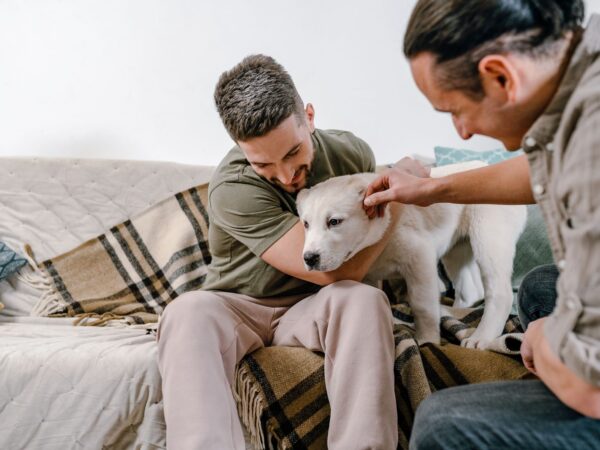
- Invite the world in. Have friends visit wearing hats, hoods, sunnies and raincoats. Ask a helper to arrive like a delivery driver so knocks and doorbells become boring, not scary.
- Build a surfaces trail. Let your puppy walk over tiles, timber, wet grass, a tarp and crunchy leaves. Varied footing now means a dog that copes with vet floors and footbridges later.
- Play the sounds of life. Quietly play recordings of thunder, fireworks, traffic and appliances while your pup eats or plays, keeping the volume low and the mood happy.
- Handle gently and often. Regularly touch ears, paws, mouth and tail with treats on hand, so grooming, nail trims and vet checks are stress-free for life.
- Set up safe playdates. Arrange meet-ups with a friend’s healthy, fully vaccinated, gentle adult dog in a clean backyard.
Keep sessions short and upbeat. Reward-based training, treats and praise for calm behaviour, does the heavy lifting. If your puppy looks frightened, back off, add distance, and try again more gently another day. Forcing a scared pup forward can create the very fear you are trying to prevent.
Book into puppy preschool
A well-run puppy preschool is one of the best investments you can make. Classes are generally aimed at young puppies, timed to catch the socialisation window, and the RSPCA says puppies can attend before full vaccination as long as the class is held in a clean environment. Held indoors on clean floors, a good class is considered lower-risk and gives your pup supervised play, new people and early manners in one hit. Ask your vet clinic what they run, and chat to your vet about the right balance for your individual dog.
While you are building good habits, it is also worth getting ahead on the practical side of puppy life, from toilet training through a cold Aussie winter to protecting your pup from kennel cough before any group classes or boarding.
Frequently asked questions
When should I start socialising my puppy?
As soon as your puppy comes home, usually from around eight weeks. The socialisation window is already open, so calm, positive experiences should start straight away, using safe indoor and backyard settings before full vaccination.
Can I socialise my puppy before their vaccinations are finished?
Yes, carefully. The AVA advises that with sensible precautions, such as avoiding dog parks and unwell dogs and choosing clean indoor puppy classes, the benefits of early socialisation can outweigh the infection risk. Speak with your vet about your puppy’s situation.
What if my puppy is already older than sixteen weeks?
Do not panic. Socialisation and confidence-building can continue well beyond the peak window, it simply takes more patience. Keep experiences positive and gradual, and consider a reward-based trainer if your dog is already showing fear or reactivity.
Key takeaways
- The critical socialisation window runs from about three weeks to roughly fourteen to seventeen weeks, and it does not wait for warmer weather.
- You can socialise safely before full vaccination by avoiding high-risk areas and sick dogs.
- Winter socialisation can happen indoors, in the backyard and in your arms, with people, sounds, surfaces and gentle handling.
- A clean, well-run puppy preschool is a lower-risk, high-value way to fill the gap.
- Keep every session short, calm and reward-based, and never force a frightened pup.
This article is general information only and is not a substitute for professional advice. Consult a licensed veterinarian for guidance on vaccination timing and socialisation specific to your puppy.