Crate training a puppy means teaching them, step by step and with rewards, that a crate is a safe, comfortable den they choose to go into, not a place they are locked away. Start with the door open and treats inside, feed meals in the crate, close the door for a few seconds at a time, then build to naps, short absences and nights. Keep sessions short: RSPCA Victoria advises that young puppies should not spend more than two to three hours in a crate without a toilet break, and a crate should never be used as punishment.
Why a crate can help a new puppy
Used well, a crate gives a puppy a quiet bolt-hole in a busy house. RSPCA Victoria says crate training a new dog or puppy teaches them boundaries and provides them with a safe space of their own, and that giving a dog an area where they can escape and feel safe can help soothe anxiety.
A crate is also a handy toilet training tool, because a puppy confined to a snug sleeping space is less inclined to toilet there, which is why the AKC warns that an oversized crate lets a puppy soil one end and sleep in the other. The American Kennel Club recommends taking your puppy straight outside to toilet every time they come out of the crate. For the full toileting routine, see our guide to toilet training a puppy; this article sticks to the crate itself.
A crate is a management tool, not a babysitter. RSPCA Victoria is clear that crate training is not right for all dogs and should never take the place of appropriate exercise and enrichment.
Choosing the right size and type
Size
The basic rule from RSPCA Victoria is that a crate should be big enough for your dog to stand up, turn around and lie down. For a puppy, there is a balance to strike. The AKC’s toilet training advice warns that a crate that is too large may let a puppy soil one end and sleep in the other. Many owners buy a crate sized for their dog’s adult size and use a divider panel, which the AKC suggests, to shrink the space for now and enlarge it as the puppy grows.
Type
| Crate type | Good for | Watch out for |
|---|---|---|
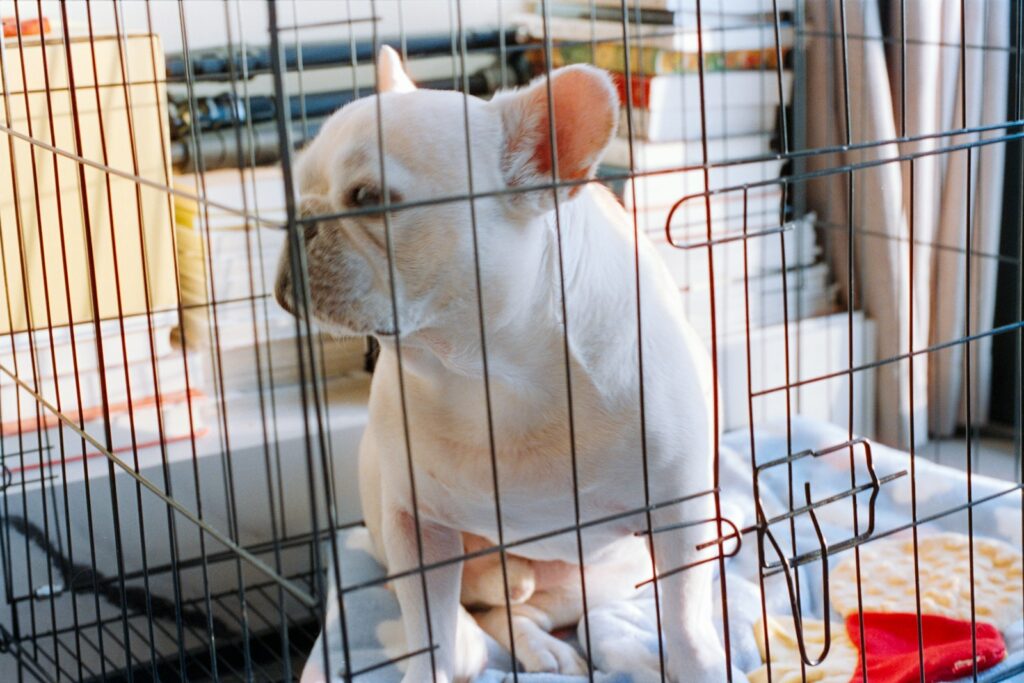
| Wire (metal) crate | Home use; good airflow; easy to see out; often folds flat and takes a divider | Can feel exposed; some owners drape a light cover over part of it, leaving the front open and air flowing |
| Hard plastic crate | Travel and car use; more enclosed and den-like | Less airflow, so keep it out of the sun in summer |
| Fabric or soft-sided crate | Calm, already crate-trained dogs on short outings | RSPCA Victoria advises against leaving a dog in a fabric crate for long periods unless you are sure they will stay calm and not scratch their way out |
Put the crate where the family spends time, and in summer keep it out of direct sun.
Making the crate positive, step by step
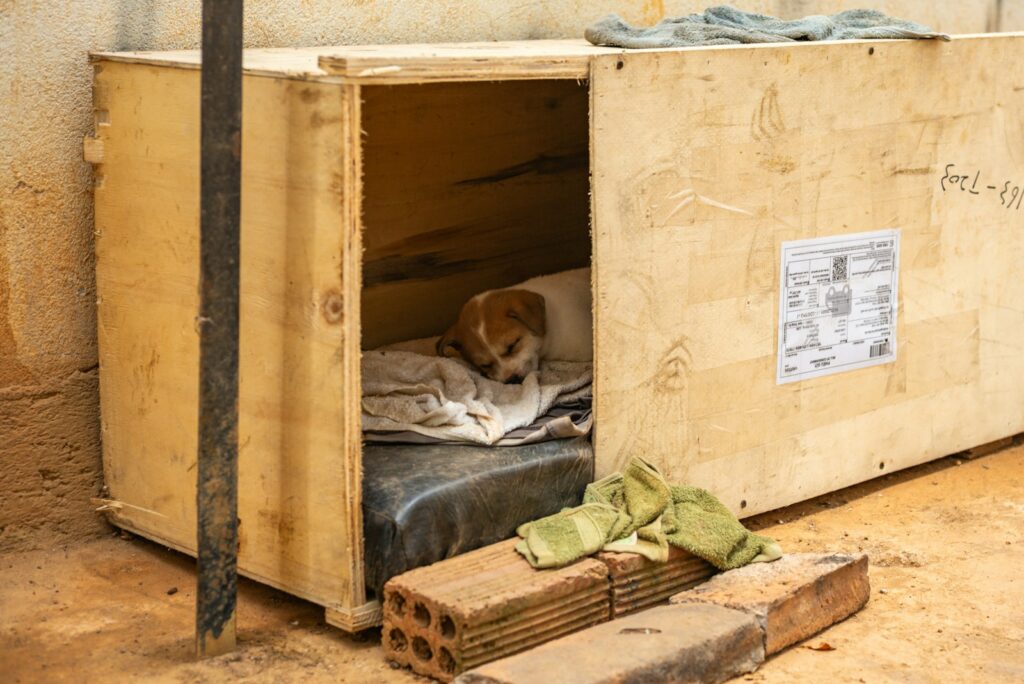
The RSPCA supports reward-based training, which its knowledgebase describes as the most humane and effective way of training dogs, and which does not involve aversive techniques or physical punishment. Crate training is a perfect fit for that approach. Go at your puppy’s pace.
- Let them explore with the door open. Put a soft bed and a toy inside, toss a few treats in, and let your puppy wander in and out. RSPCA Victoria says not to close the door in the first few interactions and to let your dog investigate on their own terms. Humane World for Animals (formerly the Humane Society of the United States) adds: do not force them in.
- Feed meals in the crate. Humane World suggests placing meals inside and moving the bowl further back over time, so your puppy walks fully in to eat.
- Close the door briefly during meals. Open it as soon as they finish, then gradually leave it closed a little longer.
- Add a cue and reward. Say “bed”, toss a treat in and praise when they go in.
- Practise short stays while you are home. Humane World recommends crating your dog for short periods while you are around, gradually increasing the time until they will stay calmly for about 30 minutes. The AKC suggests starting in increments of 10 minutes.
- Use the crate for naps. Guiding a drowsy puppy in for a nap builds a calm association.
Building duration without stress
Progress is about your puppy’s body language, not the clock. A relaxed puppy lies down, chews a toy or dozes. Constant whining, pawing, panting or drooling means you have gone too fast, so go back a step.
Keep exits low-key. Humane World advises keeping departures and arrivals calm so the crate does not become linked with big emotional moments. Let your puppy out when they are quiet, so they learn that calm behaviour, not crying, opens the door.
Night time for a new puppy
The AKC notes that puppies may cry the first night or two and that, in most cases, they are simply adjusting to home without their mum and littermates.
- Keep the crate near you. Humane World suggests keeping the crate in or near your bedroom at first, especially with a puppy, so you can hear when they need to go out and they can hear you.
- Introduce night-time crating once day-time crating is easy. RSPCA Victoria recommends moving on to nights once your dog is happy in the crate with you around.
- Plan for toilet trips. Young puppies cannot hold on all night. The AKC says most puppies should be able to sleep through without a toilet break by around four months of age. Until then, take your puppy out quietly when they wake, with no play, then straight back to bed.
How long can a puppy stay in a crate?
Guides differ slightly, so err on the shorter side.
| Source | Guidance |
|---|---|
| RSPCA Victoria | Young puppies should not spend more than two to three hours in a crate without a toilet break |
| Humane World for Animals | Puppies under six months should not stay in a crate for more than three or four hours at a time |
| American Kennel Club | As a rule of thumb, a puppy can hold on for roughly their age in months plus one hour, so about four hours at three months |
These are upper limits for toileting, not targets. The AKC is blunt: never leave a puppy in their crate all day. If you work long hours, arrange someone to break up the day.
Common crate training mistakes
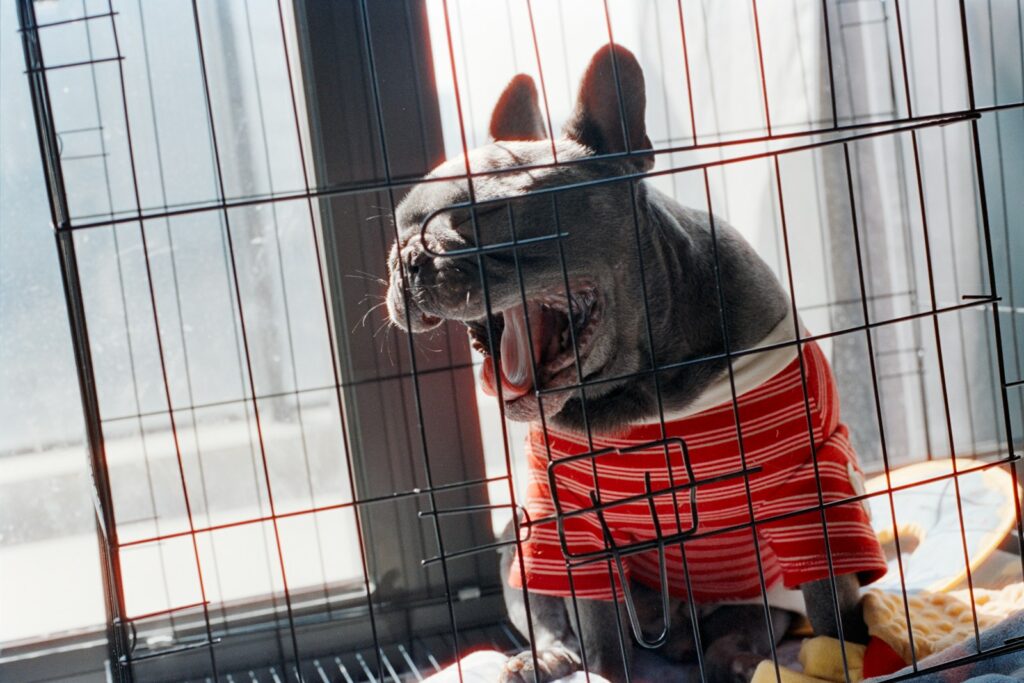
- Using the crate as punishment. The AKC says never use the crate as punishment, and Humane World agrees that a crate should be a safe space.
- Leaving them too long. Humane World warns that a dog crated for too long can become anxious or depressed.
- Rushing the steps. Shutting the door on day one is the quickest way to create a crate-hater.
- Mixing up crying with real needs. RSPCA Victoria advises that the best thing to do with whining is usually to ignore it, while still taking young puppies out for toilet breaks. Humane World suggests that if whining continues for several minutes, take your puppy out to their toilet spot, but only for a toilet trip, then calmly back in. A puppy who has just woken may need the toilet; one who has just been out, fed and played is more likely testing whether crying works.
When crating is not the right choice
Crate training is not suitable for every dog. Humane World is clear that a crate will not solve separation anxiety, and that a distressed dog may injure themselves trying to escape. If your puppy or dog panics when left alone, drools heavily, howls continuously, damages the crate or hurts their mouth or paws on the bars, stop crating and speak to your vet or a qualified behaviour professional. Our guide to separation anxiety in dogs explains the signs and a gentle plan.
Using the crate in the car and when travelling
A puppy who already loves their crate has a head start for safe travel. The RSPCA Knowledgebase advises that dogs should be restrained in vehicles, and that a travel crate should have passed safety or crash testing, be appropriately secured within the car, be adequately ventilated and be big enough for the dog to stand, turn around and lie down comfortably. It also notes that there is no formally recognised Australian standard for crash-testing dog restraints or carriers, so check product claims carefully, and that restraint laws vary between states and territories.
If your puppy drools or vomits on the road, our guide to car sickness in dogs covers what helps. And as summer arrives, remember the RSPCA’s warning: never leave your dog unattended in a car, as dogs can very quickly suffer from potentially fatal heat stress, even in mild weather.
Frequently asked questions
Should I put a puppy pad in the crate?
Generally no. The aim is for the crate to be a sleeping den, and a pad inside invites your puppy to toilet there. Take your puppy outside to toilet instead. If they keep soiling the crate, the AKC suggests checking that the crate is not too big, and make sure the gaps between toilet breaks are short enough for their age.
Is crate training cruel?
Not when it is done gradually, with rewards and for short periods. RSPCA Victoria describes a crate as a safe space of their own. It becomes a welfare problem when it is used as punishment, for long hours, or for a dog who is clearly distressed.
My puppy cries every time I close the door. What now?
Go back a step. Practise with the door open, feed meals inside, and close it only for a few seconds while your puppy is busy with a chew. Make sure they have been to the toilet, played and are tired before longer stays.
Key takeaways
- A crate can give a puppy a safe den and support toilet training, but only if it is introduced positively.
- Build up in small steps: door open, meals inside, short closures, naps, then nights.
- Keep stays short. RSPCA Victoria advises a toilet break at least every two to three hours for young puppies.
- Never use the crate as punishment, and stop if your dog shows signs of panic or separation anxiety.
- For car travel, use a secured, ventilated, crash-tested crate and never leave your dog alone in the car.
Sources
- RSPCA Victoria: Crate Training Your Dog
- RSPCA Knowledgebase: What is reward-based dog training and why does the RSPCA support it?
- RSPCA Knowledgebase: Do I need to restrain my dog when travelling in my car?
- American Kennel Club: How to Crate Train a Puppy
- American Kennel Club: Puppy Going Potty in Crate
- Humane World for Animals: Crate Training 101
This article is general information for Australian pet owners and is not a substitute for advice from a registered veterinarian or qualified behaviour professional. If your puppy shows signs of distress, illness or anxiety, contact your local vet.