The first proper cold snap of winter always sparks the same question at the dog park: does my dog actually need a coat, or am I just dressing him up? Australian winters are mild compared with the northern hemisphere, but early mornings in Melbourne, Canberra, Hobart, the Southern Highlands and inland towns regularly drop into single digits, and not every dog is built to shrug that off. The honest answer is that some dogs genuinely need the extra warmth, and others are better off without it. Here is how to tell which one you have, how to choose a coat that works, and how to keep every dog comfortable through the cooler months.
Why some dogs feel the cold more than others
A dog’s tolerance for cold comes down to coat type, body size, body fat, age and overall health. A Siberian Husky, Malamute or Border Collie carries a thick double coat with a dense undercoat, which is built-in insulation. A lean, short-haired or single-coated dog has far less to work with.
Dogs most likely to benefit from a coat
- Sighthounds and lean breeds. Greyhounds, Whippets and Italian Greyhounds have thin coats and very little body fat. The RSPCA Australia Knowledgebase notes that greyhounds are prone to cold stress and recommends a coat once temperatures drop below 15°C.
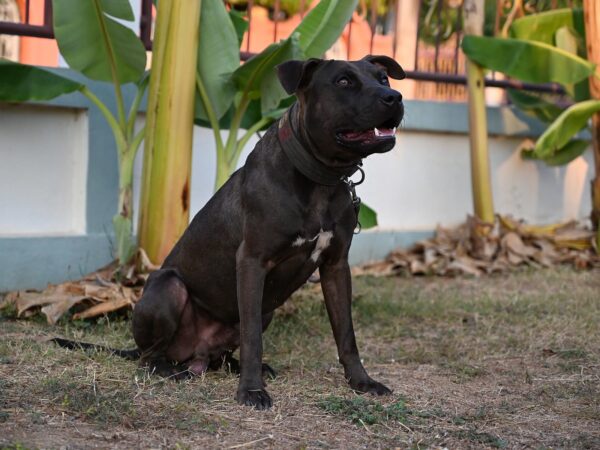
- Short-haired or single-coated breeds such as Staffies, Boxers and many terriers, which have little insulating undercoat.
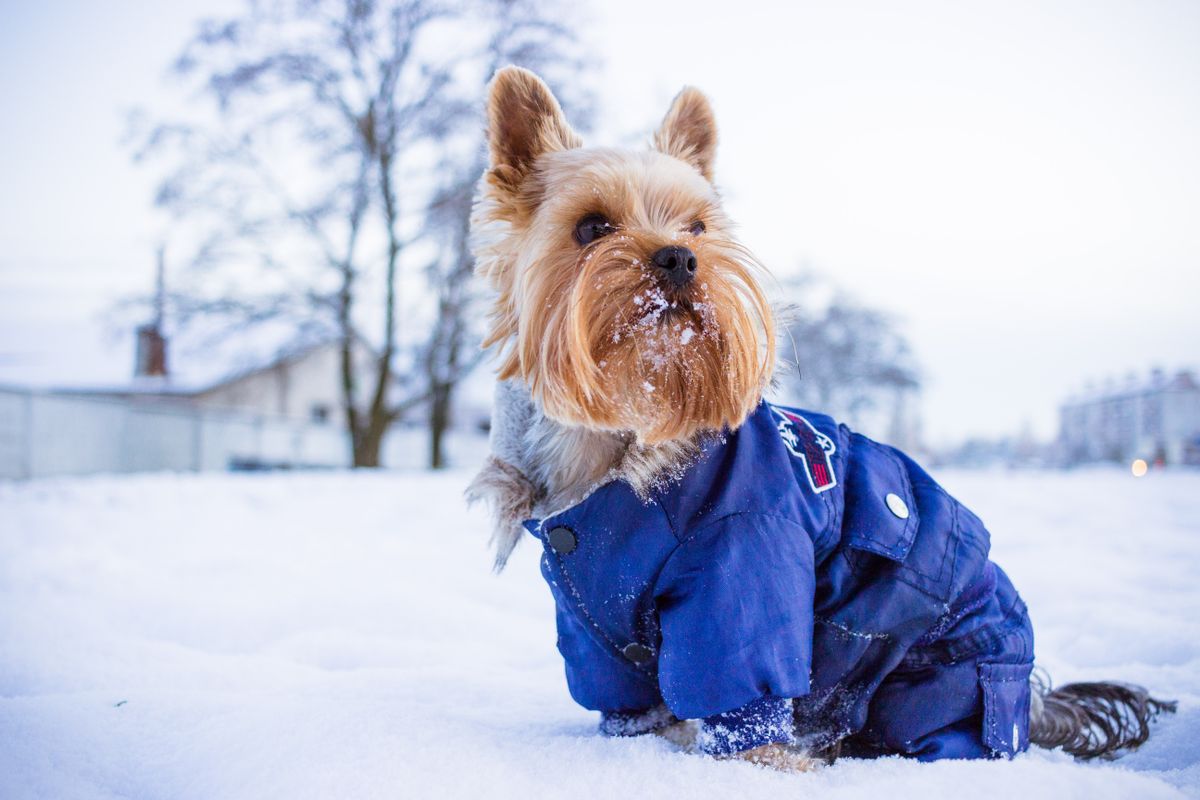
- Small and toy breeds such as Chihuahuas, Toy Poodles and Dachshunds. Small bodies lose heat faster because they have more surface area for their size.
- Puppies and senior dogs, who regulate their body temperature less efficiently. Older dogs often have stiff, sore joints that the cold makes worse.
- Dogs that are unwell, underweight or recovering from surgery, who have fewer reserves to stay warm.
- Clipped dogs. A poodle cross with a short winter clip has lost much of its natural insulation.
By contrast, a fit, healthy adult dog with a thick double coat rarely needs a coat in an Australian winter, and putting one on can leave them uncomfortably hot.

How cold is too cold?
There is no single magic number, because wind, rain, activity and the individual dog all matter. A few practical guides:
- Use the RSPCA’s greyhound rule as an upper marker. For very lean, thin-coated dogs, a coat is worth it once it is below about 15°C. Small, short-haired and senior dogs usually start to feel it as mornings fall towards single digits.
- Factor in wind and rain. Wet, blustery weather strips heat away much faster than still, dry air. A damp, windy 12°C morning can chill a dog more than a still, sunny 8°C one.
- Think about activity. A dog trotting briskly makes plenty of its own heat. A dog standing around at the park or sitting outside a cafe cools down quickly.
- Use yourself as a guide. If you are reaching for a jumper, your cold-sensitive dog probably wants one too.
Behaviour is more reliable than the thermometer, so learn the signs below and trust what your dog is telling you.
Signs your dog is too cold
- Shivering or trembling
- A hunched posture with the tail tucked in
- Curling into a tight ball when resting
- Lifting paws off cold or frosty ground
- Slowing down, stopping or trying to turn back for home
- Whining, restlessness, or hunting out warm spots and burrowing under blankets
- Stiff, slow movement, especially in older dogs
If you see these, cut the walk short and warm your dog up indoors. Shivering is not always about the cold, though. Pain, anxiety and illness can cause it too, so our guide to why dogs shiver is worth a read if it keeps happening.
Persistent shivering with weakness, lethargy, stiff muscles, slow breathing or confusion after cold exposure can point to hypothermia. That is an emergency. Wrap your dog in dry blankets and call your vet straight away.
Choosing a coat that actually works
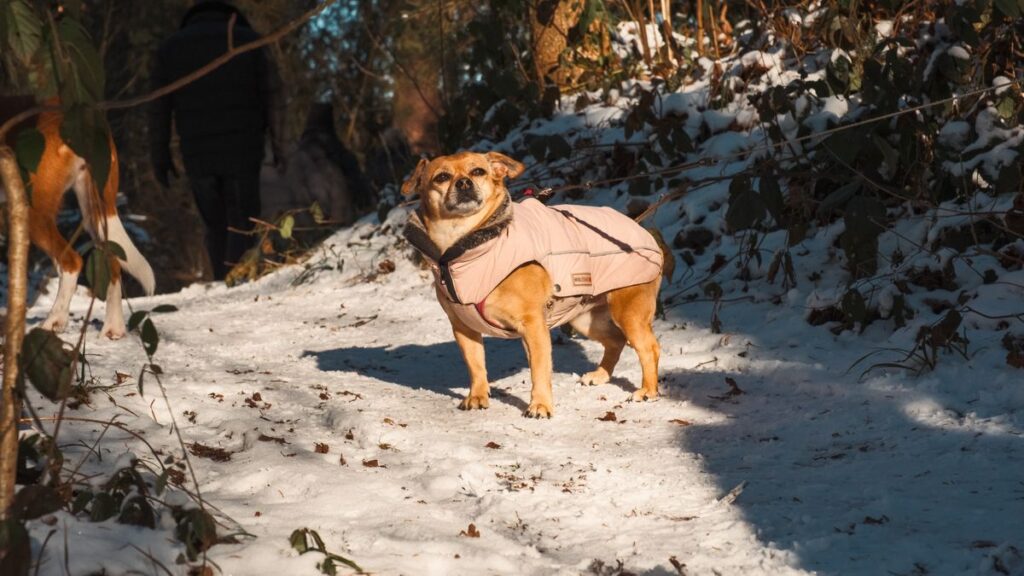
If your dog fits the “feels the cold” profile, a well-fitted coat can make winter walks far more comfortable. These are the things that separate a useful jacket from an expensive accessory.
Coverage
RSPCA Victoria advises that a good coat gives coverage from the neck to the base of the tail and protects the belly, where dogs lose a lot of heat. Avoid coats that only cover the back.
Fit
- Measure rather than guessing by breed. Take the length from the base of the neck to the base of the tail, and the girth around the widest part of the chest.
- The coat should sit snugly without rubbing under the front legs, at the armpits or around the throat, and without restricting movement or toileting.
- You should be able to slide two fingers under the straps. If you cannot, go up a size.
- Adjustable fastenings are easier to get right than pull-on styles. Avoid loose parts your dog could chew or catch.
Material for the weather
- Dry, frosty mornings: a breathable fleece or knit is usually plenty.
- Wet and windy days: a water-resistant or waterproof outer layer earns its keep.
- Arthritic or senior dogs: a padded design that adds warmth over the hips and shoulders is worth considering.
Keep it dry and clean
A damp coat chills rather than warms, so swap a soaked coat for a dry one. A spare lets one dry out between walks. Wash coats regularly to avoid skin irritation.
Using a coat the right way
- Take it off indoors. Once your dog is back in a heated home, or warmed up after exercise, a coat can cause overheating.
- Check for rubbing. Look under the legs and around the neck for chafing or matting, especially in long-coated dogs.
- Do not leave a coat on unsupervised for long periods, or overnight.
What if your dog hates wearing a coat?
Plenty of dogs freeze on the spot the first time a coat goes on, and that is normal. Introduce it slowly. Let your dog sniff it, pair it with treats and praise, and start with short indoor sessions before heading outside. Do not force it. If your dog genuinely will not tolerate clothing, put the effort into other ways of keeping them warm, such as walking in the warmest part of the day and having a cosy bed waiting at home.
When a coat does more harm than good
For thick-coated, active, cold-tolerant breeds, a coat can cause overheating and matting rather than comfort. A coat is also not a substitute for shelter. It does not make it safe to leave any dog outside for long stretches in genuinely cold or wet weather. RSPCA NSW puts it simply: if it is too cold for you to be outside, it is probably too cold for your pet.
Beyond the coat: keeping winter cosy
- Bring the bed in from the cold. Move it off cold tile or concrete and away from draughts, and add an extra blanket or a raised, padded bed.
- Outdoor dogs need a proper kennel. It should be dry, waterproof, windproof and raised off the ground, with bedding that is changed when it gets damp. The warmest place for most dogs on a cold night is inside with the family.
- Heat safely. If you use a heated bed, choose a low-voltage, pet-specific model with an automatic shut-off, and skip hot water bottles and microwaved wheat bags. Our guide to heater and heated-bed safety explains why.
- Feed for the conditions. Dogs that spend a lot of time in the cold use more energy keeping warm and may need a little more food, while couch-bound dogs may need less. Keep fresh water available.
- Keep them moving. Walk during the milder part of the day, shorten walks on the coldest, wettest days, and use indoor games to fill the gap.
- Dry off after wet walks. Towel your dog down, and check paws for cracks and grit. See our winter paw care guide.
Frequently asked questions
At what temperature should I put a coat on my dog?
There is no single number. For very lean dogs such as greyhounds, RSPCA Australia suggests a coat below about 15°C. Many small, short-haired and senior dogs start to feel the cold as mornings drop towards single digits, and in wind or rain a cold-sensitive dog can be uncomfortable at higher temperatures. Watch your dog’s behaviour as well as the forecast.
Do indoor dogs need coats?
Inside a heated home, most dogs are comfortable without one. A coat is mainly for walks and time outdoors in the cold. A thin-coated dog might appreciate a light jumper on a chilly evening in an unheated room, but take it off once they are warm.
Can a coat make my dog too hot?
Yes. A coat on a thick-coated or very active dog, or any coat left on indoors, can cause overheating. Watch for panting, restlessness or seeking cool floors, and take the coat off.
Do double-coated breeds ever need a coat?
Rarely, if they are healthy, fit and have a full coat. Exceptions include seniors, dogs that are unwell, and dogs that have been clipped short.
Should I put a coat on my dog in the rain?
A waterproof coat can help small, thin-coated or older dogs stay warm and dry on wet walks. Make sure it is dry before the next outing, and towel your dog dry when you get home.
Key takeaways
- Sighthounds, small and toy breeds, short-haired dogs, puppies, seniors, clipped dogs and unwell dogs are the ones most likely to need a winter coat.
- Healthy, thick double-coated breeds usually do not, and can overheat in one.
- Behaviour is the best guide: shivering, hunching, tucked tails and lifted paws mean your dog is cold.
- Choose a coat that covers neck to tail and the belly, fits with room for two fingers under the straps, and suits the weather.
- Keep coats dry, take them off indoors, and never use a coat as a substitute for warm, dry shelter.
This article is general information for Australian dog owners and is not a substitute for advice from a registered veterinarian. If your dog is struggling with the cold or seems unwell, contact your vet.