
Few decisions divide the dog park quite like the question of when to desex your dog. Your neighbour swears by booking the surgery the moment the pup hits six months, the breeder told you to wait, and a quick online search throws up a dozen conflicting opinions. If you are second-guessing yourself, you are in very good company.
The good news is that there is solid Australian guidance to lean on, and the right answer is less about a single magic age and more about your individual dog. Here is a clear, no-nonsense rundown to help you and your vet make a confident call.
What Desexing Actually Involves
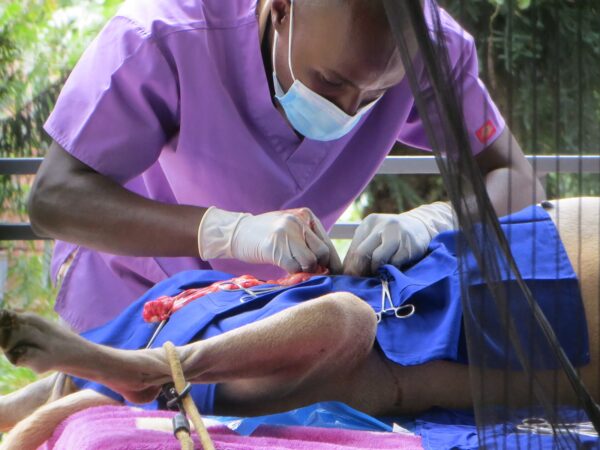
Desexing is the surgical removal of an animal’s reproductive organs – spaying for females and neutering (castration) for males. It is a routine procedure performed under general anaesthetic, and most dogs trot home the same day and are back to their cheeky selves within a week or two.
Beyond preventing unplanned litters, desexing can reduce the risk of certain cancers and infections, including mammary cancer and the life-threatening uterine infection pyometra in females, which spaying prevents entirely (VCA Animal Hospitals), and prostate problems in males. It also tends to curb hormone-driven habits such as roaming, urine marking and some forms of aggression.
Why the Timing Matters More Than You Think
For years, the standard advice was simply “around six months” and not to think too hard about it. We now know the picture is a little more nuanced, particularly for bigger dogs.
Australian veterinary advice has long favoured desexing before puberty unless there is a good reason to delay. For many small and medium breeds, that points to surgery somewhere between four and six months of age, and shelters often desex even younger animals before rehoming.

The Large-Breed Exception
Here is where it pays to know your dog. Research from the University of California, Davis suggests that for some large breeds – think Labradors, German Shepherds, Rottweilers and Golden Retrievers – desexing before six months can raise the risk of joint problems such as hip dysplasia and cruciate ligament tears. In male Golden Retrievers, for example, joint disorders affected 25% of dogs neutered before six months compared with 5% of entire males (UC Davis study in Frontiers in Veterinary Science).
The thinking is that sex hormones play a role in telling the growth plates when to close. Remove them before a big dog has finished growing and those plates can stay open a little longer than nature intended, subtly altering how the joints develop. For this reason, many vets now suggest waiting until a large-breed dog is closer to skeletal maturity. The UC Davis researchers suggested waiting beyond a year for some breeds, and beyond two years for German Shepherds and Golden Retrievers (UC Davis study in Frontiers in Veterinary Science).
It is a balancing act, though. Delaying surgery also means a longer window of unwanted litters, roaming and, in females, the small but real risks that come with each heat cycle. There is no universal “correct” age – only the best age for your particular dog.
How to Decide: Questions to Ask Your Vet
Rather than chasing a number you read online, walk into your next check-up with a few questions ready. A good conversation will cover:
- Breed and adult size: Is mine a breed that benefits from waiting for skeletal maturity?
- Lifestyle: Will my dog be around entire dogs of the opposite sex, or escape-prone if left undesexed?
- Health history: Are there breed-specific cancer or joint risks worth weighing up?
- Temperament: Are hormone-driven behaviours already becoming a challenge at home?
Your vet sees these trade-offs every day and can tailor the timing to your dog rather than a one-size-fits-all rule.
What It Costs in Australia
Cost is understandably part of the decision. As a very rough guide, desexing in Australia typically ranges from around $200 to $500, with larger breeds sometimes pushing closer to $600 because they need more anaesthetic and longer surgery time. Prices vary by clinic, location and your dog’s size and age.
If money is tight, you are not stuck. Some RSPCA branches and the National Desexing Network, an initiative of the Animal Welfare League Queensland, offer or refer owners to subsidised and low-cost desexing, particularly for those holding a pension or concession card. It is well worth a phone call before assuming the cost is out of reach.
Recovery: Helping Your Dog Bounce Back
Recovery is usually smooth, but a calm few days make all the difference. Keep your dog quiet and lead-only for the period your vet recommends, prevent licking at the wound (a cone or recovery suit is your friend), and watch the incision for swelling, redness or discharge. Skipping the post-surgery zoomies is the hardest part – for them and for you.
The Bottom Line
Desexing remains one of the most responsible things you can do as a dog owner, both for your pet’s long-term health and for reducing the number of unwanted animals in Australian shelters. The question is rarely whether to do it, but when.
For most small and medium dogs, before puberty is a sensible target. For the big breeds, a chat with your vet about waiting for full growth could pay off down the track. Either way, the smartest move is a five-minute conversation with someone who knows your dog – book it in, and you can stop second-guessing the dog park advice for good.