Yes, dogs can eat blueberries. Plain fresh or frozen blueberries are a safe, low-calorie treat for most dogs when you keep the amount small, wash them first and halve them for tiny dogs. They offer fibre, vitamin C and plant compounds called antioxidants, but they are a treat rather than a health supplement. The real risks come from blueberry products (muffins, sweetened yoghurt, “sugar-free” baking that may contain xylitol) and from mistaking other berries in the garden or bush for something safe.
Blueberries get a lot of “superfood” marketing, and some of that has spilled over into dog treats and pet food labels. This guide looks at what the research on dogs actually shows, how many berries fit into a sensible treat budget, and how blueberries compare with the other berries and small fruits your dog might come across this summer.
What blueberries offer a dog
The American Kennel Club describes blueberries as low in calories and a source of vitamin C, fibre and phytochemicals. Their deep blue colour comes from pigments called anthocyanins, which a 2025 study in the journal Animals describes as the main contributors to the antioxidant capacity of blueberries, alongside other polyphenols.
Because a single berry is small, blueberries also work well as a training reward: you can hand out several without adding much to your dog’s daily intake. The University of California, Davis veterinary nutrition service notes that fruits and vegetables are good treat options for many dogs because they are usually low in protein, fat, sodium and phosphorus.
The “superfood” claim: what the dog research really shows
It is easy to find dog treats and foods that promote blueberries as an antioxidant boost. The research in dogs is real but small, and it is worth knowing what it did and did not find.
- Sled dog work (2006): Researchers in Alaska fed blueberries to working sled dogs. As summarised in a later review of the evidence, that study found the dogs had more antioxidants available in the blood after exercise, but did not show a protective effect on muscle damage.
- Beagle study (2025): A trial in 12 adult Beagles at a Spanish university found the dogs preferred food containing 3% whole blueberries over a standard diet, and blueberries did not change how well the dogs digested protein, fat or energy. The blueberry diet did not change the measured exercise responses, although resting levels of one muscle marker were lower in summer.
- The fine print: The authors list their own limitations, including a small sample size, a short four-week feeding period and the fact that two authors worked for the company that funded the study.
The AKC mentions that research suggests antioxidants may help reduce the effects of brain ageing, which is why blueberries are sometimes promoted for senior dogs. That is a reasonable area of interest, not proof that a handful of berries will keep an older dog sharp.
The honest summary: dogs tend to like blueberries, they are a low-calorie way to say “good dog”, and they add some interesting plant compounds. There is no good evidence that adding them will prevent disease, and a complete and balanced dog food already supplies the nutrients your dog needs. If a product’s main selling point is “with blueberries”, check where blueberries sit on the ingredient list and how much sugar or fat the rest of the treat contains.
How many blueberries? Using the 10% treat rule
Vets commonly recommend that treats make up no more than 10% of a dog’s daily calories. UC Davis spells it out: if your dog eats 100 calories a day, no more than 10 of them should come from treats or other foods, with the rest from a complete and balanced diet.
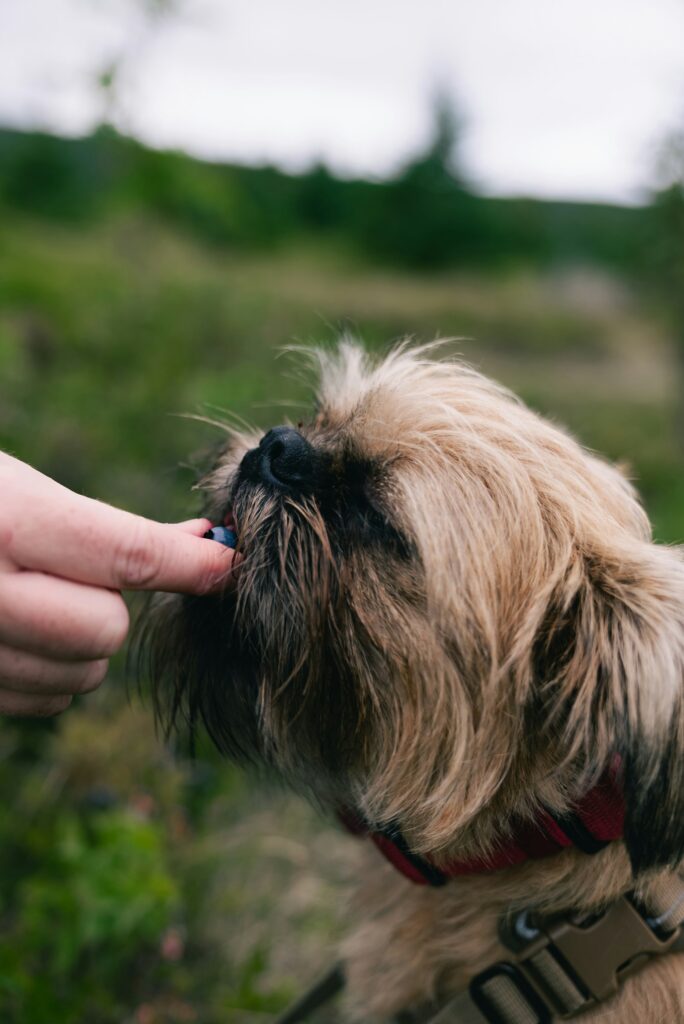
Blueberries are a light treat, so this budget stretches a long way. As a practical starting point, the AKC suggests 2 to 3 blueberries for a small dog, with larger dogs able to have several more. If your dog is carrying extra weight, our guide to healthy weight loss for pets explains how to fit treats into a weight plan.
Start with just a few berries the first time, as any new food can upset a sensitive stomach.
Choking risk for small dogs and fast eaters
A blueberry is about the size of a small dog’s airway, and its round, smooth shape is the classic choking profile. The AKC notes that blueberries can pose a choking risk, especially for very small dogs, and suggests cutting them in half. A few simple habits help:
- Halve or squash berries for toy breeds, puppies and dogs that inhale their food.
- Hand-feed one at a time rather than tipping a pile on the floor.
- Do not toss berries in the air for a dog to catch; the gulp reflex is exactly what you want to avoid.
- Wash berries before serving to remove dirt and residues, as the AKC advises for both fresh and frozen blueberries.
Frozen blueberries for hot Aussie days
A bag of frozen blueberries is a handy freezer staple once the weather warms up. The AKC says frozen blueberries are generally safe and many dogs enjoy them as a refreshing treat. A frozen berry is hard, though, so for small dogs thaw them slightly or squash them first.
Easy cooling ideas that keep portions controlled:
- Set two or three berries in a tray of water overnight for a “berry block” to lick on the back deck.
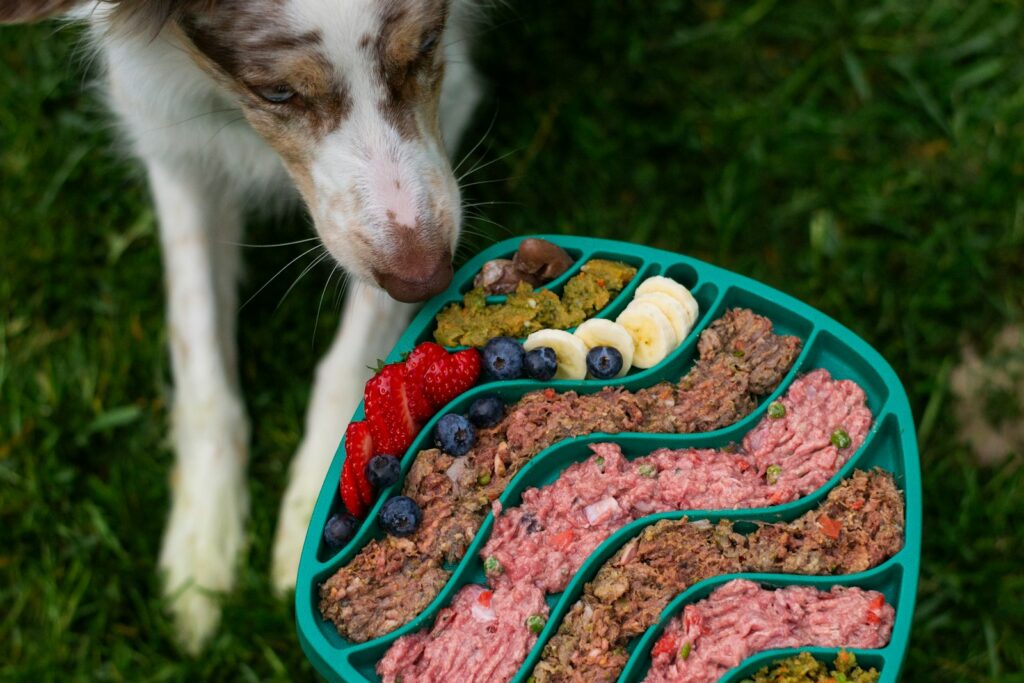
- Scatter a few frozen berries into a lick mat or slow feeder with your dog’s usual food.
- Mix a few berries with other dog-safe fruit. Our guides to watermelon and bananas cover those fruits in detail.
Chilled snacks are a nice extra on a hot afternoon, but they do not replace shade, fresh water and walking in the cooler parts of the day.
Blueberry products: where the risk really sits
Plain blueberries are simple. The trouble starts when blueberries are an ingredient in human food.
Muffins, cakes and “sugar-free” baking
A blueberry muffin is mostly flour and fat, so the berries do not make it a healthy snack. The bigger concern is xylitol, a sweetener used in keto and diet products. VCA Animal Hospitals describes xylitol as extremely toxic to dogs: it can cause dangerously low blood sugar within about 30 minutes to 2 hours and, at higher doses, liver failure. Australia’s Animal Poisons Helpline lists sugar-free cakes, muffins, cookies and pastries, as well as ice cream among products that may contain it, and advises checking labels for xylitol, birch sugar or E967.
Flavoured yoghurt and dairy desserts
The ASPCA notes that pets do not have much lactase, so dairy can cause diarrhoea or other digestive upset, and “light” versions may rely on sweeteners. Plain berries are the better choice.
Dried blueberries
Dried blueberries are no longer the low-calorie treat they started as. With the water removed, a small handful is far more energy-dense than the same handful of fresh berries, and many commercial packs are coated in oil or syrup. They are also often sold in trail mixes and breakfast blends alongside raisins and sultanas, which are a genuine danger to dogs. Stick to fresh or frozen berries.
Not all berries are equal: a quick comparison
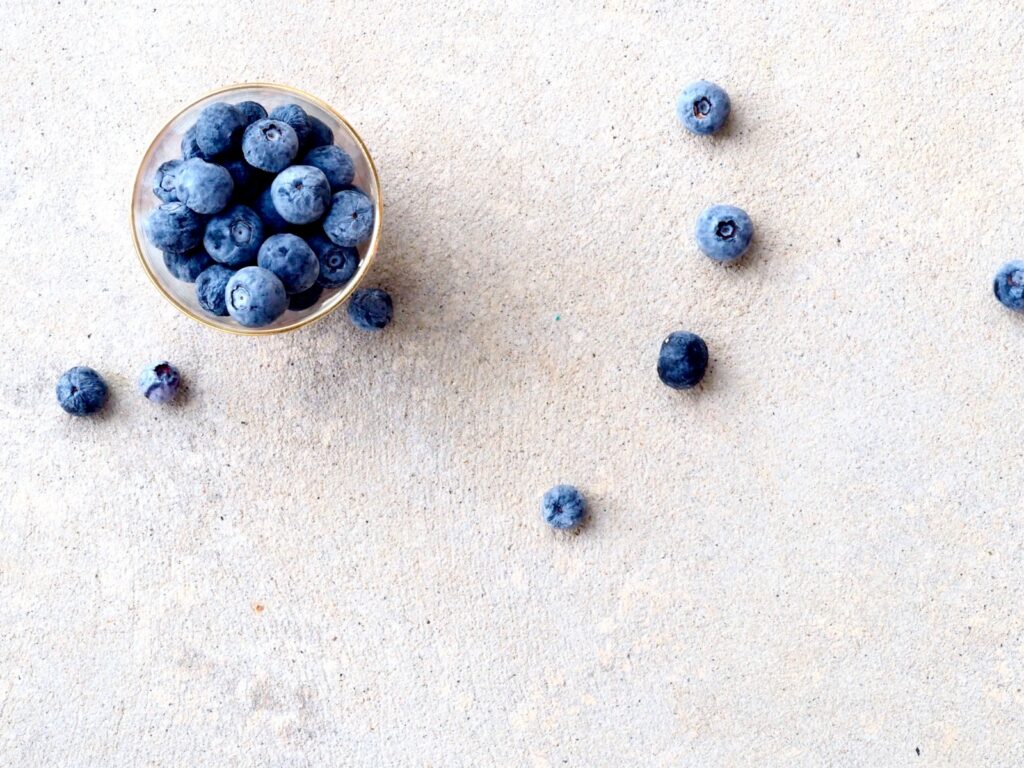
A dog that learns “small round fruit equals treat” may not stop at blueberries. Here is how common berries and small fruits compare.
| Fruit | Safe for dogs? | Main concern |
|---|---|---|
| Blueberries (fresh or frozen) | Yes, in small amounts | Choking in small dogs; tummy upset if overfed |
| Strawberries | Yes, in small amounts | Slice for small dogs; see our guide |
| Grapes, raisins and sultanas | No | Linked to kidney damage; see our grapes guide |
| Cherries | Not recommended | Pits, stems and leaves; see our cherry guide |
| Nandina (heavenly bamboo) berries | No | Toxic to dogs and cats |
| Unknown garden or bush berries | Assume no | Cannot be identified safely by look alone |
Garden and wild berries to be careful with
Late spring is when many ornamental shrubs set fruit, and a curious dog in the backyard may sample them. One common example in Australian gardens is nandina, also called heavenly bamboo. The ASPCA lists it as toxic to dogs and cats because it contains cyanogenic glycosides, with possible signs including weakness, incoordination and seizures.
The general rule is simple: if you did not buy it as human food, do not let your dog eat it. Many berries look alike, and some that birds eat happily are harmful to dogs. If your dog eats berries from a plant you cannot identify, take a photo or a cutting of the plant and call your vet or nearest emergency vet for advice.
Can puppies eat blueberries?
Yes. The AKC says puppies can eat blueberries in moderation if they are introduced gradually and offered in a size that prevents choking. For young puppies, halve or mash the berries and keep them to one or two at a time. Puppies have small stomachs and high nutritional needs, so most of their intake should come from a complete puppy food.
Frequently asked questions
Can dogs eat blueberries every day?
A few blueberries a day is fine for most healthy dogs, as long as they fit within the 10% treat allowance and your dog’s stools stay normal. Daily does not need to mean a big bowl.
Are blueberry dog treats better than fresh blueberries?
Not necessarily. Many commercial treats contain only a small amount of blueberry alongside flour, fat and flavourings. Whole berries give you the fruit itself with fewer extra calories.
Can cats eat blueberries?
Blueberries are not known to be toxic to cats, but cats are obligate carnivores that rely on nutrients found in animal products, and most show little interest in fruit. A berry or two is harmless; there is no need to offer them.
Key takeaways
- Plain fresh or frozen blueberries are safe for most dogs as an occasional treat.
- They offer fibre, vitamin C and antioxidants, but the dog research is small and does not support “superfood” health claims.
- Keep treats, including blueberries, to 10% or less of daily calories. A few berries is plenty for a small dog.
- Halve berries for small dogs and puppies and hand-feed them one at a time to reduce choking risk.
- Avoid blueberry muffins, flavoured yoghurt and dried berry mixes. Check diet and keto products for xylitol.
- Do not let your dog eat unidentified garden or bush berries, grapes, raisins or cherries.
Sources
- American Kennel Club: Can Dogs Eat Blueberries?
- American Kennel Club: How Many Treats Can a Dog Have?
- UC Davis Veterinary Medical Teaching Hospital, Nutrition Support Service: Treat guidelines for dogs
- Maturana et al. (2025), Animals: Effects of Blueberry Consumption on Preference, Digestibility, and Oxidative Balance in Dogs
- VCA Animal Hospitals: Xylitol Toxicity in Dogs
- Animal Poisons Helpline: The Xylitol Project
- ASPCA: People Foods to Avoid Feeding Your Pets
- ASPCA: Heavenly Bamboo (Nandina domestica)
- Cornell Feline Health Center: Feeding Your Cat
This article is general information for Australian pet owners and is not a substitute for advice from a registered veterinarian who has examined your pet. If your dog has eaten something you are worried about, call your vet or nearest emergency vet straight away.