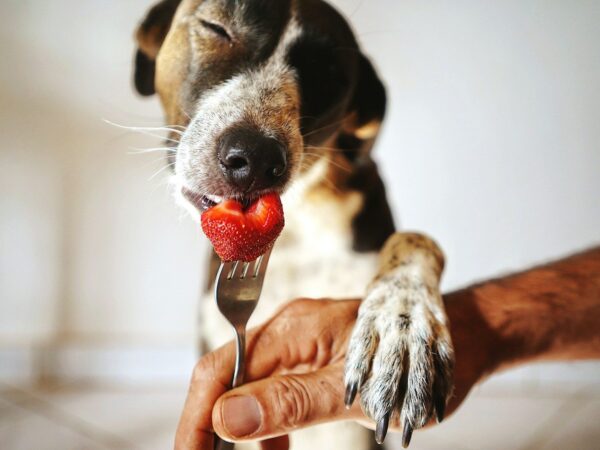

Yes, dogs can eat mango. The ripe, peeled flesh is not toxic and most dogs love the taste. The problems are the parts we throw away: the large stone (seed) can choke a dog or get stuck in the stomach or bowel, and the skin is tough, hard to digest and comes from the same plant family as poison ivy. Mango is also one of the sweeter fruits, so portions need to be small. Here is how to share mango safely, how much suits a dog of your size, and what to do if your dog steals a whole seed.
Australian mango season usually gets going in spring in the Top End and runs through summer, so trays of mangoes start appearing in shops and fruit bowls from around now. Worth planning ahead if you have a curious dog.
Is mango good for dogs?
Your dog does not need mango, since a complete and balanced dog food supplies everything a healthy dog needs. As treats go, though, a few pieces of fresh mango beat many processed snacks or barbecue leftovers.
The American Kennel Club describes mango as safe for dogs in moderation, as an occasional treat, once it is properly prepared. It notes that mango contains fibre and vitamins A, B6, C and E. In practice:
- Fibre: a little is fine, but mango is fibrous and too much at once often means loose stools.
- Vitamins: a bonus, not a reason to feed it. A dog on a complete diet is not short of these.
- Soft texture and strong smell: ripe mango suits older dogs that struggle with crunchy treats, and tiny pieces make a high-value training reward.
The real dangers: seed, skin and sugar
The mango seed (stone)
The seed is by far the biggest risk. It is large, flat and slippery, and once the flesh has been eaten off, it is roughly the size and shape that a dog can swallow whole, especially a greedy medium or large dog. RSPCA Australia specifically names mango seeds, along with apricot and avocado stones, in its list of things you should never feed your dog.
A swallowed mango seed can:
- Cause choking if it lodges in the throat.
- Get stuck in the stomach. Sydney referral hospital SASH Vets describes treating a young English bulldog whose swallowed mango seed was too large to pass out of the stomach. The team was able to retrieve it with an endoscope and forceps rather than open surgery, but that is not always possible.
- Block the intestine. If a seed does make it out of the stomach, it can jam further along the bowel, which usually needs surgery.
The AKC also notes that the pit contains small amounts of cyanide. For a dog that swallows a seed whole, blockage is the more pressing concern, but it is one more reason the stone should never be a chew toy.
The skin
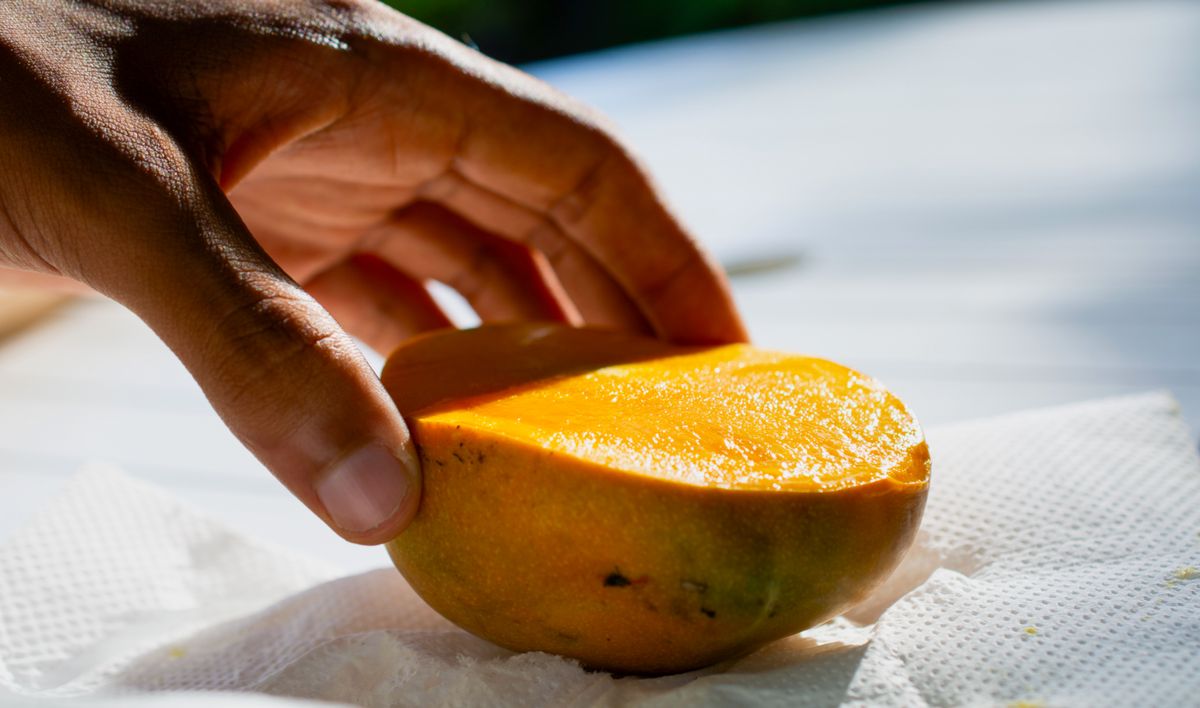
Mango skin is not poisonous in the way grapes or onions are, but it is not a good snack either. The AKC says dogs can technically eat it, but that it is difficult to digest, and recommends peeling mango before you share it. Leathery pieces can cause vomiting or diarrhoea.
There is a second reason to peel. Mango belongs to the Anacardiaceae plant family, the same family as cashews and poison ivy. DermNet, a dermatology reference from New Zealand, lists urushiol and cardol among the allergens in mango and notes that the skin contains a sap that many people react to. There is little published information on how dogs respond to these compounds, so peeling is simply a sensible precaution.
The sugar
Ripe mango is sweet. Gram for gram it carries more natural sugar than lower-sugar treats such as watermelon or strawberries, which means it adds up faster for small dogs. That matters most for:
- Overweight dogs: every extra treat makes weight loss harder. Our guide to safe weight loss for pets explains how to fit treats into a diet plan.
- Dogs with diabetes: ask your vet before offering any fruit.
- Dogs with sensitive stomachs or a history of pancreatitis: introduce new foods slowly and only with your vet’s blessing.
How much mango can a dog eat? Portions by size
The usual guide is that all treats combined should make up no more than about 10% of your dog’s daily calories, and the AKC applies that rule to mango. Because mango is relatively sweet, the amounts below are deliberately modest. They assume a healthy adult dog, 1 to 2 cm cubes of peeled flesh, and no other big treats that day. Start at the low end the first time.
| Dog size (approx. weight) | Example breeds | Suggested portion (occasional treat) |
|---|---|---|
| Toy (under 5 kg) | Chihuahua, Maltese, Pomeranian | 1 to 2 small cubes, about a teaspoon |
| Small (5 to 10 kg) | Jack Russell, Cavoodle, Dachshund | 2 to 4 cubes, about a tablespoon |
| Medium (10 to 25 kg) | Kelpie, Border collie, Staffy | 4 to 6 cubes, about 2 tablespoons |
| Large (25 to 40 kg) | Labrador, Golden retriever, Australian shepherd | 6 to 8 cubes, up to a quarter cup |
| Giant (over 40 kg) | Great Dane, Bullmastiff, Newfoundland | 8 to 10 cubes, up to a third of a cup |
Think of these as a once or twice a week treat, not a daily one. Too much mango is a classic recipe for an upset tummy, and the AKC warns that too much of any fruit can cause bellyaches and diarrhoea.
How to prepare mango for your dog
- Pick ripe fruit. Ripe mango is soft and easy to digest. Hard, unripe mango is more likely to cause stomach upset. Skip anything mouldy or fermenting.
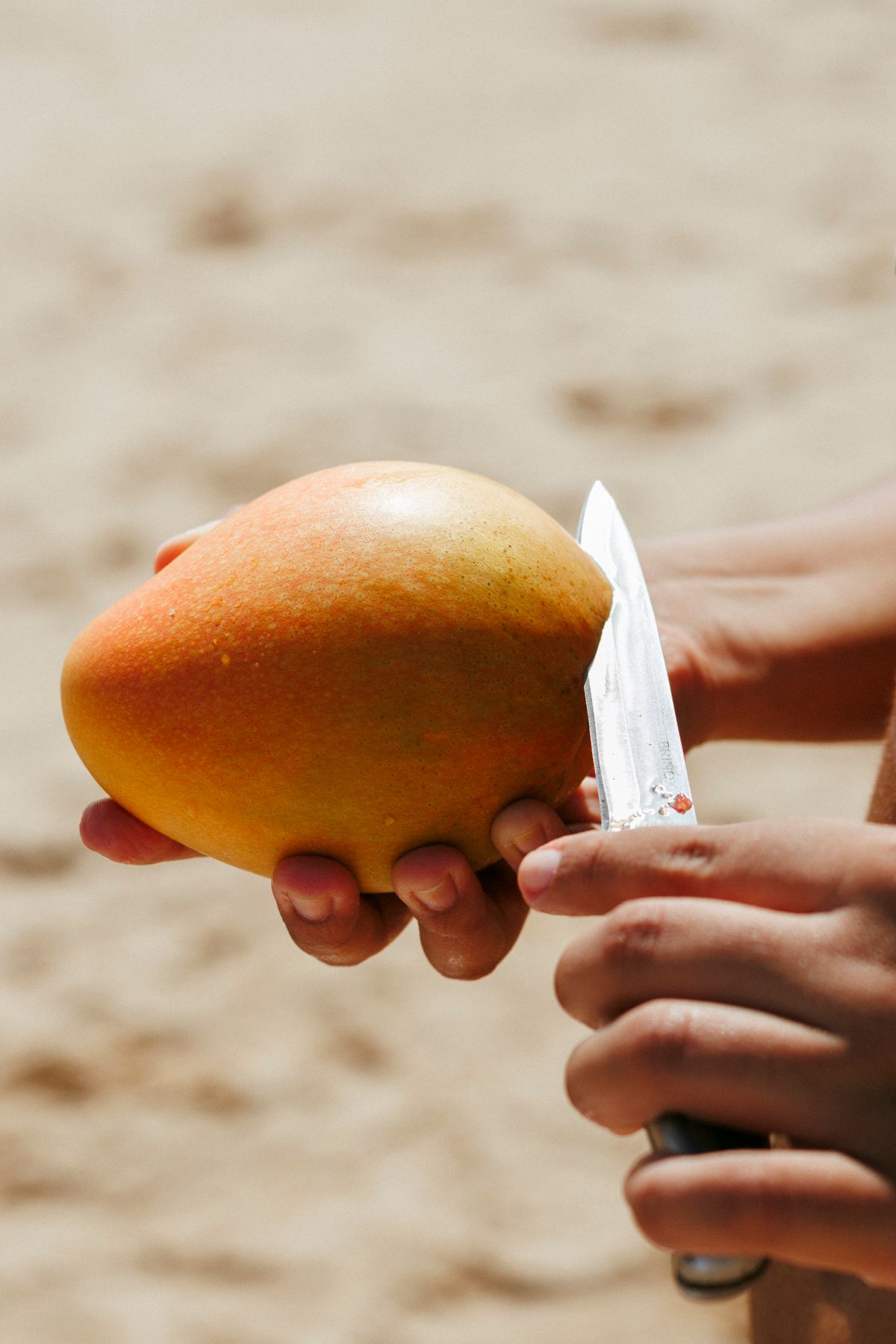
- Peel it. Remove all the skin with a knife or peeler.
- Cut the flesh away from the seed and put the seed straight into a lidded bin or compost bin your dog cannot open. Do not leave it on a plate or on the bench.
- Dice into small cubes. The AKC recommends small pieces even though mango is soft. For toy breeds, puppies and fast eaters, chop finely or mash.
- Serve it plain. No yoghurt with added sugar or sweetener, no ice cream, no sticky rice or chilli salt.
Frozen mango treats for hot days
Mango freezes beautifully, and a cold treat can be welcome on a sticky summer afternoon. A few simple ideas:
- Frozen cubes: freeze small cubes of peeled mango on a tray, then offer one or two at a time. Let large frozen pieces soften for a minute so they are not hard on teeth.
- Mango ice blocks: blend a little mango with water, pour into an ice cube tray and freeze. The water dilutes the sugar and makes the treat last longer.
- Stuffed toy: mash a spoonful of mango into your dog’s usual wet food, pack it into a rubber treat toy and freeze.
Frozen treats are a nice extra, but they do not replace shade, water and sensible exercise times. Our guide to heatstroke in dogs and cats covers the signs to watch for once the hot weather arrives. For other summer fruit, see our guides to watermelon and pineapple.
Mango products to avoid
Fresh mango is the safe version. Many mango products are not a good idea:
- Dried mango: drying concentrates the sugar, and the chewy strips are easy for a dog to gulp. Some brands add extra sugar or preservatives. Keep packets well out of reach.
- Mango juice, nectar and smoothies: lots of sugar and none of the chewing that slows a dog down.
- Mango sorbet, gelato and ice cream: high in sugar and often fat, and “no added sugar” versions can contain artificial sweeteners such as xylitol, which is dangerous for dogs.
- Mango chutney and pickles: these often contain onion, garlic, chilli, salt and spices, none of which belong in a dog’s bowl.
- Mango desserts, sticky rice and canned mango in syrup: rich and heavily sweetened.
Watch the backyard mango tree
If you live in Queensland, the Northern Territory or northern WA, there may be a mango tree in the yard. Dogs eat fallen fruit skin, seed and all, and rotting fruit can upset the stomach too. RSPCA Australia warns that fruit stones and seeds dropped by garden trees can cause serious intestinal blockages and recommends removing them so pets cannot eat them. During fruiting season, pick up windfalls daily and fence off the area under the tree if your dog is a scavenger.
When to call the vet
Call your vet or nearest emergency clinic straight away if your dog has swallowed a mango seed, even if they seem fine. Do not wait for symptoms, and do not try to make your dog vomit at home, as a seed coming back up can lodge in the throat.
Also contact your vet if you notice any of these signs after your dog has eaten mango, skin or a seed. VCA Animal Hospitals lists them as common signs of a gut obstruction:
- Repeated vomiting, or trying to vomit without bringing anything up
- Loss of appetite
- A sore or tender belly, or guarding when you touch it
- Straining to pass a motion, or passing very little
- Lethargy or unusual behaviour
- Gagging, coughing or difficulty breathing
Mild diarrhoea after too much mango flesh usually settles within a day. If it continues for longer than 24 hours, or your dog seems flat, see your vet. For advice about something your dog has eaten, the Animal Poisons Helpline is available 24/7 on 1300 869 738. Consultation fees apply (the Animal Poisons Helpline lists consultations from $75).
Frequently asked questions
Can puppies eat mango?
Yes, a taste of ripe, peeled, finely chopped mango is fine once a puppy is eating solid food well. Puppies are notorious for swallowing things, so be extra careful with seeds and skins.
My dog ate mango skin. Should I worry?
A small piece will usually pass, causing at most a mild tummy upset. If your dog ate a lot, is small, or seems unwell, call your vet.
Can dogs eat dried mango?
It is best avoided. The sugar is concentrated and the leathery strips are easy to swallow without chewing. A fresh cube is a much better choice.
Is mango safe for dogs with diabetes?
Mango is relatively high in natural sugar, so it is not a good routine treat for a diabetic dog. Ask your vet before offering any fruit.
My dog chewed a mango seed but did not swallow it. Is that okay?
If the whole seed is accounted for, the main risk has passed. If any part is missing, treat it as swallowed and call your vet.
Key takeaways
- Ripe, peeled mango flesh is safe for most dogs as an occasional treat.
- Never give your dog the seed. It can cause choking or a stomach or bowel blockage, and it contains small amounts of cyanide.
- Peel mango first. The skin is hard to digest and comes from the same plant family as poison ivy.
- Keep portions small because mango is sweet: from a teaspoon for toy breeds to around a third of a cup for giant dogs.
- Skip dried mango, juice, sorbet, chutney and mango desserts.
- If your dog swallows a mango seed, call your vet straight away.
Sources
- American Kennel Club: Can Dogs Eat Mango?
- RSPCA Australia Knowledgebase: What should I feed my dog?
- SASH Vets: Can a mango pass from a stomach?
- RSPCA Australia Knowledgebase: What garden dangers must I protect my pet from?
- DermNet: Mango
- VCA Animal Hospitals: Ingestion of Foreign Bodies in Dogs
- Animal Poisons Helpline: Australian pet poisons advice
This article is general information for pet owners and is not a substitute for advice from a registered veterinarian. If your dog has a health condition, is on a special diet or has swallowed a mango seed or anything else that worries you, contact your vet for advice specific to your pet.