You can trim your dog’s nails at home with the right tool, good light, plenty of treats and a “little and often” approach. Aim to keep the nails short enough that they do not touch the ground when your dog is standing, take off small slivers at a time so you stay clear of the quick (the living centre of the nail), and stop before your dog gets stressed. Most dogs need a trim every three to four weeks, though active dogs that walk on hard surfaces may need it less often. If your dog is very anxious or the nails are badly overgrown, a vet or groomer can help.
Why nail length matters
Overgrown nails are more than a cosmetic issue. Long nails push back into the toe joints with every step, changing the way your dog stands and walks. Over time this can cause discomfort and strain, which matters even more for older dogs with arthritis. Long nails also snag and tear more easily, and dew claws that are left to grow can curl around into the pad.
How short should dog nails be?
RSPCA Australia advises that a dog’s nails should be trimmed just before they start to touch the ground when the dog is standing or walking. A simple test: if you can hear your dog’s nails clicking on hard floors, they are probably too long.
RSPCA Australia also notes that dew claws (the “thumb” nails higher up on the inside of the leg) are not worn down by exercise and may need trimming more often than the other nails. Check them every time.
Understanding the quick
Inside each nail is the quick, a core of blood vessels and nerves. Cutting into it hurts and causes bleeding, and one bad experience can make a dog wary of nail trims for a long time.
- Light or white nails: you can usually see the quick as a pink area inside the nail. Stay a few millimetres in front of it.
- Dark or black nails: you cannot see the quick, so take off very thin slices. Look at the cut surface after each slice. The American Kennel Club suggests looking for a chalky white ring on the cut surface to help judge where the quick is. As you get closer, a darker spot usually appears in the centre of the cut surface. That is your signal to stop.
If nails have been allowed to grow long, the quick grows longer too. You cannot fix this in one session. Small, frequent trims (every week or two) encourage the quick to recede gradually, a point the AKC also makes in its guide to building a nail care routine.
Clippers vs grinder: which is better?
Both work well. The AKC notes that both are safe when used correctly, and that some dogs prefer one over the other.
| Clippers (scissor or plier style) | Grinder (rotary tool) | |
|---|---|---|
| Speed | Fast, one snip per nail | Slower, gradual filing |
| Control near the quick | Good if you take small slices | Excellent; easy to take off tiny amounts |
| Finish | Can leave sharp edges | Smooth, rounded edges |
| Noise and vibration | Quiet, but some dogs dislike the squeeze | Buzzing and vibration take getting used to |
| Best for | Most dogs, quick trims, thin to medium nails | Dark nails, thick nails, nervous dogs once desensitised |
| Watch out for | Blunt blades crush the nail; replace or sharpen them | Heat build-up (grind in short bursts) and catching long fur |
Avoid guillotine-style clippers if your dog has thick nails, as they can crush rather than cut cleanly. Whatever you choose, make sure the tool is sharp and sized for your dog. Human nail clippers are not suitable for most dogs.
What you need
- Sharp dog nail clippers or a pet nail grinder
- Styptic powder (from pet shops or vets) to stop bleeding, with plain cornflour as a backup
- Lots of small, high-value treats, or a lick mat smeared with something your dog loves
- Good lighting, and a torch for dark nails
- A non-slip surface, such as a yoga mat or towel
- A helper for the first few sessions, if possible
Step-by-step: how to trim your dog’s nails
- Pick a calm time. After a walk or play session, when your dog is relaxed and a little tired, is ideal.
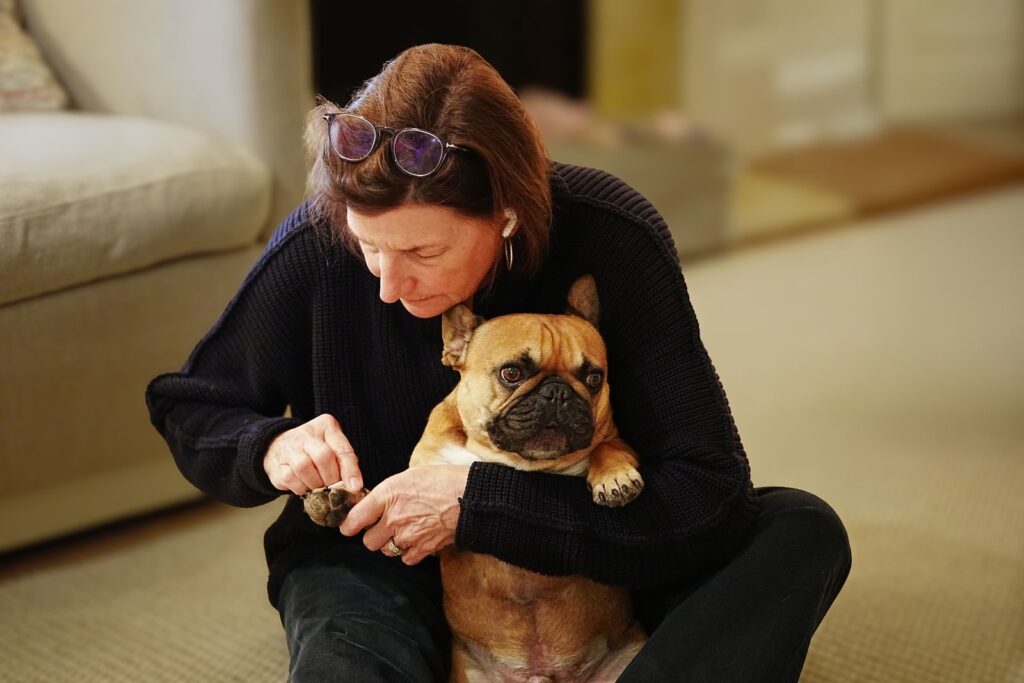
- Get comfortable. Small dogs can sit on your lap. Larger dogs can lie on their side or sit beside you. Make sure your dog is not slipping.
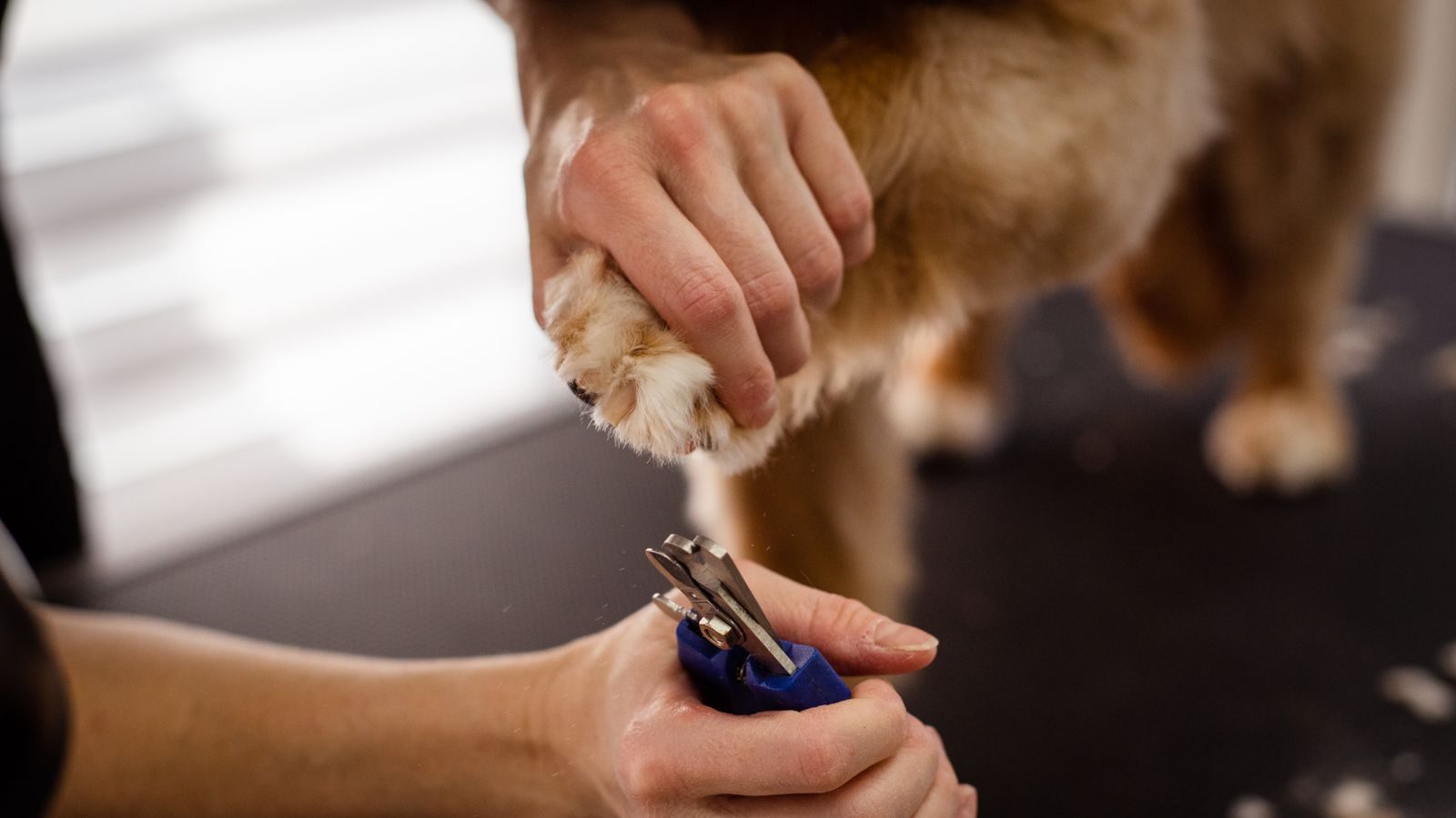
- Hold the paw gently but firmly. Press lightly on the pad to extend the nail. Push any long fur out of the way.
- Find your cutting point. On light nails, stop a few millimetres before the pink quick. On dark nails, start right at the tip.
- Cut small. The AKC recommends clipping only the tip of the nail, straight across. Take thin slices rather than one big cut, and check the cut surface each time.
- Reward after every nail, or even every touch at first.
- Do not forget the dew claws on the front legs, and on the back legs if your dog has them.
- Smooth the edges with a grinder or nail file if you like.
- Stop while things are going well. One paw, or even one nail, is a perfectly good session. You can do the rest tomorrow.
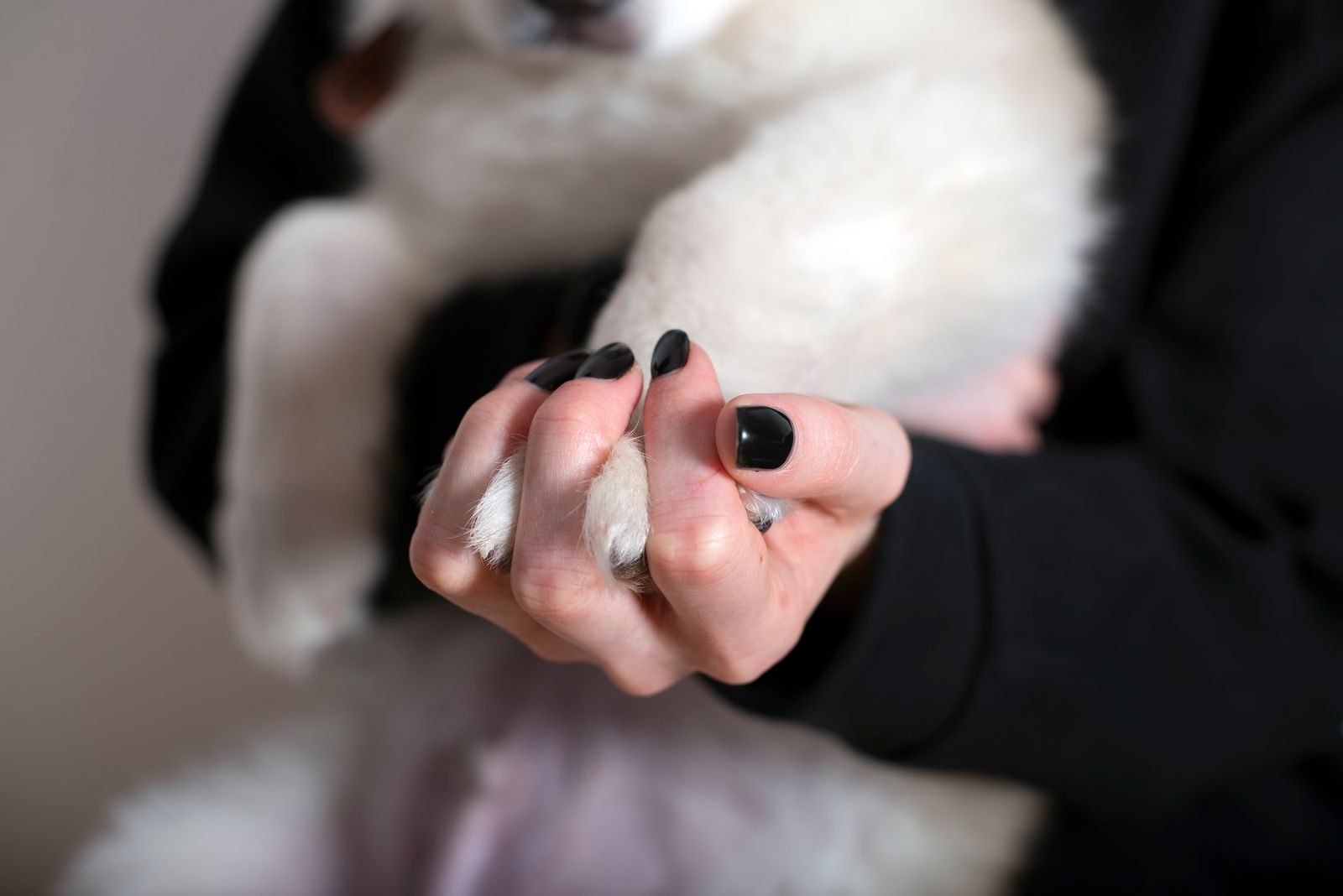
Helping a nervous dog: desensitising with rewards
Many dogs dislike having their feet handled, especially rescue dogs or dogs who have had a bad experience. Forcing a trim usually makes the fear worse. The AKC’s nail care guide explains that dogs can learn from a single painful or scary experience, which is why building trust slowly pays off. A gradual plan works better:
- Touch: briefly touch your dog’s leg, then reward. Build up to holding a paw for a second, then several seconds.
- Toes: gently handle individual toes and press on the pads. Reward each time.
- Meet the tool: let your dog sniff the clippers or grinder and reward. For a grinder, switch it on at a distance and reward, then gradually bring it closer.
- Touch the tool to the nail without cutting. Reward.
- Trim one nail, then give a jackpot of treats and finish.
- Build up slowly over days or weeks, adding a nail or two at a time.
Watch your dog’s body language. Lip-licking, yawning, turning away, whale eye (showing the whites of the eyes), freezing or pulling away are signs to slow down. If your dog growls, snaps or panics, stop and go back a step. A lick mat or a helper feeding treats can make the whole thing far more pleasant. The AKC guide suggests simply stopping if it isn’t going well and trying again another day. If your dog has broader handling or reactivity issues, our reactive dog training guide covers calm, reward-based approaches.
What to do if you cut the quick
It happens to experienced owners and groomers too. Stay calm, as your dog will pick up on your stress.
- Press styptic powder firmly onto the end of the nail for 30 seconds to a couple of minutes. The AKC advises applying styptic powder or a clotting product straight away. Cornflour pressed onto the nail is a backup if you have nothing else.
- Alternatively, apply gentle pressure with a clean cloth or gauze.
- Keep your dog quiet for a little while so the clot can hold.
- Give treats and end the session on a positive note.
- Check the nail over the next few days for redness, swelling or limping.
Call your vet if the bleeding has not stopped after about 10 minutes of pressure, if the nail is split or broken near the base, or if the toe becomes swollen or sore in the days afterwards.
How often should you trim your dog’s nails?
The AKC says most dogs need a trim every three to four weeks, depending on activity. RSPCA Australia notes that regular walks on hard surfaces such as footpaths help wear nails down naturally, but dew claws still need attention. Puppies, small breeds, older dogs and less active dogs often need more frequent trims. Do a quick nail and paw check every week; it is also a good chance to look for grass seeds, cuts and sore pads.
When to let a groomer or vet do it
RSPCA Australia suggests that if your dog is resistant to nail trims, you talk to your vet about having them done at the clinic or by a trusted, reputable professional groomer. Consider professional help if:
- Your dog is very fearful or aggressive about feet being handled
- The nails are very overgrown, curled or growing into the pads
- Your dog has thick, dark nails and you are not confident
- A nail is split, broken, bleeding or the toe looks infected
- Your dog has painful joints and struggles to stay in position
Many groomers and vet clinics offer quick nail trims between full grooms. Our guides to dog grooming costs in Australia and dog grooming at home cover what to expect and how nail care fits into your dog’s wider grooming routine. For very anxious dogs, your vet can discuss options such as pre-visit medication to make the experience less stressful.
Frequently asked questions
Can I use human nail clippers on my dog?
For tiny puppies, sometimes, but generally no. Dog nails are thicker and rounder than human nails, and human clippers can crush or split them. Use clippers designed for dogs and sized for your dog.
How do I trim black dog nails without hitting the quick?
Take very thin slices from the tip, or use a grinder, and look at the cut surface after each slice. When you see a darker spot appear in the centre, stop. Good light helps, and frequent small trims are safer than occasional big ones.
Is it OK to just walk my dog more instead of trimming?
Walking on hard surfaces does wear nails down, and some active dogs rarely need trims. But it rarely wears them evenly, and it does nothing for dew claws. Keep checking length and trim when needed.
My dog’s nails are really long. Can I cut them back in one go?
No. The quick will have grown long too, so cutting the nail short in one session will cause pain and bleeding. Trim a little every week or two to let the quick recede. If the nails are curling or digging into the pads, see your vet.
Should I trim my puppy’s nails?
Yes, and starting young is one of the best things you can do. Short, positive sessions with lots of treats teach your puppy that paw handling is no big deal, which makes life easier for both of you, and for your vet and groomer, for years to come.
Key takeaways
- Keep nails short enough that they do not touch the ground when your dog stands; clicking on the floor means they are too long.
- Take small slices to avoid the quick, especially on dark nails.
- Clippers and grinders both work. Choose the one your dog tolerates best and keep it sharp.
- Most dogs need a trim every three to four weeks, and dew claws need checking every time.
- Desensitise nervous dogs slowly with treats, and stop before your dog gets stressed.
- Keep styptic powder handy; call your vet if bleeding will not stop after about 10 minutes.
- Ask a vet or groomer for help with fearful dogs or badly overgrown nails.
Sources
- RSPCA Australia Knowledgebase: Why and how should I groom my dog?
- American Kennel Club: How to Trim Your Dog’s Nails at Home
- American Kennel Club: Good Grooming, Improve Your Dog’s Nail Care Routine
This article is general information for pet owners and is not a substitute for advice from a registered veterinarian. If your dog has a broken, bleeding or infected nail, or is very distressed by nail trims, contact your vet for advice.