If your dog has started leaving little white flakes on their bed or scratching more than usual once the weather turns, you are not imagining it. Just like us, dogs can develop dry, itchy, flaky skin over the colder months. Across much of Australia — from frosty Canberra mornings to damp Melbourne afternoons — winter quietly pulls moisture out of your dog’s skin and coat. The good news is that most cases respond well to a few simple changes at home.
Why Winter Dries Out Your Dog’s Skin
Cold outdoor air holds very little moisture. When that dry air meets your dog’s skin day after day, it weakens the coat’s natural protective barrier and lets hydration escape. Add in wind, rain and muddy walks, and the skin has to work harder to stay healthy. The result is often dullness, flaking and the odd patch of irritation.
The Indoor Heating Trap
Ironically, the cosy part of winter can be the bigger culprit. Ducted heating, reverse-cycle air conditioners and wood fires all strip humidity from the air inside your home. Because most dogs spend far more time indoors over winter, they sit in this dry, heated air for hours — which can dry the skin out even faster than the cold outside. Dogs that curl up right next to a heater are especially prone to a dry, brittle coat.
Signs Your Dog’s Skin Needs Help
A little seasonal dryness is common, but it is worth keeping an eye out for these signs:
- Flaking or visible dandruff through the coat or on bedding
- Scratching, licking or nibbling more than usual
- A dull, dry or brittle-feeling coat
- Red, flaky or irritated patches of skin
- Dry, cracked paw pads or a crusty nose
Practical Ways to Keep Your Dog’s Coat Healthy This Winter
Brush a Little More Often
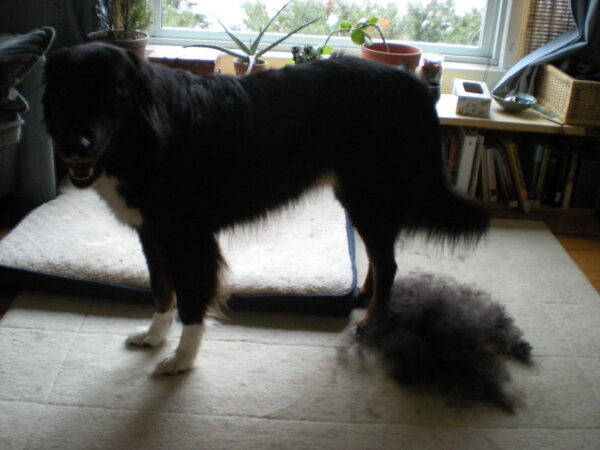
Regular brushing is one of the simplest things you can do. It lifts away dead skin and loose fur, stimulates the skin and helps spread your dog’s natural oils evenly along each hair. A few minutes every couple of days can make a real difference to how the coat looks and feels — and it is a lovely way to check for any new lumps, ticks or sore spots while you are at it.
Bathe Less, Not More
It is tempting to bath a muddy winter dog often, but frequent washing strips the very oils that keep skin supple. Where you can, stretch out the time between baths and rinse off mud with plain warm water instead. When a proper bath is needed, choose a gentle, moisturising dog shampoo made for sensitive skin, and dry your dog thoroughly afterwards so they are not left cold and damp.
Feed the Coat From the Inside
A healthy coat starts with good nutrition. Omega-3 and omega-6 fatty acids — found in fish oil, flaxseed and quality dog foods — can support skin hydration and a softer coat. Many owners find that adding a vet-approved omega supplement helps over a few weeks rather than overnight, so give any change time to work. Always check with your vet before starting a new supplement, especially if your dog has existing health conditions.
Add Some Moisture Back to the Air
If your home runs heating for long stretches, a humidifier in the room where your dog spends the most time can help replace some of the moisture the heater removes. Keeping fresh water available at all times matters too — dogs can drink less in winter, and good hydration shows in the skin and coat.
When to See Your Vet
Mild, seasonal flaking usually settles with the steps above. But dandruff and itching can also point to underlying issues such as allergies, parasites, or hormonal and skin conditions. Book a check-up if you notice constant scratching, hair loss, sores, a strong odour, greasy skin, or flaking that simply will not clear. Consult a licensed veterinarian for diagnosis or treatment specific to your pet — they can rule out medical causes and recommend the right plan.
The Bottom Line
Winter dryness is one of the most common — and most manageable — coat problems Aussie dogs face. With a little more brushing, fewer baths, the right nutrition and a bit of humidity indoors, most dogs sail through the cold months with a soft, comfortable coat. Keep an eye on the early signs, make small adjustments, and lean on your vet whenever something does not look right. Your dog’s skin will thank you for it.