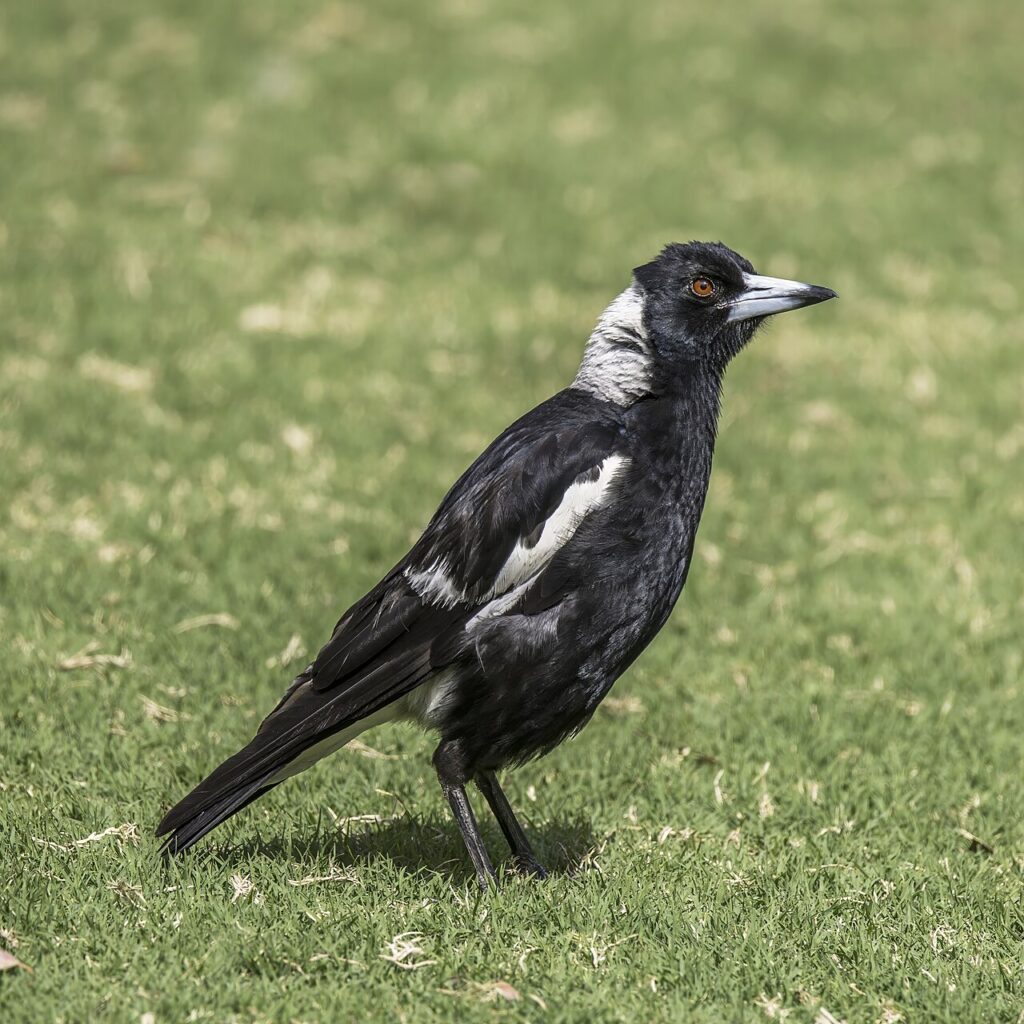
If your morning dog walk has picked up a new soundtrack of beak-clapping and a black-and-white blur overhead, magpie swooping season has landed. Across much of Australia it runs from roughly August to November and peaks in spring, and dog walkers are regular targets. The reassuring part: swooping is temporary, the vast majority of magpies never do it, and a few small tweaks to your routine keep both your dog and the birds out of harm’s way.
When is magpie swooping season in Australia?
Magpie breeding season runs from about August to November, and swooping tends to roll from north to south: south-east Queensland and northern New South Wales often see it from July or August, while southern Victoria usually peaks in September. Each nesting pair only defends its patch for around four to six weeks, while the chicks are in the nest (NSW National Parks), so any single hotspot settles down within a month or so. It’s also far less common than its reputation suggests — fewer than 10% of male magpies swoop people, it’s usually only the males, and only a tiny minority ever make contact.
Why dogs — and their walkers — get swooped
Swooping is defensive, not aggressive: a father magpie is guarding eggs or chicks from anything he reads as a threat. Fast movement makes it worse, which is why cyclists and joggers cop so much of it, and the RSPCA notes magpies may swoop pedestrians, cyclists or dogs who pass too close to the nest. Magpies will typically defend a zone of around 50 metres from the nest on foot, and up to 100 metres for cyclists. They’re also remarkably sharp — the Australian Museum notes they can recognise up to 100 individual people — so a bird that has decided you’re trouble may keep singling you out for the rest of the season.
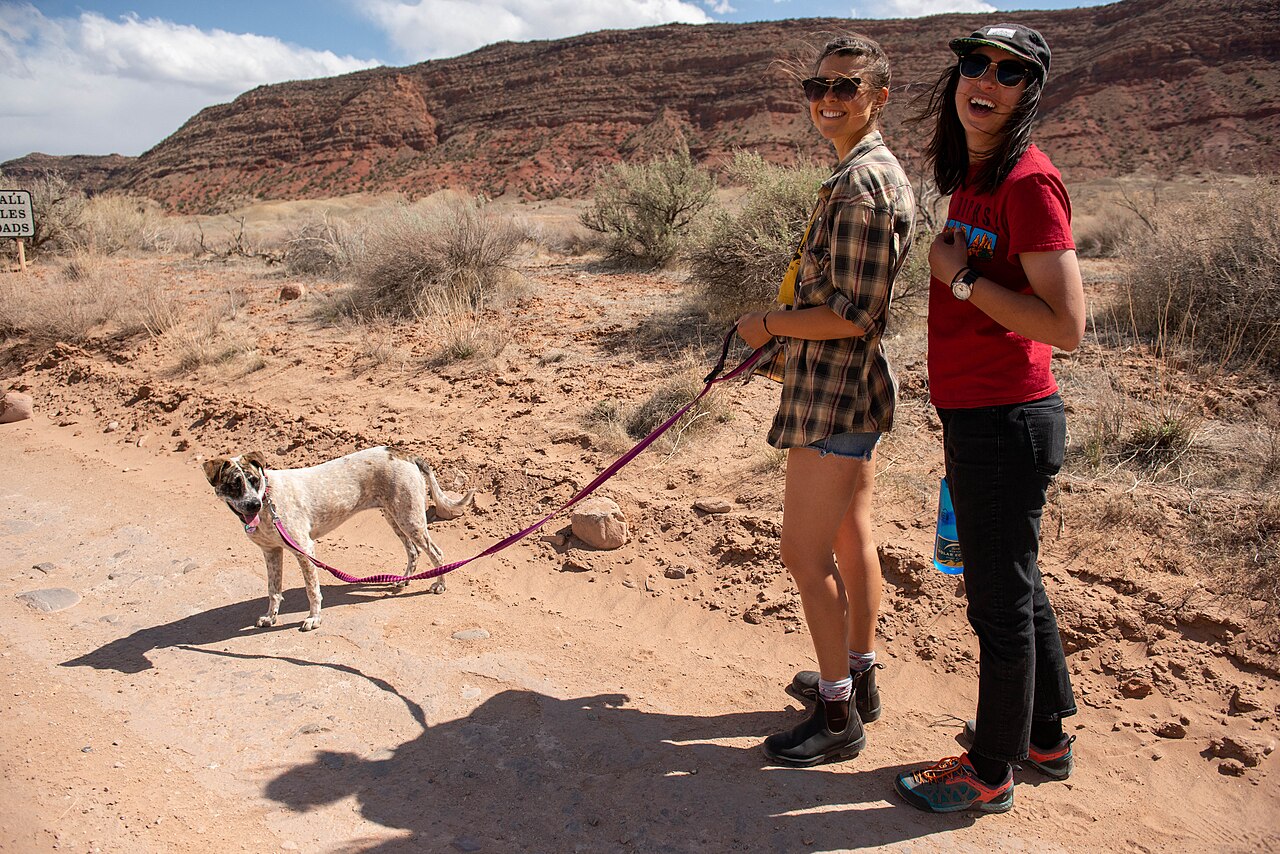
How to keep your dog safe during swooping season
You don’t have to cancel walks — you just need a plan, the same way you’d adjust for a dark winter evening. This checklist covers the essentials:
- Keep your dog on a lead near known nesting trees. A short lead lets you steer away fast and stops a startled dog bolting into a road or chasing the bird.
- Know the hotspots and reroute. Check the community-run Magpie Alert map and watch for council warning signs, then walk a different way for a few weeks.
- Walk briskly, don’t run, and stay calm. Sudden, erratic movement reads as a threat; the RSPCA and NSW National Parks both advise moving away steadily rather than panicking.
- Walk in company when you can. Magpies more often target lone walkers, so a group is a genuine deterrent.
- Use simple head protection. An open umbrella, a broad-brimmed hat or sunglasses shield your eyes — and an umbrella doubles as cover for a nervous dog.
- Never retaliate. Magpies are a protected native species under state law, so harming them or their nests is illegal — and it tends to make the swooping worse, not better.
What to do if a magpie swoops your dog
If it happens, keep the lead short and walk your dog calmly out of the defended zone; running only convinces the bird it’s winning. Once you’re clear, settle your dog and check it over. Direct hits on dogs are uncommon, but a sudden swoop can spook a dog into slipping its collar — if yours gets loose, the first 24 hours matter most. Contact injuries are rare, but if your dog is bleeding, limping or clearly distressed, treat it like any other outdoor injury and call your vet. Report a persistently aggressive bird in a public space to your local council, and if you find an injured magpie, phone a local wildlife rescue group, such as WIRES on 1300 094 737 in NSW, or RSPCA Queensland’s 1300 ANIMAL (1300 264 625) hotline in Queensland.
| Situation | What to do |
|---|---|
| Known nest on your usual route | Reroute for a few weeks; keep your dog leashed and close |
| Warning signs (beak-clapping, diving) | Walk out calmly, don’t run, shield your head |
| A direct swoop at you or your dog | Keep moving away steadily; protect your eyes |
| Dog slips the lead and bolts | Call it back and act fast — the first 24 hours count |
| Injured dog, or an injured magpie | Vet for your dog; a local wildlife rescue group for the bird |
Frequently asked questions
Do magpies actually target dogs?
They react to movement near the nest, and a dog on a walk fits the bill. More often the swoop is aimed at you, but a bouncy or barking dog can draw attention too. Keeping your dog close and calm helps on both counts.
When does swooping season end?
Each pair usually stops within four to six weeks of the chicks hatching, and most areas are clear by late October or November once the young have fledged.
Is it illegal to hurt a swooping magpie?
Yes. Magpies are protected under state wildlife laws, so harming them, their eggs or their nests is against the law across Australia — and retaliation usually makes the swooping worse.
Can I still walk my dog during swooping season?
Absolutely. Avoiding known nests, keeping your dog leashed and staying calm is usually all it takes to walk safely through the season.
Key takeaways
- Swooping season runs roughly August to November and peaks in spring, moving north to south.
- It’s temporary and uncommon — most magpies never swoop, and each nest is only defended for a few weeks.
- Keep your dog on a lead, reroute around known nests, and move away calmly if a bird warns you off.
- Never harm a magpie — it’s illegal and makes things worse. Call your vet for an injured dog and the RSPCA for an injured bird.
Written by GoPetr Writer, the GoPetr editorial team, which covers practical, everyday pet care for Australian households. General information only — not a substitute for veterinary advice. If your pet is injured or unwell, consult a licensed veterinarian.