If your dog has ever breathed a waft of less-than-fresh air in your direction, it is easy to laugh it off as normal “dog breath”. But persistent bad breath is often the first warning sign of something more serious: dental disease. Veterinary sources widely estimate that a large majority of dogs — commonly cited as around 80% by the age of three — already show some level of dental disease, making it one of the most common problems vets diagnose. The good news is that with a little know-how, it is also one of the most preventable.
What Dental Disease Actually Is
Dental disease in dogs almost always starts the same way. Bacteria in the mouth mix with saliva and food particles to form plaque, a sticky film that clings to the teeth. If that plaque is not removed, it hardens into tartar (also called calculus) within a couple of days. Tartar creeps below the gum line, where it inflames the gums and slowly destroys the tissue and bone that hold each tooth in place. That advanced stage is known as periodontal disease, and by then the damage is often irreversible.
Because the worst of it happens beneath the gums, plenty of dogs are walking around with painful mouths while their owners have no idea. Dogs are stoic by nature and rarely stop eating until the disease is well advanced.
Why It Matters Beyond the Mouth
Dental disease is not just a cosmetic concern or a bad-breath nuisance. When the gums are inflamed and bleeding, harmful bacteria gain a direct doorway into the bloodstream. From there they can travel to vital organs — the heart, liver and kidneys — triggering inflammation and infection far from the mouth. Vets consistently link chronic untreated dental disease with damage to these organs, which is why dental care is genuinely a whole-body health issue, not an optional extra.

Warning Signs Every Aussie Owner Should Know
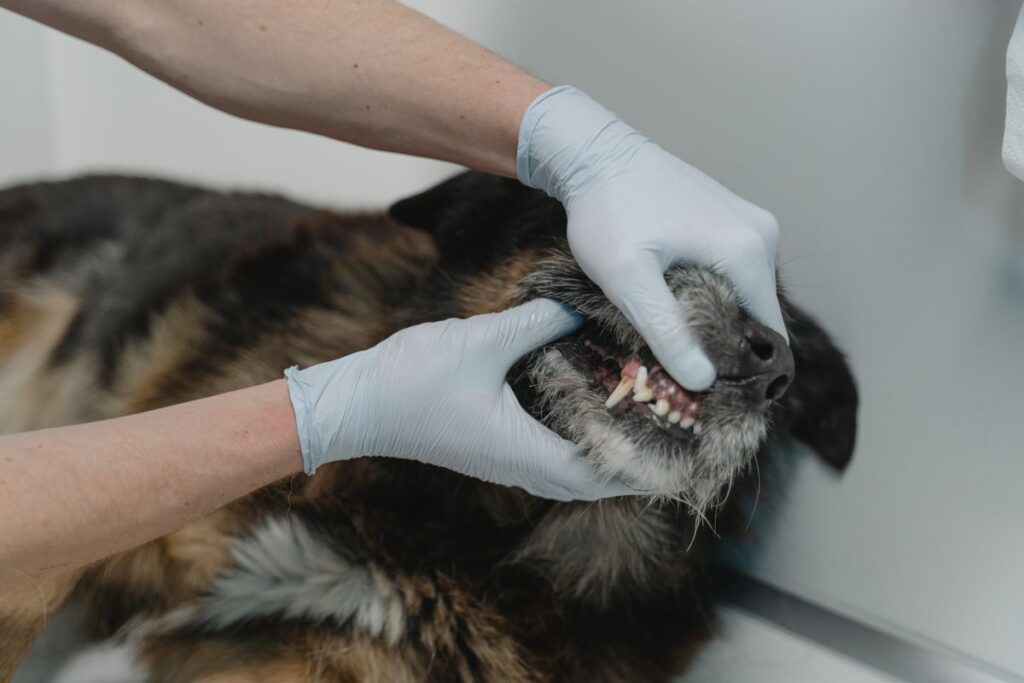
You do not need to be a vet to spot trouble early. Lift your dog’s lip every week or two and have a look. Book a check-up if you notice any of the following:
- Persistent bad breath that does not improve
- Yellow or brown build-up along the gum line
- Red, swollen or bleeding gums
- Dropping food, chewing on one side, or reluctance to eat hard kibble
- Pawing at the mouth or face rubbing
- Loose, broken or missing teeth
- Excessive drooling, sometimes tinged with blood
Small and brachycephalic (short-faced) breeds such as Pugs, French Bulldogs, Chihuahuas and Toy Poodles are especially prone, because crowded teeth trap more plaque. If you own one of these breeds, stay extra vigilant.
How to Prevent Dental Disease at Home
Brush Regularly
Daily brushing is widely regarded as one of the most effective things you can do, and it is cheaper than any treatment. Use a soft pet toothbrush or a finger brush with toothpaste made for dogs — never human toothpaste, which contains fluoride and sometimes xylitol that are toxic to dogs. Start slowly, let your dog lick the paste off your finger first, and build up over a couple of weeks. Even brushing a few times a week makes a real difference.
Choose the Right Chews and Diet
Vet-approved dental chews, special dental diets and certain chew toys help scrape away plaque between brushes. Look for products carrying the Veterinary Oral Health Council (VOHC) seal, which means they have been independently tested. Avoid hard bones, antlers and hooves — they are a common cause of cracked teeth in Australian clinics.
Keep Up With Professional Cleans
Home care slows plaque but cannot remove hardened tartar below the gum line. That requires a professional dental clean under general anaesthetic, where your vet can scale, polish, x-ray and extract any diseased teeth. Many veterinary dental experts also caution against anaesthesia-free “dental cleaning” services, because they only tidy the visible surface and cannot diagnose or treat the disease lurking beneath the gums.
Practical Takeaways
- Check your dog’s teeth and gums every week — bad breath is a red flag, not normal
- Brush daily with dog-specific toothpaste for the biggest payoff
- Use VOHC-approved chews and diets, and skip hard bones and antlers
- Book an annual vet dental check, and a professional clean when advised
- Watch small and short-faced breeds especially closely
The Bottom Line
Dental disease is common, painful and linked to serious organ damage — but it is also one of the few health problems you can largely prevent from your own kitchen. A toothbrush, the right chews and regular vet check-ups go a long way toward keeping your dog comfortable, healthy and happy well into their senior years. If you have noticed any of the warning signs above, the kindest next step is a chat with your local vet, who can assess your dog and recommend treatment specific to their needs.