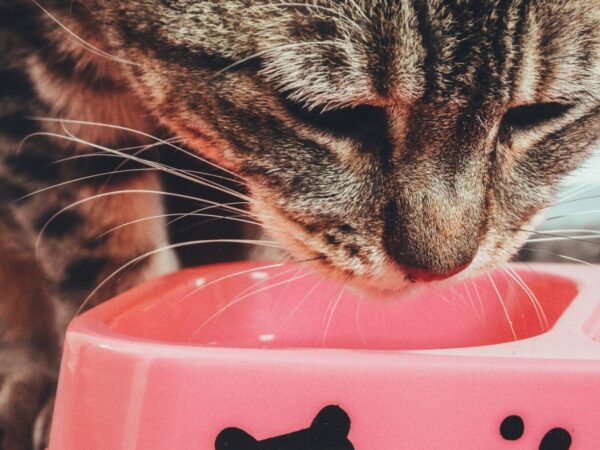

Standing in the pet food aisle at the supermarket or your local pet store can be overwhelming. Every bag promises something different, from “premium” and “natural” to “holistic” and “human-grade”, and prices range from budget-friendly to eye-watering. The good news is that you do not need a degree in animal nutrition to choose well. You just need to know where to look. This guide explains how pet food is regulated in Australia, how to read each part of the label, which claims to take with a grain of salt, and how to switch foods safely.
The front of the bag is marketing. The back is the facts.
The front of the pack is designed to sell. The useful information lives on the back or side: the ingredient list, the guaranteed analysis and the “complete and balanced” statement. Flip the bag over before you buy and compare two or three products side by side.
Under the Australian Standard covered below, a label should also show the net weight, the manufacturer’s contact details, a batch or date code for traceability, and feeding directions.
How pet food is regulated in Australia
Many owners assume pet food is checked by a government agency the way human food is. It is not. Manufactured dog and cat food in Australia is largely self-regulated. The key document is AS 5812, the Australian Standard for the manufacturing and marketing of pet food. The current edition, AS 5812:2023, was developed with input from the Pet Food Industry Association of Australia (PFIAA), the Australian Veterinary Association (AVA) and others. It covers ingredient handling, manufacturing hygiene, nutritional adequacy, labelling and marketing claims, and its nutrient requirements line up with the main international references from AAFCO (United States) and FEDIAF (Europe).
The catch is that AS 5812 is voluntary. PFIAA requires its manufacturing members to comply, but companies outside the association do not have to. General consumer protection law still applies, so labels must not be false or misleading, and there are some state rules for pet meat. Veterinary and animal welfare groups, including the AVA, have long called for national mandatory regulation. In April 2026, federal, state and territory agriculture ministers considered the issue again and agreed that a regulatory approach was not warranted at that time, so the voluntary system remains in place.
What this means for you: look for food that states it meets AS 5812, or an equivalent international standard such as AAFCO or FEDIAF. RSPCA Australia recommends a good quality commercial food that meets AS 5812 or an equivalent standard and suits your pet’s life stage, for both dogs and cats.
Reading the ingredient list
Ingredients are listed in descending order by weight, so the first few make up the bulk of the recipe. Ingredients are weighed as they go into the mix, which includes their water content. That is worth remembering when you read the list.
Look for a named protein near the top
Chicken, beef, lamb, salmon or kangaroo listed clearly near the top is a good sign. Kangaroo is a popular Australian option. It is lean and, for many dogs, a novel protein they have not eaten before, which is why vets sometimes use it when investigating food sensitivities. If your pet has a suspected allergy, work through the options with your vet rather than switching brands at random.
“Meal” is not a dirty word
“Chicken meal” is chicken that has been rendered and dried into a concentrated powder. Because most of the water has been removed, it contains more protein by weight than the same amount of fresh chicken. Fresh meat, on the other hand, is mostly water, so it can sit at the top of the list while contributing less protein than a meal listed lower down.
Vague wording tells you less
Terms such as “meat meal”, “poultry by-product”, “animal fat” or “animal derivatives” do not name the species. They are not automatically harmful, but they tell you far less about what is inside, and they are less helpful if your pet needs to avoid a particular protein.
Grains and fillers in context
Grains are not the enemy. Many dogs and cats digest rice, oats and other grains perfectly well. What matters is the overall balance. If the first few ingredients are mostly grains or plant proteins, the food may rely on them heavily, which matters more for cats. Cats are obligate carnivores, need more protein than dogs, and must get certain nutrients such as taurine from their diet. Never feed dog food to a cat as a regular diet, because it will not meet those needs.
Preservatives and additives
Some foods are preserved with synthetic antioxidants such as BHA, BHT or ethoxyquin, others with naturally derived ones such as mixed tocopherols (vitamin E). Both are permitted. Avoiding synthetic preservatives and artificial colours is a reasonable personal preference rather than a safety red flag.
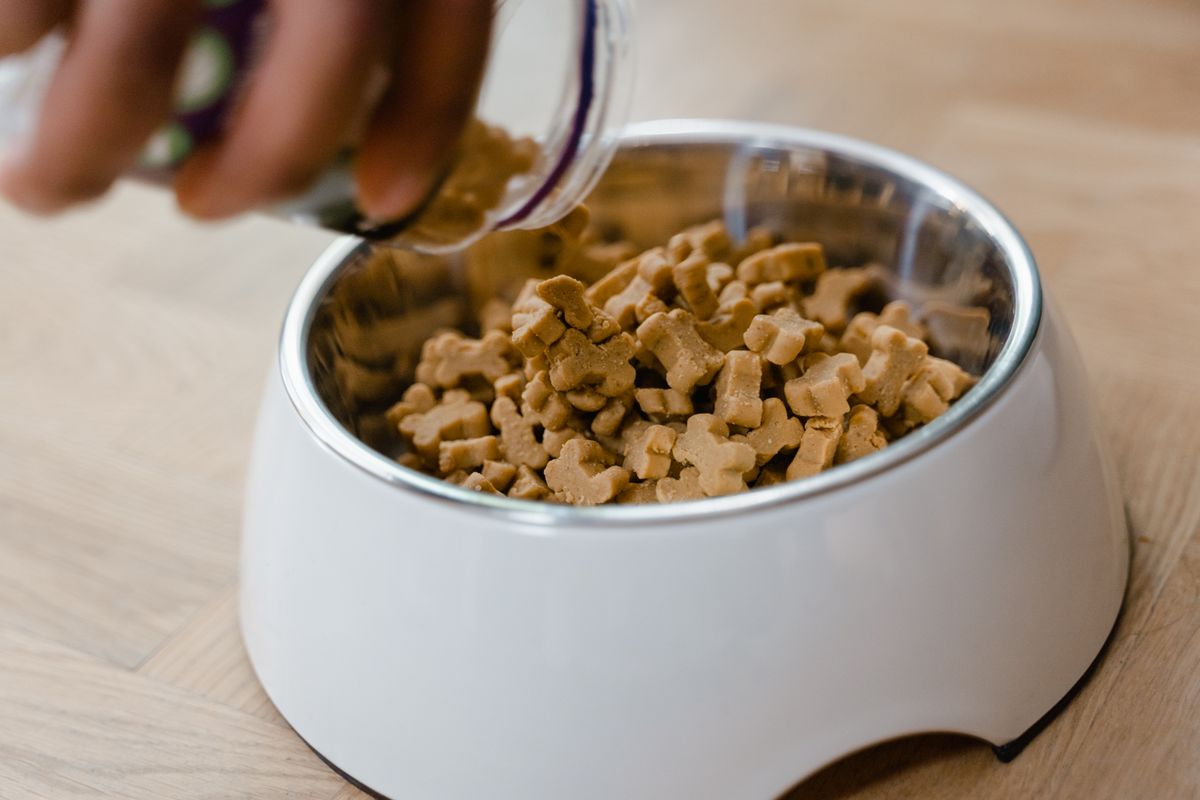
The guaranteed analysis, explained
This panel lists minimum crude protein and fat, and maximum crude fibre and moisture. It is the closest thing pet food has to the nutrition panel on human food, but it needs a little interpretation.
Compare like with like: the dry matter trick
The numbers are given “as fed”, including water. Kibble is usually around 10% moisture, while wet food is often 75% to 80% or more. That makes wet food look much lower in protein even when it is not. To compare fairly, convert both to a dry matter basis:
Dry matter % = nutrient % ÷ (100 minus moisture %) × 100
| Food | Protein (as fed) | Moisture | Protein (dry matter) |
|---|---|---|---|
| Dry kibble | 26% | 10% | 26 ÷ 90 × 100 = about 29% |
| Wet food | 9% | 78% | 9 ÷ 22 × 100 = about 41% |
In this example, the wet food that looked lower in protein on the label is actually higher once the water is taken out.
What the numbers should look like
The AAFCO nutrient profiles, which AS 5812 aligns with, set minimum levels on a dry matter basis. These are floors, not targets, and most quality foods sit above them:
| Life stage | Minimum protein (dry matter) | Minimum fat (dry matter) |
|---|---|---|
| Adult dog | 18% | 5.5% |
| Puppy (growth) | 22.5% | 8.5% |
| Adult cat | 26% | 9% |
| Kitten (growth) | 30% | 9% |
Higher is not always better. Dogs prone to weight gain or pancreatitis may need moderate fat, and pets with kidney disease often need tailored diets, so ask your vet what suits yours.
The “complete and balanced” statement
This is arguably the most important line on the pack. A food labelled complete and balanced is formulated to provide all the nutrients your pet needs as its main diet, for the life stage stated. A food labelled complementary (or as a treat, topper or supplement) is not designed to be fed on its own, and feeding it as the whole diet can lead to deficiencies over time.
Check the life stage too. Puppies and kittens need more energy, protein and minerals such as calcium than adults, and pregnant or nursing mothers have higher needs again. “All life stages” foods must meet the higher growth requirements. Large-breed puppies have specific needs around calcium and energy, so choose a food designed for them. Seniors do not have a single official nutrient profile, so “senior” formulas vary a lot between brands.
Marketing words to take with a grain of salt
- “Premium”, “holistic”, “gourmet”: these have no fixed nutritional meaning. Judge the food on its label details, not the adjective.
- “Natural”: often used loosely. Natural does not automatically mean better or safer.
- “Human-grade”: sounds reassuring, but it is not a recognised quality grade on Australian pet food. If it matters to you, ask the manufacturer exactly what they mean.
- “Grain-free”: only a small number of pets genuinely need to avoid grains. In the United States, the FDA investigated reports of a heart condition called dilated cardiomyopathy (DCM) in dogs, many of which involved grain-free diets high in legumes or potatoes. A cause has not been established, but there is no reason to choose grain-free unless your vet recommends it.
If you are trying to sort sensible advice from viral claims on social media, our guide to judging online pet food advice walks through what to look for.
Pet meat and raw products
Fresh “pet meat” and “pet mince” sold in the fridge section are not the same as a complete and balanced manufactured food. RSPCA Australia warns against pet meat products containing sulphite preservatives, which destroy thiamine (vitamin B1) and have caused serious and even fatal thiamine deficiency in dogs and cats. If you choose to feed raw meat, RSPCA advises using human-grade meat rather than pet meat with preservatives, and feeding it as part of a diet that is balanced overall. Our article on raw chicken for cats covers the hygiene side.
Kibble, wet food or a mix?
Every format has pros and cons, and the most important thing is that the food is complete, balanced and suits your pet.
- Dry food is convenient, economical and keeps well once opened. Some dental diets are specially designed to help reduce plaque, but ordinary kibble does not replace dental care.
- Wet food adds a lot of moisture, which helps cats that do not drink much and pets prone to urinary problems. RSPCA Australia suggests a balance of wet and dry food is preferable for cats. Hydration matters even more in an Australian summer. See our guide to urinary problems in cats for why water intake matters so much.
- A mix of both is what many Australian owners settle on. Just reduce the amount of each so the total daily calories stay right.
Use the feeding guide as a starting point
The feeding directions on the pack are a starting point, not a rule. Activity level, age, desexing status and breed all change how much a pet needs, and a working farm dog and a couch-loving greyhound have very different requirements. Weigh or measure portions, count treats as part of the daily total, and adjust based on your pet’s body condition. Our guide to healthy weight for dogs and cats shows how to check.
Switching foods gradually
Once you have found a better option, do not change it overnight. Swap it in over about 7 to 10 days, mixing a little more of the new food with the old each day. This gives your pet’s gut time to adjust and reduces the chance of vomiting or loose stools. Keep an eye on their poo, appetite and coat over the following weeks. Cats can be particularly fussy, so go slower if needed, and never let a cat go without eating while you wait for them to accept a new food.
If you suspect a problem with your pet’s food
If your pet becomes unwell and you think their food may be involved, RSPCA Australia suggests these steps:
- Take your pet to the vet first, and keep the packaging, batch code and any leftover food.
- Contact the manufacturer using the details on the label.
- If you are not satisfied, contact PFIAA, which will try to help even if the company is not a member.
- Ask your vet to report the case to PetFAST (the Pet Food Adverse Event System of Tracking), run by the AVA and PFIAA since 2011. Only vets can lodge reports, which are monitored for patterns that could point to a wider problem.
For more on recalls and food safety, read our guide to pet food safety in Australia.
Frequently asked questions
Is AS 5812 compulsory in Australia?
No. AS 5812 is a voluntary standard. PFIAA members must comply with it, but other manufacturers do not have to. In April 2026, agriculture ministers decided not to introduce national mandatory regulation at that time. Looking for a statement of compliance on the pack is a sensible first check.
Is more expensive pet food always better?
No. Price often reflects branding, ingredient choices and marketing as much as nutrition. Your pet does not need the most expensive bag on the shelf. They need a complete and balanced food that suits their life stage, health and body condition.
Should my dog be on a grain-free diet?
Most dogs do not need one. Grain-free diets are only helpful for the small number of dogs with a diagnosed grain sensitivity, and the possible link between some grain-free diets and heart disease in dogs is still being studied. Talk to your vet before switching.
Can I feed my cat dog food in a pinch?
A single meal will not hurt, but dog food should not be a cat’s regular diet. It is formulated for dogs and will not meet a cat’s higher protein needs or supply enough taurine, which cats must get from food. See our guide to foods toxic to cats for what to keep off the menu entirely.
Key takeaways
- Ignore the buzzwords on the front and read the back of the pack.
- Pet food in Australia is largely self-regulated under the voluntary AS 5812 standard, so look for compliance with AS 5812 or an equivalent international standard.
- Choose a food labelled “complete and balanced” for your pet’s life stage. “Complementary” products are not a full diet.
- Ingredients are listed by weight, including water. A named protein near the top is a good sign, and “meal” is a concentrated protein, not a filler.
- Compare protein and fat on a dry matter basis, especially between wet and dry foods.
- Avoid pet meat with sulphite preservatives, and do not go grain-free without a reason.
- Switch foods over 7 to 10 days, and talk to your vet if your pet has allergies or a medical condition.
This article is general information for Australian dog and cat owners and is not a substitute for advice from a registered veterinarian. If your pet has a health condition or you are unsure what to feed, talk to your vet.