
Introduction
When people hear the phrase “South American cat,” they often picture a house cat lounging somewhere in Brazil or Argentina. In reality, South America is home to one of the richest collections of wild feline species on Earth. From the tree-climbing margay to the elusive Andean mountain cat, these animals have adapted to rainforests, grasslands, wetlands, and high-altitude deserts. This guide introduces the most notable wild cats of the region, how they live, and why so many of them now need our help to survive.
Meet the Wild Cats of South America
South America hosts roughly a dozen native feline species (the exact count depends on how scientists divide some groups), ranging from the powerful jaguar to small cats that weigh less than a typical house cat. Each has carved out its own ecological niche, which is part of what makes the continent so important for feline diversity.
Ocelot
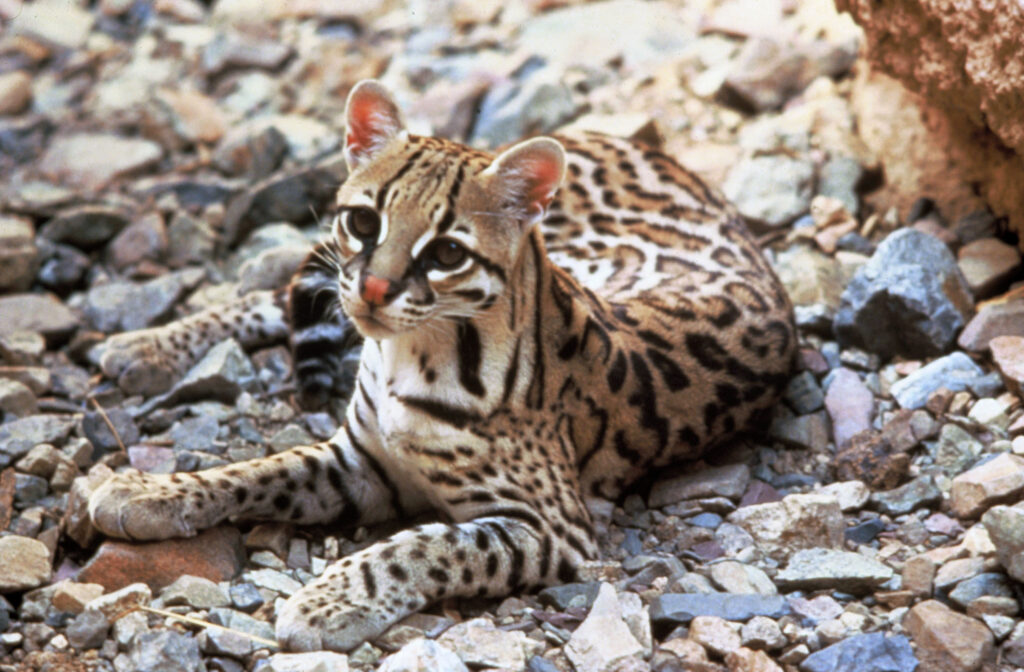
The ocelot is a medium-sized spotted cat found from Texas through Central America and across much of South America as far south as northern Argentina. Recognizable by its richly patterned coat, it is mainly nocturnal and hunts small mammals, birds, and reptiles. Ocelots are good swimmers and excellent climbers, and they tend to favor dense vegetation that offers cover.
Margay
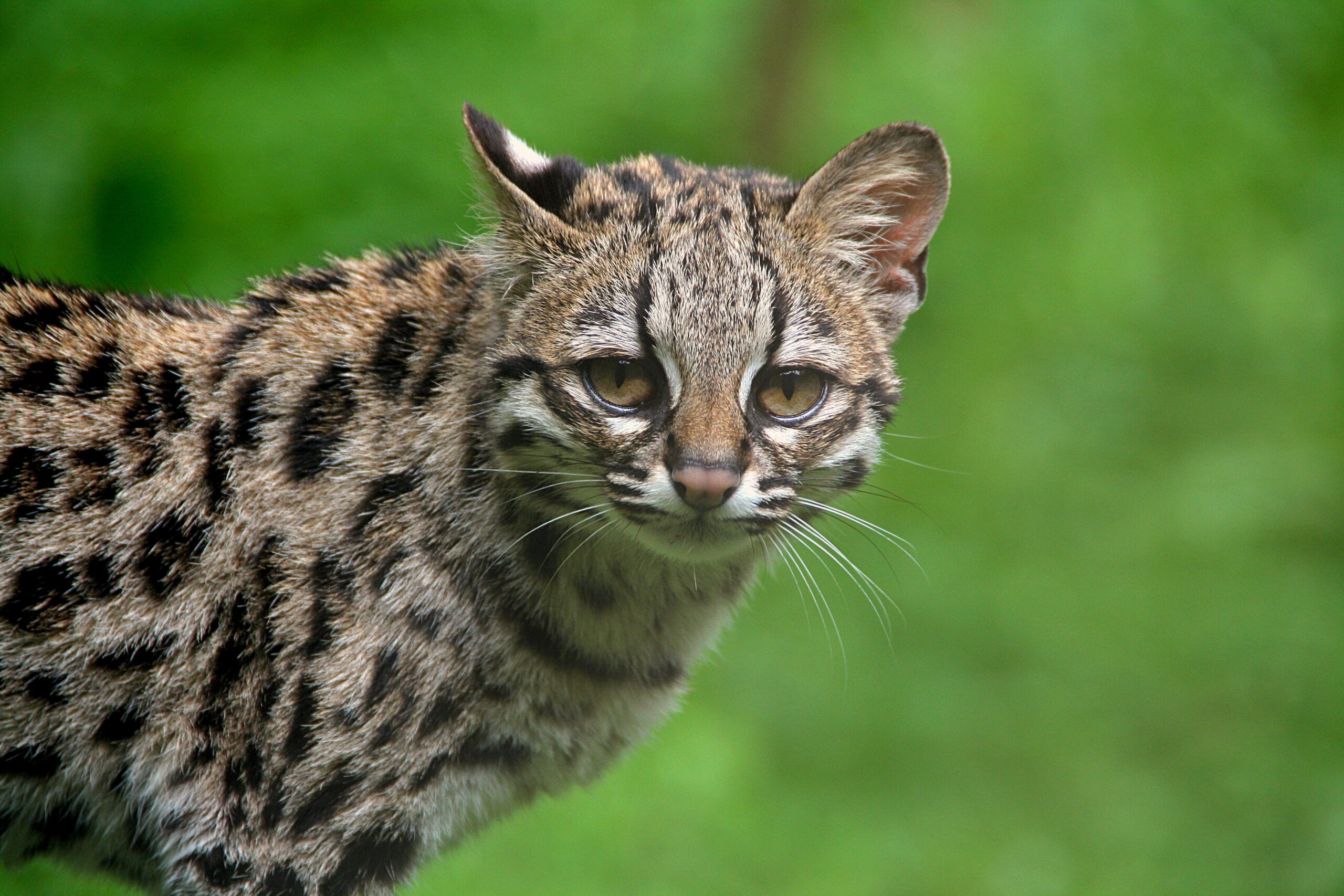
The margay is a small, big-eyed cat built for life in the trees. According to the IUCN Cat Specialist Group, its hind feet can rotate 180 degrees, allowing it to climb down trunks head-first and even hang from branches by a single hind foot. Largely arboreal and nocturnal, the margay is rarely seen by people and depends heavily on healthy forest canopy.
Geoffroy’s Cat
Geoffroy’s cat is a small spotted feline common in the southern part of the continent, including Argentina, Uruguay, southern Brazil, Bolivia and Paraguay, though it is considered rare in Chile. About the size of a large house cat, it is adaptable and can be found in scrublands, grasslands, and woodland edges, where it hunts rodents and small birds.
Pampas Cat
Named for the South American grasslands, the pampas cat is a small, stocky feline with variable coat colors across its range. It is highly adaptable, occurring from open plains to higher elevations, and is generally shy and difficult to observe in the wild. It is listed as Near Threatened on the IUCN Red List.
Andean Mountain Cat
The Andean mountain cat is one of the rarest and least-studied cats in the world. It lives at high elevations in the Andes and is well suited to cold, rocky terrain. It is classed as Endangered, with fewer than 2,500 mature individuals thought to remain in small, patchy populations, and is a major focus of regional conservation efforts.
Jaguarundi
The jaguarundi looks quite different from its spotted relatives, with a slender body, short legs, and a uniform gray or reddish coat. Unusually for a wild cat, it is mostly active during the day and is comfortable in a wide range of habitats, from forests to semi-open areas.
Where These Cats Live
South America’s wild cats occupy an impressive variety of environments. This habitat diversity is one reason the continent supports so many feline species, but it also means that different cats face very different pressures.
- Tropical rainforest: ocelots and margays rely on dense, multi-layered forest.
- Grasslands and scrub: pampas cats and Geoffroy’s cats thrive in open habitats.
- High-altitude Andes: the Andean mountain cat is adapted to cold, rocky slopes.
- Wetlands and forest edges: adaptable species such as the jaguarundi use mixed landscapes.
Conservation Challenges
Many South American cats are under pressure from habitat loss, deforestation, road expansion, and conflict with people. Smaller species can be affected when their prey declines or when forests are fragmented into patches too small to support them. Several of these cats, including the margay and pampas cat, are listed on the IUCN Red List as Near Threatened or worse, and the Andean mountain cat is classed as Endangered.
Conservation programs across the region focus on protecting habitat corridors, reducing conflict with farmers, and studying species that remain poorly understood. Supporting reputable wildlife organizations and responsible ecotourism can contribute to these efforts.
Can You Keep a South American Wild Cat as a Pet?
In short, these are wild animals, not pets. Species like ocelots, margays, and jaguarundis have specialized diets, large space requirements, and natural behaviors that cannot be met in a typical home. Keeping them is restricted or illegal in many places, and removing them from the wild harms already vulnerable populations. If you love these cats, the best way to help is to support habitat conservation and never participate in the wild-animal trade. For questions about local wildlife laws or any animal in distress, consult a licensed wildlife authority or veterinarian.
Frequently Asked Questions
What is the most common wild cat in South America?
The ocelot is among the most widespread and frequently recorded wild cats across the continent, though it is still elusive and mostly active at night. The jaguarundi is also very widespread; the IUCN Cat Specialist Group describes it as the most widely distributed small cat in the western hemisphere.
How big do South American wild cats get?
Sizes vary widely. Several small species are similar in weight to a house cat, while the jaguar (the largest cat in the Americas) is in a different category entirely from these smaller felines.
Are South American wild cats dangerous to humans?
The smaller wild cats generally avoid people and are not considered a threat under normal circumstances. As with any wild animal, it is best to observe them from a distance and never attempt to feed or handle them.
Final Thoughts
South America’s wild cats are a remarkable example of feline diversity, each shaped by a distinct landscape and way of life. Understanding and appreciating these species is a first step toward protecting them. Whether you are a curious pet lover or a budding wildlife enthusiast, supporting habitat conservation helps ensure these extraordinary cats continue to roam the forests, grasslands, and mountains they call home.