
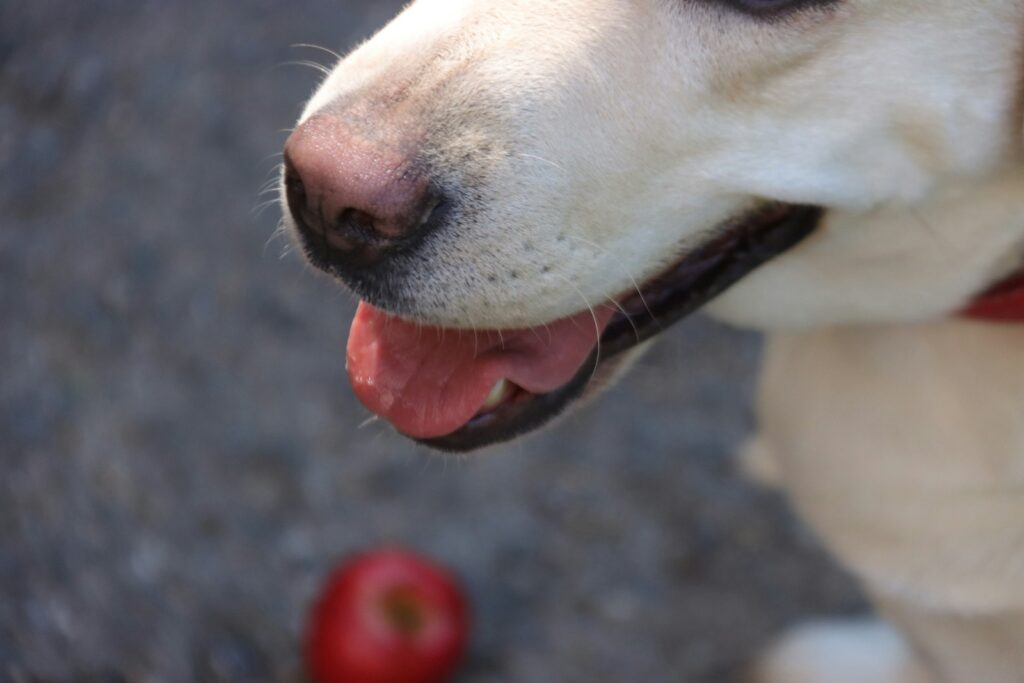
Yes, dogs can eat apples. Fresh apple flesh, with or without the skin, is a safe occasional snack for most dogs. The parts to keep out of the bowl are the core, the seeds and the stem: seeds contain amygdalin, a compound that can release cyanide when crushed, and a whole core is a choking and blockage risk. Apple products are a separate question, because sweetened apple sauce, spiced pie and fermented windfall apples carry risks that plain fruit does not.
Apple seeds and cyanide: what the evidence says
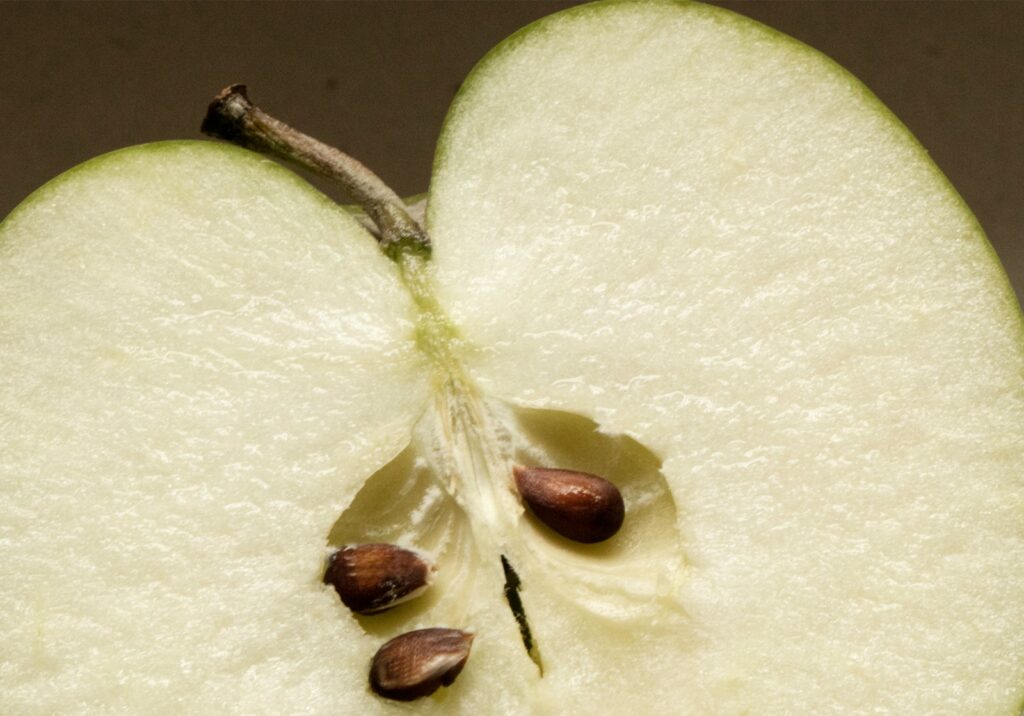
Apple seeds contain amygdalin, a cyanogenic glycoside. The ASPCA lists the stems, leaves and seeds of the apple tree as toxic to dogs, cats and horses because of these compounds, with signs such as brick-red gums, dilated pupils, difficulty breathing, panting and shock.
How much amygdalin is actually in a seed? A study published in Food Chemistry measured seeds from fifteen apple varieties and found roughly 1 to 4 mg of amygdalin per gram of seed. The same researchers found only tiny amounts in commercial apple juice and concluded those levels were unlikely to cause health problems. Apple seeds are small and light, so a single core holds only a fraction of a gram of seed.
The release mechanism matters too. The Merck Veterinary Manual explains that cyanogenic glycosides are converted to cyanide when chewing or crushing breaks open the plant cells and lets plant enzymes act on them. It also notes that animals with an acidic, single-chambered stomach are somewhat less susceptible than cattle and sheep, but not immune, and that dogs have lower activity of rhodanese, an enzyme the body uses to detoxify cyanide, than some other species.
Putting that together:
- A few swallowed seeds from one apple are very unlikely to poison a dog. The American Kennel Club notes that a small number of seeds is unlikely to cause harm but should still be avoided.
- The risk rises with dose and chewing. A small dog that crunches through a bucket of fallen fruit, or a dog that raids a bag of saved seeds, is a different situation.
- Seeds are not a treat, ever. The RSPCA Australia feeding guide lists fruit seeds and fruit stones among the things you should never feed a dog.
Leaves, twigs and prunings
The ASPCA points out that toxicity in the leaves and stems is especially high as the plant wilts, so bag or mulch apple tree prunings promptly rather than leaving them on the lawn for a bored puppy to strip.
Apple pips versus stone fruit pits
An apple pip is tiny; a peach, apricot or cherry stone is large enough to lodge in the gut. With summer stone fruit about to arrive in Aussie kitchens, the pit is usually the bigger worry. Our guide to cherries and their pits covers that risk.
Why the core is the real hazard
For most dogs, the core causes more problems than the seeds inside it. The AKC warns that the tough core and stem could choke a dog, and that owners should watch for digestive trouble or a blockage if one is swallowed.
A core that gets past the throat can still cause trouble further down. Cornell University’s College of Veterinary Medicine describes gastrointestinal obstruction as an emergency that often needs surgery, with signs including vomiting, reduced appetite, abdominal pain, diarrhoea, dehydration and lethargy.
My dog ate an apple core: what now?
- If your dog is gagging, coughing or pawing at its mouth, treat it as a choking emergency and get to a vet immediately.
- If your dog swallowed one core and seems fine, cyanide is unlikely. Watch for vomiting, a sore belly, refusal to eat or lethargy over the next day or two.
- Call your vet straight away if your dog is small, has eaten several cores, or shows any of those signs. Do not try to make your dog vomit at home.
How to prepare apple for your dog
Preparation is simple and is where most of the risk disappears:
- Wash it. The AKC recommends washing and scrubbing apples to remove dirt and any residue.
- Core it completely. Cut the apple into quarters, then slice away the core, seeds and stem with a knife. An apple corer often misses seed fragments at the edges.
- Slice to suit the dog. Thin slices or small cubes for small breeds; larger wedges are fine for big dogs that chew rather than gulp.
- Skin on or off? Either is fine; the AKC notes peeled apple is easier to digest for sensitive stomachs.
- Start small. Too much fruit at once can loosen stools. If you want a guide to treat sizes by body weight, our strawberry portion guide uses the same principle for any fruit snack.
Apple products: where the real risks hide
Plain apple is low risk. Many apple products are not, because of what has been added to them.
| Product | Main concern | Verdict |
|---|---|---|
| Plain, unsweetened apple sauce | None in small amounts | OK as an occasional lick |
| Sweetened or “no added sugar” apple sauce | Added sugar, or sugar-free sweeteners such as xylitol | Check the label; avoid if any xylitol |
| Apple pie, crumble, strudel | Sugar, fat, nutmeg, raisins or sultanas | Avoid |
| Dried apple rings and chips | Concentrated sugar, added sweeteners in some brands | Plain, unsweetened only, in tiny amounts |
| Cider, apple wine | Alcohol | Never |
| Fermenting or rotting windfall apples | Alcohol, mould | Keep dogs away |
Apple sauce and the xylitol check
The AKC says plain apple sauce is fine in moderation but that most versions contain added sugar, so unsweetened is the one to choose. The bigger worry is reduced-sugar or diet products sweetened with xylitol. VCA Animal Hospitals describes xylitol as extremely toxic to dogs: it can cause a dangerous drop in blood sugar within 30 minutes to 2 hours and, at higher doses, liver failure. It may also appear on labels as “birch sugar” or “wood sugar”. If your dog has eaten anything containing xylitol, call your vet or nearest emergency vet straight away.
Apple pie, crumble and Christmas baking
Apple desserts tend to show up on Aussie tables from Christmas through to autumn. The AKC flags nutmeg in pies because it contains myristicin, which can cause stomach upset in small amounts and more serious effects, including seizures, in larger amounts. Many recipes also add sultanas or raisins, and the ASPCA warns that grapes and raisins can cause kidney damage in dogs. If your dog gets into a fruit-studded dessert, our guide to grapes, sultanas and raisins explains what to do next.
Dried apple
Drying concentrates the sugar, and some commercial products add more. The AKC suggests making your own by baking thin, cored slices at a low temperature until crisp.
Cider and fermented windfall apples
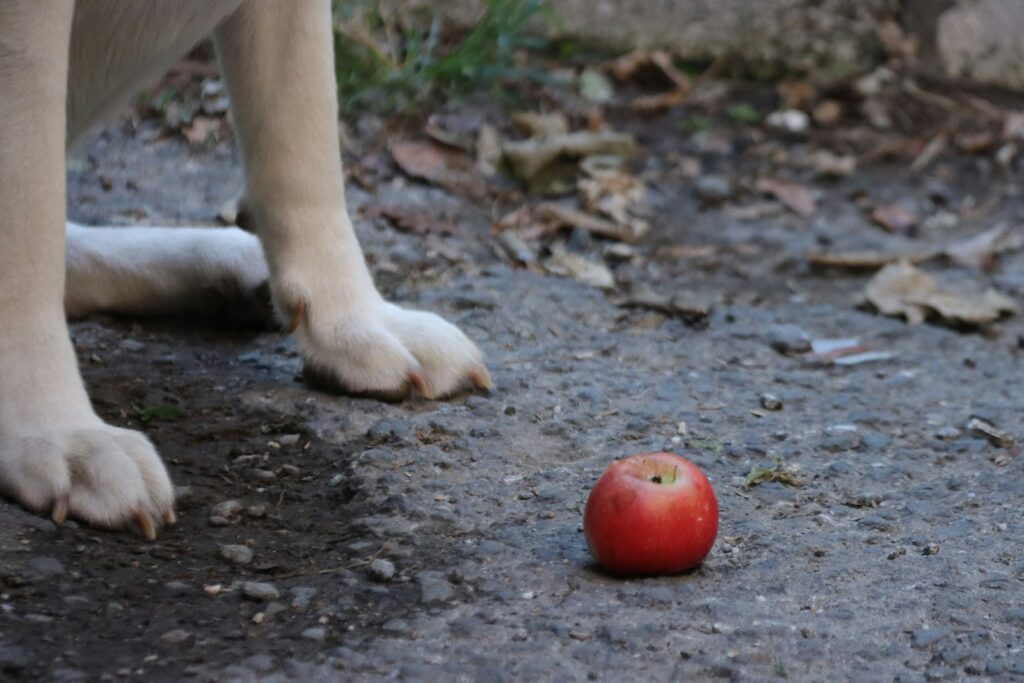
Alcohol is the apple risk most owners never think about. The ASPCA notes that alcohol is rapidly absorbed and can cause vomiting, tremors, coma and death in pets, and RSPCA Australia lists alcohol among the substances you should never give a dog. Keep cider glasses off low tables at summer barbecues.
Backyard fruit trees add a less obvious source. When apples drop and sit on warm ground, they start to ferment. A veterinary toxicology review in Today’s Veterinary Practice describes a reported case of fatal ethanol poisoning in a dog after it ate a massive quantity of rotten apples, with vomiting, wobbliness, tremors and dehydration before death. The same review lists wobbliness, lethargy, vomiting and collapse as the most common signs of alcohol poisoning, and notes low body temperature and low blood sugar as serious complications.
Rotting fruit can also grow mould. RSPCA Australia lists mouldy or spoiled foods and compost on its never-feed list, and our article on mouldy mulch and compost explains why mould toxins can cause tremors and seizures.
If you have apple trees:
- Pick up windfalls every day or two while fruit is dropping, usually late summer into autumn.
- Do not tip spoiled apples onto an open compost heap the dog can reach.
- If your dog seems drunk, wobbly, unusually sleepy or is vomiting after time under a fruit tree, see a vet promptly.
Do apples clean a dog’s teeth?
You will often read that crunchy apples “brush” a dog’s teeth. The evidence does not support relying on them. The AKC says chewing apple may slightly reduce plaque but is not a substitute for brushing or professional dental care, and notes that peel can get stuck between teeth. VCA Animal Hospitals describes daily brushing with a dog toothpaste as the best way to prevent tartar, and points to products carrying the Veterinary Oral Health Council seal, which have been tested for effectiveness.
If your dog already has bad breath, red gums or brown tartar, a fruit snack will not fix it. Our guide to pet dental disease, brushing and vet care covers what does work.
Frequently asked questions
How many apple seeds would hurt a dog?
There is no reliable published threshold for dogs, which is why vets advise removing all seeds. Seeds swallowed whole from a single apple are very unlikely to cause poisoning, but crushed seeds in quantity, especially in a small dog, are a genuine concern.
Can puppies eat apple?
Yes, in very small, cored and peeled pieces once they are on solid food. Keep cores out of the bin they can reach.
Are apples safe for cats?
A small piece of cored apple is not toxic to cats, but cats are obligate carnivores with little interest in fruit. The ASPCA lists apple stems, leaves and seeds as toxic to cats as well as dogs.
Key takeaways
- Apple flesh is safe for dogs; remove the core, seeds and stem every time.
- Apple seeds contain amygdalin, which releases cyanide when crushed. A few swallowed seeds are unlikely to poison a dog, but seeds should never be fed deliberately.
- A whole core is more likely to cause choking or a gut blockage than cyanide poisoning.
- Check apple sauce and diet products for xylitol, and keep pies with nutmeg, raisins or sultanas off the menu.
- Cider and fermenting windfall apples can cause alcohol poisoning; clear fallen fruit from the yard.
- Apples do not replace brushing or vet dental care.
Sources
- ASPCA: Toxic and Non-toxic Plants, Apple
- Bolarinwa, Orfila and Morgan, Food Chemistry (2015): Determination of amygdalin in apple seeds, fresh apples and processed apple juices
- Merck Veterinary Manual: Cyanide Poisoning in Animals
- American Kennel Club: Can Dogs Eat Apples?
- RSPCA Australia Knowledgebase: What should I feed my dog?
- Cornell University College of Veterinary Medicine: Gastrointestinal foreign body obstruction in dogs
- VCA Animal Hospitals: Xylitol Poisoning in Dogs
- ASPCA: People Foods to Avoid Feeding Your Pets
- Today’s Veterinary Practice: Ethanol Toxicosis, A Review
- VCA Animal Hospitals: Dental Disease in Dogs
This article is general information only and is not a substitute for advice from a registered veterinarian. If you think your dog has eaten something harmful, contact your vet or nearest emergency vet straight away.


