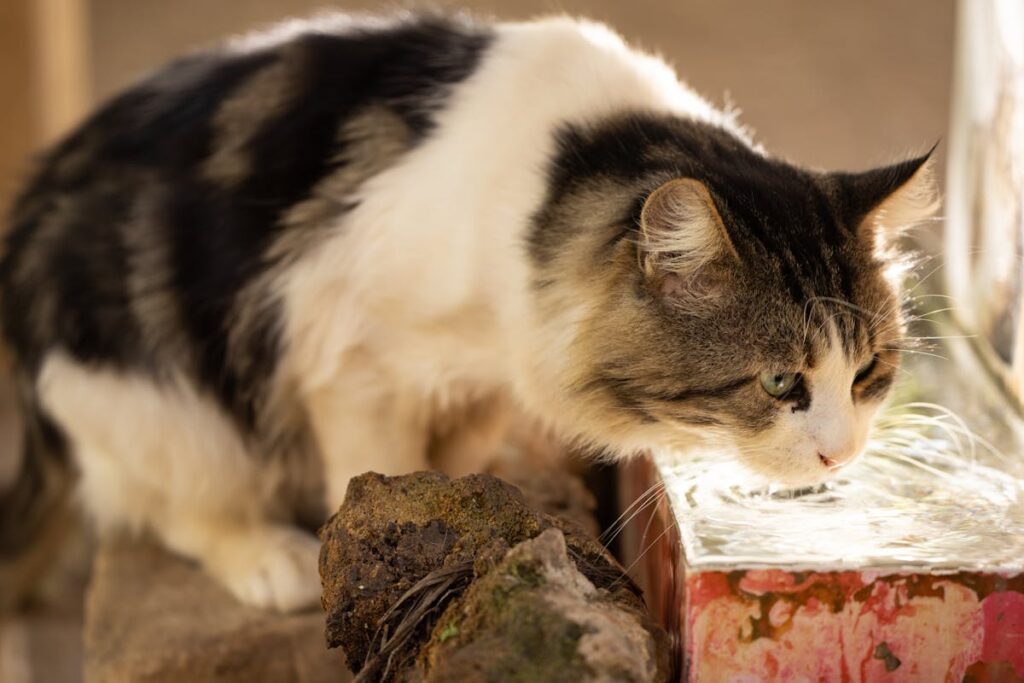
If you have noticed your cat hovering at the water bowl more than usual, or you are refilling it far more often, your instincts are worth trusting. A sudden jump in thirst is one of the earliest and most reliable signals that something is changing inside your cat, and for senior cats in particular, it is rarely something to brush off. Here is how to tell normal sipping from a genuine warning sign, and when a vet visit becomes urgent.
How Much Water Should a Cat Actually Drink?
Healthy cats are surprisingly modest drinkers. Needs vary with diet, weather and activity, but as a rough guide a cat takes in around 40–50 mL of water per kilogram of body weight each day, including the moisture in their food. For an average 4–5 kg moggie, that works out to roughly 150–250 mL daily, about one cup.
Diet changes the picture a lot. Cats on wet food get most of their water from the tin or sachet (typically around 70–80% moisture), so they may barely touch the bowl. Cats on dry biscuits (only 6–10% moisture) naturally drink more to make up the difference. That is normal. What matters is a noticeable change from your own cat’s usual habits.
- Vets generally consider drinking more than about 100 mL per kilogram a day to be excessive thirst (polydipsia), as International Cat Care’s guide to increased thirst explains.
- A simple home test: if you are suddenly refilling the bowl far more often, or scooping much larger, heavier clumps from the litter tray, take note.
The ‘Big Three’ Conditions Behind Excessive Thirst
When an older cat starts drinking heavily, Australian vets immediately think of three common culprits. The good news: caught early, all three are very manageable.
1. Chronic Kidney Disease (CKD)
CKD is extremely common in senior cats: International Cat Care estimates that around 20–50% of cats over 15 have some degree of it. As the kidneys lose their ability to concentrate urine, your cat passes more fluid and drinks constantly to keep up. Increased thirst and urination are often the very first signs, appearing long before weight loss or a dull coat. Early diagnosis and a kidney-friendly diet can add good-quality years.
2. Diabetes Mellitus
Feline diabetes is more common in middle-aged and older cats, desexed cats and overweight, inactive cats. Classic signs are intense thirst paired with a big appetite but unexplained weight loss. Many cats respond well to insulin and a vet-recommended diet, and some can even go into remission when caught promptly.
3. Hyperthyroidism
Mostly seen in middle-aged and older cats (and rarely in cats under seven), an overactive thyroid revs up the metabolism. Affected cats are often ravenously hungry, restless or vocal at night, and losing weight despite eating well, with increased thirst alongside. It is treatable with medication, a special diet, radioactive iodine therapy or surgery, depending on what your vet recommends.
Other Causes Worth Knowing
- Hot weather or a warm room: Australian summers naturally push water intake up.
- A recent switch from wet food to dry biscuits.
- Urinary tract infections or bladder issues.
- High blood calcium, liver disease, or pyometra (a serious womb infection) in unspayed females.
- Some medications, including steroids.
Warning Signs That Mean ‘Book the Vet’
Increased drinking on its own is reason enough for a check-up. Treat it as urgent if you also notice:
- Obvious weight loss or a sudden change in appetite (up or down).
- Larger or more frequent urine clumps, or accidents outside the tray.
- Lethargy, hiding, or a scruffy, unkempt coat.
- Vomiting, bad breath, or mouth ulcers.
- Straining in the litter tray: in male cats especially, this can be a life-threatening emergency.
What You Can Do at Home
While you arrange a vet visit, a few simple steps support your cat’s hydration and give your vet useful clues:
- Track the bowl: note how much you add each day so you can give your vet a real figure.
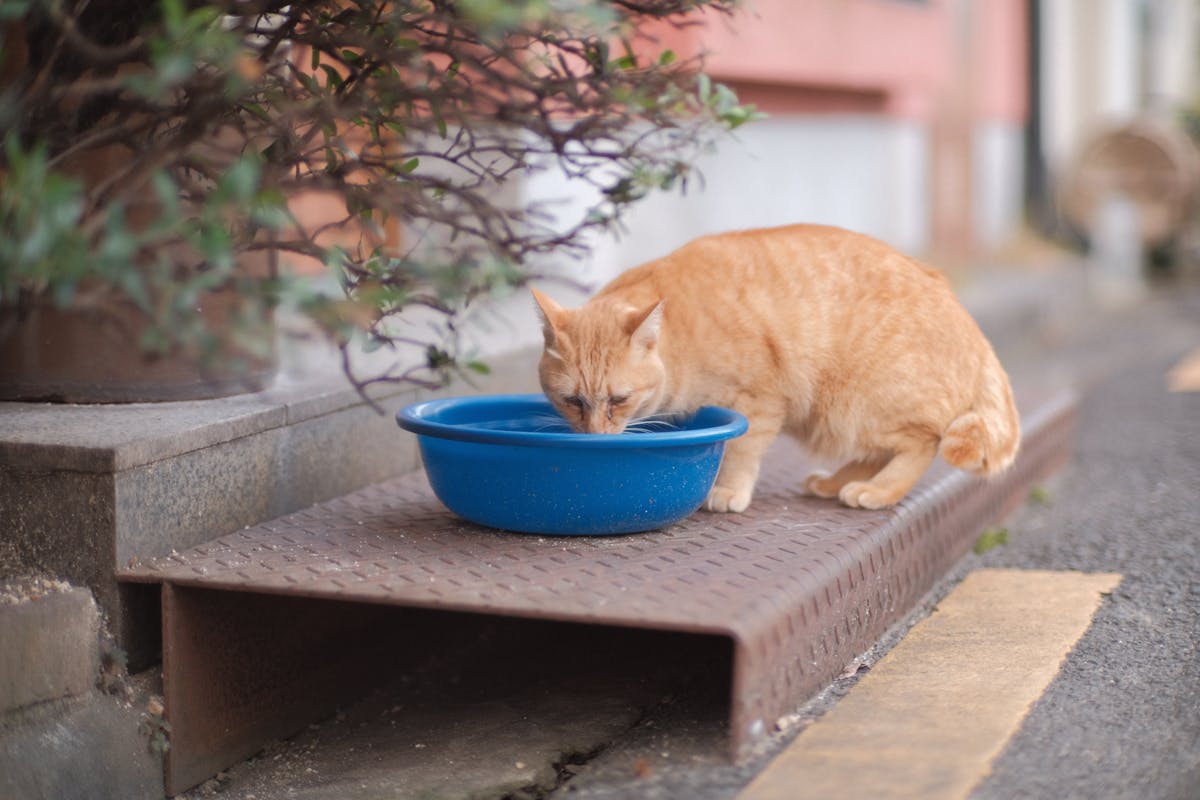
- Offer fresh water in wide, shallow bowls: many cats dislike their whiskers touching the sides.
- Try a pet water fountain; moving water tempts fussy drinkers.
- Place several water stations around the home, away from food and the litter tray.
- If your cat is on dry food, ask your vet whether adding wet food suits their needs.
Never restrict water to reduce the mess. If your cat is drinking more, the body usually needs it. Cutting it off can do real harm.
When to Call Your Vet
Book an appointment if the heavy drinking lasts more than a few days, or sooner if any of the warning signs above appear. A simple blood and urine test is the only way to confirm or rule out the ‘big three’, and the earlier these conditions are found, the easier and cheaper they are to manage.
The Bottom Line
A thirsty cat is your cat’s way of telling you something has shifted. Occasional extra sips on a hot Aussie day are nothing to worry about, but a steady, lasting increase in drinking, particularly in a cat over seven, deserves a vet’s attention. Trust what you are seeing at the bowl, act early, and you give your cat the best shot at a long, comfortable life.
This article is general information only and is not a substitute for professional advice. Please consult a licensed veterinarian for diagnosis or treatment specific to your pet.