
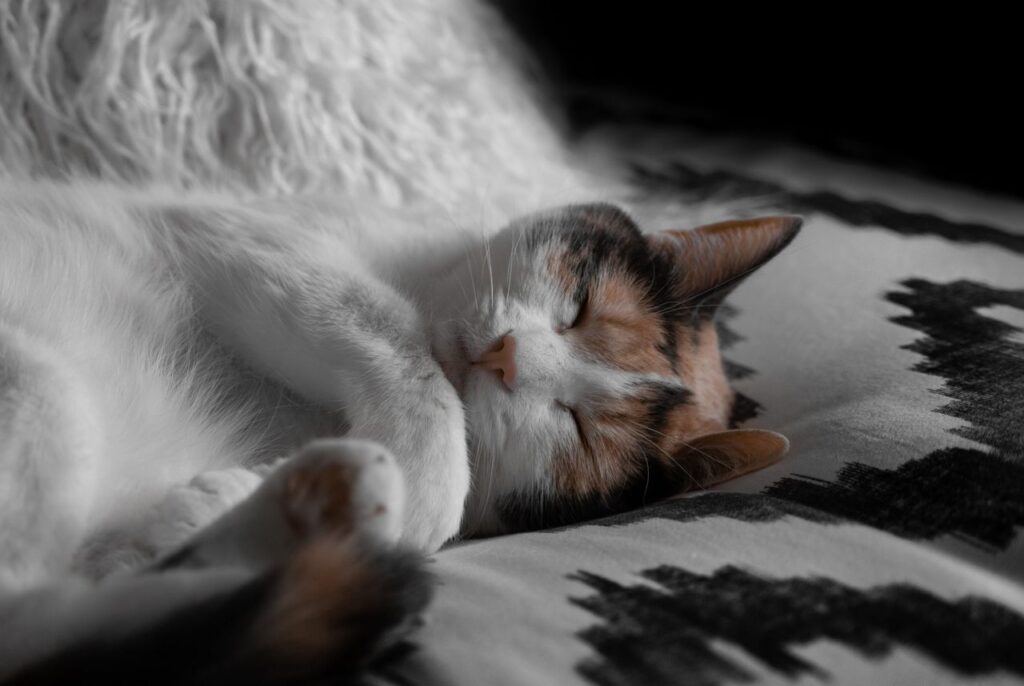
If you have ever rested a hand on a relaxed cat and felt that soft, steady rumble travel up your arm, you have wondered about one of the feline world’s most charming mysteries. Purring is something almost every cat owner recognises, yet the reasons behind it are more layered than simple happiness. Researchers have spent decades studying how cats produce the sound and why they do it, and the answers reveal a behaviour that is part communication, part comfort, and possibly part self-care.
How Do Cats Actually Purr?
For a long time the exact mechanism behind purring was debated. The widely studied explanation is that a cat’s brain sends rhythmic signals to the muscles of the voice box, or larynx, along with the diaphragm, as Scientific American explains. These signals cause the laryngeal muscles to twitch rapidly, narrowing and widening the space between the vocal folds. As the cat breathes in and out, air passes across these vibrating tissues and produces the familiar low rumble. Because the movement happens during both inhalation and exhalation, the sound can continue almost without interruption.
More recent research has added nuance to this picture. A 2023 University of Vienna study published in Current Biology found pads of connective tissue embedded in cats’ vocal folds and showed that a cat larynx can produce purring frequencies without rhythmic input from the brain. Whatever the precise details, scientists generally agree that most domestic cats purr within a range of roughly 25 to 150 Hertz, an unusually low frequency for an animal of their size.
The Many Reasons Cats Purr
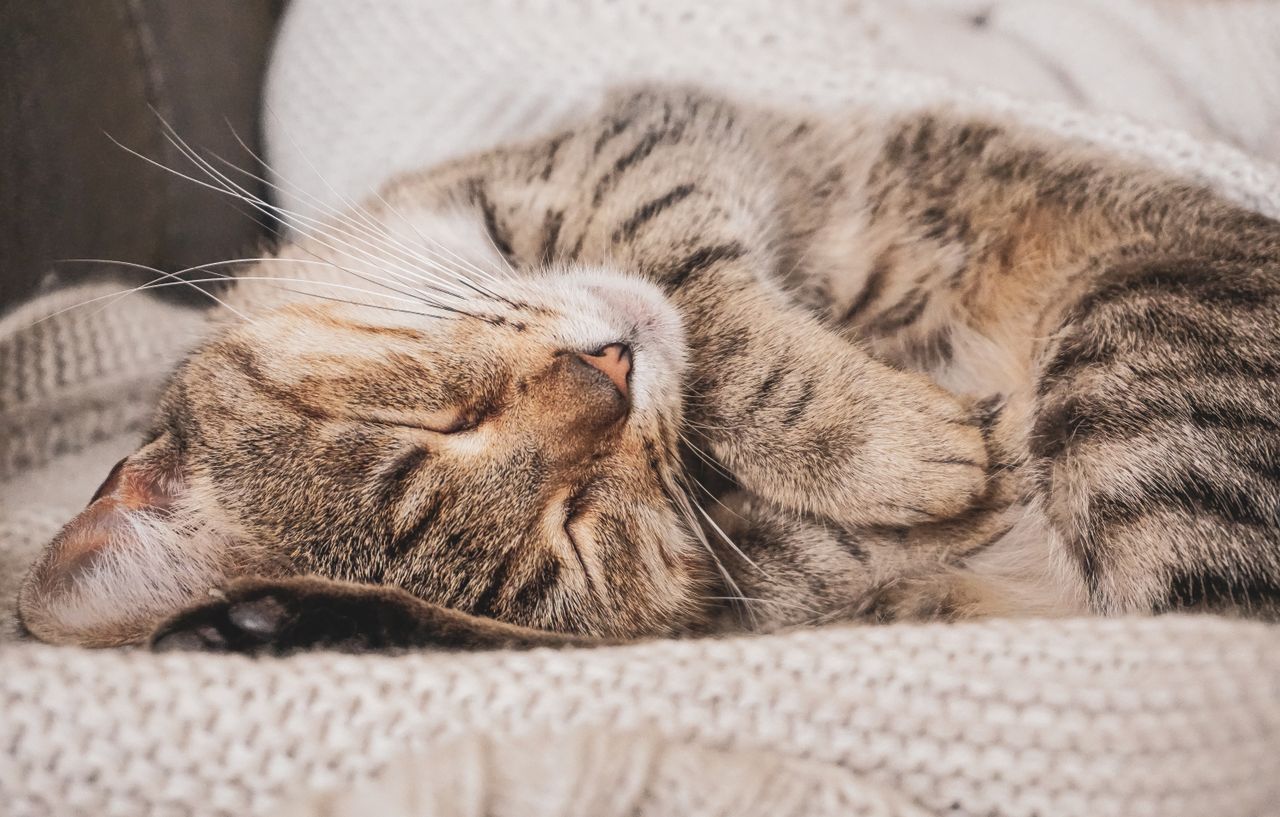
It is tempting to assume that a purring cat is always a happy cat, but the behaviour is more flexible than that. Cats appear to purr in a variety of situations, and the meaning often depends on context. Some of the most commonly observed reasons include:
- Contentment and relaxation. The classic purr, often heard when a cat is curled up, being stroked, or dozing in a sunny spot.
- Bonding and communication. Purring helps cats connect with the humans and animals around them and signal that they feel safe.
- Comfort and self-soothing. Cats sometimes purr when they are stressed, frightened, or unwell, which suggests the sound can help them calm themselves.
- Requesting attention or food. Many owners notice a more insistent purr around mealtimes or when a cat wants interaction.
Purring Starts in the First Days of Life
One of the most striking facts about purring is how early it begins. Kittens can purr when they are only a few days old, before their eyes have even opened. Mother cats also purr while nursing, and many experts believe this gentle vibration helps blind and deaf newborns locate their mother for warmth and milk. From a kitten’s earliest moments, purring functions as a kind of reassuring signal that everything is well, which may help explain why the behaviour carries into adulthood as a tool for connection and comfort.
The Solicitation Purr: How Cats Get Our Attention
Cat owners sometimes notice that the purr they hear at feeding time sounds different from the relaxed rumble of a napping cat. Researchers have described what is often called a “solicitation purr,” which tends to be more urgent and harder to ignore. A 2009 University of Sussex study reported by National Geographic found that some cats blend their normal purr with a higher-pitched cry that sits in a frequency range similar to a human infant’s, a combination that many people find difficult to tune out. In other words, cats may have learned, over generations of living alongside humans, that a particular kind of purr is an effective way to get a response.
Is There Really a Healing Connection?
Purring has attracted attention for another reason: the frequencies cats produce overlap with ranges that some studies associate with beneficial effects on bone and tissue. Low-frequency vibrations in roughly the 25 to 50 Hertz band have been linked in research to bone density and healing, while somewhat higher frequencies have been explored in the context of tissue and tendon recovery. This has led to a popular idea that cats may use purring as a gentle form of self-maintenance, particularly while resting or recovering.
It is worth treating this idea with a measured tone. While the overlap in frequencies is real and the research is intriguing, much of the work on vibration and healing has been conducted in controlled or experimental settings rather than on purring cats specifically. For people, simply being around a purring cat is often described as calming and may help some individuals feel more relaxed. These observations are general and should not be taken as medical claims. If you have questions about your own health or your cat’s wellbeing, it is always best to consult a qualified professional.
When Purring Might Signal a Problem
Because cats sometimes purr when they are uncomfortable, the sound alone is not a reliable indicator of good health. A cat that is purring but also hiding, eating less, breathing oddly, or behaving unusually may be trying to self-soothe through discomfort. Paying attention to the full picture of your cat’s behaviour is far more telling than the purr on its own. If you notice changes in appetite, energy, litter box habits, or general demeanor, it is a good idea to consult a licensed veterinarian for diagnosis or treatment specific to your pet.
A Small Sound With a Big Story
Purring is one of those everyday wonders that becomes more fascinating the closer you look. It begins in the first days of life, helps cats bond with their families, may serve as a way to self-soothe, and sits at frequencies that continue to spark scientific curiosity. For most cat owners, the purr remains a comforting reminder of the quiet companionship cats offer. The next time your cat settles in beside you and begins that familiar rumble, you can appreciate it as a behaviour shaped by biology, communication, and a long history of life alongside humans.