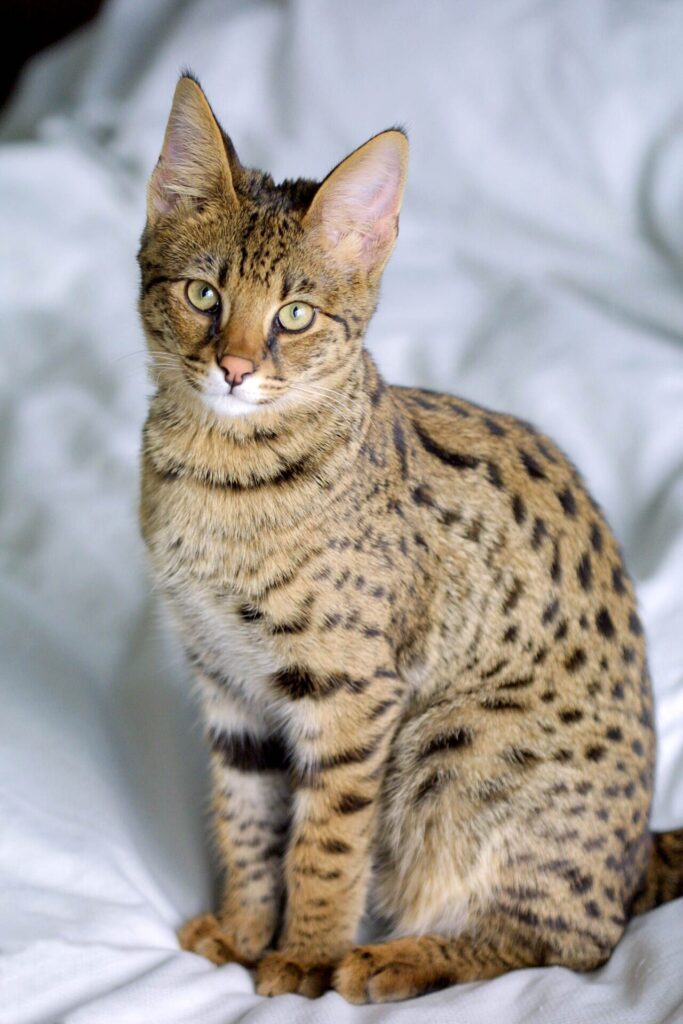
If you have scrolled past a photo of a tall, spotted cat with huge ears and a wild-looking face, there is a good chance it was a Savannah. They are one of the most talked-about cat breeds in the world, and they regularly pop up in Australian social media feeds. Here is the catch: you cannot legally bring one into Australia. Savannah cats have been banned from import since 2008, and the reasons say a lot about how seriously this country takes the threat cats pose to native wildlife. This guide explains what a Savannah actually is, why the ban exists, what it means if you see one advertised, and which legal breeds might suit you instead.
What is a Savannah cat?
A Savannah is a hybrid: a cross between a domestic cat and the serval, a long-legged wild cat from Africa. According to The International Cat Association (TICA), the first known Savannah was born on 7 April 1986, when a female domestic cat had a kitten sired by an African serval. TICA accepted the breed for registration in 2001 and granted it championship status in 2012.
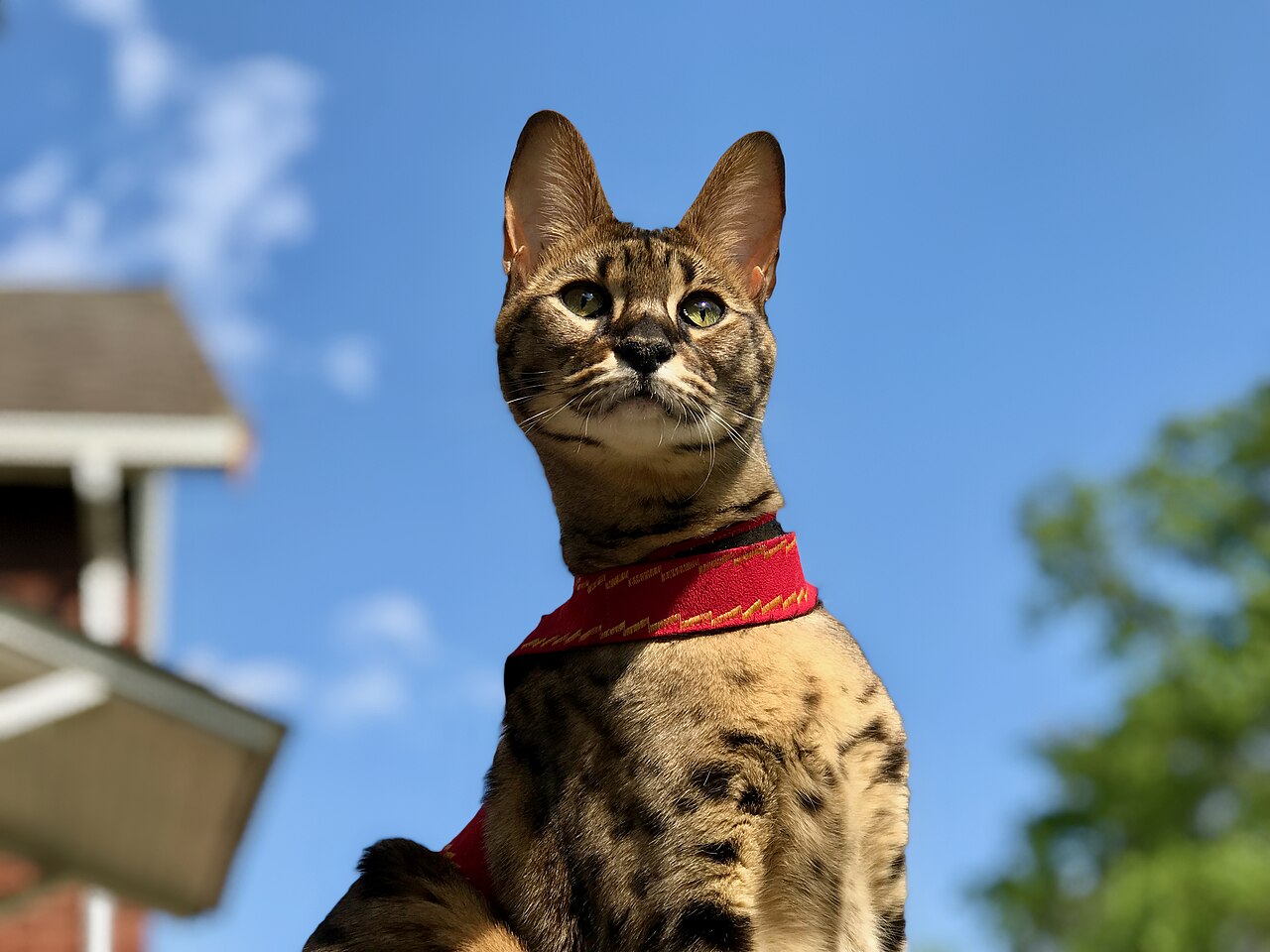
Savannahs are described by “filial” generation. An F1 has a serval parent, an F2 has a serval grandparent, and so on down to F5 and beyond. The lower the number, the more serval in the cat. Early-generation males are usually sterile, and later generations generally look and behave more like other domestic cats.
Size, temperament and care demands
Savannahs are built to look like a small serval: a long neck, long legs, tall upright ears, a medium-length tail and a boldly spotted coat. Size depends heavily on generation and sex. Early generations are usually the largest, and a 2008 Australian Government draft report quoted by ABC Science noted breeder claims of Savannahs over 13.5 kilograms, with at least one breeder claiming a male over 18 kilograms. Later generations tend to be closer in size to other large domestic breeds.
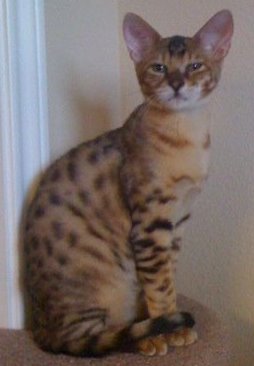
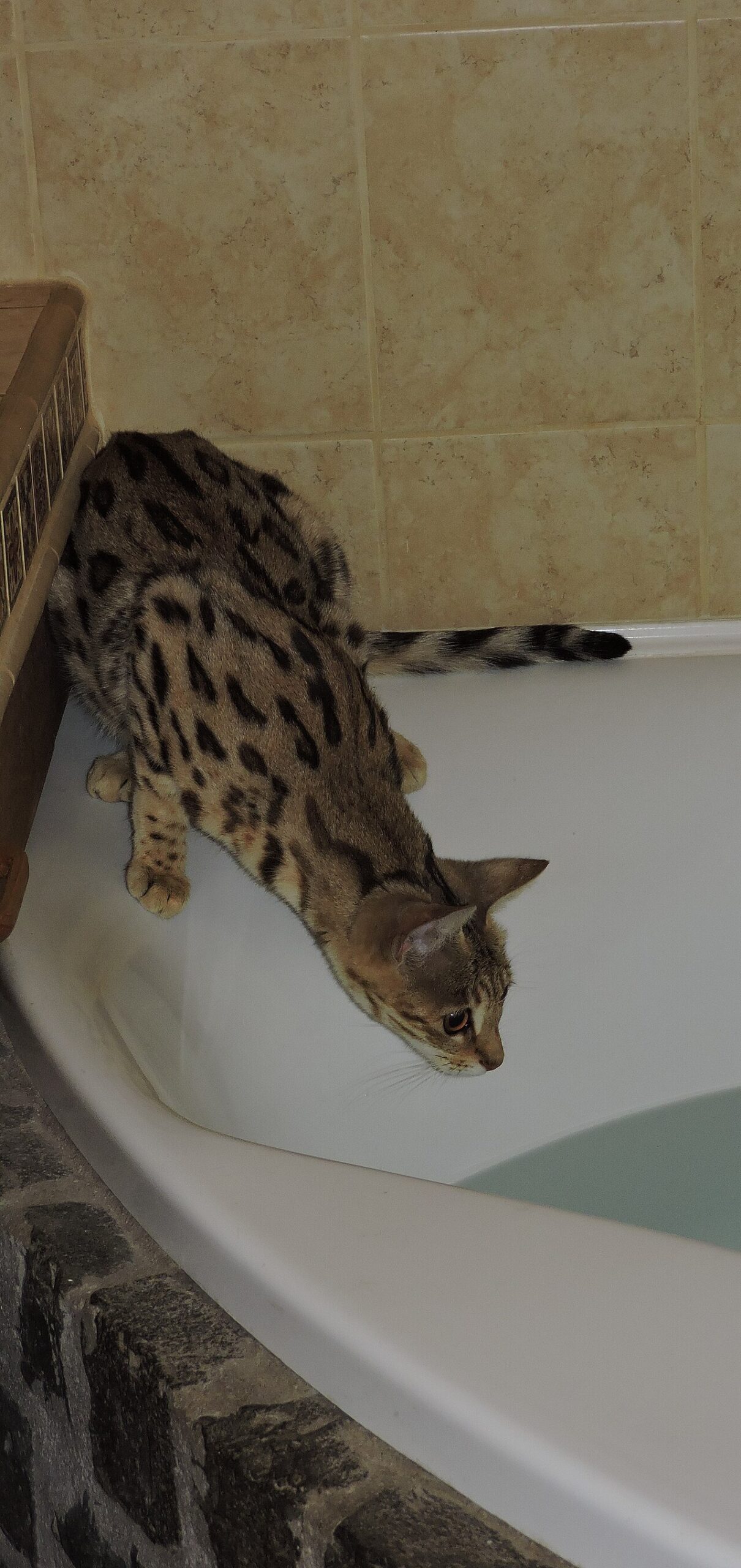
Breed bodies describe the personality as curious, assertive and highly active. TICA says the Savannah “seeks out adventure at every opportunity” and needs a great deal of interaction, and that many enjoy water, walking on a harness and games such as fetch. TICA also notes plainly that the breed is not for everyone. In practice, that means:
- A very high need for daily play, enrichment and climbing space
- Exceptional jumping ability (scientists quoted in 2008 said they can leap about two metres from a standing start)
- A tendency to get into cupboards, benchtops and anything else within reach
- Temperament and size that vary a lot between generations and individual cats
Why Australia banned Savannah cats
In 2008, the federal Environment Department learned that people were planning to import Savannah cats, and that they were already being advertised on Australian websites for around $5,000 for a sterile pet and about $10,000 for a breeding cat. That set off alarm bells in the conservation community.
In June 2008, around 40 feral animal researchers at a National Feral Cat Workshop in Darwin called for urgent changes to keep hybrid “supercats” out, as reported by ABC News at the time. University of Sydney ecologist Professor Chris Dickman warned that Savannahs could prey on bandicoots, bettongs, potoroos and possums, and that feral cats are far harder to control than foxes because they prefer live prey and rarely take baits.
A government environmental assessment found that serval genes could pass into Australia’s feral cat population, potentially adding to body size and hunting ability and widening the range of native animals feral cats can kill. Professor Tony Peacock of the Invasive Animals Co-operative Research Centre put it simply: “If they can kill a glider now they may graduate to taking a possum.”
On 3 August 2008, then Environment Minister Peter Garrett announced the ban. As The Age reported, after receiving more than 500 submissions he said that, with up to 12 million feral cats already “wreaking havoc on native fauna”, the risks of allowing the cross-bred cat into the country were “simply too great”. The department’s final assessment page records that the Minister decided to amend the Live Import List under the EPBC Act to prohibit the Savannah cat hybrid “due to the risks posed to the Australian environment”.
The legal position today
Savannah cats cannot be imported into Australia. Live animal imports are controlled under the Environment Protection and Biodiversity Conservation Act 1999 (EPBC Act), and the Savannah is not an approved import. That is the federal position, and it applies no matter which generation the cat is.
What about Bengals?
The Bengal is a different hybrid, a cross between a domestic cat and the Asian leopard cat. For years Bengals could be imported under an exemption if the owner could prove the cat was five generations away from its wild ancestor. In December 2024, the Department of Climate Change, Energy, the Environment and Water announced that from 1 March 2025 Bengals would be treated like all other animals under the EPBC Act and would no longer be permitted to enter Australia, after finding that cats imported under the exemption often carried a high percentage of Asian leopard cat genes. Bengals already in Australia remain legal to own and buy locally. Our guide to the Bengal import ban covers the detail.
Seeing a Savannah advertised?
Treat any Savannah for sale in Australia with great caution. Common warning signs include:
- A seller offering to fly in a kitten from overseas once you pay a deposit
- Requests for payment by bank transfer, gift cards or cryptocurrency
- Stock photos, reluctance to video call, or no verifiable breeder registration
- Pressure to pay “quarantine”, “permit” or “shipping” fees that keep growing
Because legal import is not possible, a seller promising delivery of an imported Savannah is either misinformed or running a scam. If you think you have been targeted, report it to Scamwatch and your bank. If you have information about an animal that may have entered the country illegally, contact the Department of Climate Change, Energy, the Environment and Water.
Wildlife, containment and why it matters
The Savannah decision was never about any single pet. It was about the risk that larger, more capable hunting genes could end up in Australia’s feral cat population, which already does enormous damage to native wildlife. The same thinking drives modern rules on keeping pet cats contained.
Many councils and states now require or encourage owners to keep cats indoors or in enclosures, particularly at night. Check our guide to cat curfew and containment laws in Australia for the rules in your area, and if you want to give an active cat safe outdoor time, our article on setting up a catio walks through costs and designs. A contained, desexed, microchipped cat is better for wildlife and usually safer and longer-lived too.
Legal alternatives if you love the Savannah look
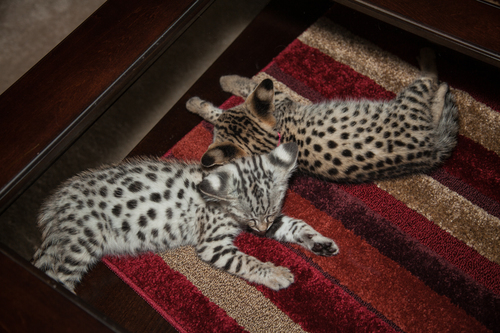
If it is the spotted coat, long legs and big personality that appeals, there are domestic breeds worth looking into. Availability varies around the country, so check with Australian registered breeders through a recognised cat council or registry in your state before you commit.
- Bengal (bred in Australia): the closest in look, with a spotted or marbled coat and very high energy. Buy only from a registered local breeder or rescue, since import is now closed.
- Ocicat: a spotted domestic breed with no wild cat in its make-up, known for being sociable and active.
- Egyptian Mau: a naturally spotted domestic breed, athletic and quick on its feet.
- Abyssinian: ticked rather than spotted, but lean, long-legged and famously busy and curious.
- Oriental: slender with large ears and a very people-focused, vocal personality.
Every one of these breeds needs plenty of play, climbing and enrichment. If a Savannah’s energy level appealed to you, plan for an equally busy cat.
Key takeaways
- A Savannah is a hybrid of a domestic cat and the African serval, described by generation from F1 to F5 and beyond.
- Australia banned Savannah imports in 2008 after Environment Minister Peter Garrett decided the risk to native wildlife was too great.
- The concern was that serval genes could make feral cats larger and better hunters, putting more native species at risk.
- Bengals have also been closed to import since 1 March 2025, but Bengals already here can still be owned and bought locally.
- Any offer to import a Savannah into Australia should be treated as a red flag for a scam.
- Legal look-alike options include locally bred Bengals, Ocicats, Egyptian Maus, Abyssinians and Orientals.
Frequently asked questions
Can I own a Savannah cat in Australia?
Savannah cats cannot be imported into Australia, and they have been prohibited from import since 2008. If you are offered one, be very cautious and check with the Department of Climate Change, Energy, the Environment and Water before handing over any money.
Are later generations like F5 Savannahs allowed?
No. The import ban covers the Savannah cat as a domestic cat and serval hybrid, regardless of generation. Australia also removed the generation-based exemption for Bengals from 1 March 2025.
Why are Savannahs legal in other countries but not here?
Many countries do not face the same feral cat problem. In 2008, Australian experts pointed out that North American wildlife already lives alongside predators such as bobcats and cougars, while Australian marsupials have no equivalent and are highly vulnerable to cats.
Is a Bengal the same as a Savannah?
No. A Bengal comes from the Asian leopard cat, while a Savannah comes from the African serval. Early-generation Savannahs are usually taller and larger, and Bengals are already established in Australia through local breeders.
What should I do if I see a Savannah for sale online?
Do not pay a deposit. Ask for proof of the cat’s breed, origin and registration, and report suspicious ads to Scamwatch. If you believe an animal has been imported illegally, contact the federal environment department.
This article is general information only and is not legal or veterinary advice. Import rules can change, so check with the Department of Climate Change, Energy, the Environment and Water for the current position on importing live animals, and with your state, territory and local council for ownership and containment rules. For health or behaviour questions about your cat, speak with a registered Australian veterinarian.