If your dog has started leaving little white flakes on their favourite blanket, or your cat’s coat feels rougher than it did back in autumn, you’re seeing one of the most common complaints Aussie vets field once the heaters go on. Winter dry skin and dandruff aren’t just a cosmetic nuisance — a flaky, itchy coat can leave pets uncomfortable and, occasionally, point to something that needs a closer look. Here’s a practical, no-fuss guide to what’s going on and what you can actually do about it this winter.
Why winter dries out your pet’s skin
It might seem odd that a cold, wet Australian winter leaves skin drier, but the culprit is usually indoors. Central heating, reverse-cycle air con and gas heaters pull moisture out of the air in our homes, and that dry indoor environment draws moisture from your pet’s skin too. Pets also tend to slow down in the colder months, so natural skin oils get spread through the coat less often. Add in the temptation to give more warm baths, and the skin’s protective oil barrier can get stripped away.
Dandruff itself — those flakes of dead skin — is what vets call seborrhoea. In many cases it’s mild and seasonal, but it can also be worsened by diet, parasites such as fleas (which stay active in warm homes right through winter), or underlying skin conditions.
Signs your pet has winter dry skin
A bit of flaking now and then is usually nothing to lose sleep over, but it’s worth keeping an eye out for these common signs:
- Visible white or greyish flakes through the coat, especially along the back and near the tail
- A dull, rough or brittle-feeling coat that’s lost its usual shine
- More scratching, licking or nibbling than normal
- Small patches of redness, dryness or flaky skin you can see when you part the fur
- Cats over-grooming or developing a ‘scurfy’ look along the spine
What you can do at home
For run-of-the-mill winter dryness, a few simple changes often make a real difference:
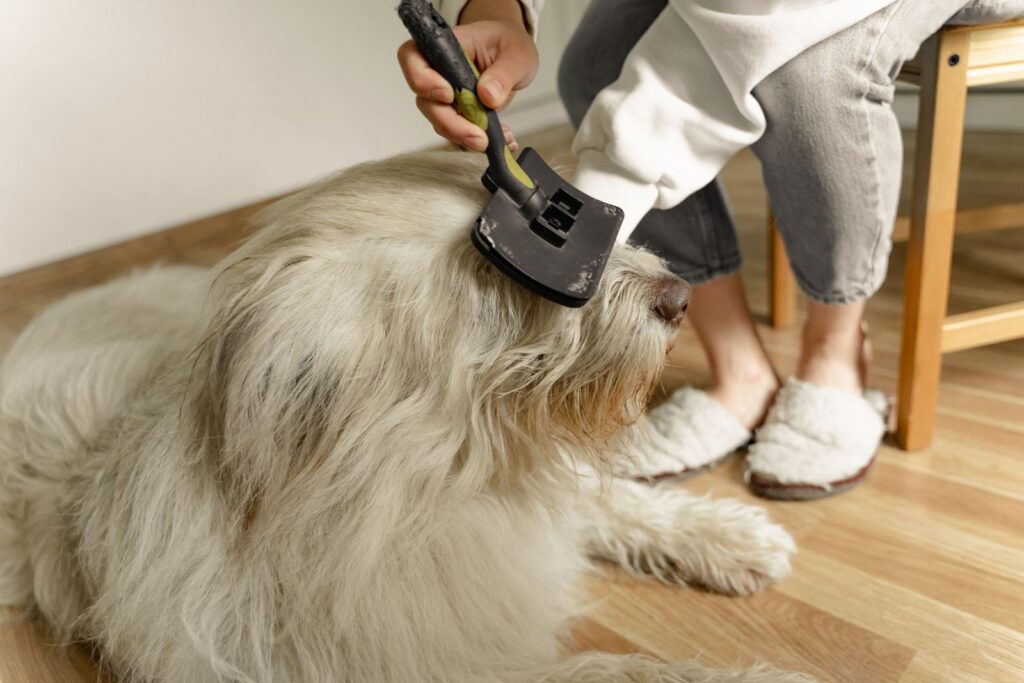
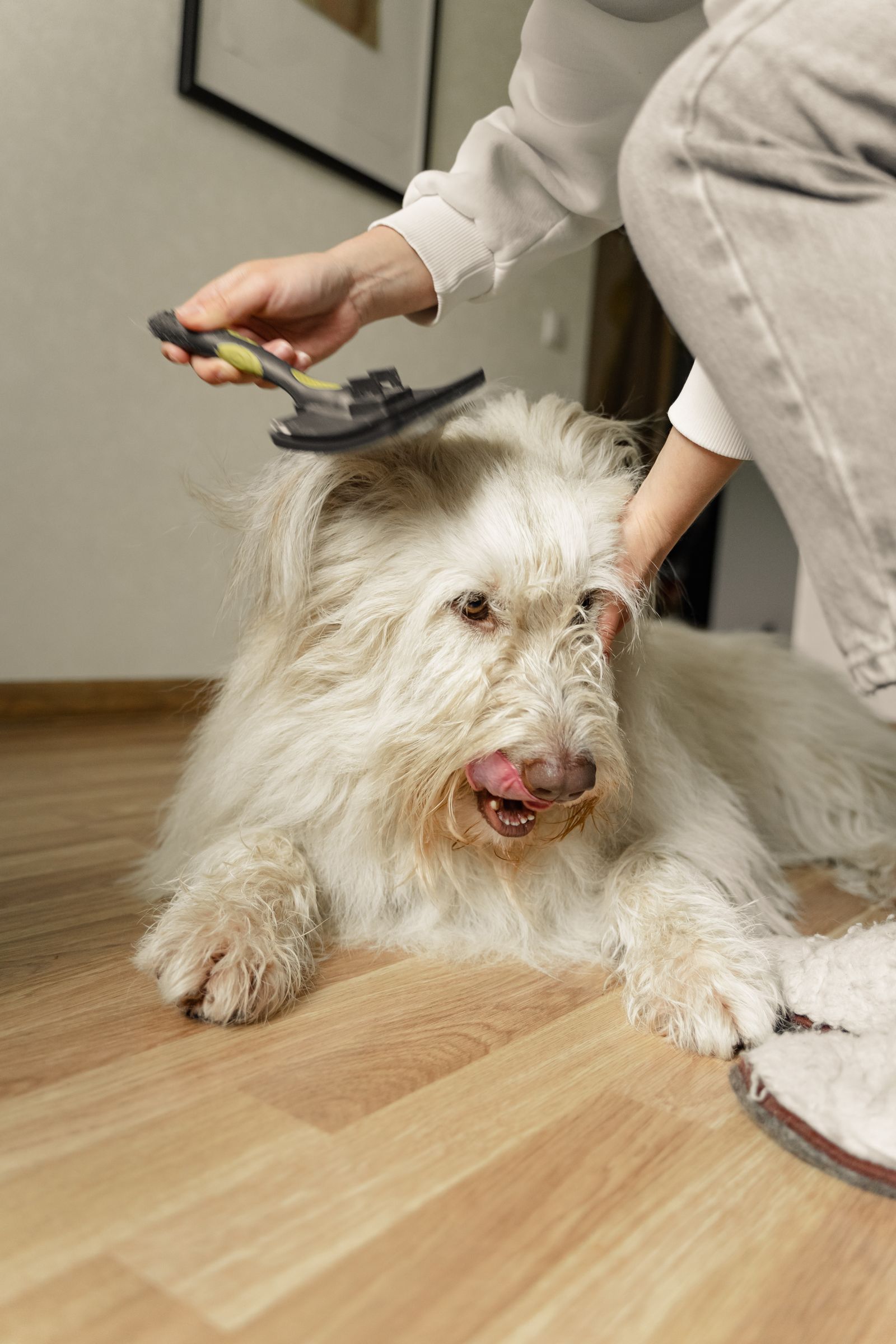
- Brush regularly. A daily brush lifts loose flakes and, importantly, helps spread your pet’s natural oils across the coat so the skin stays better protected.
- Add moisture to the air. Running a humidifier, or simply not overheating the house, can ease the dry-air effect that pulls moisture from skin.
- Go easy on baths. Over-bathing strips protective oils. When you do bathe, use lukewarm water and a gentle, moisturising or oatmeal-based shampoo made for pets rather than human products.
- Mind the diet. A balanced diet with adequate omega-3 and omega-6 fatty acids supports skin and coat condition. Ask your vet before adding any supplement.
- Keep water up. Pets can drink less in winter, and even mild dehydration can show up in the skin, so make sure fresh water is always on offer.
- Stay on parasite prevention. Fleas thrive in warm indoor spaces year-round, and flea-related itching is easily mistaken for simple dry skin.
When to see a vet
Most winter flakiness settles with grooming and a little extra care. But dry skin and dandruff can occasionally be a sign of something more — allergies, hormonal conditions, parasites or infection — so it’s worth booking a check-up if you notice:
- Constant or intense scratching, biting or licking
- Hair loss, scabs, sores, or a greasy or smelly coat
- Redness, swelling or skin that looks broken or infected
- Flaking that comes on suddenly or keeps getting worse despite home care
- Other changes such as weight loss, low energy or increased thirst
Consult a licensed veterinarian for diagnosis or treatment specific to your pet. They can rule out underlying causes and recommend the right approach rather than treating the flakes alone.
Frequently asked questions
Is dandruff in dogs and cats normal in winter?
A small amount of seasonal flaking is common once home heating dries out the air, and it often improves with regular brushing and a moisturising routine. Persistent, heavy or itchy dandruff is worth having checked by your vet.
How often should I bathe my pet in winter?
Less is usually more. Frequent baths strip the natural oils that keep skin supple, so many owners find bathing only when genuinely needed — using lukewarm water and a gentle pet shampoo — helps rather than harms.
Can food help my pet’s dry winter skin?
A complete, balanced diet with the right fatty acids can support healthy skin and coat, and some pets benefit from omega-3 supplements. Speak with your vet before making changes, as the right amount depends on your individual pet.
Key takeaways
- Indoor heating and dry winter air are the main drivers of flaky, itchy pet skin.
- Regular brushing, fewer baths, a humidifier and good hydration usually help.
- Keep up year-round flea prevention — itching isn’t always ‘just dry skin’.
- See your vet if flaking is severe, sudden, itchy, or comes with other symptoms.