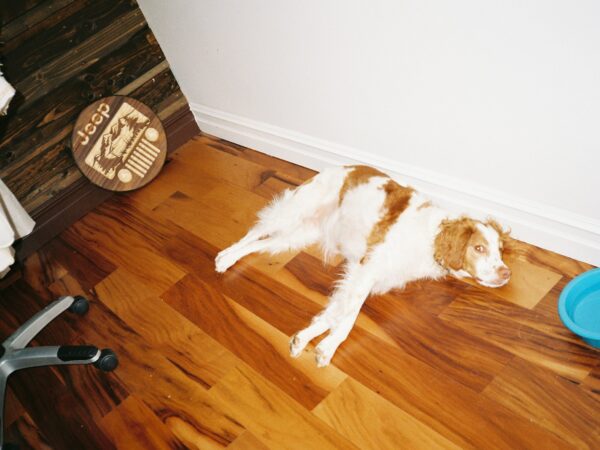
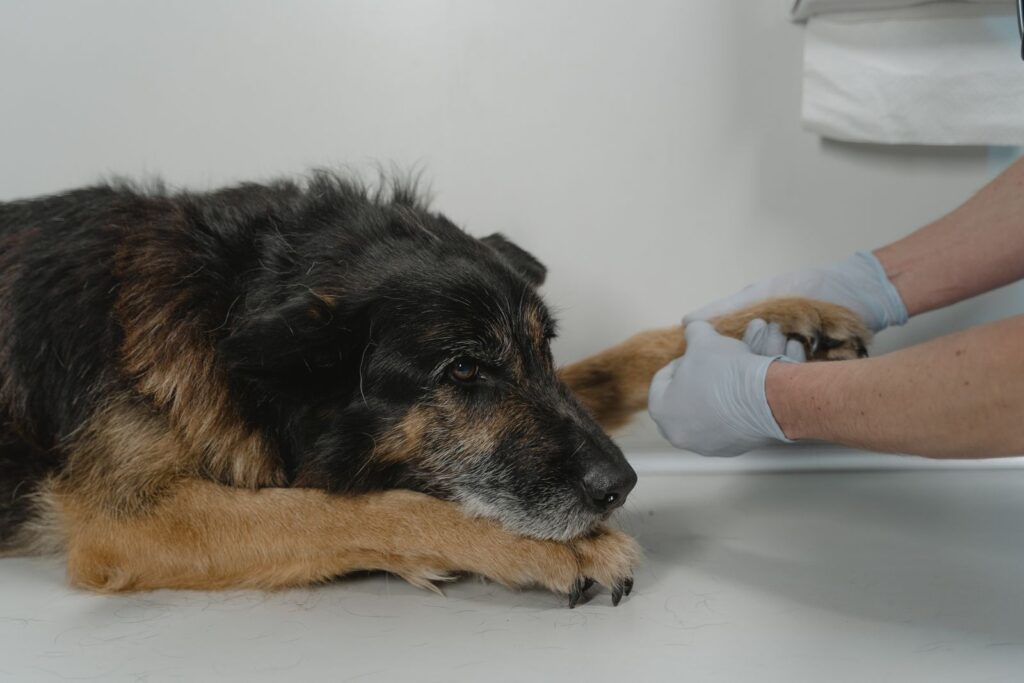
A dog limping usually has a sore paw, a strained muscle or ligament, or a joint problem. A mild limp that settles within an hour or so after rest can often be watched at home, but a dog that won’t put weight on a leg, has a swollen or misshapen limb, or starts limping after a fall or car accident needs a vet the same day. A limp that keeps coming back, or creeps in slowly over weeks, also deserves a check, even if your dog doesn’t seem to be in pain.
Sudden limp or gradual limp: why it matters
Vets often sort limping by how it started. According to the American Kennel Club, a limp that appears suddenly is usually caused by an injury or trauma, while a limp that develops slowly tends to point to a chronic or degenerative condition such as osteoarthritis or hip dysplasia.
Note when it started, which leg it is, and whether it is worse after rest or exercise. A short phone video of your dog walking is useful, as many dogs hide a limp in the clinic.
“My dog is limping but not in pain”: is that possible?
A limp almost always means something is uncomfortable, even when your dog is wagging, eating and happy to play. A limp is the body shifting weight off a leg that hurts, feels unstable, or doesn’t move properly. Some problems, such as a slipping kneecap, come and go, so the dog seems fine in between.
Some conditions genuinely cause little obvious distress.
How to check the leg and paw safely at home
Even the gentlest dog may snap when in pain, so work calmly, ideally with a second person steadying your dog. If your dog growls, stiffens or pulls away, stop and call your vet.
- Watch first. Let your dog walk on a flat surface and work out which leg is affected.
- Look at the paw. Spread the toes and check between them and under the pads. The AKC suggests checking for foreign objects such as glass, thorns, sticks or plant material, as well as cuts, stings, bites, broken toenails, burns and bruising.
- Run your hand down the leg. Compare it with the other leg, feeling for swelling, heat or a tender spot. The AKC warns owners not to bend or stretch the joints to test range of motion, because that can make an injury worse.
Late spring is peak season for a few paw culprits in Australia. If your dog is licking a paw constantly or has a small lump between the toes, read our guide to grass seeds in dogs, because a seed can migrate deeper than you can see. If your dog yelped while sniffing around flowering plants or clover, our bee and wasp sting first-aid guide covers what to do next. A split or torn nail is another common reason for a sudden limp, and keeping nails short reduces the risk; our article on trimming your dog’s nails at home explains how.
Common causes of limping in dogs
Soft tissue sprains and strains
Overdoing it at the park, a slip on tiles or an awkward landing can sprain a ligament or strain a muscle, causing a sudden limp. If it isn’t clearly improving with rest, or returns as soon as exercise resumes, see your vet.
Cruciate ligament disease
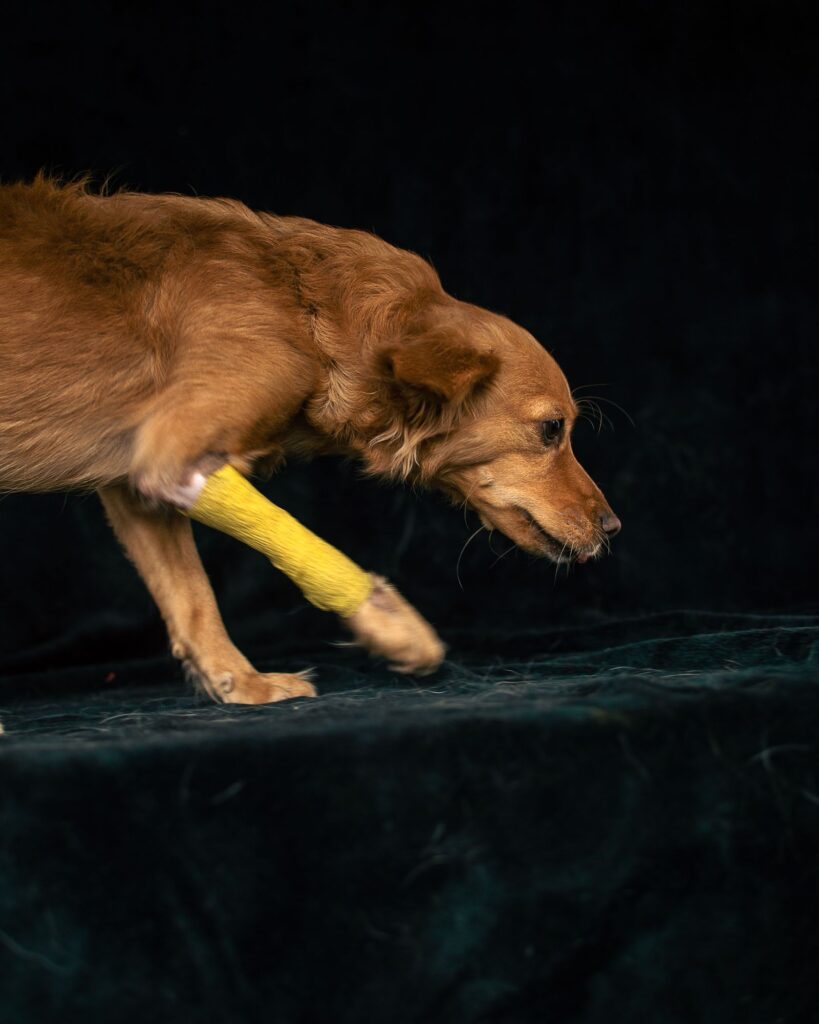
The cranial cruciate ligament stabilises the knee, and problems with it are a well-known cause of hind-leg lameness in dogs. VCA Animal Hospitals explains that in dogs the ligament usually weakens gradually over time rather than snapping from a single injury, and that being overweight, limb shape and breed all play a part, with Labradors, Rottweilers and Boxers appearing at higher risk. Early signs can be subtle: sitting with one back leg kicked out to the side, trouble rising, or an intermittent limp. When the ligament tears completely, many dogs suddenly hold the leg up or only touch their toes to the ground.
Patellar luxation (slipping kneecap) in small breeds
Toy and small breeds such as Maltese, Chihuahuas, Poodles and Bichon Frises are genetically prone to kneecaps that slip out of place. VCA describes the classic sign: a dog that skips, holds up a back leg for a few strides, and then returns to normal. Many dogs learn to flick the leg sideways to pop the kneecap back.
Hip and elbow dysplasia
These are developmental joint problems, mostly seen in medium, large and giant breeds. With hip dysplasia, the ball and socket of the hip don’t develop in step, which leaves the joint loose and leads to arthritis. VCA lists weakness and pain in the back legs, a wobbly gait, reluctance to get up and avoiding stairs as typical signs, and notes they are most common between one and two years of age.
Elbow dysplasia affects the front legs. The MSD Veterinary Manual notes that signs are typically noticed between about four and ten months of age in breeds such as Labradors, Golden Retrievers, Bernese Mountain Dogs and Rottweilers, with front-leg lameness, stiffness after rest and joint swelling. A young, large-breed puppy with any front-leg limp, even one that comes and goes, should see a vet.
Arthritis
In middle-aged and older dogs, a gradual limp or stiffness after rest is very often osteoarthritis, sometimes as the end result of the conditions above. We cover the signs and long-term management in our guide to arthritis in dogs and cats, so we won’t repeat it here.
Bone cancer in large breeds
Less commonly, a persistent limp in a large or giant breed dog is caused by osteosarcoma, an aggressive bone tumour. VCA notes it usually develops in the long bones of the legs and lists predisposed breeds such as Greyhounds, Rottweilers, German Shepherds, Great Danes and Irish Wolfhounds. Lameness and swelling are the main early signs.
Never give human pain medication
When your dog is hobbling, it is tempting to reach for something from your own medicine cabinet. Please don’t. The University of Illinois College of Veterinary Medicine explains that dogs and cats are more sensitive than people to common human anti-inflammatory painkillers, that owners should never give them to pets, and that another common household pain reliever is also toxic to dogs. Our article on why human medicines are risky for pets explains the wider problem. If your dog is sore, your vet can prescribe pain relief that is made and dosed for dogs.
Rest: what to do while you wait
For a mild limp with no emergency signs, rest is the first step. The AKC suggests keeping an acutely lame dog quiet for about 15 minutes and then reassessing; if your dog is still limping or won’t bear weight, it is time to see the vet. VCA’s urgent care guidance says a brief episode of pain that resolves quickly may not need a visit, but limping that doesn’t resolve within about an hour should be seen by a vet soon.
- Keep walks to short toilet breaks on lead, with no running, jumping or ball games.
- Block stairs and stop your dog jumping on and off furniture or in and out of the car.
- Return to normal exercise gradually once the limp settles.
If the limp hasn’t clearly improved within a day or two, or it keeps coming back, book a vet appointment.
Emergency signs: see a vet now
Go to your vet, or your nearest emergency vet if it is after hours, if your dog has any of the following:
| Sign | Why it matters |
|---|---|
| Won’t put any weight on the leg | Can indicate a fracture, dislocation or complete ligament tear |
| Obvious swelling, heat, or a leg at an odd angle | The AKC lists swelling, a hot limb, a dangling limb and an obvious break as reasons to see a vet immediately |
| Limping after a car accident, a fall, or being attacked by another dog | VCA lists limping after major trauma as an emergency, as there may be hidden injuries |
| Can’t stand or walk without help | An emergency according to VCA; may be a spinal, neurological or severe orthopaedic problem |
| Wobbly or weak back legs, especially with a changed bark, gagging or breathing changes | Possible paralysis tick poisoning, which can progress quickly |
That last one is easy to mistake for a sore leg. RSPCA NSW describes wobbliness in the back legs that worsens to paralysis as a key sign of tick paralysis in dogs, and advises contacting a vet immediately, even after removing the tick, and not waiting until morning. Late spring and summer is tick season in many east-coast areas, so if your dog walks like it is drunk rather than favouring one leg, search for a tick and head to the vet. Our paralysis tick guide covers prevention and what to look for.
What the vet will do
Your vet will take a history and examine your dog, watching it walk and checking each leg, paw and joint. For a suspected cruciate injury, VCA explains that vets use specific tests of knee stability and may need light sedation if your dog is tense or sore.
X-rays are the next step for most limps that are not obviously a paw problem. The AKC notes they help identify fractures, joint disease and skeletal abnormalities. Blood tests, joint fluid samples or a biopsy may follow. Treatment ranges from rest and vet-prescribed pain relief to physiotherapy or surgery.
Frequently asked questions
Should I wait to see if my dog’s limp goes away?
For a mild limp with no swelling, no trauma and normal weight-bearing, a short period of rest and observation is reasonable. If it hasn’t resolved within about an hour, or isn’t clearly improving over the next day or two, see your vet. Don’t wait at all if any emergency signs are present.
My small dog skips on a back leg now and then. Is that normal?
No. Occasional skipping in a small breed is the textbook sign of a slipping kneecap. Many dogs live comfortably with mild cases, but your vet should grade it and keep an eye on it.
Why is my dog limping on and off?
Partial cruciate tears, slipping kneecaps and early joint disease often cause a limp that comes and goes. A diary and video help your vet.
Key takeaways
- A sudden limp usually means injury; a gradual limp usually means a chronic joint or bone problem.
- Check the paw first, gently, and stop if your dog shows pain.
- Never give human pain medication; your vet can prescribe dog-safe pain relief.
- Non-weight-bearing, swelling, deformity, trauma or wobbly back legs mean a vet visit now.
Sources
- American Kennel Club: Why Is My Dog Limping?
- VCA Animal Hospitals: Urgent Care for Pain or Limping
- VCA Animal Hospitals: Cruciate Ligament Rupture in Dogs
- VCA Animal Hospitals: Luxating Patella in Dogs
- VCA Animal Hospitals: Hip Dysplasia in Dogs
- MSD Veterinary Manual: Elbow Dysplasia in Dogs
- VCA Animal Hospitals: Osteosarcoma in Dogs
- University of Illinois College of Veterinary Medicine: Keep Human Medications Away from Pets
- RSPCA NSW: Tick Season: Protecting Your Pet
This article is general information only and is not a substitute for advice from a registered veterinarian who has examined your dog. If your dog is limping and you are worried, contact your vet or nearest emergency vet.