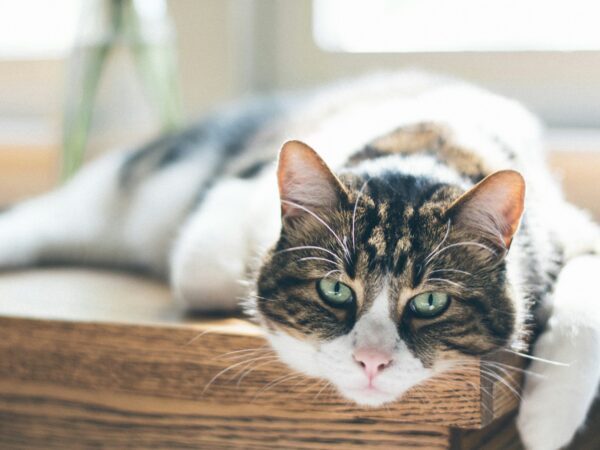

A cat in heat usually yowls loudly and often, becomes extra affectionate, rubs against people and furniture, rolls on the floor, and raises her rear end with her tail held to one side when you stroke her back. Many also become restless and try hard to get outside. Each heat typically lasts about a week, and if she is not mated or desexed, it tends to come back every two to three weeks through the breeding season. In Australia that season runs through spring and summer, so if your undesexed female suddenly started acting strangely this month, heat is a likely explanation.
When do cats have their first heat?
Earlier than most owners expect. International Cat Care says kittens reach sexual maturity from around four months of age, with the first season usually around six months but sometimes earlier. Elanco’s Australian pet health site, MyPet&I, puts the usual range at six to ten months, with some cats starting at about four months. A veterinary conference review published by dvm360 gives an average of eight to nine months, with a normal range from about 4 to 18 months.
The practical message: a kitten adopted in winter can be cycling, and able to fall pregnant, by spring.
Why heat season peaks in an Australian spring and summer
Cats are seasonal breeders, and day length is the switch. RSPCA NSW explains that cats start breeding when the days get longer, usually from around August in the southern hemisphere, and continue through spring and summer. That is what drives the annual surge of unwanted litters, which we cover in our guide to kitten season in Australia.
Indoor cats do not always follow the calendar. The dvm360 review notes that queens kept under artificial light for 12 hours a day will cycle year-round. So a house cat living with long evenings of lamp light can come into heat in autumn or winter too.
Signs your cat is in heat
Heat signs are almost entirely about behaviour. You may see some or all of these:
Calling and yowling
The most obvious sign is loud, repetitive vocalising, often at night. International Cat Care describes a female in heat “calling” regularly and very loudly, and the dvm360 review lists monotonous vocalisation as a core oestrus behaviour. It can sound alarmingly like distress.
Extra affection and rubbing
Many cats become unusually clingy, rubbing their head and body against owners, furniture and doorframes. The dvm360 review lists increased affection among typical heat behaviours.
Rolling on the floor
Rolling from side to side on the floor is another classic sign noted in the dvm360 review. Owners sometimes mistake it for play or for a cat in discomfort.
The mating posture (lordosis)
Lordosis is the posture vets use to recognise heat. The dvm360 review defines it as raising the hindquarters with the tail moved to one side. MyPet&I describes the same thing as a low crawl with the rear end raised and tail to the side, and many cats tread their back feet when stroked along the back. The Merck Veterinary Manual lists vocalisation and lordosis as the signs breeders watch for.
Restlessness and escape attempts
A cat in heat is driven to find a mate. MyPet&I notes she may be restless and want to go outside, and she may also groom her genital area more than usual. Expect door dashing, window scratching and sudden interest in any gap.

How long does a cat stay in heat, and how often?
Cycles vary between cats, but the published figures cluster together:
| Question | Typical answer | Source |
|---|---|---|
| How long does one heat last? | About a week (average about 6 days) | MyPet&I; dvm360 |
| How soon does it come back if she is not mated? | Every 2 to 3 weeks during the breeding season | dvm360; International Cat Care |
| When is the breeding season in Australia? | From around August, through spring and summer | RSPCA NSW |
| Earliest age she can breed | From about 4 months | RSPCA NSW; International Cat Care |
Why does it keep coming back? Cats are mostly induced ovulators: the Merck manual explains that ovulation is triggered by mating. Without mating, she usually does not ovulate, the cycle resets, and she comes back into heat a couple of weeks later. For owners, this is the exhausting part: a cat can spend a large share of spring and summer calling. The dvm360 review also notes that queens that are mated but do not fall pregnant tend to have a longer break before the next heat, averaging around 61 days.
Is it heat, or is she in pain or sick?
The crouching, rolling and moaning of heat can look worrying, but MyPet&I is clear that the low crawl and vocalising are normal oestrus behaviour and not a sign of pain. The key question is whether anything else seems off.
Some problems can look similar, so check for signs that do not fit a normal heat:
- Straining in the litter tray, crying while weeing, passing little or no urine, or constant licking of the genitals. The Cornell Feline Health Center lists these as signs of lower urinary tract disease, and says a urethral obstruction is an absolute emergency.
- Lethargy, poor appetite, vomiting, drinking a lot, a swollen belly, or discharge from the vulva. These can point to pyometra, a life-threatening infection of the uterus. VCA Animal Hospitals says it usually develops two to 16 weeks after a heat cycle and needs urgent treatment.
- Hiding, flinching when touched, or not wanting to move. Cats in heat seek contact; a cat avoiding it may be unwell.
- Heat-like behaviour in a cat you believed was desexed. Book a vet check to work out what is going on.
If you are unsure, ring your vet. Describing what you are seeing, and when it started, is often enough for them to tell you whether she needs to come in.
Looking after a cat in heat
Heat is not an illness, but it is stressful for the cat and her household. Practical steps:
- Keep her inside, all the time. MyPet&I advises keeping her indoors during heat and locking any cat flap so she cannot get out and other cats cannot get in. Check window screens and warn visitors and children about door dashing. Many Australian councils also have their own rules on keeping cats contained, explained in our guide to cat containment and curfew laws.
- Keep undesexed males away. Contact with an entire male, even briefly through an open door, is how unplanned litters happen.
- Give her attention and an outlet. Extra play sessions, puzzle feeders and window perches help burn off restless energy. Our indoor cat enrichment guide has more ideas.
- Do not punish the yowling. She is responding to hormones, not misbehaving.
- Ask your vet about desexing. It is the only way to stop the cycle for good.

The risk of pregnancy
Every heat is a chance of kittens. RSPCA NSW says queens can breed from as young as four months and have up to two litters in a single season, and International Cat Care notes a queen can have up to three litters a year. The UK charity Cats Protection says pregnancy usually lasts about 63 days, or nine weeks, and that heat cycles usually stop around week three of pregnancy.
Pregnancy and birth also carry risks for the mother herself, as International Cat Care points out. If you think your cat may already be pregnant, see your vet to confirm it and talk through her care.
Why vets recommend desexing, and when
Desexing (spaying) ends heat cycles and the chance of unplanned litters. RSPCA Australia recommends desexing cats before four months of age, before puberty, and says it significantly reduces the risk of mammary cancer and reduces roaming and undesirable sexual behaviours such as urine spraying. MyPet&I adds that spaying removes the risk of uterine and ovarian cancer.
If your cat is already cycling, it is not too late. Ask your vet about the best timing for her. For what happens on the day, recovery and the questions owners usually ask, read our guide to what to expect when your cat is desexed.
When to see a vet
- She is straining to urinate or passing little or no urine: treat this as an emergency.
- She is lethargic, off her food, vomiting, drinking much more, or has a swollen belly or vaginal discharge.
- Heat signs appear in a cat you believed was desexed.
- She may have mated, or you think she is pregnant.
- You want to book desexing or ask about timing.
Out of hours, call your nearest emergency vet.
Frequently asked questions
How long does a cat stay in heat?
Usually about a week, with an average of around six days. If she is not mated, she typically comes back into heat every two to three weeks during the breeding season.
Can a cat get pregnant during her first heat?
Yes. Cats can breed from around four months of age, which is why the RSPCA recommends desexing before then.
Can indoor cats go into heat in winter?
They can. Long hours of artificial light can keep a cat cycling year-round, according to the dvm360 review.
Is my cat in pain when she yowls and rolls around?
Usually not. These are normal heat behaviours. If she is also off her food, lethargic, hiding, or straining in the litter tray, call your vet.
Key takeaways
- Classic heat signs are loud calling, extra affection, rolling, a raised rear with the tail to one side, and trying to get outside.
- A heat lasts about a week and returns every two to three weeks through the breeding season.
- In Australia, longer days from around August start the season, which runs through spring and summer.
- Cats can breed from about four months old, so keep a cycling cat strictly indoors and away from males.
- Lethargy, discharge, a swollen belly or straining to urinate are not normal heat: see a vet.
- Desexing, ideally before four months, ends the cycles and the risk of unplanned kittens.
Sources
- International Cat Care: Neutering your cat
- Elanco MyPet&I Australia: How to tell if your cat is in heat
- dvm360: Feline reproduction overview (Proceedings)
- Merck Veterinary Manual: Breeding Management of Queens
- RSPCA NSW: Kitten season
- RSPCA Australia: Why should I have my cat desexed?
- Cornell Feline Health Center: Feline Lower Urinary Tract Disease
- VCA Animal Hospitals: Pyometra in Cats
- Cats Protection: Caring for your pregnant cat
This article is general information only and is not a substitute for advice from a registered veterinarian. If you are worried about your cat’s health or behaviour, contact your vet or nearest emergency vet.