Why do dogs eat poop? For most dogs it is a normal, if revolting, canine behaviour rather than a sign that something is wrong. Mother dogs clean up after their puppies, puppies explore with their mouths, and many adult dogs simply find fresh faeces appealing. Medical problems such as malabsorption, parasites or underfeeding can drive it too, so a vet check is worthwhile. The most reliable way to stop it is management: prompt clean-up, supervision and solid “leave it” and recall training.
How common is poop eating in dogs?
Eating faeces is called coprophagia (or coprophagy), and it is more common than most owners would like to think. The largest study on the subject, led by Benjamin Hart at the University of California, Davis School of Veterinary Medicine and published in Veterinary Medicine and Science in 2018, surveyed owners online in two large surveys of 1,552 and 1,475 responses. In the first survey:
- about 77% of owners had never seen their dog eat stools
- 7% had seen it one to five times
- 16% had seen it six or more times, which the researchers classed as frequent stool eating
So roughly one in four dogs had been seen doing it at least once, and about one in six did it regularly. The researchers also found some patterns worth knowing:
- Greedy eaters are over-represented. 51% of frequent stool eaters were described as greedy eaters, compared with 28% of other dogs. This was the factor most strongly associated with the habit.
- Multi-dog homes see more of it. Dogs living with two or more dogs were more likely to eat stools.
- Fresh is preferred. Around 82 to 85% of frequent stool eaters went for stools no more than two days old.
- Diet, age and desexing made little difference. Most dogs in both groups ate mainly kibble, and the sex and desexing status of stool eaters was similar to that of other dogs.
One caution: this was a self-reported owner survey, and about 90% of responses came from the United States, so the figures are a good guide rather than a precise count of Australian dogs.
Why do dogs eat poop? The main explanations
It is normal for mother dogs and puppies
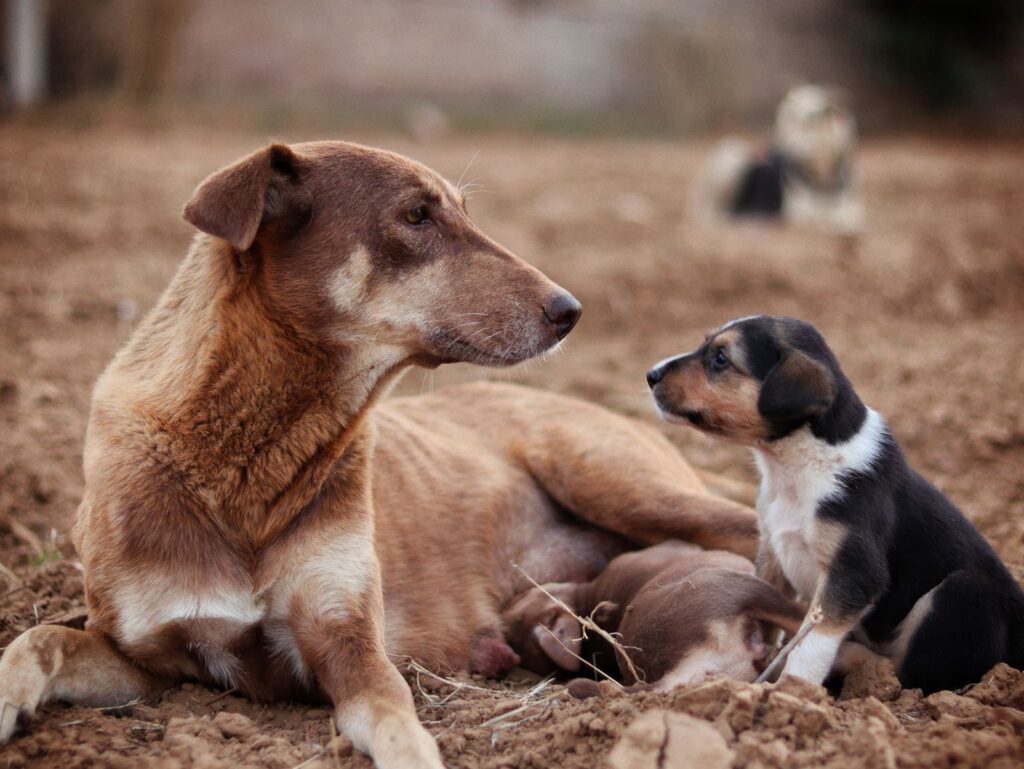
The American Kennel Club explains that mother dogs clean their puppies, including eating their faeces, for about the first three weeks after giving birth. Puppies then explore the world with their mouths, and VCA Animal Hospitals notes that they may investigate, play with and even eat stools. The AKC says that in most cases this fades before a puppy is about nine months old.
An inherited “keep the den clean” instinct
Hart’s team proposed that the behaviour may be inherited from wolf ancestors. Parasite eggs passed in faeces typically take a couple of days or more to become infective, so eating fresh droppings near the den could have reduced the risk of worm infection. The researchers are clear that this idea is tentative and has not been confirmed by field observations, but it fits neatly with the finding that most stool eaters prefer fresh faeces.
Medical causes
VCA stresses that medical problems must be ruled out before poop eating is labelled purely behavioural. Possible contributors include:
- Poor absorption of nutrients, which can leave a dog hungry and its stools more appealing
- Conditions that increase appetite, such as diabetes, Cushing’s disease and thyroid disease, according to VCA
- Intestinal parasites and side effects of some medications, both listed by the AKC
- Underfeeding or a poor diet, which VCA warns can lead to malnutrition and a bigger appetite
VCA says stool testing for parasites is the minimum level of testing, with further stool or blood tests if your dog’s stools are unusually soft or poorly digested. If you have a puppy, it is worth checking you are feeding enough; our guide to how much to feed a puppy walks through it.
Behavioural and environmental causes
- Boredom and isolation. The AKC notes that dogs kept alone in kennels or basements are more likely to eat poop. University of Melbourne researcher Dr Mia Cobb also points to stress, boredom and living conditions with too little stimulation.
- Punishment during toilet training. Both the AKC and Dr Cobb note that harsh punishment for accidents can teach a dog to hide the evidence by eating it. Rewarding toileting in the right spot works better; see our guide to toilet training a puppy.
- Attention. VCA notes that owner attention can reinforce the habit. A dramatic chase around the yard can turn it into a game.
- It simply tastes good to them. VCA puts it bluntly: stools are seldom unpleasant to dogs.
Why does my dog eat cat poop from the litter box?
Cat faeces are a particular favourite. VCA explains that dogs often eat the stools of cats and herbivores because of their odour, texture and taste, and Hart’s study found that dogs reported to eat cat stools were more likely to be frequent stool eaters overall.
Practical fixes:
- Scoop the tray at least once or twice a day so there is little to find.
- Move the litter box where your dog cannot reach it. The AKC suggests a self-cleaning box or a baby gate. A gate with a cat door, a covered tray facing a wall, or a tray in a room your dog cannot enter all work, as long as your cat can still get to it easily.
- Do not put the tray somewhere your cat dislikes just to beat the dog. A stressed cat may stop using it altogether.
How to stop your dog eating poop
The honest message from the research is that this habit is hard to change once established. In Hart’s survey, reported success rates for behaviour modification methods were only 1 to 2%, apart from “leave it” commands at about 4%. That does not mean nothing works; it means prevention and management do most of the heavy lifting, and training supports them.
1. Remove the opportunity
- Pick up after your dog straight away in the yard and on walks. The AKC and Dr Cobb both recommend keeping living areas clean and removing faeces promptly.
- VCA suggests removing stools before leaving your dog alone in the yard.
- In multi-dog homes, go out with the dogs at toilet time so you can clean up immediately.
2. Supervise and use a lead
On walks or in parks with lots of droppings, keep your dog on lead and interrupt sniffing before it turns into eating. VCA recommends supervision outdoors and interrupting with a cue or gentle guidance on the lead.
3. Teach “leave it” and a reliable recall
The AKC recommends practising a “leave it” cue and teaching your dog to come to you for a treat straight after it toilets. VCA suggests the same approach: call your dog back to sit for a reward once it has finished. Over time, the routine becomes “toilet, then run to my person for something tasty”, which beats sniffing around. Our step-by-step guide to recall training will help you build that response.
4. Add enrichment
Plenty of exercise, social contact, toys and chews give a bored dog better things to do, as Dr Cobb recommends. Food puzzles and snuffle mats can also slow down greedy eaters.
5. Stay calm
Do not punish your dog after the fact or turn the moment into a chase. Calmly interrupt, call your dog away, reward it when it comes, and clean up.
Do taste-deterrent products work?
Many powders, chews and additives are sold to make faeces taste bad. The evidence is not encouraging. In Hart’s survey, owners reported success rates of 0 to 2% across 11 commercial products, and the authors note that no clinical trials of these products have been done. VCA adds that most dogs either develop a tolerance to the taste or learn to avoid only the stools that have been treated. It also says home remedies such as papaya, yoghurt, cottage cheese and breath mints have never been proven effective.
That does not mean they never help an individual dog, but treat them as an add-on at best. If you want to try one, ask your vet first, especially if your dog has a health condition or is on medication, and keep up the clean-up and training.
Health risks of eating poop
A puppy eating its own fresh stools is generally not dangerous, according to the AKC, but faeces from other dogs and animals can carry parasites and infections. The Cornell Riney Canine Health Center explains that roundworm larvae develop inside eggs passed in faeces over two to four weeks, making them infectious to other dogs. Cornell lists prompt removal and disposal of faeces as a key prevention step, and notes that roundworms can also infect people, with young children at highest risk.
If your dog is a regular stool eater, stay on top of its worming schedule and talk to your vet about the right product and frequency. Our guide to intestinal worms and worming in Australia covers the parasites involved and the risks to your family. Also take care with lawns and parks where poop from unknown dogs is common, and wash hands after handling your dog’s mouth or toys.
When to see your vet
- An adult dog suddenly starts eating poop when it never did before
- Your dog seems constantly hungry, or is losing weight despite eating well
- Stools are soft, greasy, bulky or poorly digested
- There is vomiting, diarrhoea, lethargy or worms visible in faeces
- Your dog is drinking or urinating more than usual
Frequently asked questions
Will my puppy grow out of eating poop?
Most do. The AKC says the behaviour usually fades before about nine months of age. Keep the area clean and reward toileting in the right spot in the meantime so it does not become a habit.
Is my dog eating poop because it is missing something in its diet?
Sometimes underfeeding, a poor diet or poor nutrient absorption plays a part, which is why a vet check matters. However, Hart’s large survey found no clear link between stool eating and diet type, so most cases in well-fed, healthy dogs are behavioural.
Do home remedies added to the food bowl stop poop eating?
There is no good evidence that it does. VCA says home remedies like papaya, yoghurt, cottage cheese and breath mints have never been proven effective.
Why does my dog only eat other dogs’ poop?
Preferences vary. Hart’s study found frequent stool eaters overwhelmingly targeted fresh stools and were more common in multi-dog households. Clean-up after every dog is the key.
Should I punish my dog for eating poop?
No. Punishment, especially during toilet training, has been linked to the habit getting worse. Interrupt calmly, call your dog away and reward it for coming.
Key takeaways
- Around one in six dogs in the largest survey ate stools frequently; it is common and usually normal.
- Mother dogs clean up after puppies, and most puppies grow out of it by about nine months.
- Rule out medical causes, including parasites, malabsorption and underfeeding, with your vet.
- Prompt clean-up, supervision and training (“leave it” and recall) work better than any product.
- Taste-deterrent products have weak evidence; treat them as an optional extra.
- Keep your dog’s worming up to date, as faeces can carry parasites that also affect people.
Sources
- Veterinary Medicine and Science (Hart et al., 2018): The paradox of canine conspecific coprophagy
- VCA Animal Hospitals: Dog Behavior Problems: Coprophagia
- American Kennel Club: Why Does My Dog Eat Poop?
- University of Melbourne: Why do dogs eat poo? A canine scientist explains
- Cornell Riney Canine Health Center: Roundworms
This article is general information only and is not a substitute for advice from a registered veterinarian who has examined your dog. If your dog’s eating habits change suddenly or it seems unwell, contact your vet.