
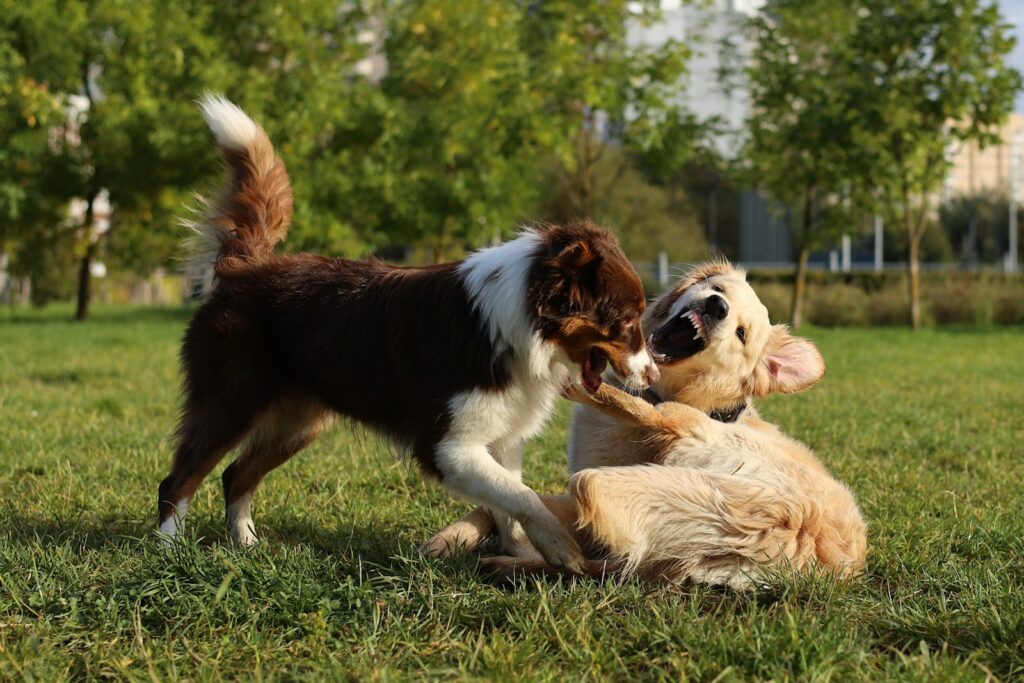
Good dog park etiquette in Australia comes down to a few habits. Check your council’s off-leash rules, and only bring a dog that is vaccinated, healthy and comes back when called. Watch your dog rather than your phone, pick up every poo, keep food and prized toys out of play, and leave as soon as play stops being fun for any dog involved. Councils such as the City of Sydney publish almost exactly this list.
Start with your council’s off-leash rules
Off-leash areas are set by local councils under state companion animal laws, so rules change from suburb to suburb. Check the park on your council’s website and read the signs at the gate. Some areas are fenced, some are open reserves with boundary markers, and some are off-leash only at certain times.
One idea runs through them all: effective control. Macedon Ranges Shire Council in Victoria is a typical example. Its effective control rules require owners to keep a clear view of their dog, carry a leash, and leash the dog within 5 metres of a playground or barbecue area. Brisbane City Council’s off-leash park rules ask owners to learn each area’s boundaries and respond promptly to aggression or excessive barking. Penalties differ by council, so ask your local ranger team if you are unsure.
Is your dog ready for the dog park?
The RSPCA’s dog park etiquette tips point out that not every dog suits a dog park, and nobody screens dogs at the gate. Be honest with this checklist.
- Vaccinated and healthy. The RSPCA says all dogs must be vaccinated and up to date on worming and flea control, because play, shared toys and communal water bowls spread disease. Our Australian vaccination schedule guide explains C3 and C5.
- Reliable recall. The City of Sydney asks for a reliable recall before using an off-leash park, and the RSPCA notes that knowing its name is not the same as coming back. Our recall training guide can help.
- Calm around other dogs. The RSPCA says dogs should already be well socialised. Busy off-leash play can feel threatening to a dog without that experience.
- Desexed, or at least not in season. The City of Sydney suggests desexing to reduce antisocial behaviour at the park, and VCA Animal Hospitals advises leaving females in heat at home. See when to desex your dog.
What about puppies?
The RSPCA’s puppy exercise advice is to finish routine vaccinations before visiting public places like the park, and to ask your vet when your puppy is fully covered. VCA notes that pups under about four months that are not fully immunised risk infection, and small pups can be hurt by bigger dogs that mean well. Start with puppy preschool and calm play with known, vaccinated adult dogs.
Reading the play: fun, rough or bullying?
The American Kennel Club describes healthy play as loose, exaggerated movement: open mouths, play bows, rolling over, taking turns at chasing and pinning, and both dogs choosing to keep going. Play growls can sound fierce while bodies stay relaxed. Warning signs are stiff posture, raised hackles, tight mouths, curled lips, flattened ears and quick, efficient movements. The AKC also warns that a dog repeatedly chased or surrounded by several dogs can become distressed, which is what most people mean by dog park bullying.
Watch your own dog for quieter stress signals too. The RSPCA lists lip-licking, yawning, pinned-back ears, walking low, a tense body and a tucked tail, while growling, snapping, snarling and lunging are the more obvious signs of aggression.
| Usually fine | Time to interrupt |
|---|---|
| Loose, bouncy movement and play bows | Stiff, still body and a hard stare |
| Dogs swap roles: chaser becomes chased | One dog always pinned or always chased |
| Both dogs return for more after a pause | One dog hides, tries to leave or sticks to your legs |
| Two dogs playing as a pair | Several dogs ganging up on one |
A quick test: call your dog away for a few seconds. If the other dog follows for more, play is probably mutual. If it takes the chance to escape, keep yours away.
Toys, treats and food
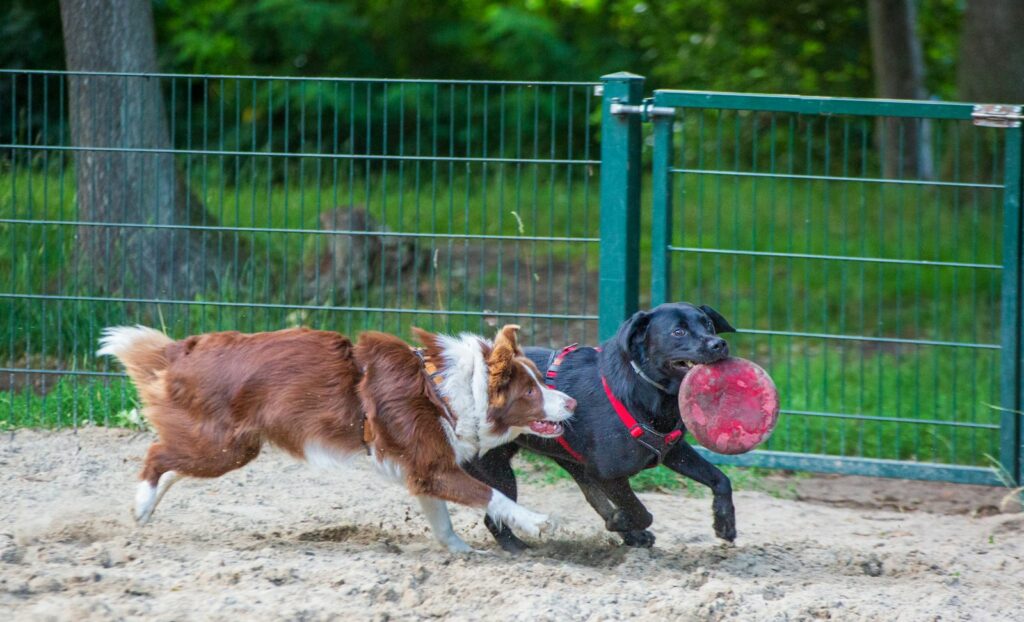
Many scuffles start over an object. The ASPCA describes possessive aggression, where dogs guard food, chews, toys or even resting spots. VCA warns that bringing lots of toys and treats can create conflict at the park.
- Leave the toy bag at home. If your dog guards its ball, play fetch somewhere quieter.
- Keep treats in a closed pouch and reward away from the crowd.
- Never feed someone else’s dog without asking the owner first.
- Bring your own water and bowl rather than relying on communal bowls.
Poo, people and the small dog area
Both the City of Sydney and Brisbane City Council ask owners to clean up after their dogs and use the bins provided. Bring spare bags, and walk over to find it even if your dog went at the far end of the park.
If the park has a fenced small dog section, use it for small or timid dogs. Brisbane’s rule is simple: don’t take big dogs into areas for small dogs, even when that side looks empty. The RSPCA also asks owners to leash up when someone needs to pass with a reactive dog. Teach your dog to sit when greeting people, as the City of Sydney suggests, because not everyone wants a muddy dog jumping on them.
Hot weather: pick your timing
The RSPCA’s summer advice is to walk early in the morning or late in the evening on hot days, avoid hot sand, concrete and asphalt, and test the ground with the back of your hand for five seconds. Sunny paths and sandy play areas can burn, so read our guide to hot pavement and burnt paws. On warm days, pick a shaded park, bring water and keep visits short.
Watch your dog, not your phone
VCA says the dog park is not the place for reading or playing games on your phone, and that you should be ready to call your dog away from inappropriate play. Most trouble gives a few seconds of warning, and you only see it if you are watching. Stay within recall distance and move around with your dog. If another dog is causing problems, tell its owner rather than correcting the dog yourself.
When to leave
Leaving early is good manners, not failure. Clip the lead on and go if:
- your dog shows repeated stress signs or keeps hiding behind you
- your dog is the one pinning or chasing a dog that wants out
- play styles don’t match, which the City of Sydney lists as a reason to leave
- it is crowded, too hot, or your dog is panting heavily
If your dog simply doesn’t enjoy off-leash parks, the City of Sydney says an on-lead walk is fine instead.
If a fight breaks out
The ASPCA notes that people are often bitten when they try to break up dog fights. The RSPCA’s advice on staying safe around other dogs is not to physically separate fighting dogs. Instead:
- Stay calm and call your dog. Ask the other owner to call theirs.
- Make a sudden loud noise from a distance, such as clapping or rattling keys.
- Throw water or a large coat over the dogs. The AKC adds that you should never put your hands between them.
- Once they separate, leash your dog and leave.
See a vet even if wounds look minor. VCA explains that canine tooth punctures can close over and be missed, and that all bite wounds are considered contaminated. For heavy bleeding, breathing trouble, pale gums or collapse, go straight to your vet or nearest emergency vet.
Reporting a dog attack
Report serious attacks on people or animals to your local council. The NSW Office of Local Government adds that outside council hours you can contact police, who are authorised officers under the Companion Animals Act 1998. South Australia’s City of Burnside suggests noting the dog’s description, registration disc number, the owner’s details, witnesses, and the date, time and location, and keeping any vet records.
Better options for reactive dogs
The RSPCA suggests reactive dogs may do better on streets or in quieter parks. Try on-lead walks at quiet times, a long line in an empty reserve, sniff walks or play with one familiar dog. Our reactive dog training guide explains how to build confidence step by step.
Frequently asked questions
When should I take the lead off?
The City of Sydney asks owners to have dogs leashed before entering an off-leash area. Wait until you are through any double gate, then unclip and move away from the entrance so dogs don’t crowd new arrivals.
How old should a puppy be before the dog park?
There is no single age. Wait until routine vaccinations are complete and your vet says your puppy is fully protected.
Should I let dogs “sort it out” themselves?
No. The RSPCA says to step in early and de-escalate as quickly as possible.
Key takeaways
- Check your council’s off-leash rules and signs, and carry a lead.
- Bring only vaccinated, healthy, socialised dogs with reliable recall.
- Interrupt stiff or one-sided play early, and keep food and prized toys away.
- Pick up every poo and respect small dog areas.
- In summer, go early or late and check the ground temperature.
- Never reach into a fight. Get bites checked and report serious attacks to council.
Sources
- City of Sydney: Dog park etiquette
- Macedon Ranges Shire Council: Effective control of dogs
- Brisbane City Council: Off-leash dog parks
- RSPCA Australia: Top tips for dog park etiquette
- RSPCA Australia: How to exercise your puppy
- RSPCA Australia: Keeping safe around other dogs
- RSPCA Australia: 4 ways to keep your dog cool this summer
- American Kennel Club: Are my dogs playing or fighting?
- ASPCA: Aggression in dogs
- VCA Animal Hospitals: Proper etiquette at the dog park
- VCA Animal Hospitals: Bite wounds in dogs
- NSW Office of Local Government: Reporting a dog attack
- City of Burnside: Dog attack and harassment
This article is general information for Australian dog owners and is not a substitute for advice from a registered veterinarian, a qualified behaviour professional or your local council. Off-leash rules differ between councils, so always check the signs and your council’s website before you visit.


