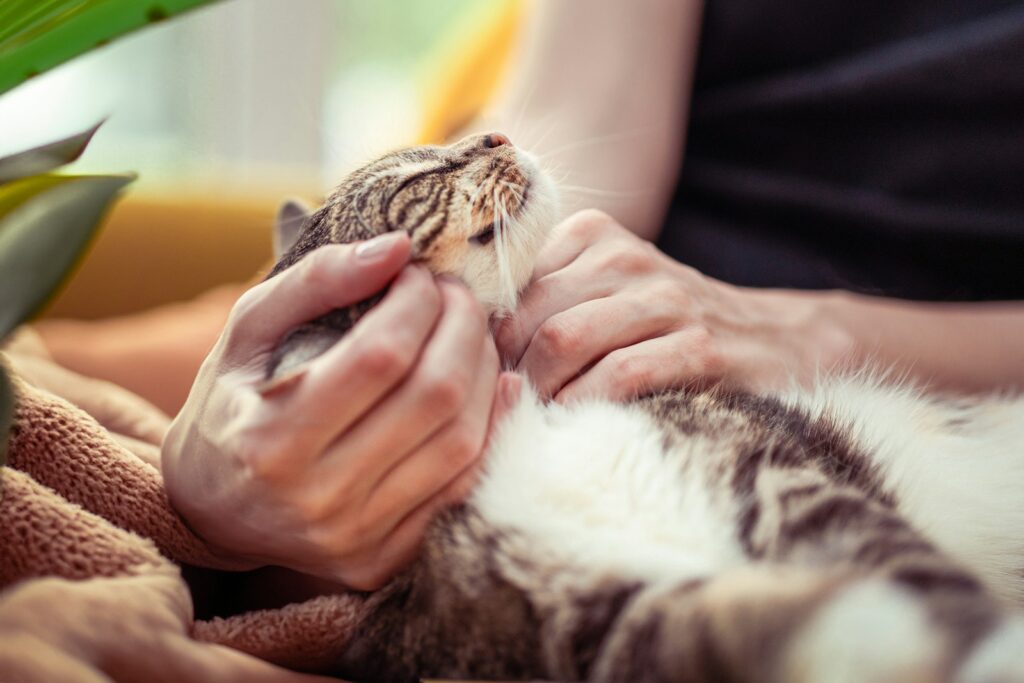
The easiest way to give a cat a pill is to hide it in a small amount of a favourite soft food or a pill treat, after checking with your vet that the tablet can be given with food. If your cat will not take it that way, give it by hand: hold the head gently, tilt it up, open the lower jaw, place the tablet as far back on the tongue as you can, then immediately follow with a little water or food so the pill does not lodge in the oesophagus. Stay calm, keep it quick, reward your cat, and ask your vet about liquid or compounded options if pilling becomes a battle.
Step one: ask your vet the right questions
Before you try anything, ask your vet or vet nurse a few quick questions when the medicine is dispensed:
- Can it be given with food? International Cat Care points out that some medications must be given with food while others should be given on an empty stomach.
- Can it be split or crushed, or the capsule opened? Some tablets have a special coating and must be swallowed whole, and some should not be handled by people once split or crushed. Never crush a tablet without checking first.
- Can you show me? A quick demonstration by a vet nurse beats any written guide.
Method 1: hide the pill in food or a pill treat
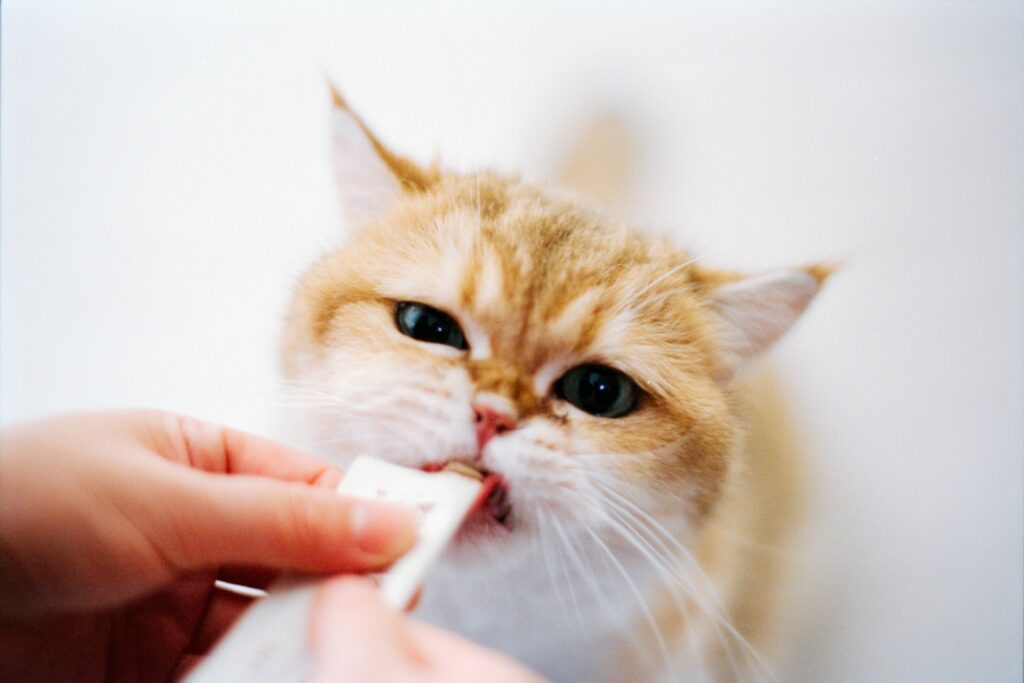
Giving medication in food means you do not have to restrain your cat at all, which is why RSPCA NSW recommends it whenever possible. Good options include a small piece of soft meat or fish, a lick of wet food, a little soft cheese, or a treat that can be moulded around the tablet. Pill pockets and pill pastes sold through vet clinics are designed for exactly this job.
Tips that improve the odds:
- Time it before a meal. RSPCA NSW notes hungry cats are more likely to accept food with medicine in it.
- Use the three-treat trick. Offer a plain piece, then the piece with the tablet, then another plain piece straight after.
- Keep the portion tiny. International Cat Care advises against mixing medication into your cat’s main meal, as it could put them off eating and makes it hard to tell whether the whole dose was taken.
- Check the bowl and floor to make sure the tablet was swallowed, not eaten around.
Method 2: giving a pill by hand, step by step
If food does not work, you will need to give the tablet directly. The technique below follows guidance from International Cat Care and the Cornell University College of Veterinary Medicine pharmacy.
Get ready first
Have the tablet, a treat and a syringe with about a teaspoon of water ready before you fetch your cat; Cornell notes cats often mirror an anxious owner. Pick a quiet room, and enlist a second person to steady your cat if you can. Cornell also suggests coating the tablet in a little butter or savoury paste to help it slide down.
The towel wrap (“cat burrito”)
For a wriggly cat, or if you are on your own, a towel helps keep paws and claws out of the way. International Cat Care suggests sitting your cat on a mid-sized soft towel on a stable surface, facing away from you, then bringing both sides of the towel up around the neck so the front legs are tucked in. Hold gently but firmly. The aim is to support your cat, not pin them down: RSPCA NSW cautions against holding cats down, scruffing them or wrapping them tightly, as forceful handling makes future doses harder.
Giving the tablet
- Approach calmly from the side or behind, rather than looming over your cat’s face.
- Hold the head. Place one hand over the top of the head with your thumb and forefinger resting either side of the jaw, just behind the upper lip.
- Tilt the head back so the nose points towards the ceiling. This tends to make the lower jaw drop slightly.
- Open the mouth. Hold the tablet between the thumb and forefinger of your other hand and use your middle finger to gently press down on the front of the lower jaw.
- Place the pill as far back on the tongue as you can, quickly and smoothly. The further back it goes, the harder it is for your cat to do anything but swallow.
- Close and stroke. Let the head return to a normal position, hold the mouth closed for a few seconds and gently rub under the chin or throat. Licking the lips or nose is a good sign the pill has gone down.
- Follow with water or food straight away. Give about a teaspoon (5 to 6 mL) of water from a syringe, or a small tasty treat.
Why the water chaser matters
This is the step most people skip. Tablets given “dry” can sit in a cat’s oesophagus for minutes. In a fluoroscopy study of 30 cats published in the Journal of Veterinary Internal Medicine, none of the dry-swallowed tablets had reached the stomach after 60 seconds and only 36.7% had done so after five minutes. When the tablet was followed by water, 90% had passed within 30 seconds and all had passed by 90 seconds. The researchers, who had seen tablet-induced narrowing (stricture) of the oesophagus in cats, recommended routinely following tablets and capsules with water, and Cornell gives the same advice.
Pill poppers (pill givers)
A pill popper is a plastic, syringe-like device with a soft tip. Load the tablet first, open the mouth as above, then push the plunger to release the tablet at the back of the tongue, keeping your fingers out of the mouth. International Cat Care stresses that you should never force the device into your cat’s mouth, as this can cause injury. Ask your clinic for one and for a quick demonstration, then follow up with water just as you would by hand.
Liquid and compounded alternatives
If tablets are a constant struggle, talk to your vet about other formats. VCA Animal Hospitals explains that a compounding pharmacy can sometimes reformulate a medicine as a flavoured liquid, a chewable treat or a gel that is absorbed through the skin. Compounded products are not tested in the same way as registered medicines, so their effectiveness and safety cannot be guaranteed, which is why this decision needs to be made with your vet rather than switched at home.
How to give a cat liquid medicine
Liquids need a slightly different technique, because they are more likely than pills to go down the wrong way. VCA and Cornell suggest:
- Draw up the exact dose in an oral syringe first. If it has been in the fridge, warm it in your hand; never microwave it.
- Do not tilt the head right back. Keep it level or only slightly raised.
- Slip the syringe tip into the side of the mouth, just behind the canine tooth, so the liquid lands on the tongue rather than at the back of the throat.
- Squeeze slowly in small amounts, pausing to let your cat swallow.
Staying calm and rewarding your cat
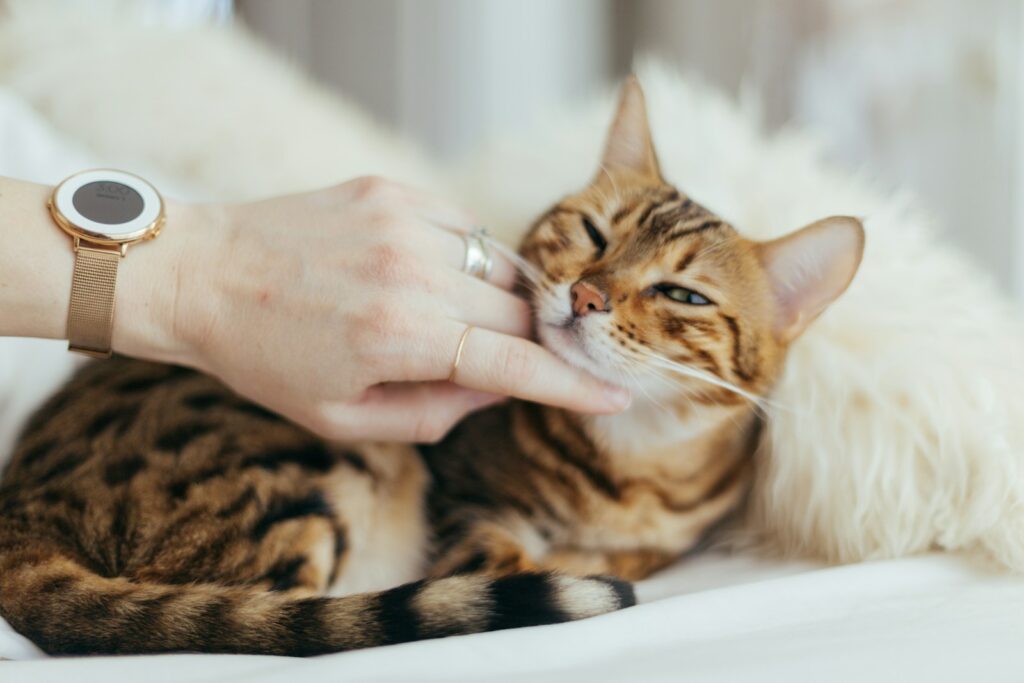
Today’s dose shapes how tomorrow’s goes. RSPCA NSW recommends letting your cat come to you, moving slowly, and finishing with a “jackpot” reward such as extra treats or play, even if you did not manage the dose. Stop and pause if your cat hides, freezes, hisses, growls, swipes or tries to bite. It is fine to try again later. International Cat Care also notes that if medicating causes significant stress, your vet should know, because stress can hinder recovery.
If your cat spits out the pill or foams at the mouth
- Spat it out intact? If your cat is calm, try again.
- Not sure how much went down? With liquids, VCA advises against re-dosing unless you are certain none was swallowed. Call your vet for advice rather than doubling up.
- Drooling or foaming? Bitter medicines commonly make cats drool or foam at the mouth. Cornell describes excess salivation after medication as normal and not harmful, and VCA notes some cats foam from the taste. A treat or a little water helps rinse the taste away.
- Gagging, retching, repeated swallowing or refusing food afterwards? These could mean a tablet has stuck or irritated the oesophagus. Contact your vet promptly.
Safety: what never to do
Never give your cat human medicine. Cats process many drugs very differently from people. International Cat Care describes paracetamol as extremely toxic to cats and advises never giving your cat any medication that has not been prescribed by your vet. Our article on why human medication is risky for pets explains more.
Protect yourself from bites and scratches. A cat that feels trapped may bite, and cat bites are a genuine health risk to people. Healthdirect Australia says up to 8 in 10 cat bites can become infected and advises seeing a doctor as soon as possible if a bite breaks the skin. If your cat struggles, let go and regroup. For reading the warning signs, see Why does my cat bite me?
When to ask your vet for help
Contact your clinic if you have missed doses, if pilling is damaging your bond with your cat, if you have been bitten, or if your cat seems unwell after a dose. International Cat Care notes that your veterinary team may be able to give the medication for you or advise on alternative formulations. Asking for help is far better than a half-finished course.
Frequently asked questions
Is it okay to give a pill without water?
It is best not to. Research in cats shows dry-swallowed tablets often stay in the oesophagus for minutes, which can cause irritation. Follow every tablet or capsule with about a teaspoon of water or a small treat, unless your vet advises otherwise.
Key takeaways
- Ask your vet whether the tablet can be crushed, split or given with food before you start.
- Hiding the pill in a small amount of tasty food or a pill treat is the least stressful option.
- For hand pilling, tilt the head, drop the jaw, place the tablet far back on the tongue and close the mouth gently.
- Always follow a tablet with about a teaspoon of water or a treat to help it clear the oesophagus.
- Use a loose towel wrap or pill popper if needed, and never scruff or force your cat.
- Never give human medicine, and ask your vet about liquid or compounded options if pilling is a struggle.
Sources
- International Cat Care: How to give a cat medication
- Cornell University College of Veterinary Medicine: Giving Your Cat Oral Medications
- RSPCA NSW: A cat friendly approach to medication
- Journal of Veterinary Internal Medicine (PubMed): Evaluation of esophageal transit of tablets and capsules in 30 cats
- VCA Animal Hospitals: What is a compounded medication?
- VCA Animal Hospitals: Giving Liquid Medication to Cats
- International Cat Care: Paracetamol poisoning in cats
- Healthdirect Australia: Dog, cat, bat and human bites
This article is general information for Australian pet owners and is not a substitute for advice from a registered veterinarian who has examined your cat. Always follow the instructions on your cat’s medication label and ask your vet if you are unsure.